
For many years, Perth Airport has been a pilgrimage destination for planespotters. The airlines based there – Network Aviation, Skippers Aviation, Maroomba Airlines, and more – have consistently used older aircraft for their intrastate operations across Western Australia. Perth sees more daily Fokker 100 flights, for example, than almost any other airport in the world.
In the past, that has been okay. After all, the majority of airline passengers in Western Australia are flying for free: it’s one of the largest mining regions in the world, and mining operations have lucrative contracts with local airlines for “Fly-In, Fly-Out (FIFO)” flights – charter flights that carry workers between major cities and mine sites. Having modern, flashy aircraft in a charter market didn’t really make much sense, since every competing airline flies the same old Fokker 100s, and the passengers don’t mind, as their tickets are paid for by their employer. But in September 2024, Virgin Australia Regional Airlines decided to change the way people fly in WA, with a historic order for eight Embraer E190-E2s.
The Birth of the E-Jet
Embraer announced the launch of the original E-Jet family in 1999, as a modern replacement for older regional jets and turboprops, such as the BAe-146 and Fokker 70/100. Production began with the 78-seat E170 prototype, which rolled out of Embraer’s final assembly line in São Paulo in 2001.
Following the E170’s success, Embraer launched the E190, a stretched and improved version of the E-Jet with seating for up to 124 passengers. The E175 and E195 were developed shortly after, completing the first-generation E-Jet family. The E-Jet became nicknamed the “Jungle Jet” after its factory’s Brazilian location, and has rapidly earned its place as one of the world’s most popular regional aircraft. To date, the aircraft has flown for over 150 airlines and sold more than 2,000 units.
Of the original E-Jet family, only the E170 and E190 have made their way to Australia so far. Virgin Blue was the first Australian operator of the E190 in 2008, taking delivery of 18 E190s between 2008 and 2011. The airline also briefly had a fleet of six E170s, which were dubbed “Capital Jets” due to their frequency on routes to the capital city of Canberra. In 2011, Virgin Blue rebranded as Virgin Australia, and in 2018, the decision was made to retire the remaining E-Jets from the fleet.
Today, the only Australian operator of the E170 is Airnorth, a regional airline based in Darwin, NT, Australia. In 2021, Brisbane-based Alliance Airlines announced it would be buying second-hand E190s from many airlines that were retiring them at the time. E190ARs from American Airlines, Copa Airlines, and JetBlue, and E190LRs from Helvetic Airlines began pouring in from all corners of the world, and in just a couple of years, Alliance Airlines became the world's largest E190 operator.
How Embraer Reinvented Its Most Popular Jet
In 2016, Embraer announced the replacement for the E-Jet: the E2. The E2 is offered in three variants currently: the E190-E2, the larger E195-E2, and the smaller E175-E2. Sharing the same fuselage as the E-Jet but with a completely new wing and engine, the E2 offers improved performance over the E-Jet while being more efficient and cost-effective.
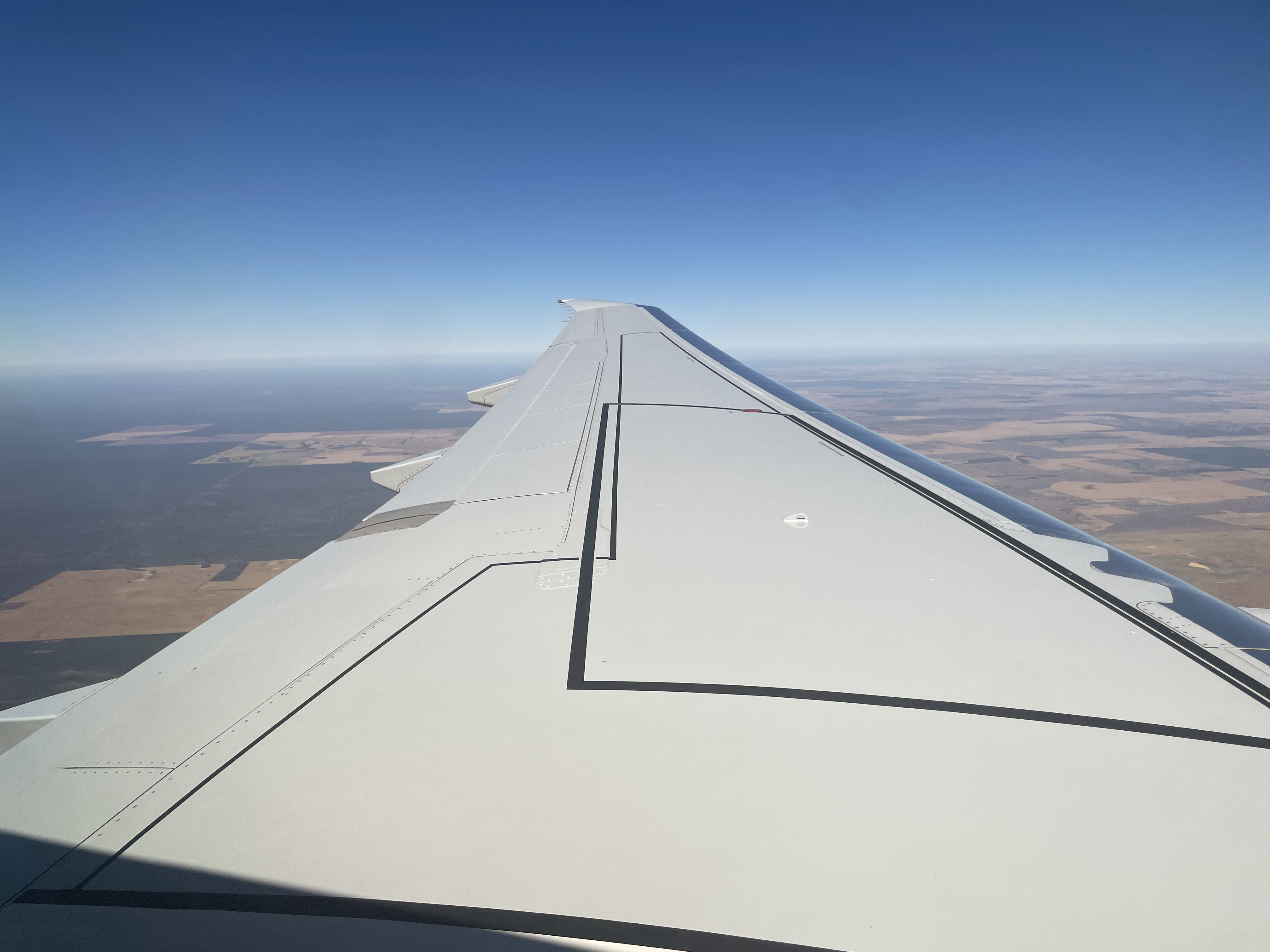
One of the biggest improvements was the entirely new computer-designed wing. The E2 features a distinctively curved wing design, which allows for larger engines with a higher bypass ratio to be mounted. Instead of ending in a blended winglet like the classic E-Jet, the E2’s wing tapers into a raked wingtip, which increases efficiency by reducing wingtip vortices.
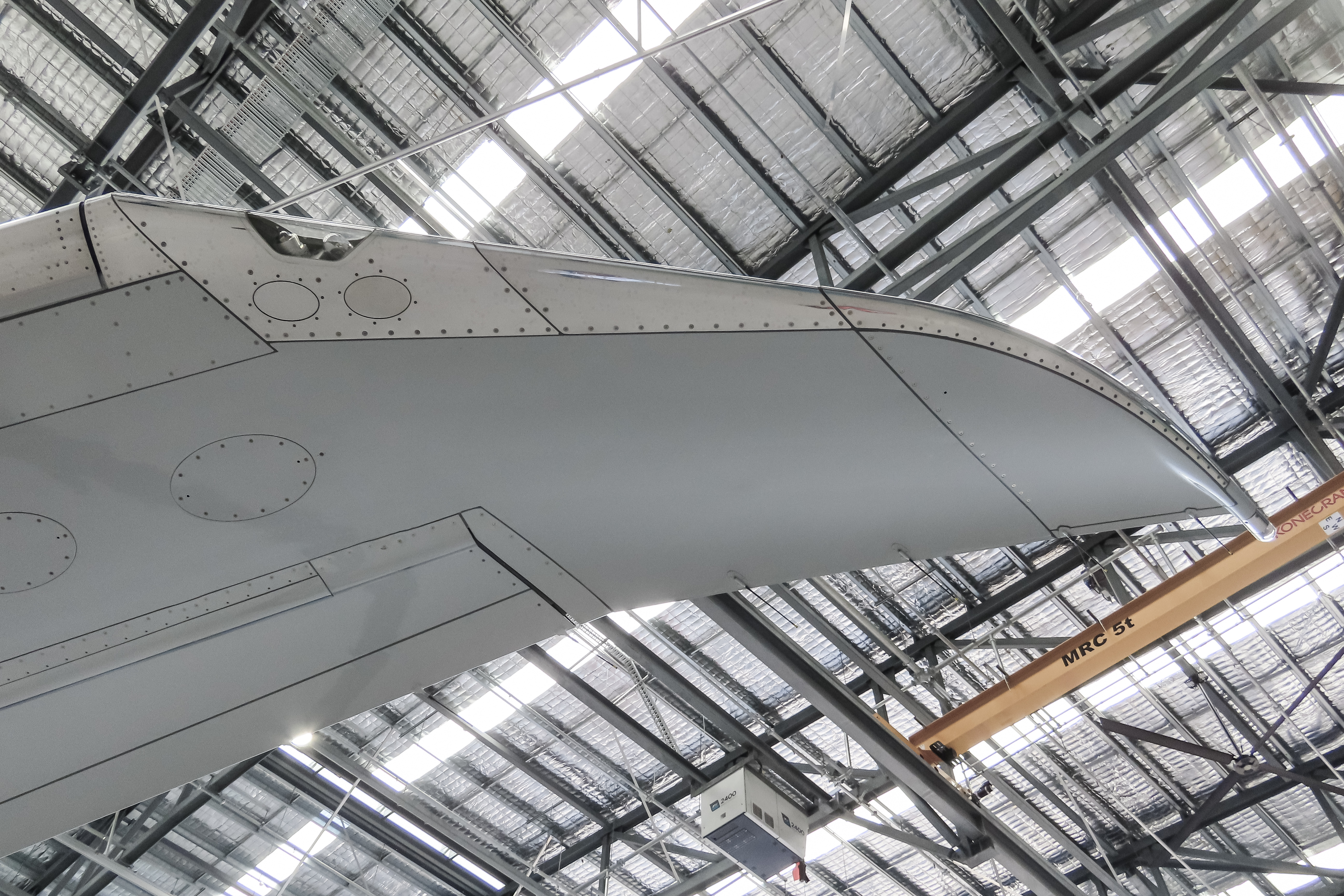
Interestingly, all three versions of the E2 have a slightly different wing design; each wing is tailored specifically to the aircraft’s length, making it more versatile than its competitor, the Airbus A220.
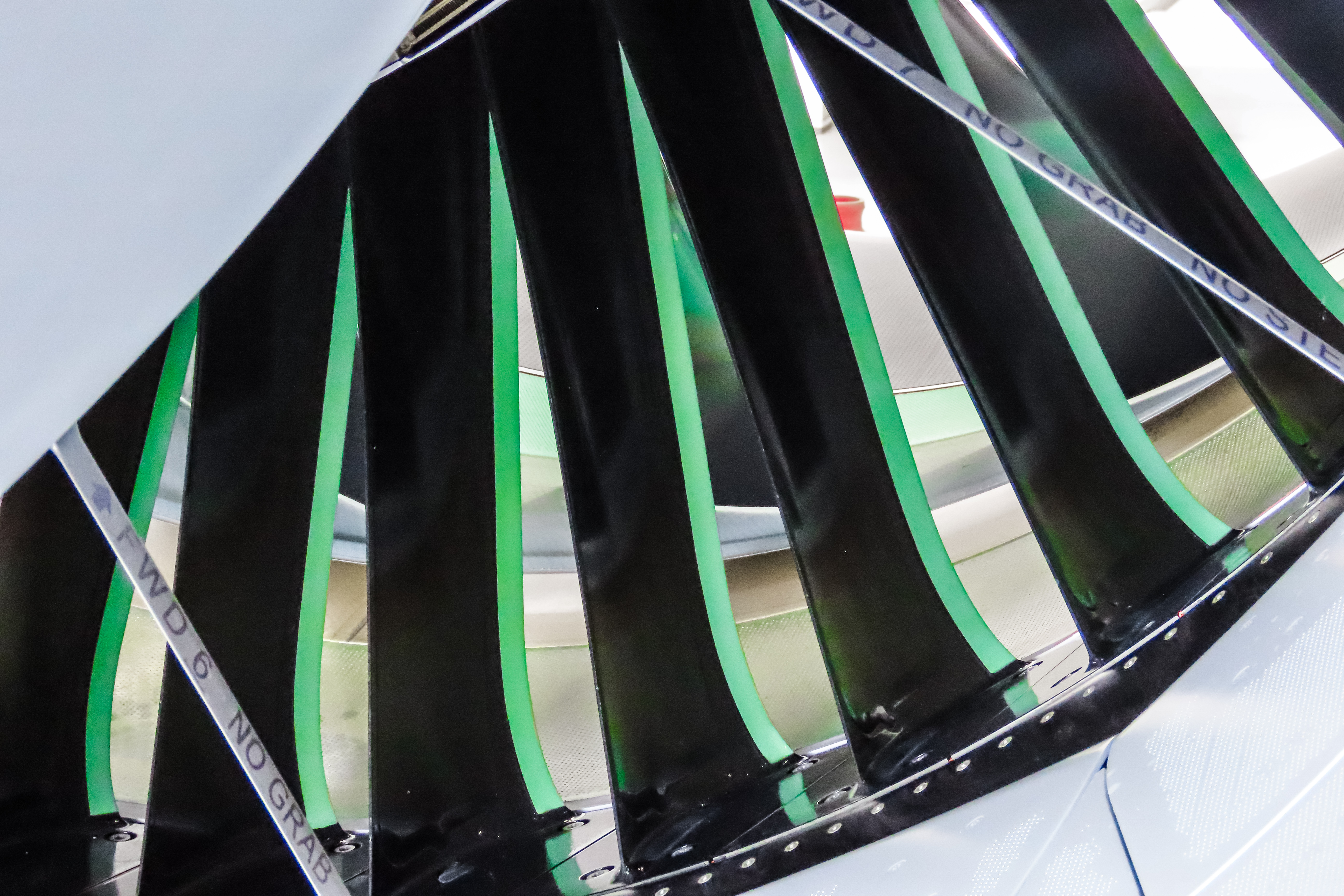
The E2 uses the same Pratt & Whitney PW1000G Geared Turbofan engines as the A220 and A320NEO family of aircraft. The PW1000G is one of the most modern and efficient jet engines in the world.
There were also improvements to the aircraft’s landing gear: the E2 is Embraer’s first jet aircraft to feature main landing gear doors, which reduce drag. The landing gear also uses a trailing-link design for smoother touchdowns.
Due to the fairly young age of the world’s E-Jet fleet, the E2 had a slow start to sales. However, as more E2s are delivered and more E-Jets are retired, the E2’s sales are rapidly picking up. This year alone, the E2 family has gained more than 150 new orders, nearly doubling the aircraft’s backlog.
Airlines favor the E195-E2 for its low Cost-per-Available-Seat-Kilometer (CASK) figures, making it an extremely economical aircraft to operate. The E190-E2 has fewer orders, but airlines like Widerøe and Scoot are loving its efficiency and high-performance design. The E190-E2 is currently in service with six airlines, with VARA being the only operator based in the Southern Hemisphere.
E190-E2 production list (As of November 2025):
| Serial number | Registration | Airline |
| 19020001 | PR-ZEY | First prototype |
| 19020002 | PR-ZFU | Second prototype |
| 19020003 | PR-ZFV | Third prototype |
| 19020004 | PR-ZGQ | Fourth prototype |
| 19020009 | LN-WEA | Widerøe |
| 19020010 | LN-WEB | Widerøe |
| 19020011 | LN-WEC | Widerøe |
| 19020012 | EI-KHA | Air Astana |
| 19020013 | JY-REZ | Royal Jordanian |
| 19020014 | EI-KHC | Air Astana |
| 19020015 | PS-LMP | Placar Linhas (charter plane) |
| 19020016 | PS-YVL | Placar Linhas (charter plane) |
| 19020017 | EI-KHD | Air Astana |
| 19020019 | EI-KHE | Air Astana |
| 19020022 | HB-AZA | Helvetic Airways |
| 19020026 | HB-AZB | Helvetic Airways |
| 19020029 | VH-IKJ | ASL Australia (charter plane) |
| 19020030 | HB-AZC | Helvetic Airways |
| 19020031 | HB-AZD | Helvetic Airways |
| 19020036 | HB-AZG | Helvetic Airways |
| 19020038 | HB-AZE | Helvetic Airways |
| 19020043 | HB-AZF | Helvetic Airways |
| 19020046 | HB-AZH | Helvetic Airways |
| 19020127 | 9V-THA | Scoot |
| 19020129 | JY-REC | Royal Jordanian |
| 19020133 | 9V-THB | Scoot |
| 19020139 | JY-RED | Royal Jordanian |
| 19020144 | JY-REE | Royal Jordanian |
| 19020150 | 9V-THC | Scoot |
| 19020154 | 9V-THD | Scoot |
| 19020165 | 9V-THF | Scoot |
| 19020184 | 9V-THG | Scoot |
| 19020185 | VH-E2A | Virgin Australia Regional |
| 19020191 | 9V-THH | Scoot |
E190-E2s by operator
| Widerøe | 3 |
| Air Astana | 4 |
| Royal Jordanian | 4 |
| Helvetic Airways | 8 |
| Scoot | 7 |
| Virgin Australia Regional Airlines | 1 |
The E2 Comes to Australia
Understanding the need to replace the aging Fokker 100 fleet, Virgin Australia Regional Airlines (VARA) announced the order of eight Embraer E190-E2s in September 2024. Virgin Australia then reserved the rights to the very fitting VH-E2_ block of aircraft registrations with the Civil Aviation Safety Authority. The first aircraft in the fleet would be VH-E2A, naturally followed by VH-E2B, VH-E2C, and so on.
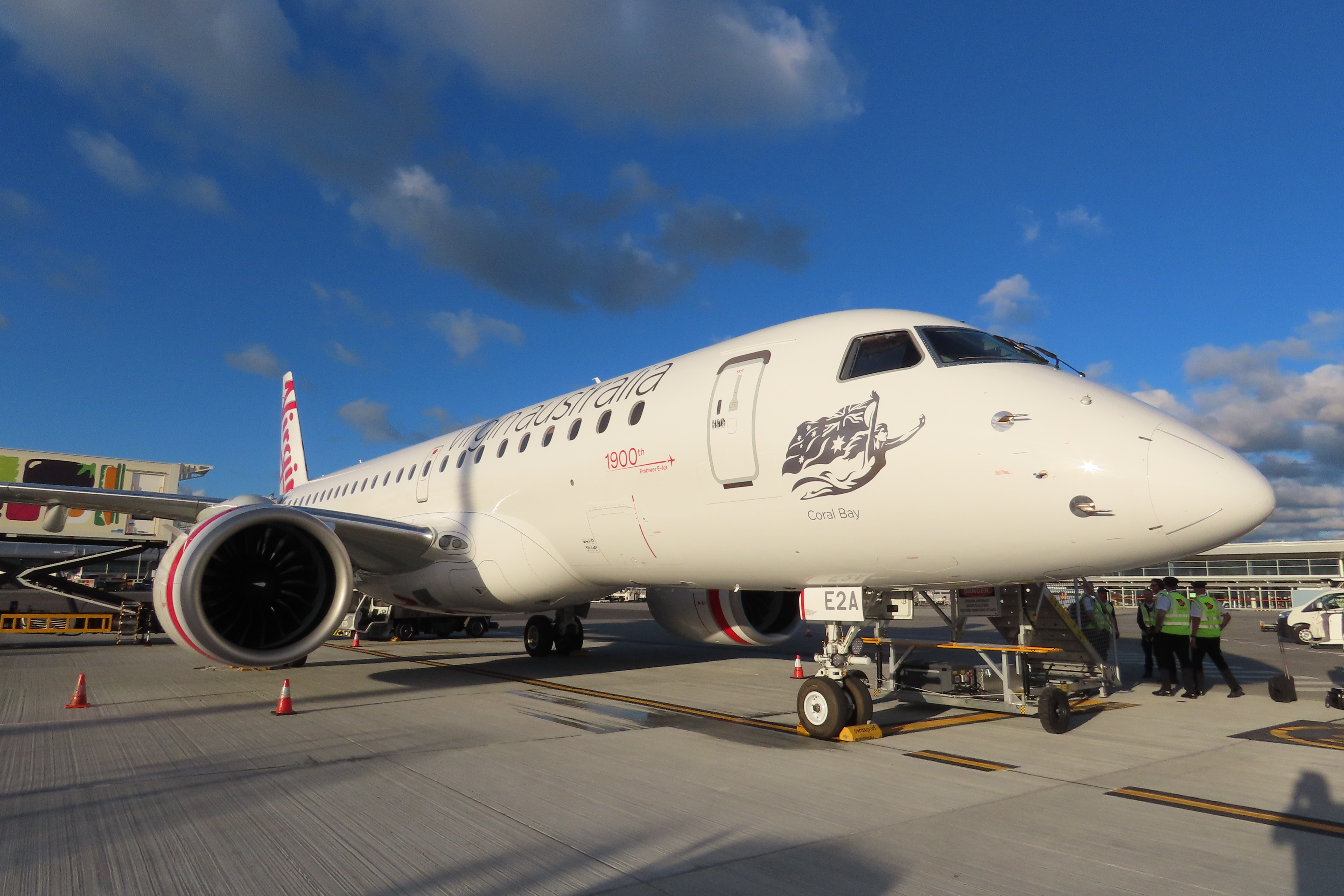
Virgin Australia also invited its staff to take part in a competition to name the upcoming E2 fleet. In keeping with the tradition set by its Boeing 737 aircraft, the new E2s were named after eight of Australia's stunning beaches. VH-E2A eventually rolled off Embraer’s final assembly line in August of 2025, being the 33rd E190-E2 built, bearing the name “Coral Bay,” after a beach in Western Australia.
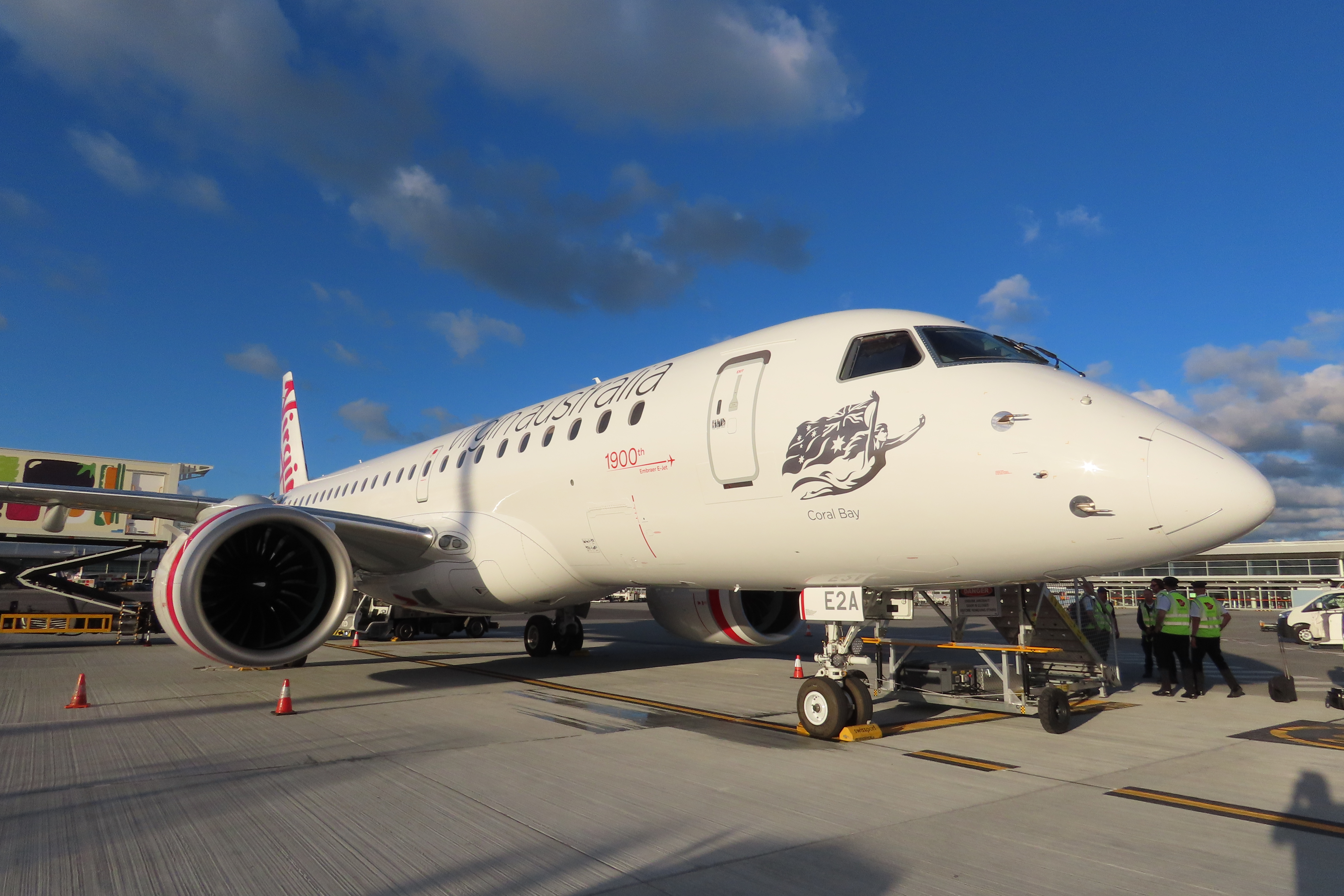
After months of planning, VH-E2A touched down on Australia’s golden soil for the first time, making an evening arrival into Canberra on September 6th, 2025. An overnight stay in Canberra was followed by E2A’s first ‘passenger’ flight the next day, when it operated a VIP charter flight to its new home of Perth, WA, Australia. The aircraft was parked at VARA’s new hangar at Perth Airport, designed specifically for the E2, and a ceremony for the aircraft’s arrival was held to officially welcome it into the fleet.
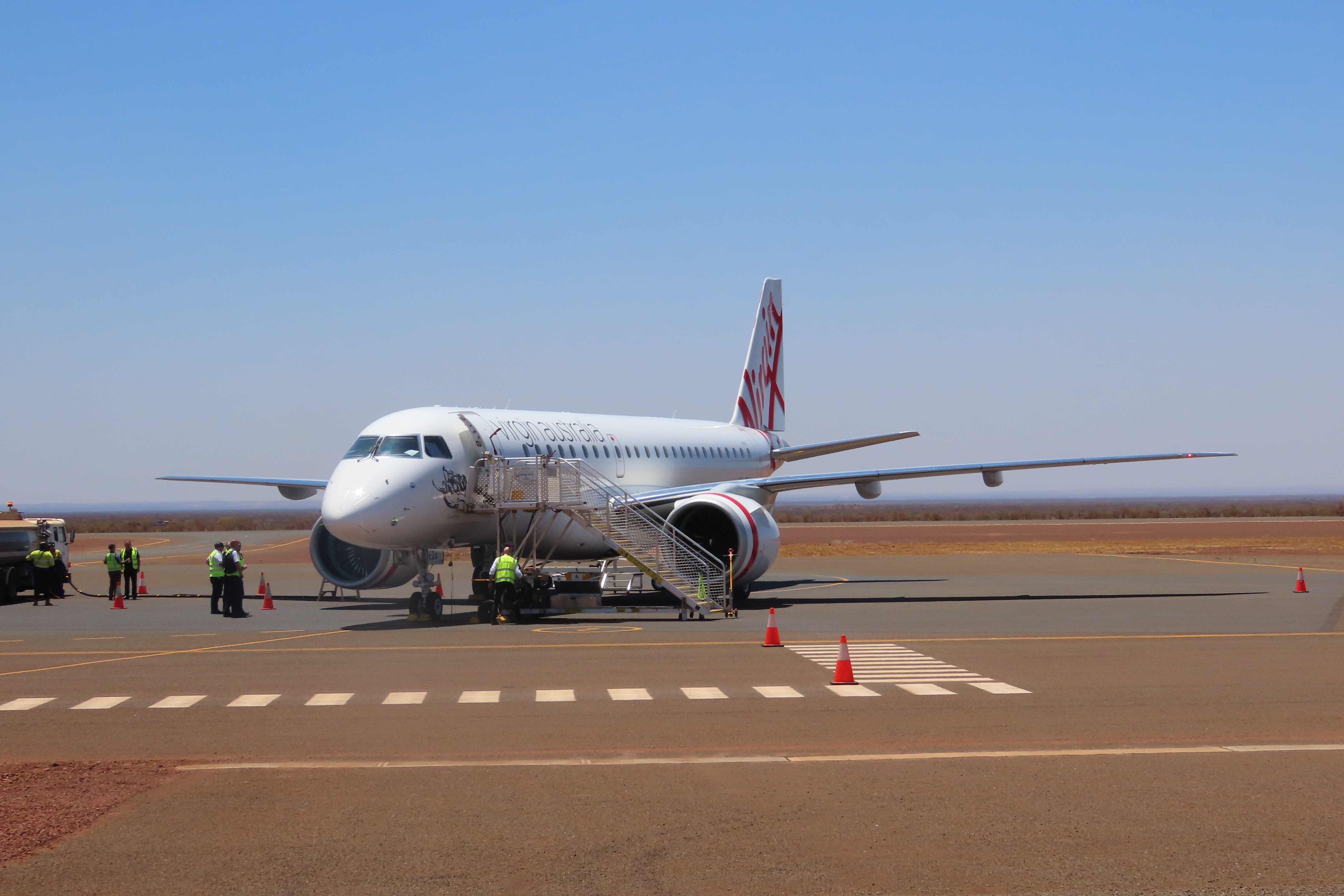
The eight E2s on order will replace VARA’s last remaining Fokker 100s, and take over from the old Airbus A320s in the fleet. Over the next several months, VARA will replace its entire fleet with brand new Embraer E2s. Used initially on charter flights to support Australia’s huge mining industry, the E2s will slowly be introduced into passenger service, being used on regional flights in WA, Australia, that can’t viably support the larger Boeing 737.
The introduction of brand-new airliners to the WA airline market is a bigger deal than one would expect. Western Australia is riddled with older aircraft, which, although great for planespotters, leave charter clients and passengers feeling less confident.
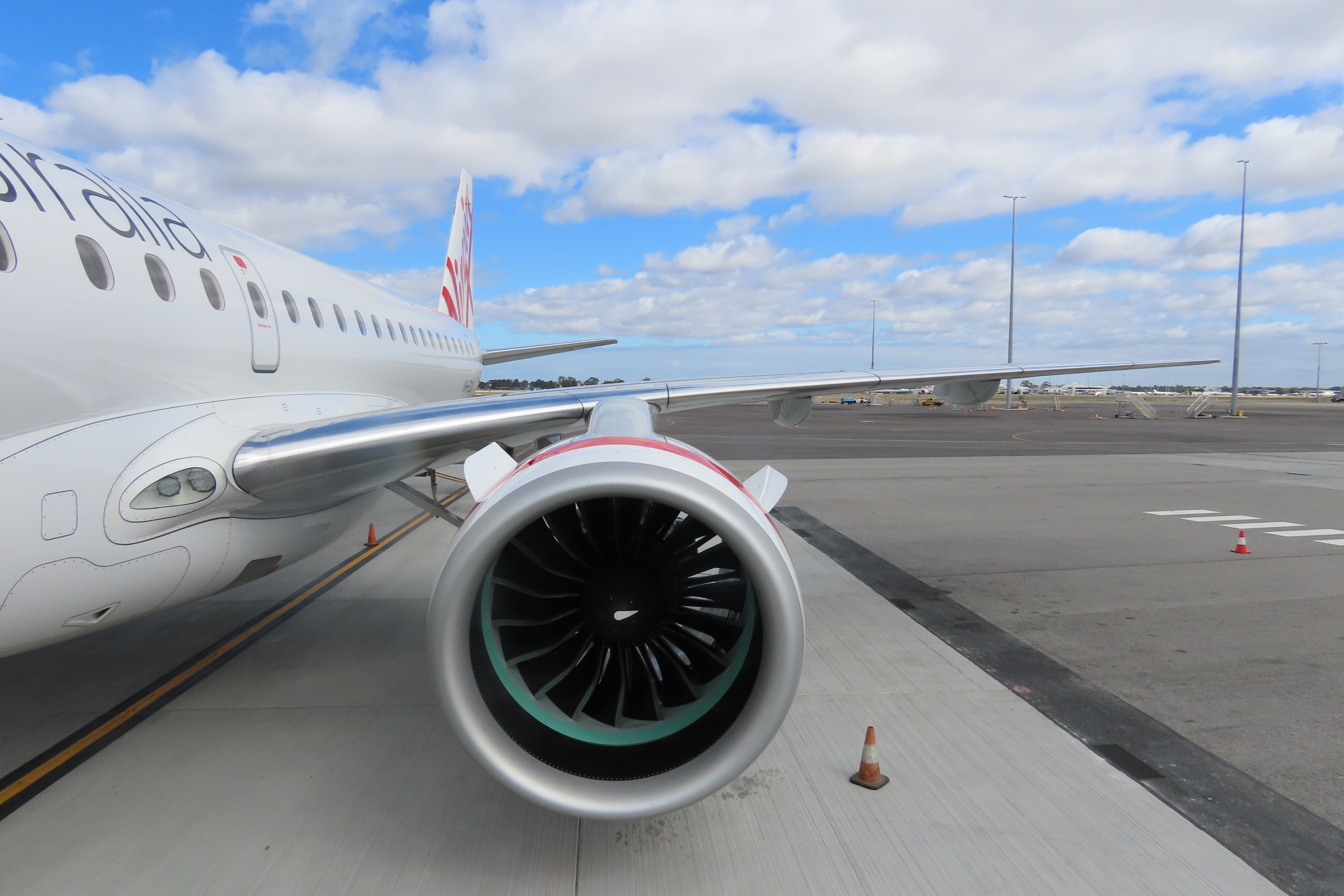
To put this into context, the youngest Perth-based aircraft in Qantas Group’s fleet is over 15 years old, while the aircraft of Maroomba Airlines and Skippers Aviation are, on average, 31 and 32 years old, respectively. Compare these to VH-E2A: this aircraft is less than a month old, delivered straight from the manufacturer to VARA, and was built to the exact specifications that Virgin Australia had asked for. VARA isn’t just another airline flying second-hand planes anymore; they are the only airline offering a brand-new, modern airliner with much better performance and efficiency than anything else in the western half of the country.
Onboard the new VARA E2
Recently, I had the honor of flying on VH-E2A and experienced this aircraft’s comfort and performance for myself. Walking into the cabin feels like boarding a private jet: mood lighting and comfortable seats greeted me as I walked down the aisle. The engines were quiet while taxiing, with the silence occasionally broken by the low hum of the Pratt & Whitney PW1900G’s acoustic resonance.
As the aircraft lined up with the runway, the E2’s quietness really showed itself – the jet seemed to accelerate without any noise accompanying it. We surged forward, and as we lifted off the runway, I felt myself pushed back against my seat from the aircraft’s tremendous power. At cruise, the E2 was so quiet that I could hear conversations between people several rows in front or behind.
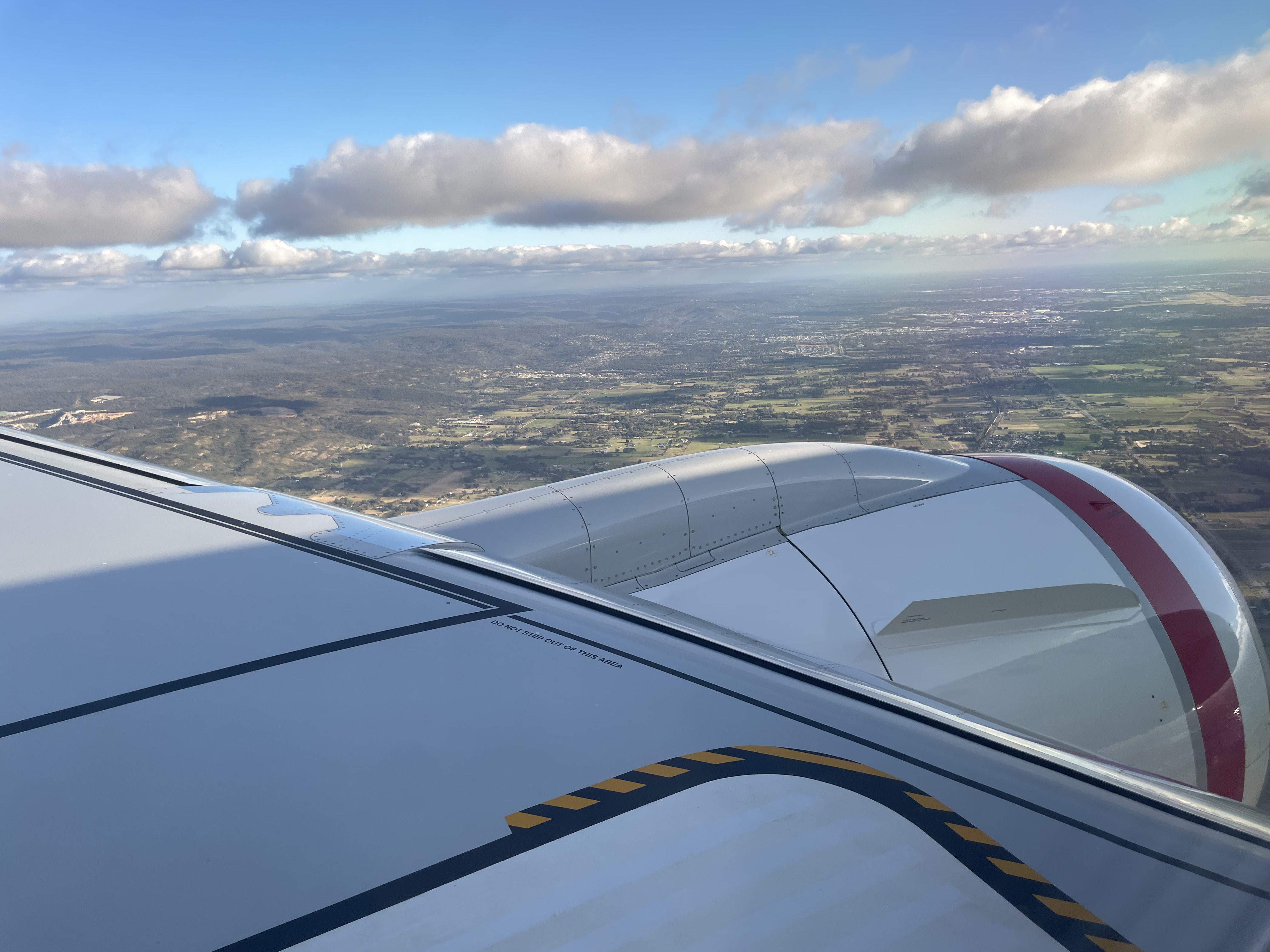
The plane is beautiful both inside and out, and those efficient swept wings look great in the midday sun. I’ve flown on almost every Western regional jet there is: CRJ, E-Jet, 737, A320, F70, F100, 717, etc. but as soon as I flew on this aircraft, I knew it would be a game-changer. The E2 is so quiet, so smooth, and so good-looking … it’s hard not to fall in love.
The E2 is set to revolutionize flying in Western Australia. Mining companies and airline passengers no longer have to choose between “Fokker A and Fokker B”; they can now book flights on brand-new, modern aircraft. That gives VARA a substantial advantage over its competition and offers a better onboard experience. The arrival of the E190-E2 isn’t just another airliner; it’s a testament to innovation in Western Australia.
This content is only available with an AeroXplorer+ subscription.
Why Did Some Air India A320s Have Extra Wheels? Bogie Gear Explained » Delta Aircraft Isolated at Ben Gurion Airport Following Bomb Threat » FAA Clears JetBlue's $58.5M Purchase of Spirit's LaGuardia Slots »

Comments (0)
Add Your Comment
TAGS
TRIP REPORTS Jetstream Jetstream Magazine VARA Virgin Australia Embraer E195-E2RECENTLY PUBLISHED
 Selma Blair Charged With Assault After Alleged Biting Incident on Delta Flight
Actress Selma Blair faces assault charges after allegedly biting a Delta flight attendant and kicking a police officer during a disturbance at JFK.
NEWS
READ MORE »
Selma Blair Charged With Assault After Alleged Biting Incident on Delta Flight
Actress Selma Blair faces assault charges after allegedly biting a Delta flight attendant and kicking a police officer during a disturbance at JFK.
NEWS
READ MORE »
 Riyadh Air Relocates New Boeing 787 Dreamliners Away From Capital Amid Houthi Missile Threat
Saudi Arabia's new flag carrier Riyadh Air has moved its Boeing 787 Dreamliners out of Riyadh over fears of Houthi missile attacks ahead of launch.
NEWS
READ MORE »
Riyadh Air Relocates New Boeing 787 Dreamliners Away From Capital Amid Houthi Missile Threat
Saudi Arabia's new flag carrier Riyadh Air has moved its Boeing 787 Dreamliners out of Riyadh over fears of Houthi missile attacks ahead of launch.
NEWS
READ MORE »
 FAA Orders Engine Repairs on Airbus A380 Fleet After Uncontained Failure
The FAA has ordered inspections and repairs on Engine Alliance GP7200 engines powering Airbus A380s after an uncontained failure during takeoff.
NEWS
READ MORE »
FAA Orders Engine Repairs on Airbus A380 Fleet After Uncontained Failure
The FAA has ordered inspections and repairs on Engine Alliance GP7200 engines powering Airbus A380s after an uncontained failure during takeoff.
NEWS
READ MORE »
More than just headlines.
Get unlimited ad-free access to in-depth aviation news, premium stories, and exclusive insights other sites don't cover.
- Ad-free browsing on AeroXplorer
- Unlimited access to premium and exclusive articles
- Higher photo upload limits & commissions on sales
- Free access to Jetstream Magazine on higher tiers
- Ad-free browsing
- Sell aviation photos with 60% commission
- First week free!
- Everything in Basic+
- Unlimited premium articles
- Sell aviation photos with 70% commission
- Free Digital subscription to Jetstream Magazine
- First week free!
- Everything in Basic+ and Pro
- Sell aviaiton photos with 80% commission
- Early access to exclusive stories
- Free Digital+Print subscription to Jetstream Magazine