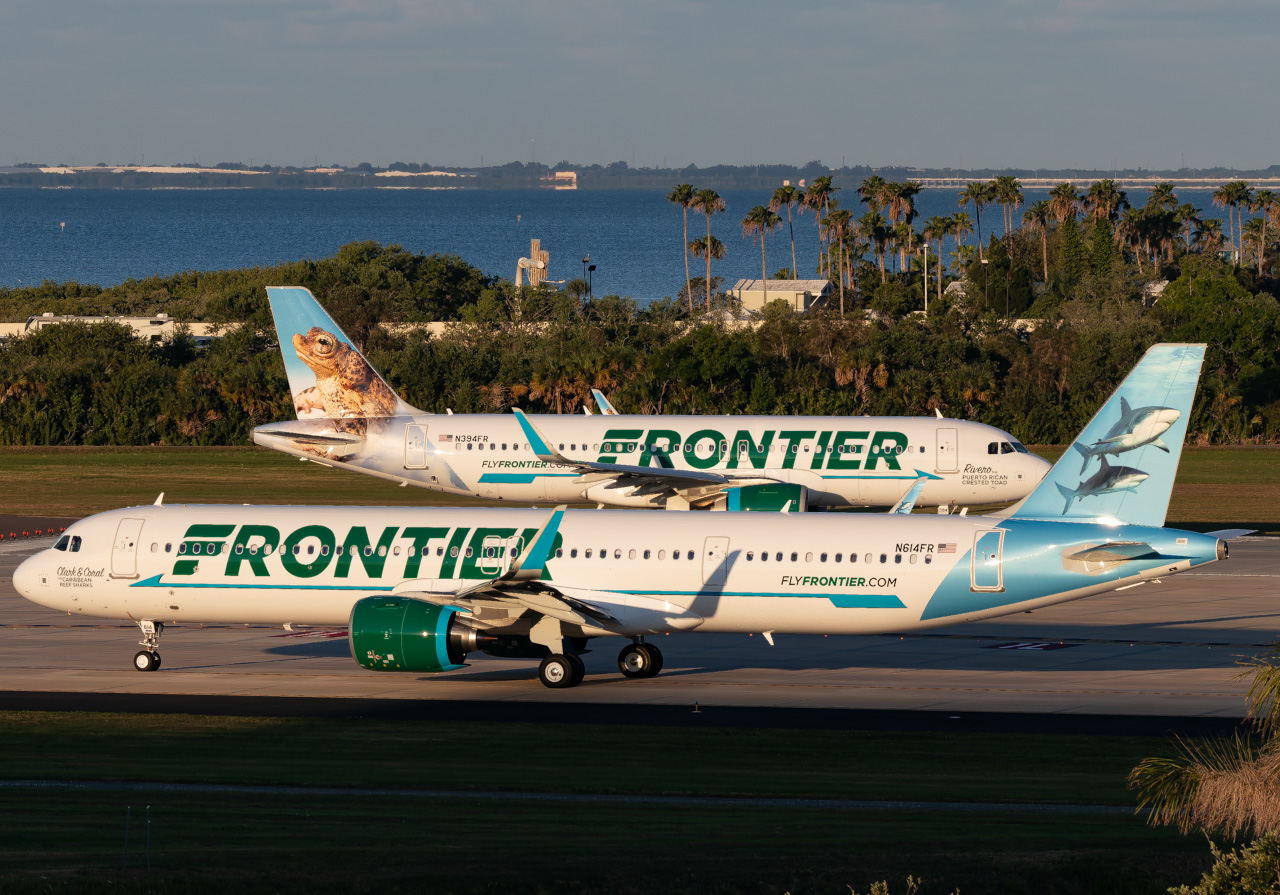

Frontier Airlines has reached an agreement to sell 11 future Airbus A321neo aircraft to Dublin-based lessor Avolon, a transaction that adjusts the ultra-low-cost carrier's near-term fleet trajectory and reinforces the leasing giant's growing narrowbody portfolio.
The Denver-based airline disclosed the arrangement as part of its ongoing fleet management strategy, opting to convert direct ownership commitments into a more flexible arrangement with one of the world's largest aircraft lessors. The deal underscores how carriers continue to recalibrate their capital deployment in response to evolving market conditions, delivery timelines, and financing preferences.
Details of the Transaction
Under the terms disclosed, Frontier Airlines will transfer 11 Airbus A321neo aircraft from its order book to Avolon. The jets in question are scheduled for future delivery, meaning the transaction does not affect aircraft currently operating in Frontier's active fleet. Instead, it reshapes what the carrier's incoming fleet will look like over the coming years.
The A321neo, powered by next-generation engine options, has become a cornerstone of narrowbody operations for airlines seeking greater seat capacity and improved fuel efficiency on medium-haul routes. For an ultra-low-cost carrier like Frontier, the type offers attractive unit economics, with lower cost per available seat mile compared with smaller variants in the A320neo family.
By selling the aircraft to Avolon rather than canceling the orders outright, Frontier preserves its relationship with Airbus while shifting the capital burden of ownership to a third party. The airline retains the option to lease aircraft back through sale-and-leaseback structures, a common practice among low-cost carriers looking to keep balance sheets lean.

Frontier's Fleet Strategy
Frontier operates one of the youngest and most fuel-efficient fleets among U.S. carriers, built almost entirely on Airbus A320 family aircraft. The airline has leaned heavily on the A321neo as a growth vehicle, using its larger cabin to spread fixed costs across more seats and reduce per-passenger operating expenses.
The carrier's business model depends on maintaining low unit costs, and fleet flexibility plays a central role in that equation. Sale-and-leaseback transactions have long been a preferred financing tool for Frontier, allowing the airline to unlock capital tied up in aircraft acquisitions and redeploy it into operations, marketing, or debt reduction.
The decision to sell the 11 future A321neos to Avolon aligns with this approach. It gives Frontier immediate financial flexibility while ensuring the aircraft can still enter its fleet under a lease arrangement if desired. Industry observers view such moves as prudent management of delivery schedules, particularly given the well-documented delays affecting Airbus and its engine suppliers.

Analysis: How Spirit Airlines Changed Airline Pricing, then Paid the Price
Avolon's Expanding Portfolio
For Avolon, the acquisition of 11 A321neo aircraft represents another step in expanding its narrowbody portfolio. The Irish lessor, headquartered in Dublin, ranks among the largest aircraft leasing companies globally and maintains a diversified order book with both Airbus and Boeing.
The A321neo has emerged as one of the most sought-after aircraft in the leasing market, driven by strong demand from airlines worldwide. Its combination of range, capacity, and fuel efficiency makes it an appealing asset for lessors, who can place the type with a wide variety of operators across regions and business models.
Avolon's addition of these aircraft strengthens its ability to serve airline customers seeking modern narrowbodies without committing to direct manufacturer orders. The lessor has been active in similar transactions with other carriers, positioning itself to benefit from the industry's continued preference for the neo family over older-generation aircraft.
Market Context
The transaction takes place against a backdrop of shifting dynamics in the U.S. airline industry. Ultra-low-cost carriers have faced pressure from rising labor costs, elevated fuel prices at times, and softer domestic yields, prompting several operators to reassess growth plans. Frontier itself has adjusted its network strategy in recent quarters, reducing capacity in certain markets while emphasizing profitability over aggressive expansion.
Selling future aircraft to a lessor allows the airline to moderate its growth pace without walking away from the Airbus order book entirely. It also provides a hedge against demand uncertainty, giving management the option to lease aircraft back at terms that reflect current market conditions.
Airbus, for its part, continues to work through a substantial backlog of A320neo family orders. The manufacturer has faced production challenges linked to supply chain constraints, engine availability, and workforce ramp-up. Transactions like the Frontier-Avolon deal do not reduce Airbus's overall backlog but do shift the identity of the end customer, a routine occurrence in the commercial aviation financing world.

Implications for Enthusiasts
For aviation enthusiasts tracking fleet developments, the deal offers a reminder of how modern airline economics function. Aircraft rarely follow a simple path from manufacturer to operator. Instead, they move through a complex web of order transfers, sale-and-leaseback agreements, and secondary market transactions that shape the composition of global fleets.
Frontier's livery may still appear on some or all of these 11 A321neos once they enter service, depending on whether the airline leases them back from Avolon. Alternatively, the aircraft could find homes with other operators around the world, each carrying the distinctive characteristics of the neo family: sharklet wingtips, advanced engines, and quieter cabins.
The deal, while modest in the context of global aviation, reflects the ongoing evolution of how airlines and lessors work together to match aircraft supply with commercial demand. As Frontier continues refining its fleet plan and Avolon builds out its portfolio, transactions of this nature will remain a defining feature of the industry's financing landscape.
Delta Passenger Arrested After Allegedly Stealing Airport Tug » Why Airliners Pump Nitrogen Into Their Fuel Tanks » This Week in Aviation: The 10 Stories That Mattered Most »

Comments (0)
Add Your Comment
TAGS
INFORMATIONAL Frontier Airlines Avolon Airbus A321neo Fleet Restructuring Aircraft Leasing Airline Finance Aviation News Fleet Management Aircraft Orders Low-Cost CarriersRECENTLY PUBLISHED
 Boeing's Touchscreen Flight Controls for 737 Draw Sharp Criticism from Pilots
Boeing's plan to introduce Touchscreen Control Display Units on the 737 has sparked backlash from pilots who warn of safety and usability concerns.
NEWS
READ MORE »
Boeing's Touchscreen Flight Controls for 737 Draw Sharp Criticism from Pilots
Boeing's plan to introduce Touchscreen Control Display Units on the 737 has sparked backlash from pilots who warn of safety and usability concerns.
NEWS
READ MORE »
 Southwest Airlines Blames Brief System Outage for Boarding Delays and Checked Bag Disruptions
Southwest Airlines confirms a brief technology outage disrupted boarding and checked bag operations, forcing gate agents to process travelers manually.
NEWS
READ MORE »
Southwest Airlines Blames Brief System Outage for Boarding Delays and Checked Bag Disruptions
Southwest Airlines confirms a brief technology outage disrupted boarding and checked bag operations, forcing gate agents to process travelers manually.
NEWS
READ MORE »
 Southwest Airlines Considers Boeing 787 Order for Long-Haul International Expansion
Southwest Airlines is evaluating the Boeing 787 Dreamliner as it explores a shift into long-haul international flying, sources tell Reuters.
NEWS
READ MORE »
Southwest Airlines Considers Boeing 787 Order for Long-Haul International Expansion
Southwest Airlines is evaluating the Boeing 787 Dreamliner as it explores a shift into long-haul international flying, sources tell Reuters.
NEWS
READ MORE »
More than just headlines.
Get unlimited ad-free access to in-depth aviation news, premium stories, and exclusive insights other sites don't cover.
- Ad-free browsing on AeroXplorer
- Unlimited access to premium and exclusive articles
- Higher photo upload limits & commissions on sales
- Free access to Jetstream Magazine on higher tiers
- Ad-free browsing
- Sell aviation photos with 60% commission
- First week free!
- Everything in Basic+
- Unlimited premium articles
- Sell aviation photos with 70% commission
- Free Digital subscription to Jetstream Magazine
- First week free!
- Everything in Basic+ and Pro
- Sell aviaiton photos with 80% commission
- Early access to exclusive stories
- Free Digital+Print subscription to Jetstream Magazine