

The Federal Aviation Administration has ordered operators of Boeing 737 Next Generation jets to repeatedly test part of the aircraft’s flight control system, citing a risk that a safeguard in the autothrottle could fail to work and lead to a loss of control. The directive, AD 2026-23-04, was published in the Federal Register on Friday, November 20.

What the FAA Is Worried About
The directive covers the 737-600, -700, -700C, -800 and -900. It does not apply to the 737 MAX. The FAA estimates it affects about 300 airplanes on the US register.
The concern is the autothrottle’s cruise thrust split monitor, which disconnects the autothrottle if the thrust from the two engines differs by too much. The monitor relies on flight-control data, including the position of the wing spoilers. According to the FAA, a review found the possibility of latent loss of that spoiler data, or of erroneous spoiler data.
If that happened, the monitor might not activate. The autothrottle could then stay engaged despite a significant thrust imbalance, producing asymmetric thrust and an uncommanded roll. The FAA warns that if the crew does not correct the roll in time, the result could be a loss of control. The agency cited a design review and did not point to a specific accident or incident.
What Operators Must Do
Operators must carry out repetitive built-in tests of the aileron system, part of the digital flight control system, following Boeing Alert Safety Advisory 737-BSA-22-001, dated October 30, 2026. If a test fails, the operator must correct the problem and repeat the test until the system passes. The directive also includes on-condition actions. It does not require operators to replace hardware immediately.
The repetition intervals are set out in Boeing’s advisory, and the directive uses its own effective date as the starting point for certain compliance periods. Reports have not given the interval.
The FAA estimates each test takes about two work-hours, at roughly $85 an hour, or about $170 per airplane per test cycle with no parts cost. Across the 300 US-registered airplanes, that comes to about $51,000 per cycle, not counting any corrective work.
How the Rule Takes Effect
The FAA issued the directive as a final rule without the usual advance notice and comment, finding good cause because of the risk to the flying public and a compliance time shorter than a comment period would allow. It takes effect 15 days after publication, which falls on about December 5. Air Data News reported that the agency is accepting public comments for 45 days after publication.
An Earlier Directive on Older 737s
The action echoes an earlier one. In October 2022, the FAA required recurring tests on older 737 Classic models, the -300, -400 and -500, over a similar concern about spoiler sensor failures going undetected. The new directive does not refer to any accident, and it does not say that the older and newer models share a defect.

The Aircraft
The 737NG was the successor to the Classic 737 and was replaced on the production line by the 737 MAX. Boeing delivered the first one, a 737-700, to Southwest Airlines in December 1997, and the type entered service in 1998. Boeing built about 7,000 of them, and the last commercial delivery came in early 2020. The directive applies to the airplanes identified in Boeing’s advisory, not to the entire 737NG fleet.
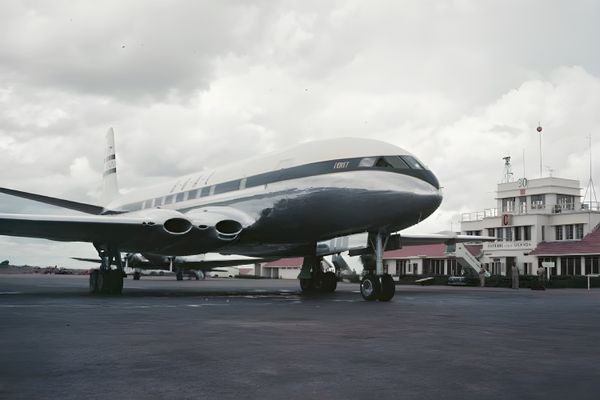
The Shape of Disaster: The Plane That Kept Falling Apart Mid-Air
What Remains Unclear
Reports so far do not say how often the tests must be repeated or how many airplanes worldwide are affected, and they include no Boeing statement. The FAA has not tied the order to a particular incident.
British Airways A321 Suffers Double Tail Strike During Landing at Heathrow » Hollywood Burbank Airport Operated Briefly Without Tower Controllers, Reports Say » GOL Secures Gatwick Slots for Potential Rio-London Service in Summer 2027 »

Comments (0)
Add Your Comment
TAGS
NEWS FAA Boeing 737 737 Boeing 737NG 737NG 737-600 737-700 737-700C 737-800 737-900 Flight Control Thrust Split AutothrottleRECENTLY PUBLISHED
 FAA Urges Business Aviation Operators to Add Runway Crossing Callouts to Standard Procedures
The FAA recommends business aviation operators incorporate explicit runway crossing callouts into SOPs to reduce incursion risk during taxi operations.
NEWS
READ MORE »
 Global Aircraft Orders Surge 88% as Airlines Scramble to Meet Rising Travel Demand
Global aircraft orders climbed 88% in the first nine months of 2025, with backlogs reaching a record high as airlines expand fleets.
NEWS
READ MORE »
 US Lawmakers Push to Block Chinese Aircraft Certification and Curb Aerospace Investments
A House Select Committee on China urges the US to deny certification to Chinese-made aircraft and restrict American investment in China's aerospace sector.
NEWS
READ MORE »
More than just headlines.
Get unlimited ad-free access to in-depth aviation news, premium stories, and exclusive insights other sites don't cover.
- Ad-free browsing on AeroXplorer
- Unlimited access to premium and exclusive articles
- Higher photo upload limits & commissions on sales
- Free access to Jetstream Magazine on higher tiers
- Ad-free browsing
- Sell aviation photos with 60% commission
- First week free!
- Everything in Basic+
- Unlimited premium articles
- Sell aviation photos with 70% commission
- Free Digital subscription to Jetstream Magazine
- First week free!
- Everything in Basic+ and Pro
- Sell aviaiton photos with 80% commission
- Early access to exclusive stories
- Free Digital+Print subscription to Jetstream Magazine