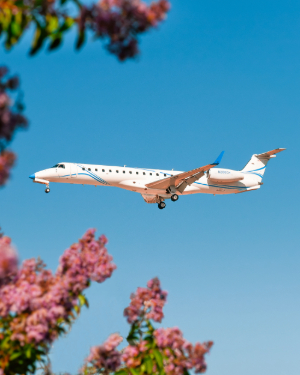


On most airliners, the flaps follow a simple routine. They extend for takeoff, retract shortly afterward, stay tucked away for the whole cruise and come out again for landing. The Airbus A350 breaks that routine. Its flaps make small adjustments at cruising altitude, and the reason shows how far wing design has moved beyond a single fixed shape.

Flaps That Work in Cruise
Two systems, called Variable Camber and Differential Flap Setting, make gradual changes to the A350's flap positions during cruise. The movements are small, only a few degrees, and they are not something passengers would notice during a flight. The inboard flaps are moved differently from the outer flaps, and the aim is to shift the center of lift very slightly to reduce fuel burn.
What Variable Camber Does
Camber is the curvature of a wing's profile. More curvature generally means more lift, and also more drag. Variable Camber allows the A350's flaps to be deflected symmetrically in cruise, on both wings together, to fine-tune the wing profile and manage the loads along the wing. The goal is the best possible ratio of lift to drag, which is the measure of how efficiently a wing carries weight through the air.

What Differential Flap Setting Adds
The second system works differently. Instead of moving the flaps together, Differential Flap Setting deflects the inner and outer flaps by different amounts. That changes where the wing's center of lift sits along the span, which improves cruise efficiency and helps control the lateral loads on the wing. This function is unique to the A350. Both systems matter most early in a flight and when the aircraft is heavily loaded, which is when the wing is working hardest.
Why the Wing Needs to Change Shape
A wing with a fixed profile can only be ideal for one condition, and over a long flight that condition does not remain constant. The aircraft burns a large amount of fuel and becomes steadily lighter, so the lift the wing must produce keeps falling. The variable camber system adjusts the trailing-edge surfaces during cruise to cut drag as the fuel burns off. Instead of accepting one compromised shape for the entire journey, the wing is retuned along the way.
Not the Same as Normal Flap Use
The system helps to separate movements from what pilots do with flaps on approach. Landing flaps are large, deliberate configuration changes that add lift and drag so the aircraft can fly slowly. The A350's cruise adjustments are the opposite in scale and purpose. They are tiny corrections meant to keep the wing efficient, built into the aircraft's flight control laws rather than treated as a separate configuration.

That integration is also why the system goes unnoticed. From a window seat over the wing, there is nothing to see. The surfaces move by a few degrees at most, and the effect shows up in fuel flow rather than in anything visible outside.

How AI Quietly Became the Backbone of Today’s Aviation Industry
Where It Fits in the Bigger Picture
Airbus describes the outcome as an efficient wing that produces more lift with less weight and handles loads well, which helps reduce fuel burn and CO2 emissions. It is worth being careful with the headline figures. The 25% lower fuel burn and CO2 per seat that Airbus quotes for the A350 reflects the whole aircraft, including its materials, engines and aerodynamics. Variable camber is just one contributor to that result, not the entire explanation.
Even so, it is a good example of a wider trend. Wings used to be designed around one cruise condition and left alone. On the A350, the flaps keep working after takeoff, quietly adjusting the wing as the aircraft burns fuel across the length of a long-haul flight.
Etihad Airways Expands Calgary Service to Daily Flights Following Strong Booking Demand » Angel Flight Northeast Turns 30: How Volunteer Pilots Provide Free Medical Flights » Five Injured After Severe Turbulence Strikes JetBlue Flight Bound for Fort Lauderdale »
Comments (0)
Add Your Comment
TAGS
INFORMATIONAL Airbus Airbus A350 A350 Variable Camber Flaps Wing CruiseRECENTLY PUBLISHED
 What Are Droop Ailerons? Why Ailerons Drop Down with Flaps
A look at how aileron droop increases wing lift during takeoff and landing, how it works alongside flap deployment, and why aircraft such as modern Airbus airliners use this configuration.
INFORMATIONAL
READ MORE »
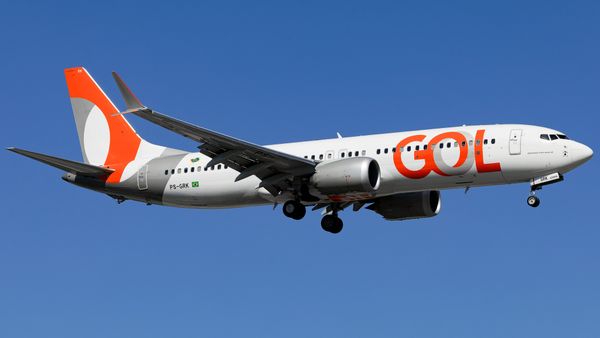 GOL Secures Gatwick Slots for Potential Rio-London Service in Summer 2027
GOL has won enough slot capacity at London Gatwick for roughly six weekly roundtrips in summer 2027, but the Brazilian airline has not yet confirmed a Rio de Janeiro-London route or opened reservations.
ROUTES
READ MORE »
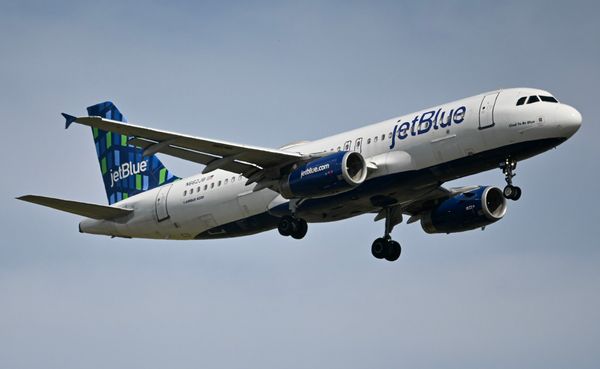 JetBlue Passenger Blames Airline After Suitcase Strikes Her Head During Rushed Deplaning
A JetBlue passenger says she suffered a head injury when another traveler's suitcase fell on her while rushing to exit the aircraft after landing.
NEWS
READ MORE »
More than just headlines.
Get unlimited ad-free access to in-depth aviation news, premium stories, and exclusive insights other sites don't cover.
- Ad-free browsing on AeroXplorer
- Unlimited access to premium and exclusive articles
- Higher photo upload limits & commissions on sales
- Free access to Jetstream Magazine on higher tiers
- Ad-free browsing
- Sell aviation photos with 60% commission
- First week free!
- Everything in Basic+
- Unlimited premium articles
- Sell aviation photos with 70% commission
- Free Digital subscription to Jetstream Magazine
- First week free!
- Everything in Basic+ and Pro
- Sell aviaiton photos with 80% commission
- Early access to exclusive stories
- Free Digital+Print subscription to Jetstream Magazine