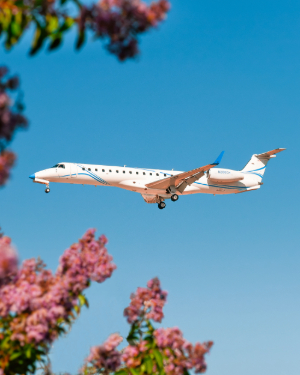


Ailerons are best known as the surfaces that roll an aircraft, one moving up on one wing while the other moves down on the opposite side. On some aircraft, though, both ailerons hang slightly below the trailing edge when the flaps come out. That is aileron droop, and it is entirely deliberate.

What Droop Ailerons Are
The idea is simple, “Droop” means lowering the ailerons on both wings at the same time, below their neutral position. In its strictest dictionary sense, the term describes hinged trailing-edge ailerons rigged so that both the left and right surfaces sit with a downward deflection of 10 to 15 degrees when the control column is neutral. The pilot then rolls the aircraft by moving them differently around that lowered position. It should not be confused with a drooped leading edge. That is a separate feature at the front of the wing. Droop ailerons sit at the back, alongside the flaps.
Why Lowering Them Adds Lift
The reasoning follows from what flaps do. Flaps usually cover only the inboard part of the trailing edge, while ailerons sit farther out toward the wingtip. Extending the flaps increases the wing's camber, or curvature, which produces more lift at a given speed. If the ailerons stay level, the outer portion of the wing is left with a flatter profile.

Lowering the ailerons carries the high-lift shape further along the span. More of the wing is cambered, so the wing produces more lift at low speed. The practical results are a lower speed at which the wing can stay airborne, along with shorter takeoff and landing distances.
Automatic Droop on Modern Airliners
On modern airliners, droop is usually not something the pilot chooses. On Airbus, aileron droop is activated automatically depending on the flap configuration, and pilots have no direct control over it. The aileron position indication in the cockpit shows the current deflection, including any droop, so the crew can see what the surfaces are doing. Automation makes sense here. Takeoff and landing are already busy phases of flight, and tying the droop to the flaps means the surfaces move as part of the normal configuration. When the flaps retract, the ailerons return to their clean position, which suits cruise.

Roll Control Is Still There
Drooping does not turn the ailerons into flaps. They continue to do their primary job, with one surface moving up and the other moving down from the lowered position to roll the aircraft. That is why they are still called ailerons rather than a second set of flaps. The droop changes the starting point, not the function.
The Cost of Droop
Nothing in aerodynamics is free. Lowered surfaces add drag, and that is acceptable only when lift matters more than efficiency. During takeoff and approach, the aircraft is flying slowly and needs every bit of lift, so the extra drag is a fair price. In cruise, the same drag would simply waste fuel, which is why the ailerons return to their normal position once the flaps are retracted.
Hindenburg: The Disaster That Ended the Airship Age
A Close Relative: The Flaperon
Some aircraft take the idea a step further. Airliners such as the Boeing 777 and 787 use flaperons, surfaces that combine the roles of flap and aileron in a single control surface. They can lower with the flaps to add lift and still help control roll, which blurs the line between the two functions.

Seen together, droop ailerons and flaperons show how designers squeeze more work out of every surface on the wing. A small downward angle at the trailing edge costs little, and it helps the wing carry the aircraft safely at the lowest speeds of every flight.
Etihad Airways Expands Calgary Service to Daily Flights Following Strong Booking Demand » United Hits Starlink WiFi Milestone on Half of Daily Flights as Delta Picks Amazon's Project Kuiper » GOL Secures Gatwick Slots for Potential Rio-London Service in Summer 2027 »
Comments (0)
Add Your Comment
TAGS
INFORMATIONAL Airbus Aileron Droop Aileron Flaps Wing Spoilers A320RECENTLY PUBLISHED
 GOL Secures Gatwick Slots for Potential Rio-London Service in Summer 2027
GOL has won enough slot capacity at London Gatwick for roughly six weekly roundtrips in summer 2027, but the Brazilian airline has not yet confirmed a Rio de Janeiro-London route or opened reservations.
ROUTES
READ MORE »
 JetBlue Passenger Blames Airline After Suitcase Strikes Her Head During Rushed Deplaning
A JetBlue passenger says she suffered a head injury when another traveler's suitcase fell on her while rushing to exit the aircraft after landing.
NEWS
READ MORE »
 Five Injured After Severe Turbulence Strikes JetBlue Flight Bound for Fort Lauderdale
A JetBlue A320 flying from Ponce International Airport to Fort Lauderdale International Airport hit severe turbulence, injuring five people on board.
NEWS
READ MORE »
More than just headlines.
Get unlimited ad-free access to in-depth aviation news, premium stories, and exclusive insights other sites don't cover.
- Ad-free browsing on AeroXplorer
- Unlimited access to premium and exclusive articles
- Higher photo upload limits & commissions on sales
- Free access to Jetstream Magazine on higher tiers
- Ad-free browsing
- Sell aviation photos with 60% commission
- First week free!
- Everything in Basic+
- Unlimited premium articles
- Sell aviation photos with 70% commission
- Free Digital subscription to Jetstream Magazine
- First week free!
- Everything in Basic+ and Pro
- Sell aviaiton photos with 80% commission
- Early access to exclusive stories
- Free Digital+Print subscription to Jetstream Magazine