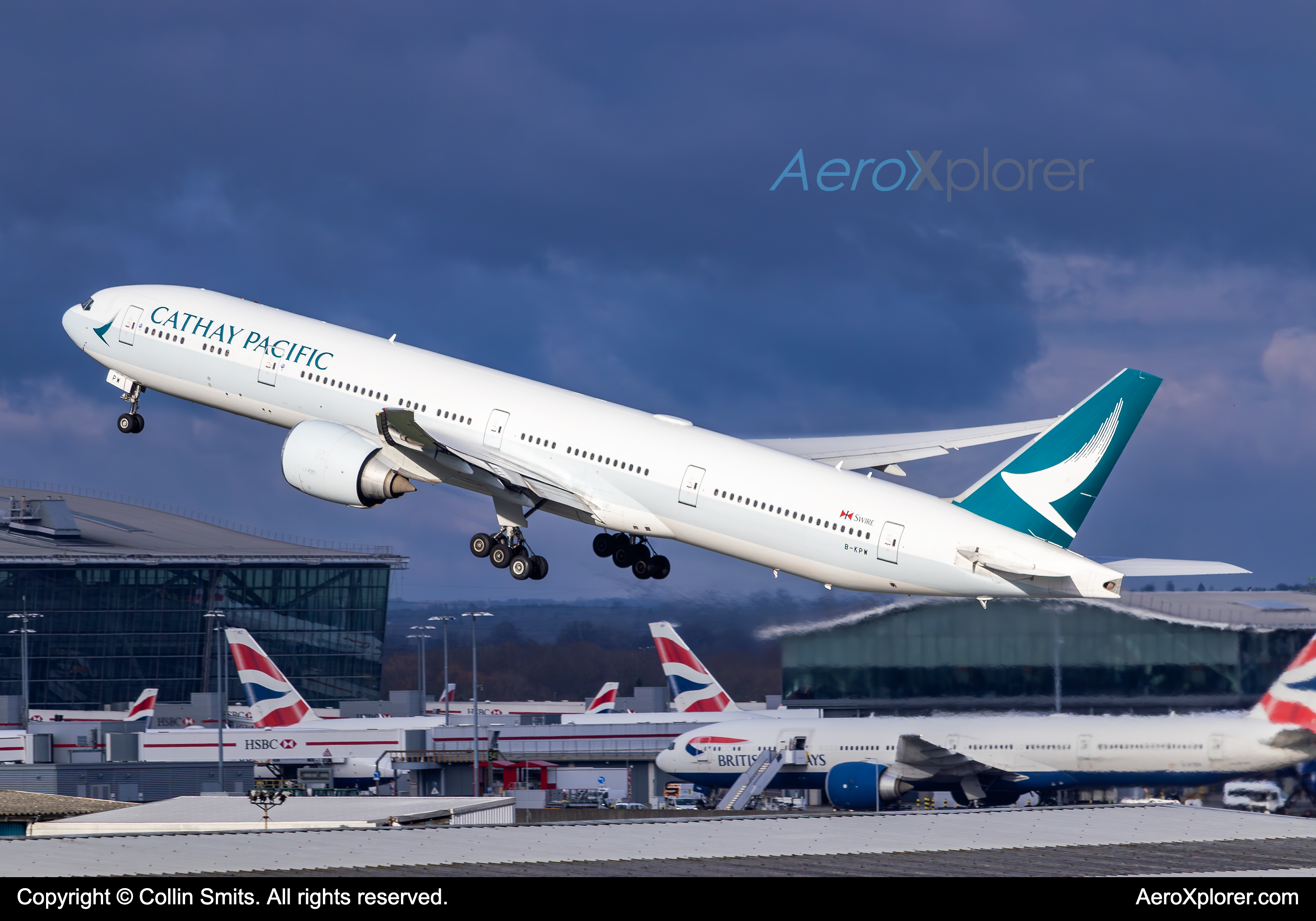

Cathay Pacific has announced a partnership with Google to research and trial artificial intelligence tools designed to help its pilots avoid creating contrails, the white streaks that trail behind aircraft at high altitude. Those same streaks have long fueled the "chemtrails" conspiracy theory, which claim planes spray chemicals into the atmosphere.
The Hong Kong-based airline says the real reason for cutting contrails has nothing to do with conspiracy theories. Contrails, short for condensation trails, form when hot engine exhaust meets cold, humid air at cruising altitude. Scientists estimate contrails account for roughly one-third of aviation's total climate impact, according to assessments Google attributes to the Intergovernmental Panel on Climate Change, because persistent contrails can spread into cloud-like formations that trap heat in the atmosphere.

Early Results: A 40% Reduction
Cathay Pacific and Google began an operational trial in late 2025, targeting more than 100 flights across Cathay's network. Of those, more than 80 flights followed contrail-avoidance routing, and Google's satellite imagery analysis estimated that these flights reduced the warming impact of their contrails by roughly 40%.
Following those results, Cathay Pacific and Google are now scaling into a larger second phase of trial flights and have brought on Contrails.org, a nonprofit focused on advancing the science of contrail mitigation, as a partner.
How the AI Tool Works
The system pairs Cathay Pacific's flight data with Google's AI models, satellite imagery, and weather intelligence to predict which sections of airspace are most likely to produce persistent contrails on a given day. Flight dispatchers cross-reference those predictions with intended flight plans and revise them as needed, sometimes through minor altitude adjustments, before handing the updated plans to pilots. The forecasts are delivered through Cathay's Electronic Flight Folder system and update dynamically via in-flight Wi-Fi, keeping pilots current on changing conditions.
In practice, avoiding a contrail-forming zone might mean flying a few thousand feet higher or lower than originally planned. The change is small, but the climate benefit could be significant if the approach is proven and scaled across a full network.
Cathay Pacific is Google's first commercial airline partner in the Asia-Pacific region to trial this contrail mitigation technology, and the first airline globally to test contrail avoidance specifically on ultra-long-haul flights – defined in the partnership's announcement as routes of more than 16 hours and often 13,000 kilometers or more. Google has previously run similar contrail-avoidance projects across U.S. airspace and the North Atlantic, though specific comparative results from those earlier trials were not detailed in this announcement.
The Chemtrails Connection
The white lines produced by jet engines have been a fixation for conspiracy theorists for decades. Believers argue the trails contain harmful substances deliberately released for purposes ranging from weather control to population management. Scientists and aviation regulators have repeatedly rejected these claims, explaining that contrails are simply ice crystals formed from water vapor in engine exhaust.
Part of a Broader Sustainability Push
The contrail research fits into Cathay Pacific's wider environmental strategy. The airline has committed to reaching net zero carbon emissions by 2050 and plans to use sustainable aviation fuel for 10 percent of its total fuel consumption by 2030. Reducing carbon emissions remains Cathay's primary climate focus, through fleet modernization, operational efficiency improvements, and greater SAF adoption – the airline has been clear that contrail avoidance complements, rather than replaces, those longer-term investments, since avoiding contrails does not offset the carbon released when aircraft burn fuel.
Lawrence Fong, Director Digital and IT at Cathay Pacific, said the partnership reflects the airline's interest in solutions that can be deployed with existing aircraft.
Aviation needs solutions to address climate change, and AI is accelerating that progress,
Fong said.
This partnership combines Cathay's operational expertise with Google's world-class AI capabilities to tackle complex sustainability challenges at scale.
Google Hong Kong Managing Director and General Manager Michael Yue said the partnership is researching how predictive AI could be deployed in live operations "to help address the climate impact of contrails with today's aircraft and today's fuel."
Google, for its part, has been building out its contrail-forecasting research for several years, using machine learning trained on satellite imagery to identify where and when contrails form. That data feeds prediction models that airlines can integrate into flight planning software.

Analysis: How Spirit Airlines Changed Airline Pricing, then Paid the Price
What Happens Next
Cathay Pacific and Google have not disclosed a precise timeline for concluding the expanded second-phase trials, but the companies said the work will help build a broader understanding of how contrail avoidance could function across different Asia-Pacific and transpacific operating environments, and inform whether the approach can be implemented and managed at scale across the aviation industry.
Austrian Airlines Flight Diverts to Sofia Under Fighter Escort After Bomb Threat » Aegis Air Bets on By-the-Seat Private Jet Flights From Miami to Caracas » How Delivery Delays Are Reshaping Aviation Sourcing »

Comments (0)
Add Your Comment
TAGS
NEWS Cathay Pacific Google AI Contrails Chemtrail ContrailRECENTLY PUBLISHED
 American Airlines Boeing 787 Makes Emergency Landing at O'Hare After Brake Issue, One Hospitalized
An American Airlines Boeing 787 makes an emergency landing to Chicago O'Hare after a brake problem.
NEWS
READ MORE »
American Airlines Boeing 787 Makes Emergency Landing at O'Hare After Brake Issue, One Hospitalized
An American Airlines Boeing 787 makes an emergency landing to Chicago O'Hare after a brake problem.
NEWS
READ MORE »
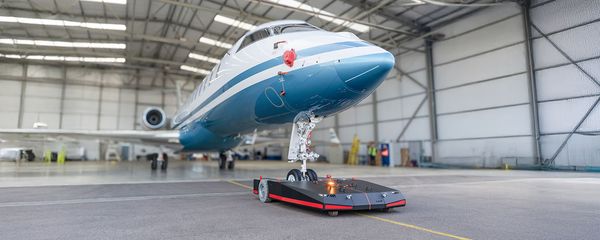 Why Aircraft Towing May Be One of the Last Frontiers of Autonomous Ground Operations
Ground support equipment has advanced steadily toward autonomy: baggage carts and pushback tractors, among others, are being designed to operate with minimal human intervention. Yet the aircraft itself – the single most valuable and structurally sensitive asset on the ramp – is still almost universally towed under direct human control.
STORIES
READ MORE »
Why Aircraft Towing May Be One of the Last Frontiers of Autonomous Ground Operations
Ground support equipment has advanced steadily toward autonomy: baggage carts and pushback tractors, among others, are being designed to operate with minimal human intervention. Yet the aircraft itself – the single most valuable and structurally sensitive asset on the ramp – is still almost universally towed under direct human control.
STORIES
READ MORE »
 British Airways Finishes Starlink Wi-Fi Rollout Across Its A350 Fleet
British Airways has installed SpaceX's Starlink Wi-Fi on every Airbus A350 in its fleet, offering passengers free high-speed internet on long-haul flights.
NEWS
READ MORE »
British Airways Finishes Starlink Wi-Fi Rollout Across Its A350 Fleet
British Airways has installed SpaceX's Starlink Wi-Fi on every Airbus A350 in its fleet, offering passengers free high-speed internet on long-haul flights.
NEWS
READ MORE »
More than just headlines.
Get unlimited ad-free access to in-depth aviation news, premium stories, and exclusive insights other sites don't cover.
- Ad-free browsing on AeroXplorer
- Unlimited access to premium and exclusive articles
- Higher photo upload limits & commissions on sales
- Free access to Jetstream Magazine on higher tiers
- Ad-free browsing
- Sell aviation photos with 60% commission
- First week free!
- Everything in Basic+
- Unlimited premium articles
- Sell aviation photos with 70% commission
- Free Digital subscription to Jetstream Magazine
- First week free!
- Everything in Basic+ and Pro
- Sell aviaiton photos with 80% commission
- Early access to exclusive stories
- Free Digital+Print subscription to Jetstream Magazine