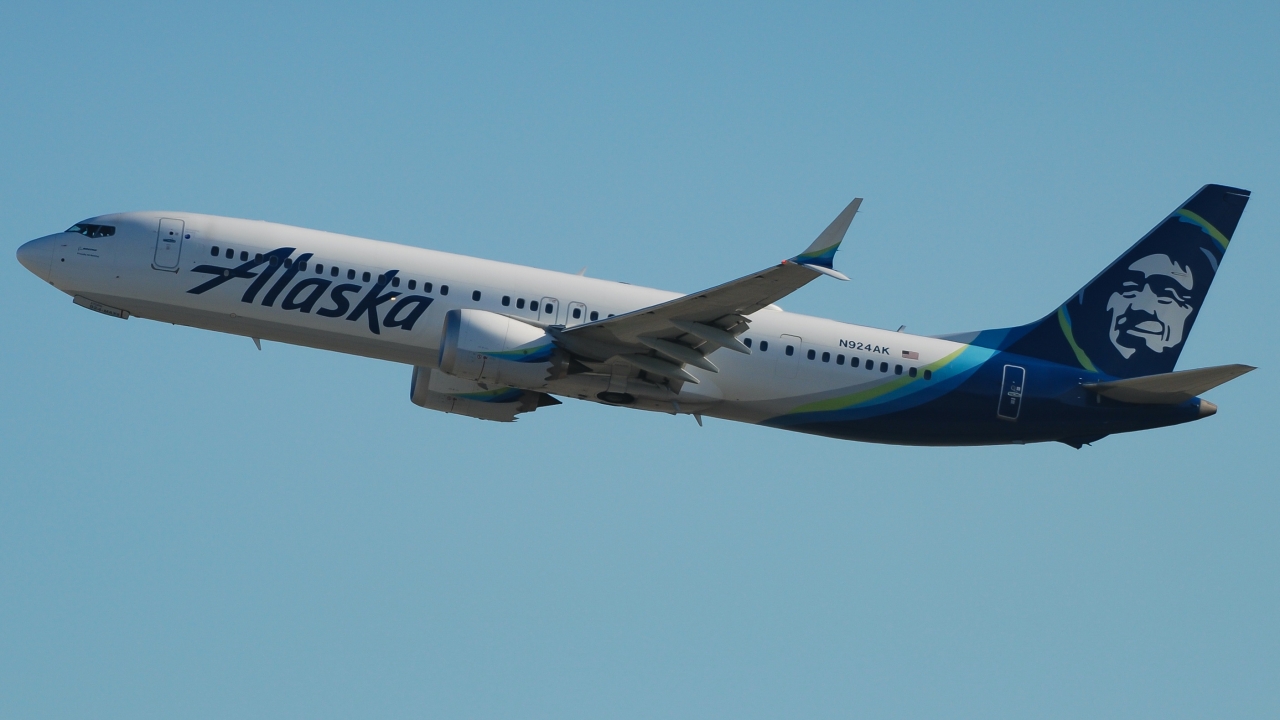

Boeing has paid a $3.1 million civil penalty to the Federal Aviation Administration, closing out a case tied to a series of production safety failures at its 737 MAX manufacturing operations. The settlement, disclosed in recent regulatory filings, resolves allegations that the manufacturer violated federal aviation regulations across multiple incidents, including the January 2024 door plug blowout on an Alaska Airlines flight.
The penalty amount matches the figure the FAA proposed in May 2025, when the agency announced it was seeking civil action against Boeing over quality control breakdowns at both its Renton, Washington factory and supplier Spirit AeroSystems. Boeing did not contest the fine, and the payment was completed without a public announcement from the company.
What the FAA Alleged
The FAA's enforcement action stemmed from two distinct sets of allegations. The first involved the January 5, 2024, incident aboard Alaska Airlines Flight 1282, when a mid-cabin door plug separated from a 737 MAX 9 shortly after takeoff from Portland, Oregon. The aircraft climbed to roughly 16,000 feet before the rapid decompression forced an emergency return. No fatalities occurred, but the event triggered a fleet-wide grounding of MAX 9 jets and renewed scrutiny of Boeing's production practices.
Investigators from the National Transportation Safety Board later determined that four bolts intended to secure the door plug were missing when the aircraft left Boeing's Renton facility. The FAA alleged that Boeing employees pressured colleagues at Spirit AeroSystems, the fuselage supplier, to comply with manufacturing demands in ways that compromised safety protocols.
The second set of allegations centered on a Boeing employee who allegedly falsified aircraft records related to work performed on the wings of a 737 MAX. According to the FAA, the employee certified that required work had been completed when it had not.
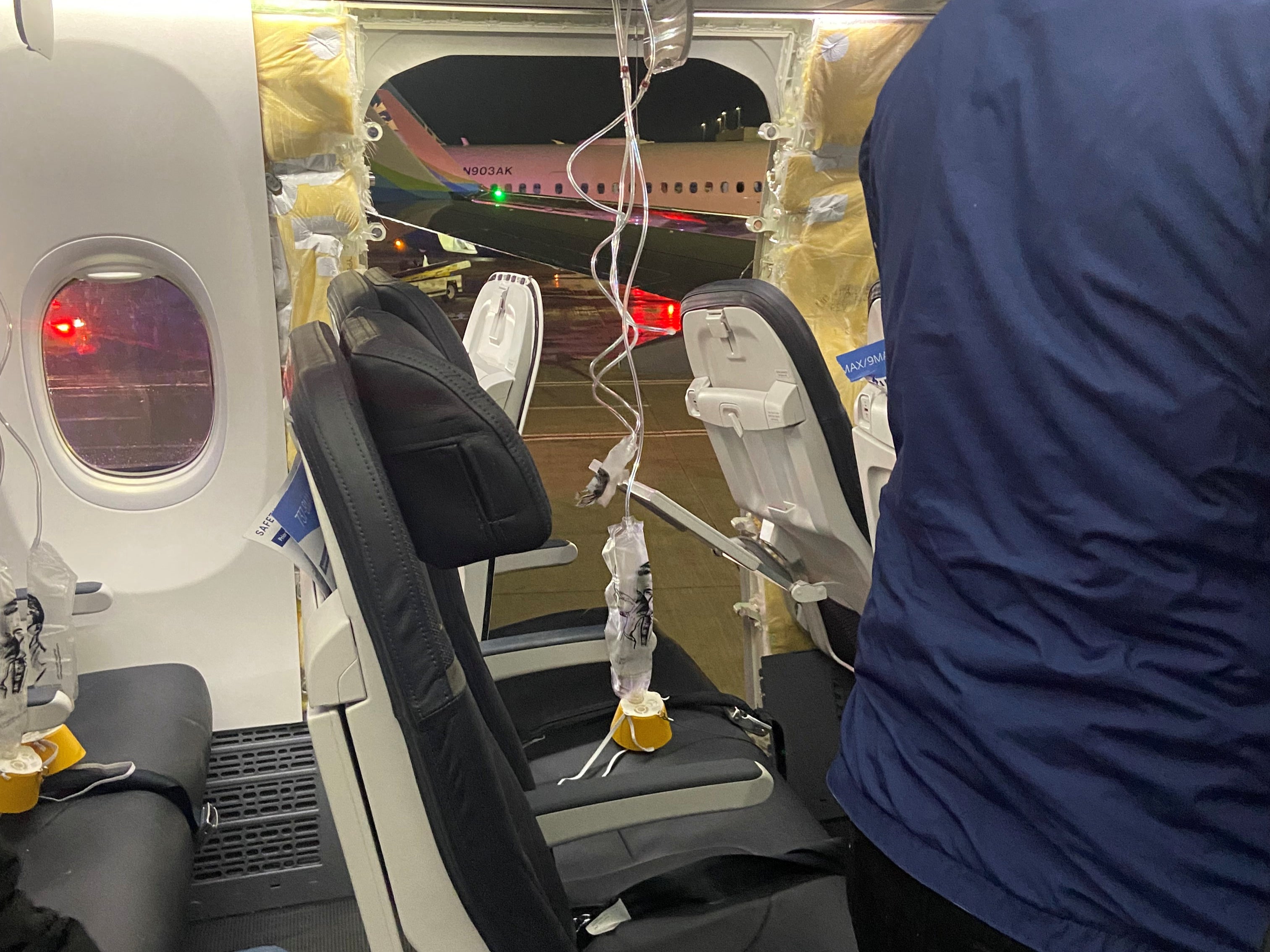
Photo: The Independent
Boeing's Response and the Settlement
Boeing accepted the penalty rather than pursue further administrative proceedings. The company has publicly acknowledged its shortcomings in the wake of the Alaska Airlines incident, with executives repeatedly stating they are working to rebuild trust with regulators, airline customers, and the flying public.
The FAA capped Boeing's 737 production at 38 aircraft per month following the January 2024 accident, a limit that remains in place as the agency continues to evaluate the manufacturer's quality management systems. The production cap has weighed heavily on Boeing's commercial aviation output and delivery schedules throughout 2024 and into 2025.
FAA Administrator Mike Whitaker has previously emphasized that regulatory oversight of Boeing has intensified since the door plug incident, with additional inspectors placed at Boeing and Spirit AeroSystems facilities. The agency has stated that the production cap will not be lifted until Boeing demonstrates sustained improvements in quality control.

Analysis: How Spirit Airlines Changed Airline Pricing, then Paid the Price
Broader Regulatory Context
The $3.1 million penalty represents only one strand of Boeing's ongoing legal and regulatory exposure related to the 737 MAX program. The manufacturer remains under a deferred prosecution agreement tied to the two fatal MAX 8 crashes in 2018 and 2019, which killed 346 people combined. The Department of Justice determined earlier that Boeing had breached the terms of that agreement following the Alaska Airlines incident, opening the door to additional criminal exposure.
Boeing agreed to plead guilty to a criminal fraud conspiracy charge in a separate settlement with the Justice Department, though that plea agreement has faced challenges in federal court. Families of the crash victims have objected to what they view as insufficient accountability.
The FAA fine, while modest relative to Boeing's overall financial position, carries symbolic weight. It formalizes the regulator's finding that the manufacturer's production floor practices contributed to the door plug failure, rather than treating the incident as an isolated supplier issue at Spirit AeroSystems.

Spirit AeroSystems Acquisition
Boeing announced in July 2024 its plan to reacquire Spirit AeroSystems, the Wichita, Kansas supplier it spun off two decades ago. The deal, valued at approximately $4.7 billion in stock, is intended to bring fuselage production back under Boeing's direct control. Company leadership has framed the acquisition as central to fixing the quality issues that led to the January 2024 incident.
The reintegration is expected to close in 2025, subject to regulatory approvals. Analysts have noted that folding Spirit back into Boeing's operations will present its own challenges, including cultural integration and the need to manage Spirit's work for other customers such as Airbus.
What Comes Next
For enthusiasts tracking the health of the 737 program, the payment closes one chapter but leaves several others open. Boeing's monthly production rate remains constrained, deliveries continue to lag behind pre-2024 targets, and the certification timelines for the 737 MAX 7 and MAX 10 variants have slipped repeatedly.
Kelly Ortberg, who took over as Boeing's chief executive in August 2024, has focused publicly on stabilizing production, improving safety culture, and returning the commercial airplanes division to profitability. Ortberg has committed to spending more time in Boeing's factories and has restructured senior leadership within the commercial unit.
The FAA has indicated it will maintain its enhanced oversight posture for the foreseeable future. Whether Boeing can convince regulators that it has fundamentally addressed the production culture issues underlying the door plug incident will shape the trajectory of the 737 program in the years ahead.
Delta Aircraft Isolated at Ben Gurion Airport Following Bomb Threat » How the AI Chip Boom Is Squeezing Transpacific Air Cargo » United and Air Canada Push to Expand Joint Venture Amid Cross-Border Travel Strains »

Comments (0)
Add Your Comment
TAGS
NEWS Boeing FAA Penalty 737 MAX Production Safety Regulatory Compliance Aviation Safety Manufacturing Oversight Aviation News Safety Violations Aircraft ManufacturingRECENTLY PUBLISHED
 The End of Lufthansa's Four-Engine Era as Its Last Airbus A340-600 Lands in Frankfurt for the Final Time After 23 Years
Porter Airlines expands its international network from London, Ontario, deploying the Embraer E195-E2 on new routes for Canadian travelers.
NEWS
READ MORE »
The End of Lufthansa's Four-Engine Era as Its Last Airbus A340-600 Lands in Frankfurt for the Final Time After 23 Years
Porter Airlines expands its international network from London, Ontario, deploying the Embraer E195-E2 on new routes for Canadian travelers.
NEWS
READ MORE »
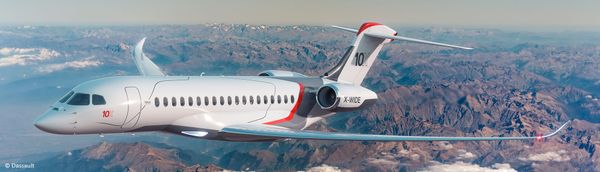 Rolls-Royce Launches Serial Production of Pearl 10X Engine for Dassault's Falcon 10X
Rolls-Royce begins serial production of its Pearl 10X engine, powering Dassault's upcoming Falcon 10X ultra-long-range business jet.
NEWS
READ MORE »
Rolls-Royce Launches Serial Production of Pearl 10X Engine for Dassault's Falcon 10X
Rolls-Royce begins serial production of its Pearl 10X engine, powering Dassault's upcoming Falcon 10X ultra-long-range business jet.
NEWS
READ MORE »
 Austrian Airlines Flight Diverts to Sofia Under Fighter Escort After Bomb Threat
An Austrian Airlines flight from Tel Aviv to Vienna made an emergency landing in Sofia, Bulgaria, on Sunday, October 18, after a bomb threat against the aircraft.
NEWS
READ MORE »
Austrian Airlines Flight Diverts to Sofia Under Fighter Escort After Bomb Threat
An Austrian Airlines flight from Tel Aviv to Vienna made an emergency landing in Sofia, Bulgaria, on Sunday, October 18, after a bomb threat against the aircraft.
NEWS
READ MORE »
More than just headlines.
Get unlimited ad-free access to in-depth aviation news, premium stories, and exclusive insights other sites don't cover.
- Ad-free browsing on AeroXplorer
- Unlimited access to premium and exclusive articles
- Higher photo upload limits & commissions on sales
- Free access to Jetstream Magazine on higher tiers
- Ad-free browsing
- Sell aviation photos with 60% commission
- First week free!
- Everything in Basic+
- Unlimited premium articles
- Sell aviation photos with 70% commission
- Free Digital subscription to Jetstream Magazine
- First week free!
- Everything in Basic+ and Pro
- Sell aviaiton photos with 80% commission
- Early access to exclusive stories
- Free Digital+Print subscription to Jetstream Magazine