


The United States government is pushing to accelerate the certification of new aircraft, with Transportation Secretary Sean Duffy warning that mounting competition from China threatens American leadership in commercial aviation.
Speaking at an event in Washington on Wednesday, September 30, 2026, Duffy argued that current approval timelines have placed American manufacturers at a competitive disadvantage.
Rather than unveiling a brand-new initiative, Duffy's remarks built on an FAA proposal already introduced in June 2026 to modernize certification standards for transport-category aircraft and propulsion systems, aimed at reducing the time and cost involved in bringing new designs to market.

Why the Push Now
If we can't move at a different pace in certification, we're going to lose. China is going to beat us,
Duffy told reporters after the event.
He also questioned why major manufacturers haven't delivered more aviation breakthroughs in recent years, suggesting the certification process itself may be discouraging innovation.
We need to make sure we have safe aviation, but can we move faster?
he said.
Certifying a new aircraft can currently take five to nine years, according to the FAA. The scale of the problem is illustrated by two of Boeing's own programs: the 737 MAX 7 needed more than eight years before it was finally certified in August 2026, and the 777X is running more than five years behind its original schedule.
Following the two fatal crashes of the Boeing 737 MAX in 2018 and 2019, the FAA tightened its oversight procedures, extending the time required to approve new aircraft and significant design changes. While regulators defended the stricter review as necessary for safety, manufacturers have argued that the current pace risks ceding ground to foreign competitors operating under faster national approval systems.
A Timely Backdrop: The 737 MAX 10
Duffy's comments landed just two days after the FAA disclosed, on September 28, that it would not approve the 737 MAX 10 for certification until a recently identified software issue is resolved. The issue involves the aircraft's vertical navigation (VNAV) system and can increase pilot workload during a go-around maneuver.
Duffy addressed the issue directly on September 30, saying he currently sees no safety risk associated with it.
China's Expanding Footprint
Duffy's remarks specifically cited the growing capability of Chinese aerospace firms, particularly the state-backed Commercial Aircraft Corporation of China (COMAC). The manufacturer has been expanding production of its C919 narrowbody jet, a direct competitor to the Boeing 737 MAX and Airbus A320neo families.
COMAC's C919 entered commercial service with China Eastern Airlines in 2023 and has since logged orders from several Chinese carriers. Although the aircraft relies on Western components, including engines from CFM International, Beijing has made clear its ambition to build a self-sufficient aerospace industry capable of challenging the Boeing-Airbus duopoly. Chinese regulators have moved aircraft through domestic certification at a pace that Western observers describe as aggressive, raising the prospect of COMAC gaining international market share, particularly in developing economies, before the FAA approves next-generation designs from Boeing or newer entrants.
What the FAA's Proposed Changes Involve
The FAA's June 2026 proposal covers a specific set of technical areas, including cabin interiors, emergency exits and signage, fuel tank flammability assessments, windshield visibility, decompression standards, and protections against hazardous use of power levers or thrust reversers.
The agency has said the goal is to reduce the need for manufacturers and the FAA to repeatedly work through separate approvals for design features the agency is already familiar with.
Safety Concerns Remain
Critics of faster certification caution that the lessons of the 737 MAX disasters, which killed 346 people combined, should not be forgotten. Investigations revealed that gaps in the certification process allowed flawed flight control software to receive approval. Lawmakers subsequently passed reforms strengthening FAA oversight.
Duffy has stressed that any changes will preserve safety as the primary objective, even as he pushes for a faster process.

Analysis: How Spirit Airlines Changed Airline Pricing, then Paid the Price
What Comes Next
The FAA's proposed rule changes are expected to move through further review in the coming months, facing scrutiny from Congress, safety advocates, and foreign regulators whose own certification systems often mirror or coordinate with the FAA's. For now, the message is clear: the United States intends to defend its position in global aviation, and the pace of regulation has become part of that strategy.
Southwest Airlines Flight Returns to Orlando After Bird Strike on Takeoff » Flydubai Suspends All Tel Aviv Flights After Foiled Cockpit Attack on Israeli Pilot » Norwegian Air Taken to Court Over Trademark Dispute by Erling Haaland »

Comments (0)
Add Your Comment
TAGS
NEWS US United States Aviation China Aerospace Aerospace Sector Boeing 737 MAX Boeing 777XRECENTLY PUBLISHED
 IATA's New Passenger Data Shows Global Air Travel Demand Shrinking for the First Time This Year
Global air travel just hit a reverse that has not been seen in months -- the numbers point to something more interesting than a simple slowdown.
INFORMATIONAL
READ MORE »
IATA's New Passenger Data Shows Global Air Travel Demand Shrinking for the First Time This Year
Global air travel just hit a reverse that has not been seen in months -- the numbers point to something more interesting than a simple slowdown.
INFORMATIONAL
READ MORE »
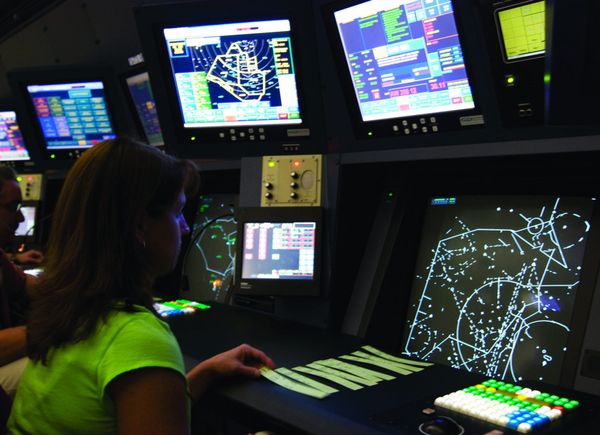 The $30 Billion Question: Why America's Air Traffic Control Overhaul Keeps Getting More Expensive
The U.S. government is seeking $30 billion more to modernize America’s aging air traffic control system. Explore the rising $42.5 billion price tag, GAO oversight concerns, and where the new funding would go.
INFORMATIONAL
READ MORE »
The $30 Billion Question: Why America's Air Traffic Control Overhaul Keeps Getting More Expensive
The U.S. government is seeking $30 billion more to modernize America’s aging air traffic control system. Explore the rising $42.5 billion price tag, GAO oversight concerns, and where the new funding would go.
INFORMATIONAL
READ MORE »
 Embraer Posts Record 66 Aircraft Deliveries in Q3 2026 as Commercial Jets Climb 10%
Embraer delivered 66 aircraft in Q3 2026, its strongest third quarter on record, with commercial jets up 10% and business jets rising 41%.
NEWS
READ MORE »
Embraer Posts Record 66 Aircraft Deliveries in Q3 2026 as Commercial Jets Climb 10%
Embraer delivered 66 aircraft in Q3 2026, its strongest third quarter on record, with commercial jets up 10% and business jets rising 41%.
NEWS
READ MORE »
More than just headlines.
Get unlimited ad-free access to in-depth aviation news, premium stories, and exclusive insights other sites don't cover.
- Ad-free browsing on AeroXplorer
- Unlimited access to premium and exclusive articles
- Higher photo upload limits & commissions on sales
- Free access to Jetstream Magazine on higher tiers
- Ad-free browsing
- Sell aviation photos with 60% commission
- First week free!
- Everything in Basic+
- Unlimited premium articles
- Sell aviation photos with 70% commission
- Free Digital subscription to Jetstream Magazine
- First week free!
- Everything in Basic+ and Pro
- Sell aviaiton photos with 80% commission
- Early access to exclusive stories
- Free Digital+Print subscription to Jetstream Magazine