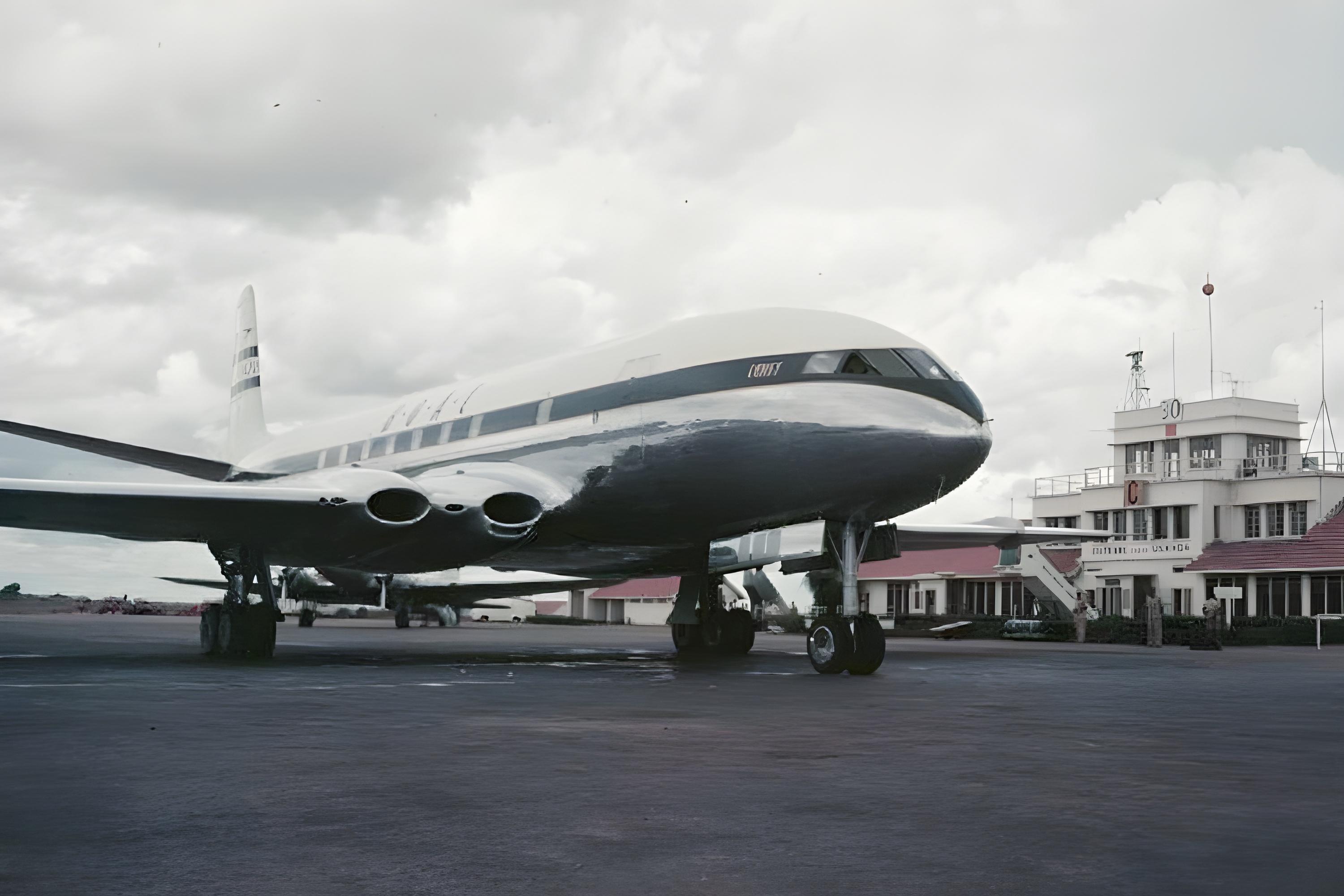
The dawn of the jet age connected cities like never before, in a way that was faster, higher, and more luxurious than anyone would have ever previously thought was possible. The de Havilland Comet was that promise, a gleaming marvel that would carry passengers above the clouds in pressurized comfort. Airlines raced to operate it, whilst travelers dreamed of flying on it. The future had arrived.
Then the planes started falling apart mid-air.
Three catastrophic in-flight breakups in the span of just two years sent investigators scrambling for answers, triggering one of the most consequential forensic investigations in aviation history. What was ultimately uncovered wasn't a faulty engine or pilot error.
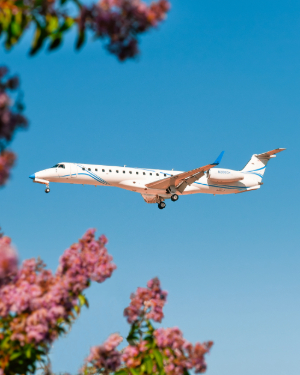
It was a shape. A simple, seemingly innocent shape that had been cut into the fuselage thousands of times over. The story of why every commercial aircraft today has oval windows is a story of the physics that taught engineers lessons that forever changed how we fly.
But it was not just the windows. It was the way a pressurized fuselage, thin aluminum skin, rivet holes, and repeated flight cycles concentrated stress around cutouts until tiny cracks propagated, leading to a catastrophic outcome.
The de Havilland Comet
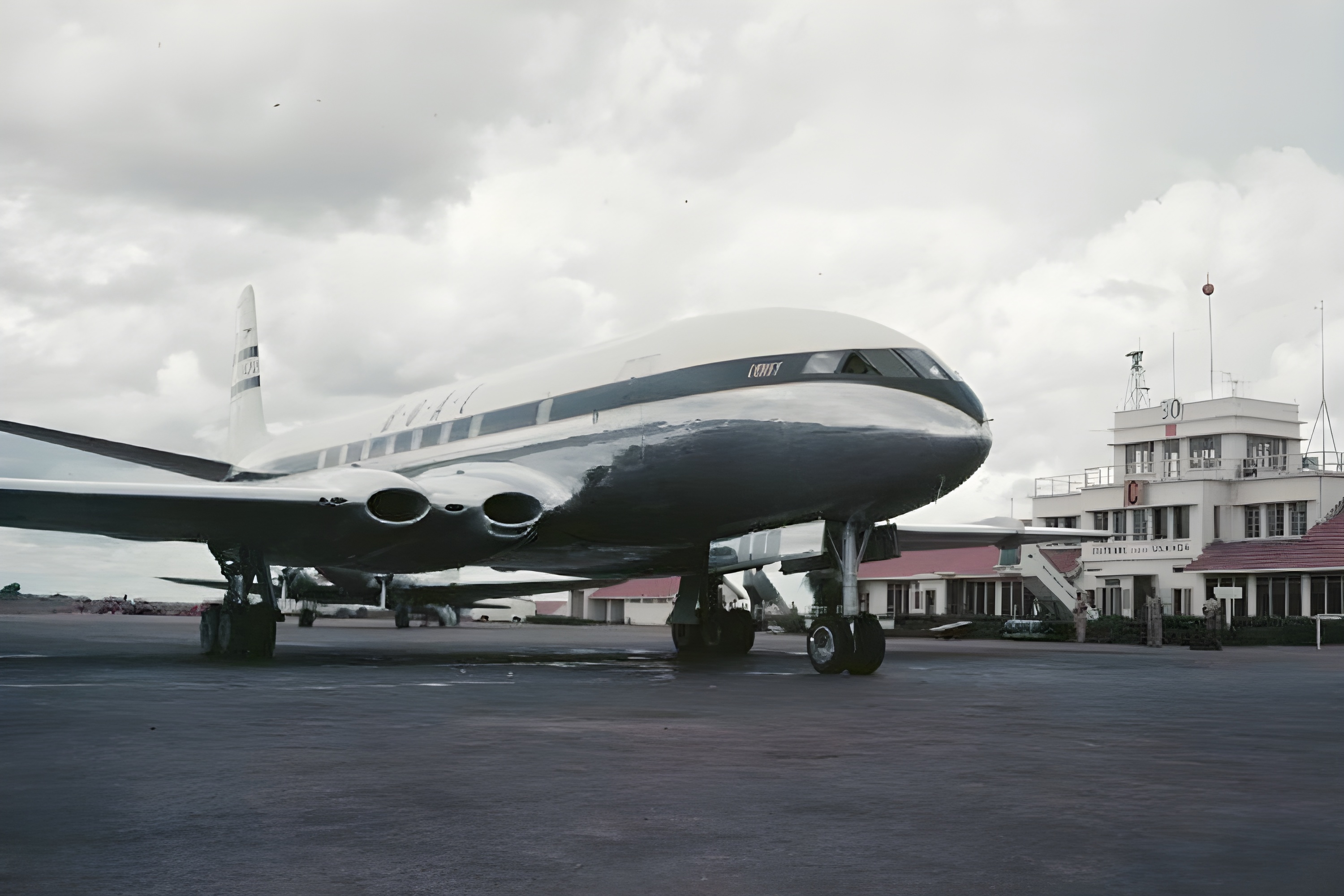
First flying in 1949, the de Havilland Comet was a breakthrough in the aviation industry, as it featured a series of revolutionary changes compared to the average aircraft of the time. Most notably, it was the world's first jet-powered commercial airliner. Featuring four de Havilland Ghost turbojets, the Comet 1 represented the future of the aviation industry, but at the same time created a major challenge for engineers. Much higher speeds and completely different aircraft performance characteristics forced engineers to venture into an area of aeronautics only tested on smaller military aircraft developed during World War II, such as the Gloster Meteor or de Havilland Vampire. Scaling up to the size of a commercial airliner would not be a smooth ride, as was discovered all too soon.
Why Square Windows?
It is important to note that most World War II-era aircraft used square windows because they were easy to assemble. Flying at low altitudes did little to affect the windows and the fuselage at large, and thus, de Havilland followed suit and used square windows on its Comet aircraft. Testing the windows suggested that there would be limited problems. This would prove to be a fatal mistake.
Critical Failures
The Comet entered commercial service with BOAC in May 1952, ferrying passengers between London and Johannesburg. Most notably, flight times were reported to be just half of those on the most modern piston-engine aircraft of the time. However, excitement for the new aircraft was rather short-lived as the Comet suffered three major accidents in just 12 months.
Shortly after the first scheduled flight in the spring of 1952, on October 26, 1952, a Comet operated by BOAC suffered a failed takeoff in Rome and slid off the edge of the runway. Although there were no casualties, the aircraft was severely damaged and consequently written off. While the cause of this particular accident was attributed to human error, two later crashes would forever damage the reputation of the Comet.
BOAC Flight 783
Just eight months later, on May 2nd, 1953, a Comet experienced an in-flight breakup while ascending through a violent storm near Calcutta, India. The aircraft, operating as BOAC Flight 783, disintegrated at altitude, scattering wreckage across miles of terrain below. All 43 passengers and crew on board perished. Investigators attributed the structural failure to the immense stress placed on the airframe by either severe wind gusts or aggressive pilot inputs while battling the storm. But the full, darker truth about why the Comet was so vulnerable to such forces had not yet been uncovered.
BOAC Flight 781
In January 1954, BOAC Flight 781 from Rome-Ciampino to London Airport (now London-Heathrow), operated by a Comet, was climbing through 27,000 feet when it suffered a structural failure, crashing off the southern coast of the Italian island of Elba. Witnesses on the ground described watching pieces of the plane separate in the sky, a sight that would shock the aviation world and trigger an urgent, sweeping investigation into what was turning the world's most celebrated airliner into a death trap.
An investigation into the crash was initiated, which involved recovering the wreckage from the seabed. Once analyzed, experts concluded the failure had occurred in the fuselage of the aircraft, leading to an explosive decompression due to the pressure difference at that altitude – breaking the aircraft into several pieces. Such an issue warranted serious investigation; so much so that BOAC donated one of its remaining Comets to be used as a testing airframe to perform experiments on.
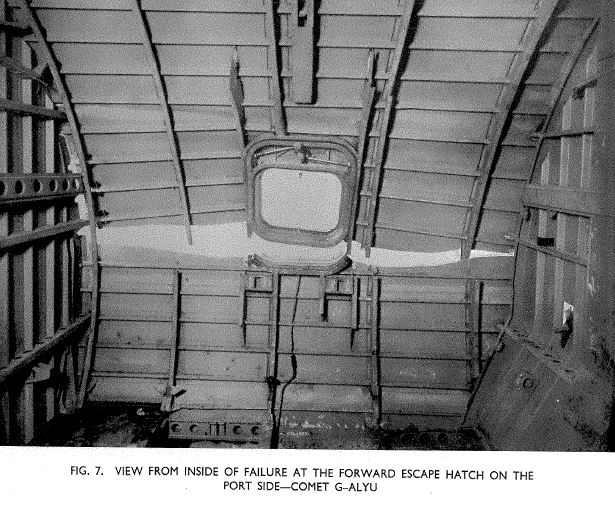
This was done by simulating thousands of pressurization cycles using a water tank in which the fuselage was placed. The results were conclusive: metal fatigue due to repeated pressurization and depressurization of the airframe had caused cracks to appear prematurely in the metal skin of the fuselage, which eventually failed.
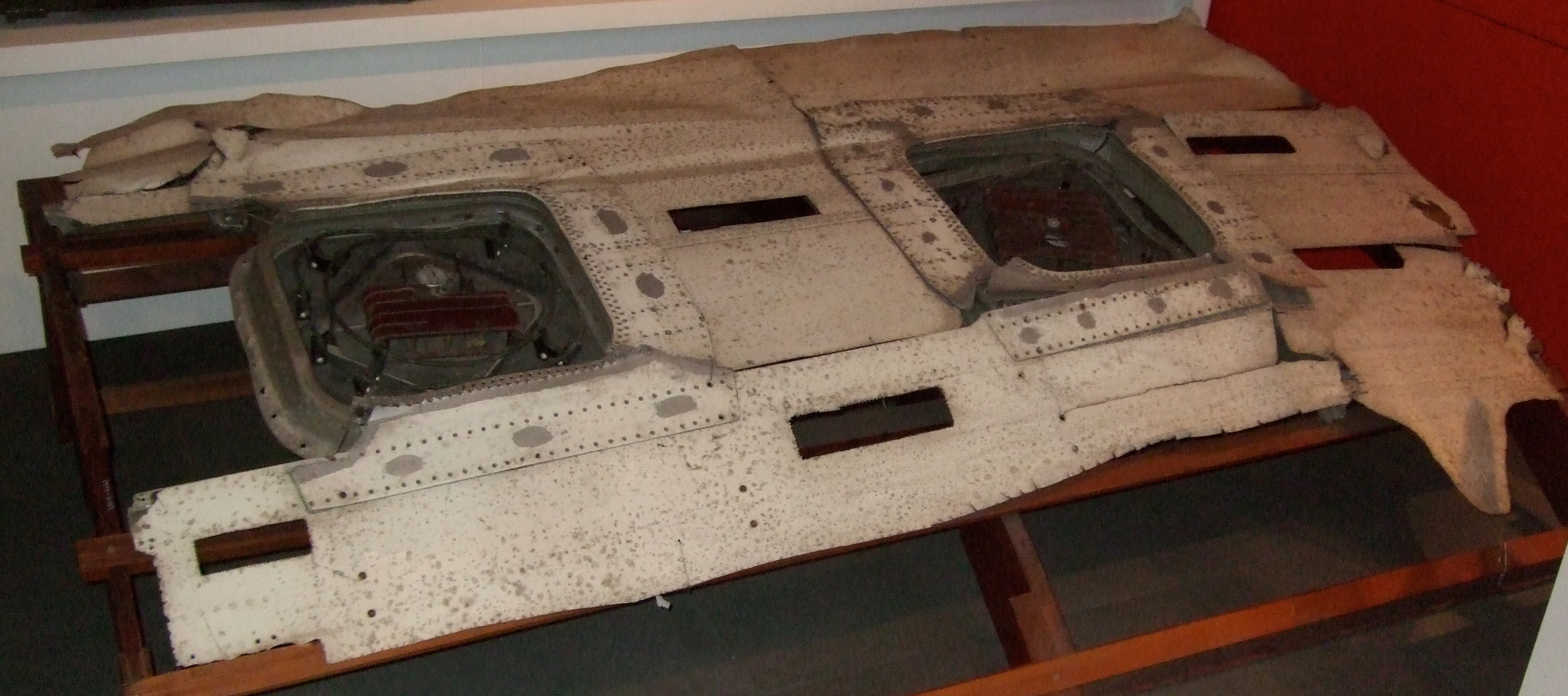
However, a common misconception is that the square windows fitted in the aircraft were to blame. In fact, the accident at Elba was determined to have been caused by an initial crack that formed on the top side of the aircraft fuselage. A square window would indeed experience high stress at the corners; however, this was a well-known fact at the time. For this reason, the designers of the Comet had not made the windows of the aircraft completely rectangular. The corners were not sharp, but featured an angled edge to distribute the stress more evenly, although investigations concluded the stress in the skin around these areas was still much higher than in other areas. While it is true that this window design was still weak and thus contributed to the two fatal crashes, the source of the cracks was another.
To improve the aerodynamics and efficiency of the aircraft as a whole, engineers wanted the smoothest possible fuselage surface. In earlier aircraft, the rivets connecting the skin to the frames and stringers on the inside of the structure protruded from the surface of the fuselage, creating extra drag. On other aircraft, this had been overcome by machining a hole into the skin of the fuselage for the rivet head to sit in. However, advances in aluminum alloys meant a thinner skin could be used on the Comet, providing the same strength but with a lower weight. The downside of this was that the skin was too thin to drill a suitable hole in.
As a solution, designers decided instead to use the ‘punch rivet’ technique, where rivets are applied with enough force to dent into the skin, creating a flatter surface. In doing so, though, the rivets created uneven holes and microfractures in the skin of the aircraft, which, combined with the fact that no glue or sealant was used in combination with the rivets, facilitated the propagation of cracks and metal fatigue over repeated cycles.
South African Airways Flight 201
Unfortunately, this was only discovered after a second crash. In April 1954, just three months after the loss of Flight 781, South African Airways Flight 201 – another Comet operating under contract with BOAC – departed Rome bound for Cairo. Like its predecessor, it never arrived. The aircraft broke apart somewhere over the Tyrrhenian Sea, near the Italian island of Stromboli, killing all 21 people on board. The wreckage, scattered across the deep Mediterranean seabed, was never fully recovered, making a definitive conclusion about the cause nearly impossible for investigators to reach.
But the parallels were impossible to ignore: the same aircraft type, the same departure airport, the same phase of flight, the same violent, sudden end. A similar sequence of events had almost certainly unfolded at altitude, invisible to anyone on the ground until pieces of the plane began falling from the sky. Two Comets, three months apart, gone in a disturbingly similar fashion. The aviation world could no longer look away.
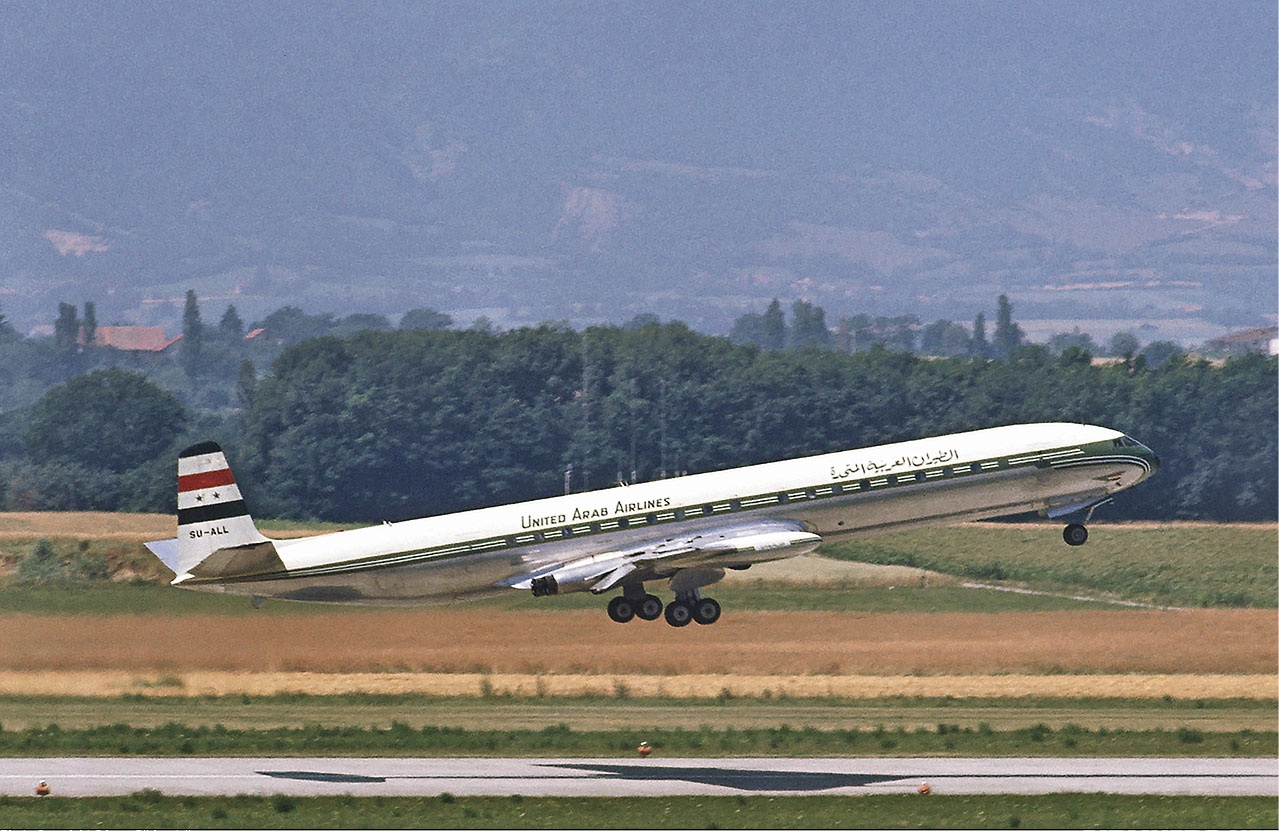
Following this deadly accident, the Comet was grounded and its airworthiness certificate revoked. When the investigation findings were published, all Comet 1s were retired, with de Havilland working quickly to develop the redesigned Comet 4, which featured a thicker skin and elliptical windows. By that time, however, the jet age was in full swing, with de Havilland facing stiff competition from the United States, namely the Boeing 707 and Douglas DC-8. Both of these aircraft became much more popular than the Comet, of which only 114 were built.

After the 1954 disasters, the Comet 1 never returned to commercial passenger service. Since then, no airline has introduced a commercial airliner with square windows.
In 1958, oval windows were introduced on commercial aircraft, which has become an industry standard ever since. Stress buildup around windows has remained a minor factor in subsequent crashes as aircraft engineers look to perfect the designs of other aircraft parts. Modern windows also contain additional protections, like layers of acrylic for protection from outside elements and a “bleed hole” to help keep air pressure relatively constant on board.
This content is only available with an AeroXplorer+ subscription.
Joby Aviation to Pay $116.9 Million in Trade Secrets Case » Aviation Fuel Prices Hit Six-Month High in September » 4th vs 5th Generation Fighter Jets: How Fighter Jets Have Evolved »

Comments (0)
Add Your Comment
TAGS
INFORMATIONAL Jetstream Magazine De Havilland Comet Comet Aviation History TravelRECENTLY PUBLISHED
 This Week in Aviation: The 10 Stories That Mattered Most
From major airline developments to aircraft updates and industry shifts, this weekly recap highlights the ten most-read aviation stories from the week of October 04.
INFORMATIONAL
READ MORE »
This Week in Aviation: The 10 Stories That Mattered Most
From major airline developments to aircraft updates and industry shifts, this weekly recap highlights the ten most-read aviation stories from the week of October 04.
INFORMATIONAL
READ MORE »
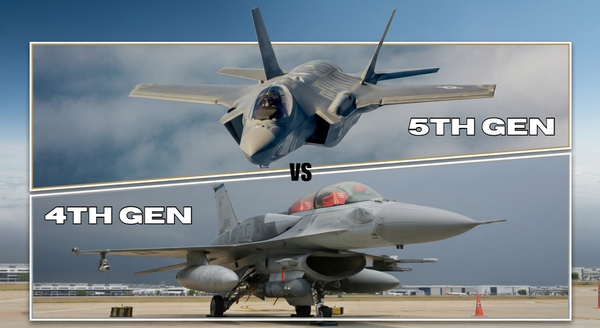 4th vs 5th Generation Fighter Jets: How Fighter Jets Have Evolved
A look at what separates fourth- and fifth-generation fighter jets, from stealth and sensor fusion to combat capability and cost.
INFORMATIONAL
READ MORE »
4th vs 5th Generation Fighter Jets: How Fighter Jets Have Evolved
A look at what separates fourth- and fifth-generation fighter jets, from stealth and sensor fusion to combat capability and cost.
INFORMATIONAL
READ MORE »
 United 777 Diverts to Dublin After Cockpit Windscreen Cracks Over the Atlantic
A United Airlines Boeing 777 bound for Milan made a steep descent and diverted to Dublin after its cockpit windscreen cracked mid-flight.
NEWS
READ MORE »
United 777 Diverts to Dublin After Cockpit Windscreen Cracks Over the Atlantic
A United Airlines Boeing 777 bound for Milan made a steep descent and diverted to Dublin after its cockpit windscreen cracked mid-flight.
NEWS
READ MORE »
More than just headlines.
Get unlimited ad-free access to in-depth aviation news, premium stories, and exclusive insights other sites don't cover.
- Ad-free browsing on AeroXplorer
- Unlimited access to premium and exclusive articles
- Higher photo upload limits & commissions on sales
- Free access to Jetstream Magazine on higher tiers
- Ad-free browsing
- Sell aviation photos with 60% commission
- First week free!
- Everything in Basic+
- Unlimited premium articles
- Sell aviation photos with 70% commission
- Free Digital subscription to Jetstream Magazine
- First week free!
- Everything in Basic+ and Pro
- Sell aviaiton photos with 80% commission
- Early access to exclusive stories
- Free Digital+Print subscription to Jetstream Magazine