
For decades, simplified fleets have been one of the airline industry's most trusted cost-control strategies. By standardizing around a single aircraft family, carriers can streamline pilot training, maintenance, and scheduling logistics. After all, airlines like Southwest Airlines and Ryanair have been very successful in keeping their expenses low by operating 737-only fleets.
But in today's environment, simplification is no longer just a cost strategy; it has become a risk management decision. Certification delays and growing dependence on a small number of manufacturers have introduced new risks, forcing airlines to rethink whether simplification still delivers the long-term benefits it once did.

All Eggs in One Basket
Southwest Airlines’ latest annual report puts it in layman’s terms: the carrier’s “use of a single aircraft type, the Boeing 737, allows for simplified scheduling, maintenance, flight operations, safety management, and training activities,” which is one of the pillars of the company’s strategy to focus on cost discipline and offering attractive fares.
The report also outlined the risks of relying on a single planemaker. According to the airline, if the 737 MAX “were to become unavailable for [its] operations, or if [Southwest Airlines] were not able to procure future aircraft in a timely manner or on favorable commercial terms, [the airline’s] business plans, strategies, and results of operations could be affected.”
For Southwest Airlines, this theoretical risk has, unfortunately, materialized. The airline is the launch customer for the 737 MAX 7, the smallest aircraft within the 737 MAX family. Boeing launched the variant in May 2013, with an initially planned delivery date of 2019.
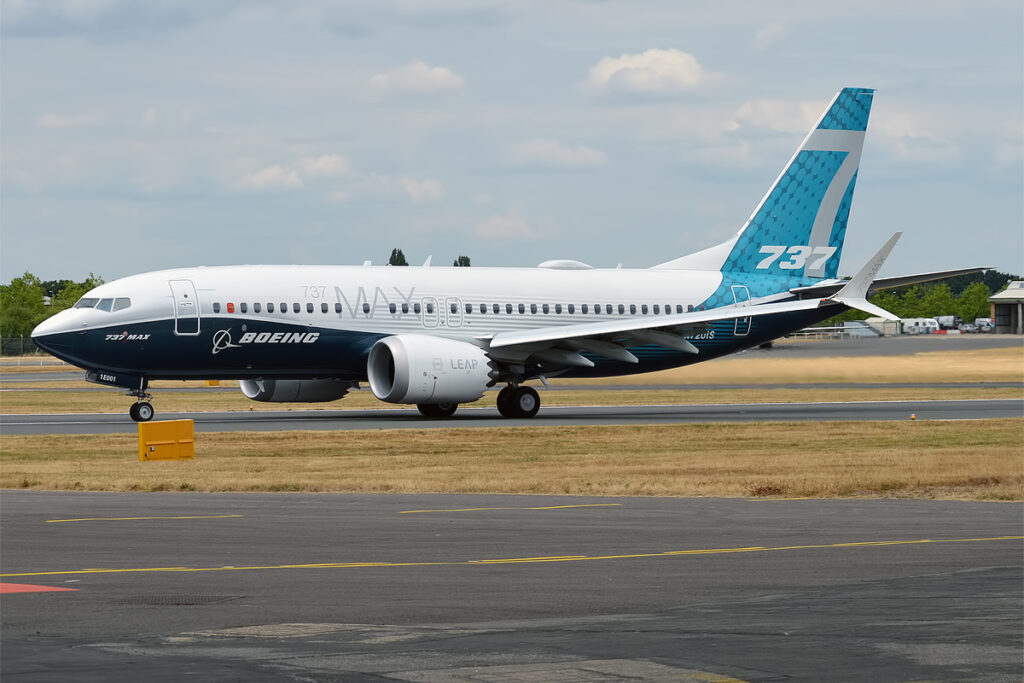
The aforementioned annual report detailed that Southwest Airlines – which, by the end of 2026, will have confirmed orders for 268 Boeing 737 MAX 7s – would only take delivery of 66 737 MAX 8 aircraft in 2026 as it continues to wait for the Federal Aviation Administration (FAA) to certify the MAX 7.
Operators of the 737 MAX 10 are in the same boat, yet none of them have the same intertwined relationship with the MAX 7 as Southwest Airlines does: of the 289 confirmed MAX 7s on Boeing's order sheet, 268 are from Southwest.
The origins of the delays for the 737 MAX 7 and 737 MAX 10 trace back to the two fatal 737 MAX 8 crashes in Indonesia and Ethiopia, which claimed the lives of 346 people in total. Heightened scrutiny of Boeing and the FAA has delayed the certification of the two variants, while the 737 MAX 8 and 737 MAX 9 have continued to fly successfully, albeit still under intense scrutiny.
After the MAX was cleared to fly again in 2020, things seemed to go back to normal for a while. However, on January 5, 2024, an Alaska Airlines 737 MAX 9 lost a door plug mid-flight. While the incident was consequential for Boeing – which once again had to face probes into its internal processes – it also affected the certification timelines of the 737 MAX 7 and 737 MAX 10.
Before the incident, Boeing had requested that the FAA grant an exemption for the 737 MAX 7 and its engine nacelle inlet structure and engine anti-ice (EAI) system. Following the door plug incident, Boeing withdrew the time-limited exemption request on January 29, 2024.
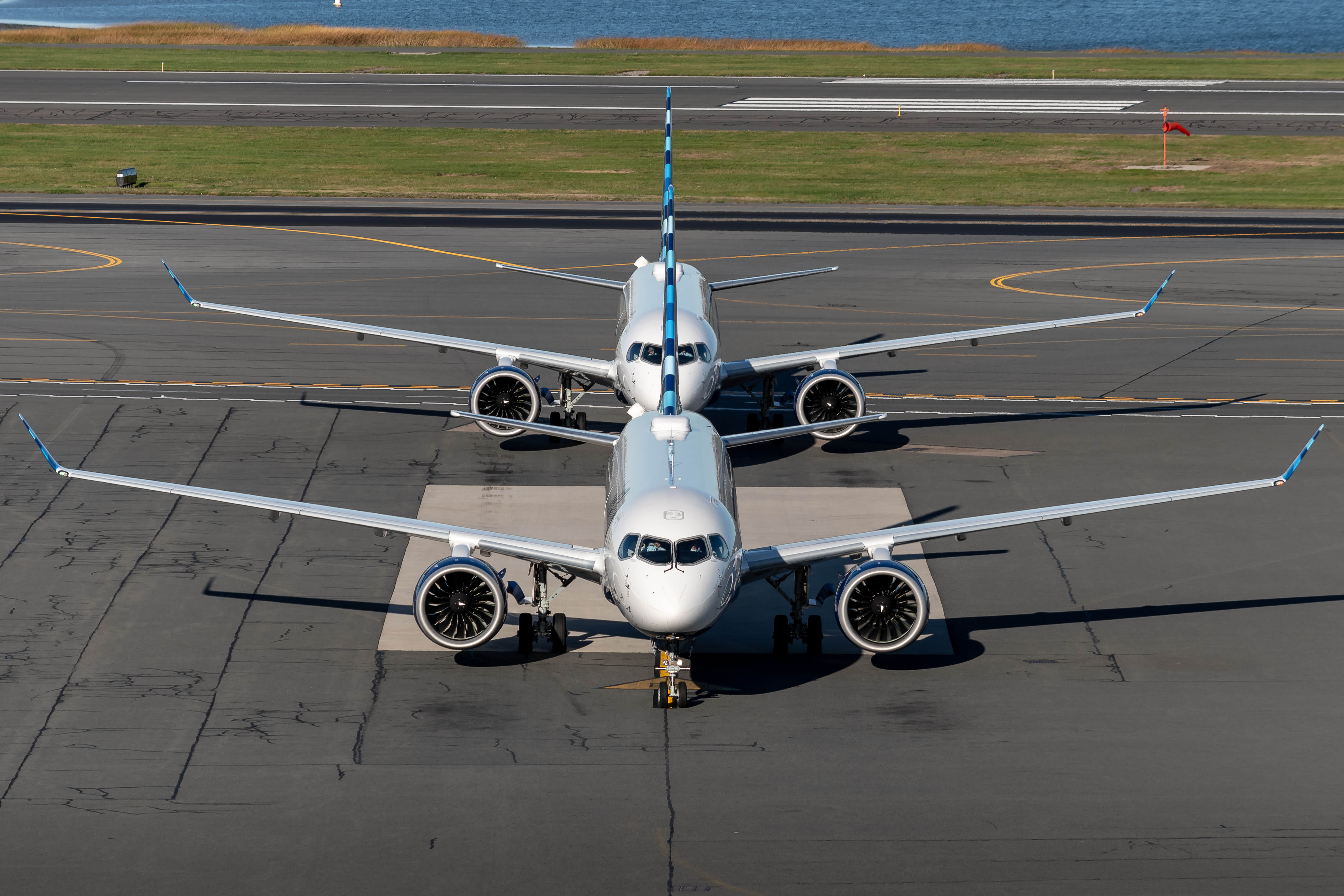
More recently, a software-driven grounding highlighted a different (and potentially more systemic) risk related to the Airbus A320 family aircraft Elevator Aileron Computers (ELAC), which the planemaker confirmed in a statement on November 28, 2025. According to the European Union Aviation Safety Agency (EASA), the ELAC-related error was discovered in October of 2025 and traced to a JetBlue A320 that experienced an “uncommanded and limited pitch down event” during a flight from Cancun to Newark. Nearly 6,000 A319, A320, and A321 aircraft were grounded as a result, affecting short and medium-haul operations worldwide.

Following the incident, global regulators ordered an emergency software rollback from version L104 to the stable L103, a process that could take between 30 minutes and two hours per aircraft. For airlines that had not yet installed the update, the directive had limited impact. Others, however, faced a more significant disruption.
At JetBlue, an internal memo from the airline's Chief Operating Officer indicated that roughly 150 of the airline's 272 in-service aircraft were affected, accounting for more than 50% of its fleet.
JetBlue Fleet Breakdown (as of March 2026)
| Aircraft Type | Fleet Size | Average Age |
| Airbus A220-300 | 60 | 2.1 yrs |
| Airbus A320-200 | 129 | 20.5 yrs |
| Airbus A321-200 | 63 | 9.7 yrs |
| Airbus A321neo | 37 | 4.3 yrs |
| TOTAL | 289 | 12.2 yrs |
So, while simplification continues to deliver meaningful cost and efficiency advantages, it also concentrates operational risk. In this case, a single software bug had the potential to disrupt a majority of an airline's operation within hours, a prime example of how easily fleet simplification could translate into the grounding of an entire fleet.
Simple Yet Diverse
A handful of carriers have taken a different approach to fleet simplification, placing major orders with both Airbus and Boeing simultaneously. In July 2011, less than a year after Airbus unveiled the A320neo, American Airlines seemingly did the unthinkable, placing its first-ever order for Airbus’ narrowbody aircraft. The carrier committed to 260 A320 family jets, split evenly between 130 A320ceo and 130 A320neo. At the same time, American Airlines also ordered up to 200 Boeing 737s, including 100 Next Generation (NG) aircraft and 100 of Boeing's then-unannounced 737 variant, which the manufacturer said would deliver "even more significant fuel-efficiency gains." This aircraft would later become known as the 737 MAX.
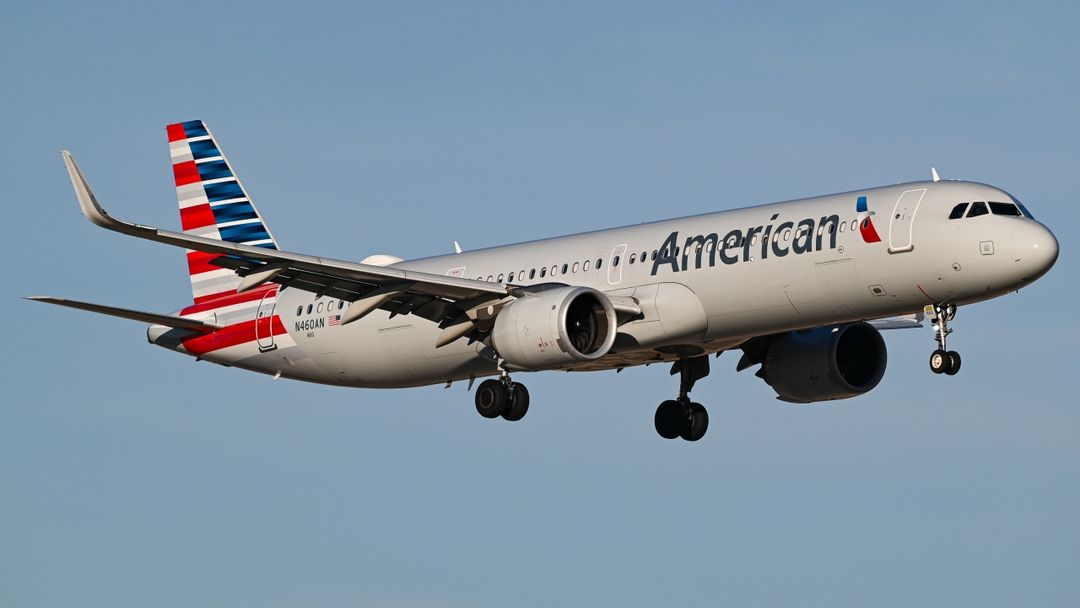
These agreements included options and purchase rights for an additional 465 aircraft to be delivered through 2025.
At the time, American Airlines was navigating difficult waters – or rather, skies. Amid a Chapter 11 bankruptcy case, the carrier ended Q2 2011 with fuel costs of $2.2 billion, an increase of 33.1% year-on-year (YoY). The spike in fuel prices pushed the airline’s operating profit into the red, with the airline, on average, paying $3.12 per gallon of jet fuel during the quarter, compared to the average of $2.37 per gallon in Q2 2010.
The primary goal of the 460 aircraft order? Reducing fuel costs. American Airlines highlighted that “Boeing and Airbus aircraft in the 737 and A320 families offer a 35 percent reduction in fuel cost per seat versus the MD-80 and a 12 percent and 15 percent fuel cost reduction per seat, respectively, versus the 757 and 767-200.”
As such, American Airlines would transition from four fleet types for regional travel – MD-80, 737-800, 757, and 767-200 – to two: the 737 and A320.
If approved, the orders would allow the carrier to take delivery of next-generation Airbus and Boeing aircraft that would “further accelerate fuel-efficiency gains,” it said at the time.

American Airlines could have ordered only the Airbus or Boeing aircraft, focusing on the 737 NG and what would become the 737 MAX. But diversifying the order meant that it could ensure that it would have aircraft for a wide range of missions, including, for example, transcontinental routes (A321/737-900ER), or secondary domestic markets or high-altitude and/or short-runway airports (A319/737-700), according to the airline’s presentation about the order.
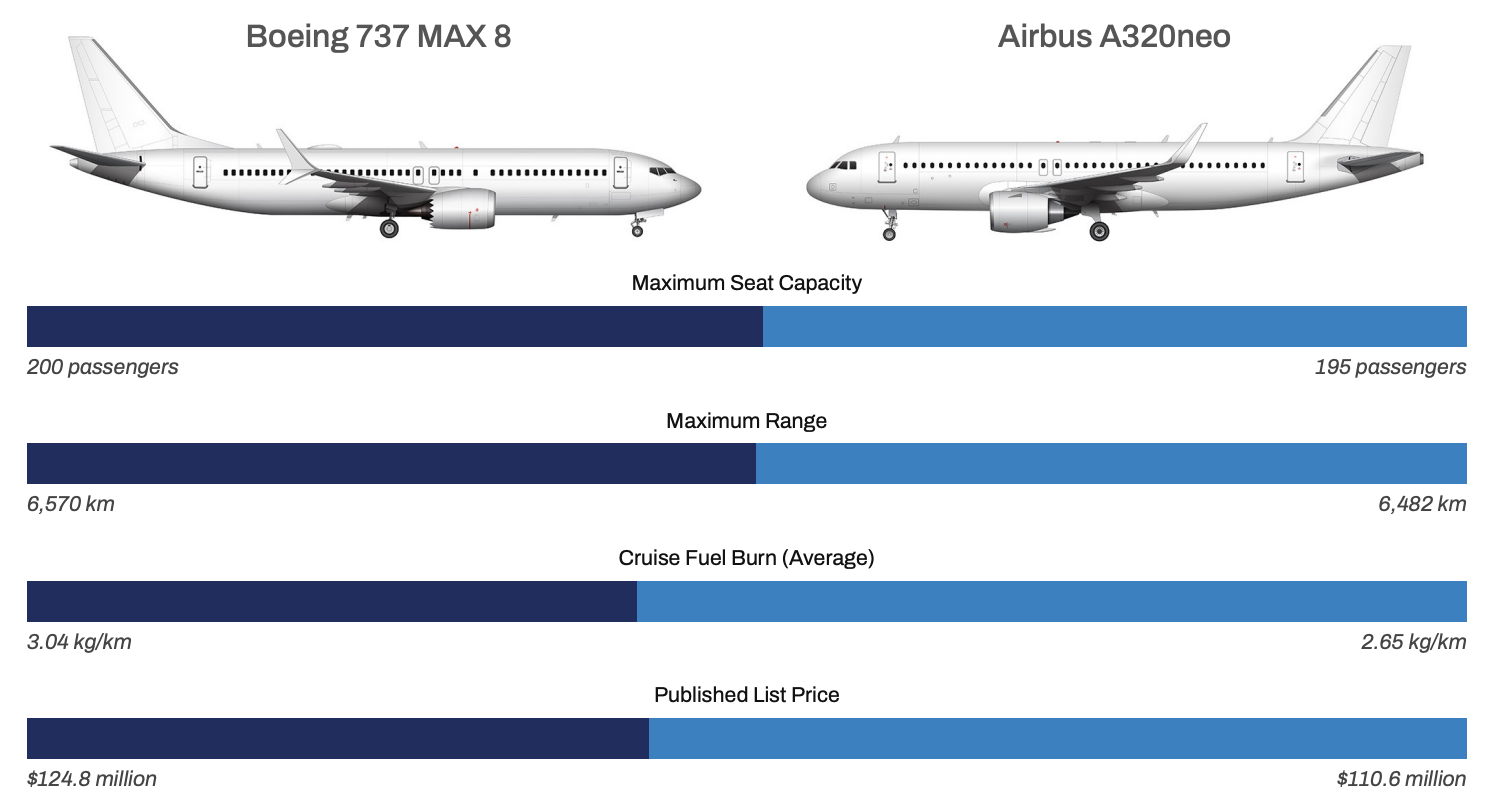
Aircraft Spec. Comparison: Boeing 737 MAX 8 vs. Airbus A320neo
Widebody Diversification
Delta Air Lines was another airline that recently decided to diversify its fleet with another cockpit type. The airline’s widebody fleet is currently comprised of 767, A330ceo, A330-900, and A350-900 aircraft.
Size and Average Age of Active Delta Air Lines Subfleets (as of March 2026)
| Aircraft Type | Fleet Size | Average Age |
| Airbus A220-100 | 45 | 6.2 yrs |
| Aibus A220-300 | 37 | 2.8 yrs |
| Airbus A319-100 | 57 | 24.1 yrs |
| Airbus A320-200 | 45 | 29.1 yrs |
| Airbus A321-200 | 127 | 7.2 yrs |
| Airbus A321neo | 89 | 2.2 yrs |
| Airbus A330-200 | 11 | 20.9 yrs |
| Airbus A330-300 | 31 | 17.1 yrs |
| Airbus A330-900 | 39 | 3.3 yrs |
| Airbus A350-900 | 40 | 5.5 yrs |
| Boeing 717-200 | 80 | 24.4 yrs |
| Boeing 737-800 | 77 | 24.5 yrs |
| Boeing 737-900ER | 163 | 10.2 yrs |
| Boeing 757-200 | 74 | 28.0 yrs |
| Boeing 757-300 | 16 | 23.1 yrs |
| Boeing 767-300 | 37 | 29.2 yrs |
| Boeing 767-400 | 21 | 25.2 yrs |
| TOTAL | 989 | 15 yrs |
While the most obvious replacements for the A330ceos – and perhaps even the 767-300ERs – are the A330-900 and the A350-900, the replacement choice for the 767-400ER was not as straightforward. Instead of ordering more A330-900, A350-900, or even A350-1000s, the airline went for the 787-10.
Why?
Joe Esposito, Chief Commercial Officer of Delta Air Lines, explained during the carrier's fourth-quarter 2025 earnings call that the airline's initial priority was to build "critical mass" within its A330-900 and A350 fleets, a strategy he said helps drive "significant efficiency" across operations.
But looking ahead, the 787-10 will help the airline do a lot with premium seating, with the carrier continuously looking to expand its premium revenues, which, for the first time in its history, overtook revenue from its Main cabin.
“So, it is a natural fit, especially when it starts to replace the 767-400ERs, which it is slated to do. It is designed for growth and replacement.”
Esposito added that in addition, the 787-10 is a “great cargo airplane,” and that the acquisition will diversify its engine options. While Delta Air Lines’ next-generation Airbus widebodies are exclusively powered by the Rolls-Royce Trent engine family, the 787-10s will have two GE Aerospace GEnx engines.
Glen Hauenstein, President of Delta Air Lines, said the carrier is working toward a widebody fleet made up of aircraft that would have different strengths, including some that may have long-range capabilities, some that are “category killers” in terms of unit costs, and some to be the carrier’s “milk run airplane that is going to do most of the spoke services out of [its] core hub.” He added that this setup allows Delta to have a wide array of aircraft, providing substantial “versatility moving forward and best-in-class for economics.”
Flexibility Over Simplicity
Taken together, these orders and decisions shed more light on why fleet simplification may not always be the answer, especially for large, full-service carriers with complex global networks. While operating a single aircraft type can deliver short-term savings in training, maintenance, and scheduling, the reality of modern airline operations often demands more flexibility.
Even some low-cost carriers have made the switch from Boeing to Airbus, or vice-versa, with easyJet moving from the 737 family to the A320 family, while Transavia and its parent company, KLM, began replacing their 737 NGs with the A321neo.
The problem was – and still is – the structural gap in the narrowbody market. The closest alternative to the A321neo, the highest-capacity next-generation narrowbody currently available on the market, is the Boeing 737 MAX 10, which is still uncertified. This gives airlines the choice to either continue waiting for certification or to diversify their fleets and add additional complexity with one more cockpit type.
And with capacity growth plans locked in place, waiting is not always an option.
Flexibility is becoming just as critical as efficiency, suggesting that the era of strict fleet simplification may be giving way to a more balanced, risk-aware approach to aircraft strategy.
This content is only available with an AeroXplorer+ subscription.
This Week in Aviation: The 10 Stories That Mattered Most » United Express Flight Returns to Houston After Cockpit Windshield Shatters Mid-Flight » FAA Clears JetBlue's $58.5M Purchase of Spirit's LaGuardia Slots »

Comments (1)
 Mahlomola Jonas Mpoka
Dear AeroXplorer.
I am happy to reach you and I really appreciate.
I stuck in Bram Fischer International Airport at South Africa based in Bloemfontein.
The big thing here is, any documents, Order, Policies doesn't working. Management are rejected all.
Mahlomola Jonas Mpoka
Dear AeroXplorer.
I am happy to reach you and I really appreciate.
I stuck in Bram Fischer International Airport at South Africa based in Bloemfontein.
The big thing here is, any documents, Order, Policies doesn't working. Management are rejected all.
Add Your Comment
TAGS
INFORMATIONAL Fleet Simplification Analysis Jetstream Magazine Fleet Breakdown United Delta JetBlue RyanAir TravelRECENTLY PUBLISHED
 US State Department Warns of Threats to Airlines and Airports in Saudi Arabia Following Deadly Houthi Attacks
The US State Department has issued a security alert for Saudi Arabia after Houthi air attacks on the kingdom killed three people and injured dozens more.
NEWS
READ MORE »
US State Department Warns of Threats to Airlines and Airports in Saudi Arabia Following Deadly Houthi Attacks
The US State Department has issued a security alert for Saudi Arabia after Houthi air attacks on the kingdom killed three people and injured dozens more.
NEWS
READ MORE »
 Southwest Airlines Becomes First US Carrier to Integrate Flight Booking Into ChatGPT
Southwest Airlines launches a first-of-its-kind ChatGPT plugin, allowing travelers to search and book flights directly through the AI platform.
NEWS
READ MORE »
Southwest Airlines Becomes First US Carrier to Integrate Flight Booking Into ChatGPT
Southwest Airlines launches a first-of-its-kind ChatGPT plugin, allowing travelers to search and book flights directly through the AI platform.
NEWS
READ MORE »
 Joby Aviation to Pay $116.9 Million in Trade Secrets Case
A federal jury found air taxi maker Joby Aviation liable for misappropriating trade secrets, awarding $116.9 million in damages to the plaintiff.
NEWS
READ MORE »
Joby Aviation to Pay $116.9 Million in Trade Secrets Case
A federal jury found air taxi maker Joby Aviation liable for misappropriating trade secrets, awarding $116.9 million in damages to the plaintiff.
NEWS
READ MORE »
More than just headlines.
Get unlimited ad-free access to in-depth aviation news, premium stories, and exclusive insights other sites don't cover.
- Ad-free browsing on AeroXplorer
- Unlimited access to premium and exclusive articles
- Higher photo upload limits & commissions on sales
- Free access to Jetstream Magazine on higher tiers
- Ad-free browsing
- Sell aviation photos with 60% commission
- First week free!
- Everything in Basic+
- Unlimited premium articles
- Sell aviation photos with 70% commission
- Free Digital subscription to Jetstream Magazine
- First week free!
- Everything in Basic+ and Pro
- Sell aviaiton photos with 80% commission
- Early access to exclusive stories
- Free Digital+Print subscription to Jetstream Magazine