
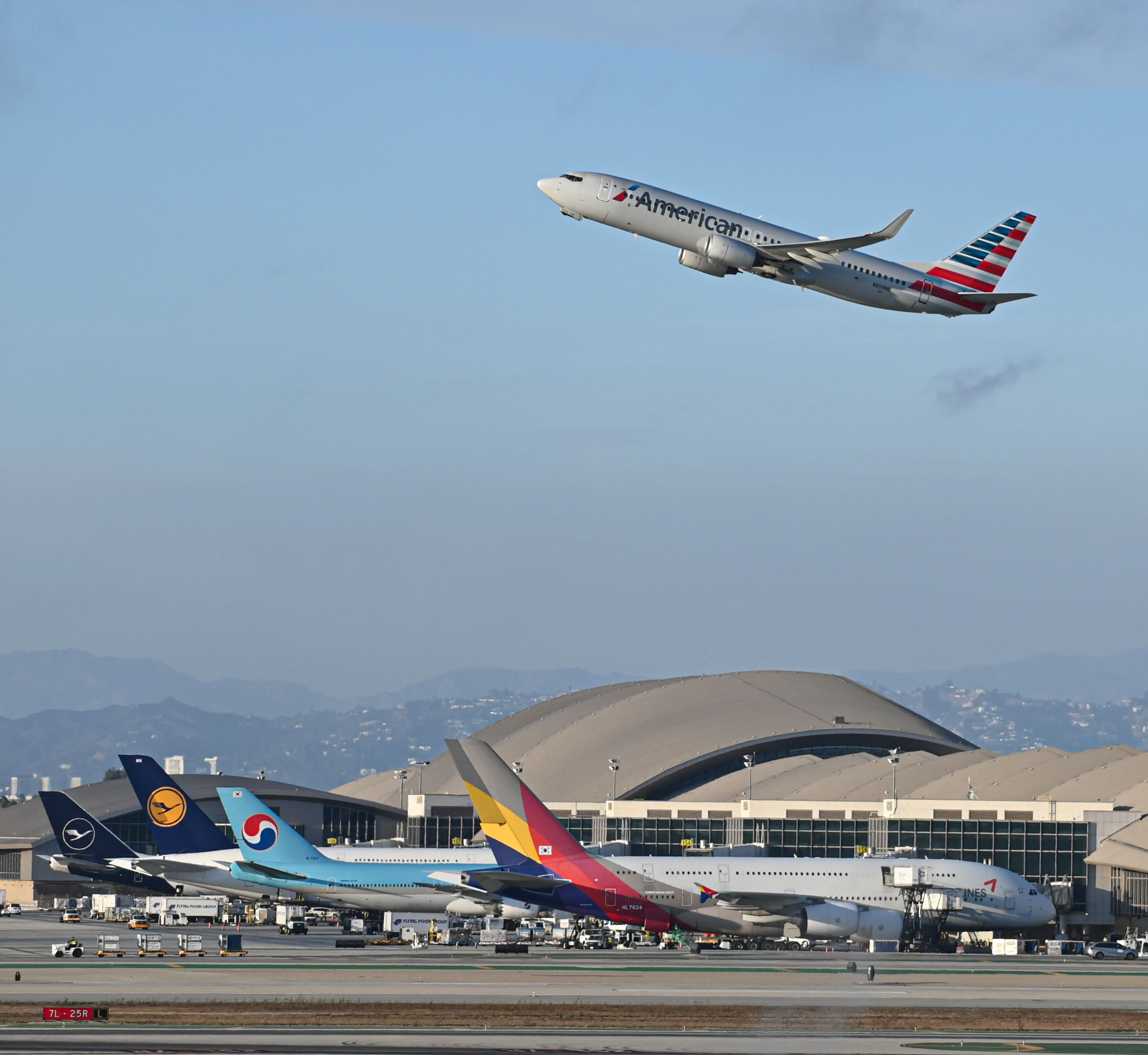

The connected journey no longer starts in the air
For years, in-flight Wi-Fi was treated as a bonus. If it worked, passengers were pleased. If it did not, most people accepted the idea that flying meant being offline for a while.
That expectation is changing quickly.
Today, travelers check in on their phones, use mobile boarding passes, receive gate-change notifications, track bags, message hotels, manage ride-share pickups, and monitor flight delays in real time. Connectivity is no longer limited to what happens during the flight. It has become part of the entire passenger journey, from the airport entrance to the moment the traveler reaches the hotel.
The aviation industry has noticed. Airlines, airports, satellite companies, and technology providers are all trying to close the gaps in the journey. Airport Wi-Fi is improving. Airline apps are becoming more central. Satellite-based in-flight internet is moving from novelty to competitive advantage. And systems such as Starlink are accelerating the idea that passengers should be able to stay online even at 35,000 feet.
But the future of connected travel is not just about faster Wi-Fi in the cabin. It is about continuity.
Airport connectivity: useful, but still uneven
Most major airports now offer some form of free Wi-Fi. For travelers, this is helpful but not always perfect. Speeds vary, login portals can be frustrating, and the network may become slow in crowded terminals.
The airport is also one of the places where passengers need connectivity the most. They may need to download a boarding pass, check a delay, find a lounge, change a seat, contact a hotel, or respond to an urgent work message before boarding.
For frequent travelers, the issue is not whether Wi-Fi exists. It is whether it is reliable enough at the exact moment it is needed. A traveler trying to rebook a missed connection does not care that the terminal technically has Wi-Fi if the portal will not load or the signal drops near the gate.
This is why mobile data, airline apps, airport systems, and in-flight Wi-Fi are starting to feel like parts of one larger travel experience.
Airlines are turning Wi-Fi into a competitive feature
Airlines used to treat onboard internet as a paid add-on. That model is changing, especially as passengers expect to message, browse, work, or stream during flights.
United has been adding free Starlink Wi-Fi to its fleet, with the airline stating that Starlink is being phased into its Wi-Fi offering and that customers are notified when their flight is equipped with the service. Southwest has also announced Starlink-powered Wi-Fi, with the airline explaining that passengers can see “WiFi Powered by Starlink” in the Southwest app when available, although aircraft changes can still affect availability.
The trend is not limited to U.S. carriers. Wizz Air has announced plans to introduce Starlink in-flight internet from 2027, highlighting how low-cost and ultra-low-cost carriers are also looking at connectivity as part of the onboard experience.
For passengers, this matters because Wi-Fi is becoming part of how airlines differentiate themselves. Seat pitch, fares, loyalty programs, and onboard service still matter, but connectivity is now joining the list.
Why Starlink changed the conversation
Traditional in-flight internet has often been slow, expensive, or inconsistent. Many passengers have experienced the frustration of paying for Wi-Fi that is only strong enough for messaging, or a connection that works well for a few minutes and then drops.
Low Earth orbit satellite systems such as Starlink have changed the conversation because they promise lower latency and stronger performance compared with older systems. In practical terms, that can mean a better chance of handling everyday online tasks in the air: messaging, email, browsing, cloud documents, and in some cases streaming.
That does not mean every passenger will get perfect internet on every flight. Aircraft type, route, airline setup, passenger demand, satellite coverage, certification, and installation schedules all matter. Even when a carrier has announced a major Wi-Fi upgrade, not every aircraft is equipped immediately.
Still, the direction is clear. The old idea that airplane Wi-Fi is always slow and unreliable is becoming less acceptable. Airlines are under pressure to offer something closer to the connectivity passengers already expect on the ground.
What passengers actually need in the air
Most travelers do not need full office-level internet during a flight. They need a connection that supports basic tasks without constant frustration.

That usually means:
checking messages;
following connection updates;
receiving airline notifications;
opening travel documents;
sending emails;
using collaboration tools;
accessing entertainment;
keeping family or colleagues informed.
For business travelers, reliable onboard Wi-Fi can turn a flight into usable working time. For leisure travelers, it can reduce stress by making it easier to check arrival details, weather, transport, or itinerary changes.
For connecting passengers, Wi-Fi can be particularly valuable. A delayed flight becomes less stressful if the traveler can check the next gate, message a hotel, or see whether the onward flight is still on time before landing.
The limit: the connected journey does not end at touchdown
Even the best in-flight Wi-Fi has a natural limit. It helps while the passenger is on the aircraft, but it does not solve everything after landing.
The first few minutes in a new country can be some of the most connectivity-dependent moments of the entire trip. A traveler may need to open maps, message a driver, confirm a hotel address, translate instructions, check a train platform, contact a host, or receive a banking verification code.
This is where relying only on airport Wi-Fi becomes risky. The signal may not work outside the terminal. The login page may require a local phone number. The connection may drop once the passenger leaves baggage claim.
For international travelers, services like Holafly can help bridge that gap with international mobile data through eSIM plans. The value is not replacing in-flight Wi-Fi; it is keeping the journey connected after the aircraft door opens, especially when travelers need maps, messages, hotel details, and transport apps immediately.
Why the airport-to-hotel gap matters
A lot of travel stress happens between the airport and the hotel. This is the moment when the passenger is tired, possibly jet-lagged, and trying to make decisions in an unfamiliar place.
A missed shuttle, a changed pickup point, a train delay, or a wrong address can quickly turn into a problem if the traveler has no connection. Even a simple task like ordering a ride or checking a public transport route becomes harder without data.
This is why the next phase of connected travel is not only about faster internet in the sky. It is also about making sure passengers do not lose access during the handoff between flight, airport, ground transport, and accommodation.
From the passenger’s perspective, the journey is one continuous experience. The airline may only control part of it, but the traveler feels the gaps.
Airline apps are becoming travel control centers
Another important part of connected travel is the airline app. These apps are no longer just places to check in. They can manage seat changes, boarding passes, bag tracking, upgrades, delay notifications, and customer service messages.
United, for example, promotes its app as a tool for booking, check-in, boarding passes, seat changes, flight changes, bag tracking, and trip preparation. That reflects a wider industry shift: the airline app is becoming the passenger’s control center before and during the trip.
But this creates another dependency. An app is only useful if the passenger has access to the internet when they need it. If the traveler loses connection at the wrong moment, the digital experience collapses back into airport queues and information desks.
What still needs to be improved
Connected travel is moving forward, but there are still gaps.
First, Wi-Fi availability is inconsistent. A carrier may offer excellent internet on one aircraft and older connectivity on another. Last-minute aircraft swaps can change the passenger experience.
Second, free Wi-Fi often depends on conditions. Some airlines require loyalty program membership. Some services may only be available on certain aircraft or routes. Some still limit streaming or high-bandwidth activities.
Third, the ground experience remains fragmented. Airports, airlines, transport providers, hotels, and mobile networks do not always work together smoothly. Passengers still have to manage multiple apps, logins, confirmations, and updates.
Finally, not every traveler understands the difference between in-flight Wi-Fi, airport Wi-Fi, roaming, and eSIM data. Many people only think about connectivity when it fails.
The future: fewer dead zones in the travel day
The future of connected travel will likely be defined by fewer dead zones. Not just fewer dead zones in the sky, but fewer moments when the passenger suddenly loses access to essential information.
In-flight Wi-Fi will continue improving. Satellite systems will expand. Airline apps will become more useful. Airports will keep adding digital services. Mobile data solutions will become easier to activate before arrival.
For passengers, the goal is simple: less friction.
They do not want to think about which network, portal, SIM, app, or password is required at each stage. They want the journey to feel connected when it needs to be connected, and quiet when they want to disconnect.
Final thoughts
The aviation industry is entering a new phase of passenger connectivity. Airport Wi-Fi, airline apps, satellite internet, and eSIM services are no longer separate details. Together, they shape how travelers move through the journey.
Starlink and other satellite systems are making the aircraft cabin more connected than ever. That is a major step forward. But the passenger journey does not begin at cruising altitude, and it does not end at touchdown.
The real future of connected travel is door-to-door: from planning and check-in to the airport, the flight, the arrival hall, the ride into the city, and the final destination. The airlines that understand this wider journey will have a stronger passenger experience than those that only focus on the hours in the air.
Southwest Airlines Becomes First US Carrier to Integrate Flight Booking Into ChatGPT » Halon Was Supposed to Disappear. This Company Kept It Flying. » 4th vs 5th Generation Fighter Jets: How Fighter Jets Have Evolved »

Comments (0)
Add Your Comment
TAGS
INFORMATIONAL Holafly eSIM Travel Travel TipsRECENTLY PUBLISHED
 Power Bank Fire in Overhead Bin Forces IndiGo A321neo to Divert
An IndiGo A321neo diverted to Hyderabad after a fire broke out on the aircraft
NEWS
READ MORE »
Power Bank Fire in Overhead Bin Forces IndiGo A321neo to Divert
An IndiGo A321neo diverted to Hyderabad after a fire broke out on the aircraft
NEWS
READ MORE »
 This Week in Aviation: The 10 Stories That Mattered Most
From major airline developments to aircraft updates and industry shifts, this weekly recap highlights the ten most-read aviation stories from the week of October 04.
INFORMATIONAL
READ MORE »
This Week in Aviation: The 10 Stories That Mattered Most
From major airline developments to aircraft updates and industry shifts, this weekly recap highlights the ten most-read aviation stories from the week of October 04.
INFORMATIONAL
READ MORE »
 4th vs 5th Generation Fighter Jets: How Fighter Jets Have Evolved
A look at what separates fourth- and fifth-generation fighter jets, from stealth and sensor fusion to combat capability and cost.
INFORMATIONAL
READ MORE »
4th vs 5th Generation Fighter Jets: How Fighter Jets Have Evolved
A look at what separates fourth- and fifth-generation fighter jets, from stealth and sensor fusion to combat capability and cost.
INFORMATIONAL
READ MORE »
More than just headlines.
Get unlimited ad-free access to in-depth aviation news, premium stories, and exclusive insights other sites don't cover.
- Ad-free browsing on AeroXplorer
- Unlimited access to premium and exclusive articles
- Higher photo upload limits & commissions on sales
- Free access to Jetstream Magazine on higher tiers
- Ad-free browsing
- Sell aviation photos with 60% commission
- First week free!
- Everything in Basic+
- Unlimited premium articles
- Sell aviation photos with 70% commission
- Free Digital subscription to Jetstream Magazine
- First week free!
- Everything in Basic+ and Pro
- Sell aviaiton photos with 80% commission
- Early access to exclusive stories
- Free Digital+Print subscription to Jetstream Magazine