


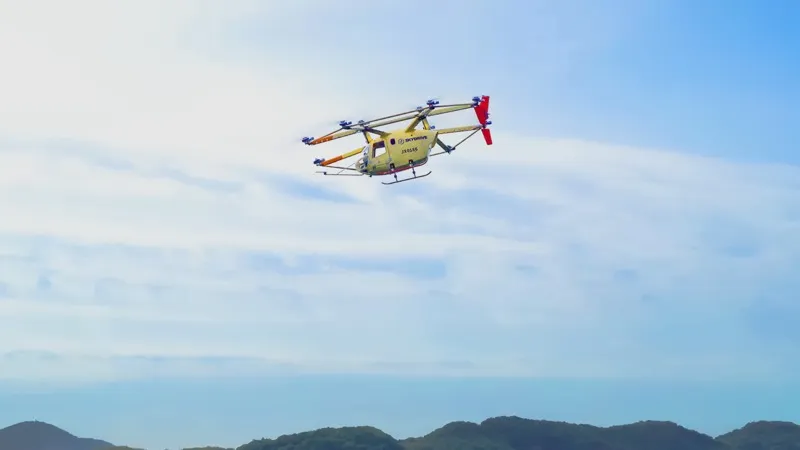
Japanese eVTOL developer SkyDrive announced that its SD-05 aircraft reached a flight speed of 100 km/h (about 62 mph) during recent unmanned test flights. The company describes the achievement as a meaningful step in its push to bring a certified electric air taxi to market.
The flight tests took place at the company's test site in Japan. SkyDrive used an unmanned prototype to evaluate the aircraft's handling and performance at higher speeds than it had previously demonstrated. The team plans to keep expanding the flight envelope in the coming months.
What the SD-05 is
The SD-05 is a three-seat electric vertical takeoff and landing (eVTOL) aircraft designed to carry a pilot and two passengers. SkyDrive intends the vehicle for short urban and regional trips, including airport shuttles and point-to-point travel between locations that would otherwise require long drives.
The aircraft uses a multicopter configuration with 12 rotors, which the company says simplifies the design and improves safety through redundancy. If one or more motors fail during flight, the remaining rotors can keep the aircraft stable. SkyDrive has emphasized that this layout avoids the mechanical complexity of tilt-rotor or lift-plus-cruise designs used by some competitors.
The SD-05 has a target cruise speed of 100 km/h and a planned range of around 15 km (about 9 miles). Those numbers place it on the shorter end of the eVTOL spectrum, where some rival aircraft aim for ranges of 100 miles or more. SkyDrive has positioned the SD-05 as a vehicle for dense urban corridors and specific commuter routes rather than longer regional trips.
Why the 100 km/h mark matters
Reaching the target cruise speed in flight testing is a key checkpoint for any new aircraft program. It confirms that the vehicle can perform near its design parameters in real conditions, not just in simulation or low-speed hover tests. For SkyDrive, hitting 100 km/h shows that the propulsion system, flight controls, and airframe work together as intended at operational speed.
The company has been running an expanding flight test program with the SD-05 prototype. Earlier tests focused on hover stability, low-speed maneuvering, and transitions. The latest round pushed the aircraft to its planned cruise speed during forward flight.

The Hidden Cost: Why Airlines Are Rethinking Fleet Simplification
Path to certification
SkyDrive is working toward type certification with the Japan Civil Aviation Bureau (JCAB). The company applied for certification in October 2021 and has been progressing through the required design reviews, ground tests, and flight tests since then.
The company is also pursuing certification with the U.S. Federal Aviation Administration (FAA) through a bilateral agreement that allows for validation of Japanese type certificates. That step would open the door for SkyDrive to sell and operate the aircraft in the United States.
SkyDrive has lined up several preorders and partnerships in markets including Japan, the United States, Vietnam, and Ireland. The company aims to begin commercial operations in time for broader eVTOL service rollouts expected later this decade.
Manufacturing plans
SkyDrive has partnered with Suzuki Motor Corporation to manufacture the SD-05. Production takes place at a Suzuki facility in Shizuoka Prefecture, Japan, with the first aircraft already in assembly. The partnership gives SkyDrive access to Suzuki's manufacturing expertise and supply chain, which the company says will help it scale production once the aircraft is certified.
Suzuki's involvement reflects a broader trend in the eVTOL industry, where startups team with established manufacturers to handle production. Joby Aviation has a similar arrangement with Toyota, and Archer Aviation works with Stellantis.
The competitive picture
SkyDrive faces competition from a growing list of eVTOL developers worldwide. U.S. companies Joby Aviation and Archer Aviation, Germany's Volocopter and Lilium, China's EHang, and the United Kingdom's Vertical Aerospace are all pursuing similar markets, though with different aircraft designs and operational profiles.
SkyDrive's smaller, slower aircraft stands apart from many rivals that target longer ranges and higher speeds. The company argues that its approach fits the realities of early urban air mobility operations, where vertiports are likely to be close together and trips short.
The eVTOL industry has faced delays across the board as developers work through certification, battery limitations, and the buildout of supporting infrastructure such as vertiports and charging networks. SkyDrive's latest test results suggest the SD-05 program is moving forward, though commercial service still depends on regulatory approval and operational readiness.
The company has not announced a firm date for entry into service, but it continues to target the second half of the decade for commercial operations.
Caribbean Airlines Expands Network With New Toronto and Caracas Routes » AirBaltic to Cut Up to 700 Jobs in Restructuring » Aviation Fuel Prices Hit Six-Month High in September »

Comments (0)
Add Your Comment
TAGS
NEWS SkyDrive SD-05 Aviation eVTOLRECENTLY PUBLISHED
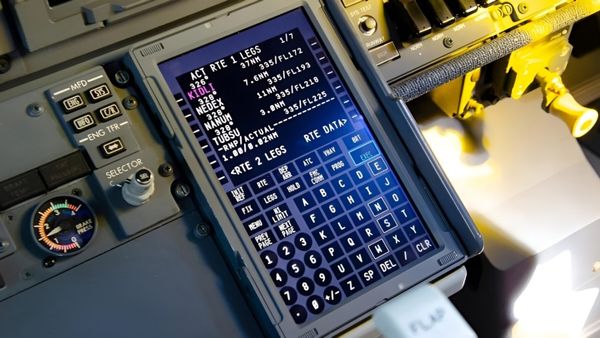 Boeing's Touchscreen Flight Controls for 737 Draw Sharp Criticism from Pilots
Boeing's plan to introduce Touchscreen Control Display Units on the 737 has sparked backlash from pilots who warn of safety and usability concerns.
NEWS
READ MORE »
Boeing's Touchscreen Flight Controls for 737 Draw Sharp Criticism from Pilots
Boeing's plan to introduce Touchscreen Control Display Units on the 737 has sparked backlash from pilots who warn of safety and usability concerns.
NEWS
READ MORE »
 Southwest Airlines Blames Brief System Outage for Boarding Delays and Checked Bag Disruptions
Southwest Airlines confirms a brief technology outage disrupted boarding and checked bag operations, forcing gate agents to process travelers manually.
NEWS
READ MORE »
Southwest Airlines Blames Brief System Outage for Boarding Delays and Checked Bag Disruptions
Southwest Airlines confirms a brief technology outage disrupted boarding and checked bag operations, forcing gate agents to process travelers manually.
NEWS
READ MORE »
 Southwest Airlines Considers Boeing 787 Order for Long-Haul International Expansion
Southwest Airlines is evaluating the Boeing 787 Dreamliner as it explores a shift into long-haul international flying, sources tell Reuters.
NEWS
READ MORE »
Southwest Airlines Considers Boeing 787 Order for Long-Haul International Expansion
Southwest Airlines is evaluating the Boeing 787 Dreamliner as it explores a shift into long-haul international flying, sources tell Reuters.
NEWS
READ MORE »
More than just headlines.
Get unlimited ad-free access to in-depth aviation news, premium stories, and exclusive insights other sites don't cover.
- Ad-free browsing on AeroXplorer
- Unlimited access to premium and exclusive articles
- Higher photo upload limits & commissions on sales
- Free access to Jetstream Magazine on higher tiers
- Ad-free browsing
- Sell aviation photos with 60% commission
- First week free!
- Everything in Basic+
- Unlimited premium articles
- Sell aviation photos with 70% commission
- Free Digital subscription to Jetstream Magazine
- First week free!
- Everything in Basic+ and Pro
- Sell aviaiton photos with 80% commission
- Early access to exclusive stories
- Free Digital+Print subscription to Jetstream Magazine