
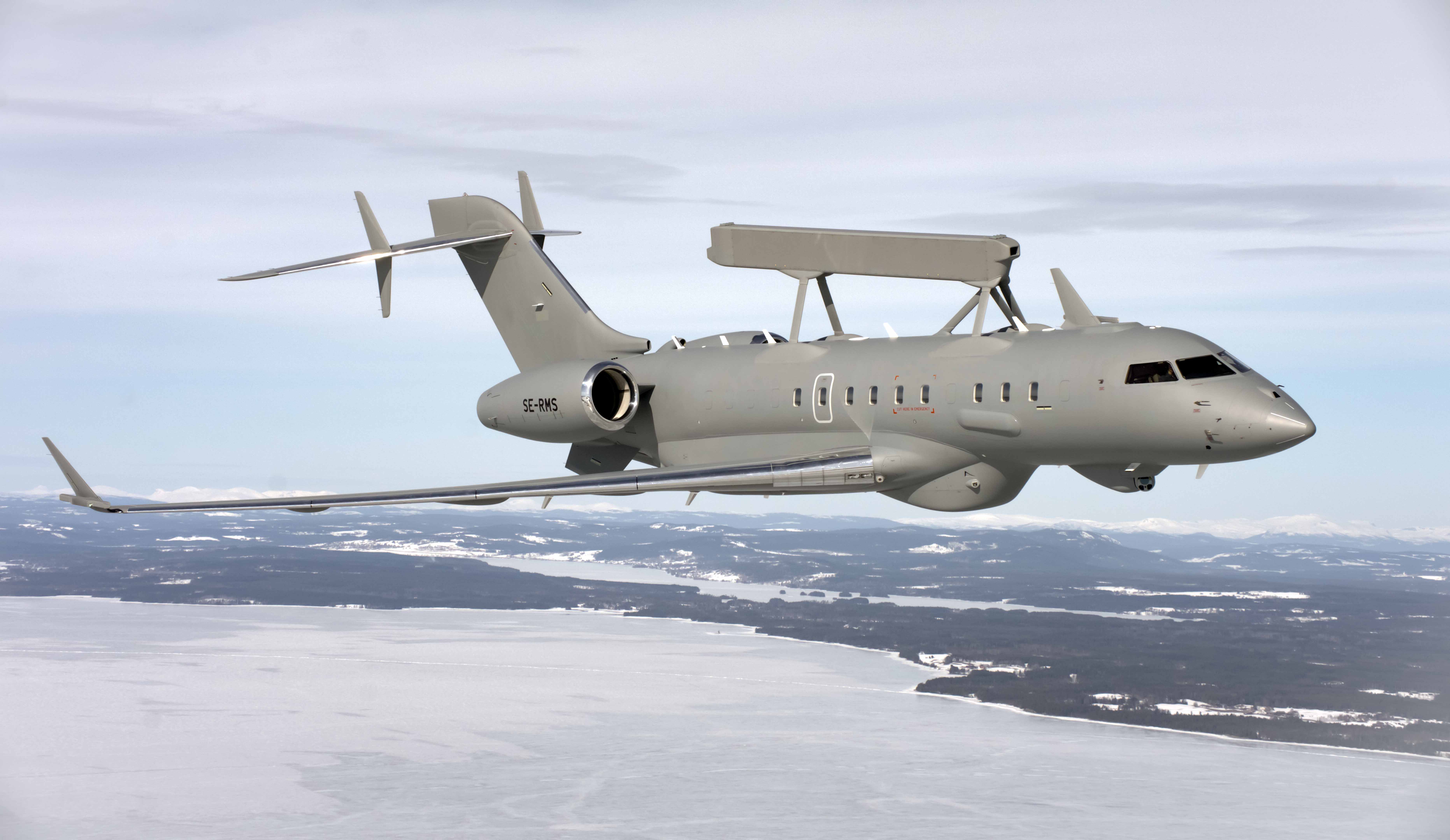
Saab is weighing the establishment of a GlobalEye production line in Canada, a move that would respond to climbing international demand for the airborne early warning and control aircraft and support a potential Canadian order for the type.
The Swedish defense manufacturer has seen interest in the GlobalEye accelerate over the past two years, driven by renewed focus on airborne surveillance across NATO and allied air forces. Canada has emerged as one of several prospective customers evaluating the platform, and Saab executives have signaled a willingness to shift elements of production abroad to secure major contracts.
Micael Johansson, Saab's chief executive officer, told reporters that the company is prepared to industrialize GlobalEye manufacturing in Canada if Ottawa commits to the aircraft. "We are prepared to do a lot in Canada when it comes to the GlobalEye," Johansson said, pointing to the possibility of final assembly, integration, and sustainment work being performed within the country.
The GlobalEye combines Saab's Erieye ER radar with the Bombardier Global 6000/6500 business jet airframe, a Canadian-built platform. That existing Canadian industrial link gives the proposal a logical foundation, as the baseline aircraft already rolls off Bombardier's lines in Toronto before being flown to Sweden for mission system integration at Saab's facility in Linköping.
Rising Order Book
Demand for the GlobalEye has grown markedly. The United Arab Emirates was the launch customer, followed by Sweden, which converted two of its planned aircraft from the earlier Saab 340based Erieye to the GlobalEye configuration. France has also selected the aircraft, and additional European operators are evaluating it as a replacement for aging airborne warning fleets, including platforms being retired by NATO's collective E-3 Sentry force.
According to Saab, the current backlog and pipeline of prospective orders have pushed the company to examine how it can scale production beyond its Swedish facilities. Establishing a second line in Canada would allow Saab to meet delivery timelines without overloading Linköping, where work on Gripen E fighters and other programs is also underway.
Johansson indicated that the scope of Canadian work would depend on the size of any domestic order and the willingness of the Canadian government to invest in the associated industrial base. Options under consideration range from component manufacturing and subsystem integration through to full final assembly and flight test activity.
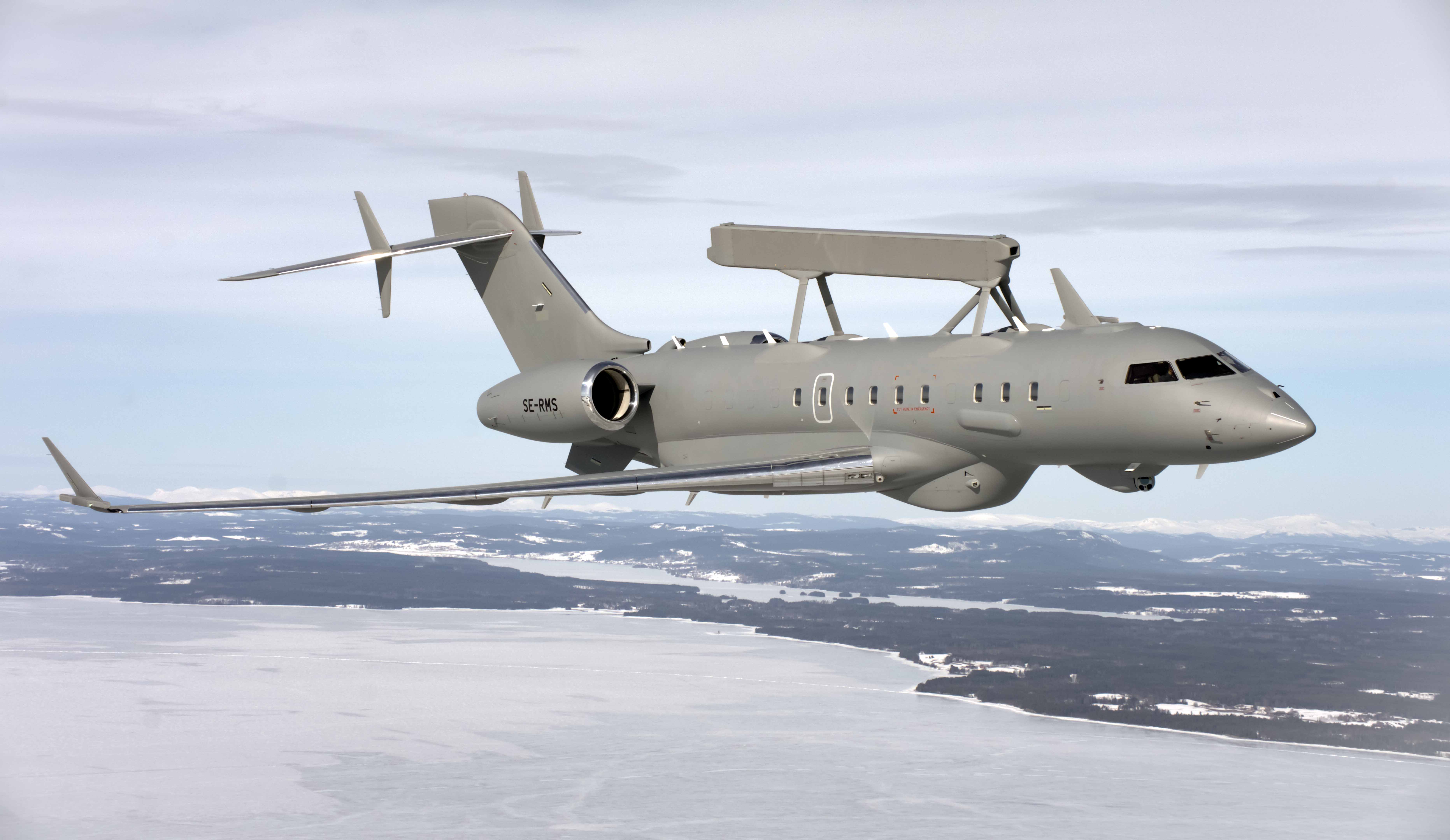
Photo: SAAB
Canadian Requirement
Canada is in the process of evaluating replacements and new capabilities across several defense domains, including airborne surveillance. The Royal Canadian Air Force does not currently operate a dedicated airborne early warning and control aircraft, relying instead on contributions to NATO's E-3 fleet and ground-based radar coverage through the North American Aerospace Defense Command.
Ottawa's recent commitments to increase defense spending, combined with pressure to modernize surveillance of the Arctic and northern approaches, have created an opening for platforms such as the GlobalEye. The aircraft offers long endurance, with Saab citing more than 11 hours of mission time, and multi-domain sensing capable of tracking air, maritime, and ground targets simultaneously.
Saab has argued that the GlobalEye's radar range and the Global 6500's performance make it well suited to the vast distances involved in Canadian domain awareness missions. The company has also highlighted the political appeal of a program that would place high-value aerospace work inside Canada, building on Bombardier's existing role as the airframer.
The Shape of Disaster: The Plane That Kept Falling Apart Mid-Air

Industrial Footprint
Saab already maintains a presence in Canada and has expanded its local engagement in recent years as it pursued the CF-18 replacement competition with the Gripen E. Although the F-35 ultimately won that contract, the company retained a focus on the Canadian market and has pointed to the GlobalEye as a natural next step.
Johansson said that a Canadian production arrangement would require close coordination with Bombardier, which supplies the Global 6500 airframe used by the GlobalEye. Deepening that relationship would allow more of the aircraft's value to be captured domestically, a factor that typically carries significant weight in Canadian defense procurement decisions.
The chief executive stopped short of announcing a firm timeline, noting that any decision to stand up a Canadian line would follow, not precede, a government commitment to the platform. "It depends on what Canada wants to do," Johansson said, framing the proposal as a response to customer requirements rather than a speculative investment.
Broader Context
The GlobalEye entered service with the UAE Air Force and has since become one of the most capable airborne early warning aircraft on the market, competing against Boeing's E-7 Wedgetail. Boeing's platform has secured orders from the United Kingdom, Australia, South Korea, Turkey, and the United States, while the GlobalEye has carved out its own position with European and Middle Eastern operators.
Saab's willingness to decentralize production reflects a broader trend among defense manufacturers responding to customer demands for domestic industrial participation. Governments awarding large contracts increasingly expect final assembly, sustainment, and technology transfer to occur within their borders, both to support local employment and to ensure sovereign operational capability.
For enthusiasts tracking the airborne early warning segment, the prospect of a Canadian GlobalEye line would mark a notable expansion of Saab's industrial footprint and reinforce Bombardier's role in military derivatives of its business jets. Any formal announcement remains contingent on Ottawa's selection process, which has yet to publish a firm timeline for a decision.
Why Did Some Air India A320s Have Extra Wheels? Bogie Gear Explained » Selma Blair Charged With Assault After Alleged Biting Incident on Delta Flight » Delta Aircraft Isolated at Ben Gurion Airport Following Bomb Threat »

Comments (0)
Add Your Comment
TAGS
NEWS Saab GlobalEye Canada Surveillance Aircraft Airborne Early Warning Defense Aviation Aircraft Production Military Aviation Defense ContractsRECENTLY PUBLISHED
 Lawmakers Press FAA to Suspend AI Air Traffic Control Tool at Washington-Area Airports
Senators and union leaders urge the FAA to pause an AI-driven air traffic management tool at DC airports, citing safety concerns.
NEWS
READ MORE »
Lawmakers Press FAA to Suspend AI Air Traffic Control Tool at Washington-Area Airports
Senators and union leaders urge the FAA to pause an AI-driven air traffic management tool at DC airports, citing safety concerns.
NEWS
READ MORE »
 Lufthansa Wins Bid for 44.9% Stake in TAP Air Portugal, Edging Out Air France-KLM
Portugal selects Lufthansa as preferred buyer for a 44.9% stake in TAP Air Portugal, beating competing offers from Air France-KLM and IAG.
NEWS
READ MORE »
Lufthansa Wins Bid for 44.9% Stake in TAP Air Portugal, Edging Out Air France-KLM
Portugal selects Lufthansa as preferred buyer for a 44.9% stake in TAP Air Portugal, beating competing offers from Air France-KLM and IAG.
NEWS
READ MORE »
 Why Engine Lease Rates Are Still Climbing as Values Level Off
Spirit Airlines’ shutdown released dozens of A320-family aircraft and spare engines into the market, but engine lease rates remain high despite stabilizing values. Explore how engine availability, MRO capacity and aircraft storage are shaping the narrowbody engine leasing market.
INFORMATIONAL
READ MORE »
Why Engine Lease Rates Are Still Climbing as Values Level Off
Spirit Airlines’ shutdown released dozens of A320-family aircraft and spare engines into the market, but engine lease rates remain high despite stabilizing values. Explore how engine availability, MRO capacity and aircraft storage are shaping the narrowbody engine leasing market.
INFORMATIONAL
READ MORE »
More than just headlines.
Get unlimited ad-free access to in-depth aviation news, premium stories, and exclusive insights other sites don't cover.
- Ad-free browsing on AeroXplorer
- Unlimited access to premium and exclusive articles
- Higher photo upload limits & commissions on sales
- Free access to Jetstream Magazine on higher tiers
- Ad-free browsing
- Sell aviation photos with 60% commission
- First week free!
- Everything in Basic+
- Unlimited premium articles
- Sell aviation photos with 70% commission
- Free Digital subscription to Jetstream Magazine
- First week free!
- Everything in Basic+ and Pro
- Sell aviaiton photos with 80% commission
- Early access to exclusive stories
- Free Digital+Print subscription to Jetstream Magazine