
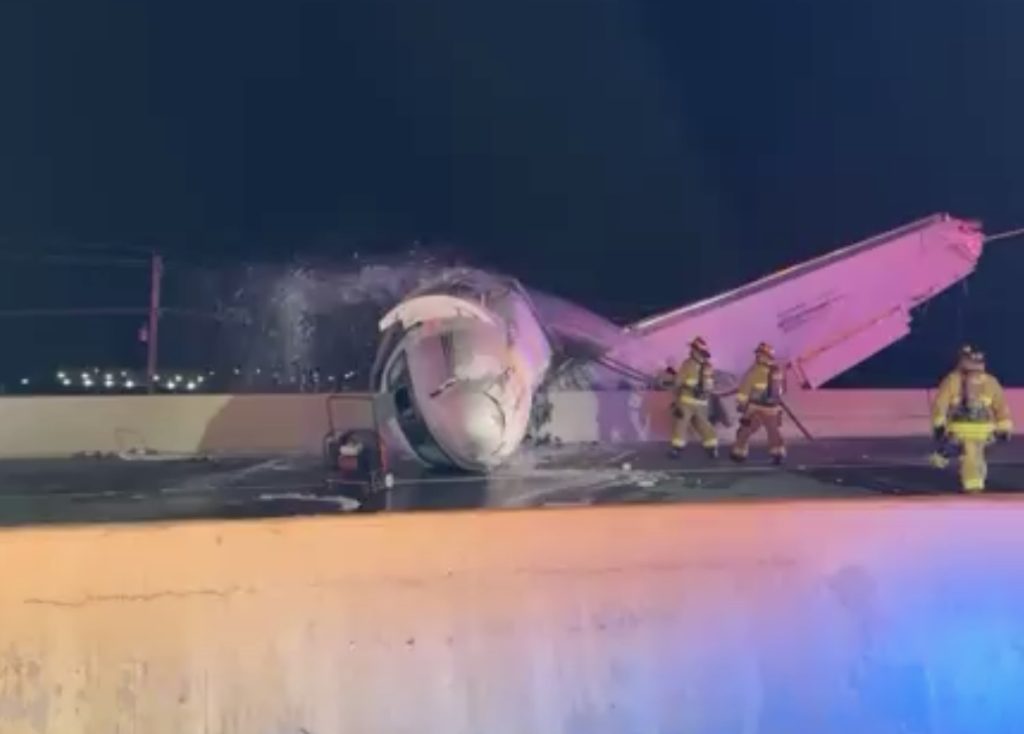
Federal investigators have not yet specified the mechanical problem that the crew of a Cessna Citation Sovereign 680A reported moments before the business jet crashed near Laredo, Texas, killing everyone on board.
The accident has drawn close attention from operators and pilots of the Sovereign family, a midsize platform with a long service record and a reputation for reliability. For now, the precise nature of the fault remains an open question, and the National Transportation Safety Board has stopped short of identifying any component, system, or sequence of events that may have contributed to the loss of control.
What the crew reported
According to information released so far, the flight crew communicated a mechanical issue to air traffic control before the aircraft went down. Investigators have confirmed that the pilots flagged a problem, but the agency has not disclosed what the crew told controllers, whether the issue involved a specific system, or how long the crew dealt with it before the aircraft departed controlled flight.
That gap matters. In an aircraft as capable as the Citation 680A, the difference between a manageable abnormality and a fatal upset often comes down to which system failed, how quickly the crew recognized it, and what configuration the jet was in at the time. Without that information, any technical reading of the event remains speculative.
The aircraft and its track record
The Citation Sovereign 680A is the updated variant of the original Sovereign, certified after a series of aerodynamic and avionics upgrades intended to extend range and improve performance. It uses Pratt and Whitney Canada PW306C engines and the Garmin G5000 flight deck, putting it among the more modern midsize jets still in active corporate and charter service.
Sovereigns have logged a strong safety record across the global fleet, with relatively few hull losses tied to airframe or systems failures. That history is part of what makes the Laredo accident notable for enthusiasts and operators who follow Cessna's midsize lineup. A fatal accident preceded by a reported mechanical fault stands out against the type's broader operational history.

Analysis: How Spirit Airlines Changed Airline Pricing, then Paid the Price
Why the silence on specifics
The NTSB typically withholds detailed findings until investigators can correlate cockpit voice recorder audio, flight data recorder parameters, radar tracks, air traffic control transcripts, and wreckage analysis. In an accident where the crew identified a problem before impact, the agency tends to be especially cautious. Premature attribution to a specific system can mislead other operators and complicate any subsequent airworthiness action.
For the Laredo crash, several technical questions remain unanswered in public reporting. Investigators have not confirmed whether the aircraft suffered a flight control anomaly, an engine issue, a pressurization or environmental fault, an electrical problem, or something else entirely. They have not indicated whether the crew declared an emergency, requested a diversion, or attempted to return to the departure airport. They have also not disclosed the altitude or phase of flight at which the trouble began.
Those details will shape the eventual probable cause finding, and they will determine whether the investigation prompts a service bulletin, airworthiness directive, or fleet-wide inspection campaign.
What enthusiasts should watch for
If you follow business aviation accident investigations closely, there are a few markers worth tracking as the inquiry progresses.
The first is the preliminary report. The NTSB typically releases a preliminary document within about 30 days of an accident. These reports rarely identify a cause, but they do confirm basic facts such as the aircraft's flight path, the crew's communications with controllers, weather at the time, and the general condition of the wreckage. Enthusiasts can use that document to rule in or rule out broad categories of failure.
The second is any factual update covering recorder data. The Citation 680A carries both a cockpit voice recorder and a flight data recorder. If those units survived the impact in usable condition, the NTSB will eventually publish parameter readouts that show control inputs, engine performance, and aircraft attitude in the final minutes. That data tends to settle most technical debates about what actually failed.
The third is any communication from Textron Aviation or the Federal Aviation Administration. If investigators identify a component or procedure that warrants fleet attention, manufacturer service information or an FAA airworthiness directive often follows. Operators of the Sovereign and Sovereign Plus will be watching for both.

Operational context
Laredo International Airport sits in south Texas near the Mexican border and handles a steady mix of cargo, general aviation, and business jet traffic. The airport's location makes it a common stop for corporate flights moving between Mexico and the United States. The flight involved in this accident departed in that operational environment, though investigators have not made public any indication that route, weather, or air traffic factors played a role in the outcome.
For the Sovereign community, the practical takeaway right now is patience. The Citation 680A has proven itself across thousands of hours of line operation, and a single accident, however serious, does not change that record on its own. What matters is what the investigation eventually reveals about the chain of events from the first sign of trouble to the final impact.
Until the NTSB publishes more, the nature of the mechanical issue that preceded the Laredo crash remains the central unanswered question of the case.
Cabin Fumes Send Delta Passengers To Hospital, Force Flight To Divert To Honolulu » Virgin Australia Cancels Flights After Cabin Crew Call In Sick, Citing Exhaustion » What Are Strakes? The Aerodynamic Fins Attached on an Aircraft's Fuselage »

Comments (0)
Add Your Comment
TAGS
NEWS Laredo Citation 680A Aircraft Crash Mechanical Fault NTSB Investigation Aviation Accident Fatal Crash Flight Operations Accident Investigation Investigation Status Wreckage AnalysisRECENTLY PUBLISHED
 UAE Suspends Iranian Airline Flights to Comply With US Sanctions, Triggering Retaliatory Airspace Ban From Tehran
The UAE has halted all Iranian carrier operations to comply with reimposed US sanctions, prompting Iran to bar Emirati airlines from its airspace.
NEWS
READ MORE »
UAE Suspends Iranian Airline Flights to Comply With US Sanctions, Triggering Retaliatory Airspace Ban From Tehran
The UAE has halted all Iranian carrier operations to comply with reimposed US sanctions, prompting Iran to bar Emirati airlines from its airspace.
NEWS
READ MORE »
 What Are Strakes? The Aerodynamic Fins Attached on an Aircraft's Fuselage
A look at how aircraft strakes quietly shape airflow, improve stability, and enhance aerodynamic performance.
INFORMATIONAL
READ MORE »
What Are Strakes? The Aerodynamic Fins Attached on an Aircraft's Fuselage
A look at how aircraft strakes quietly shape airflow, improve stability, and enhance aerodynamic performance.
INFORMATIONAL
READ MORE »
 BETA Technologies Begins Electric Aircraft Operations in North Carolina to Support Rural Healthcare Access
BETA Technologies launches its ALIA CTOL electric aircraft in North Carolina under a FAA program aimed at improving rural healthcare logistics.
NEWS
READ MORE »
BETA Technologies Begins Electric Aircraft Operations in North Carolina to Support Rural Healthcare Access
BETA Technologies launches its ALIA CTOL electric aircraft in North Carolina under a FAA program aimed at improving rural healthcare logistics.
NEWS
READ MORE »
More than just headlines.
Get unlimited ad-free access to in-depth aviation news, premium stories, and exclusive insights other sites don't cover.
- Ad-free browsing on AeroXplorer
- Unlimited access to premium and exclusive articles
- Higher photo upload limits & commissions on sales
- Free access to Jetstream Magazine on higher tiers
- Ad-free browsing
- Sell aviation photos with 60% commission
- First week free!
- Everything in Basic+
- Unlimited premium articles
- Sell aviation photos with 70% commission
- Free Digital subscription to Jetstream Magazine
- First week free!
- Everything in Basic+ and Pro
- Sell aviaiton photos with 80% commission
- Early access to exclusive stories
- Free Digital+Print subscription to Jetstream Magazine