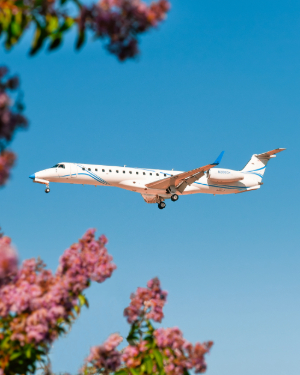
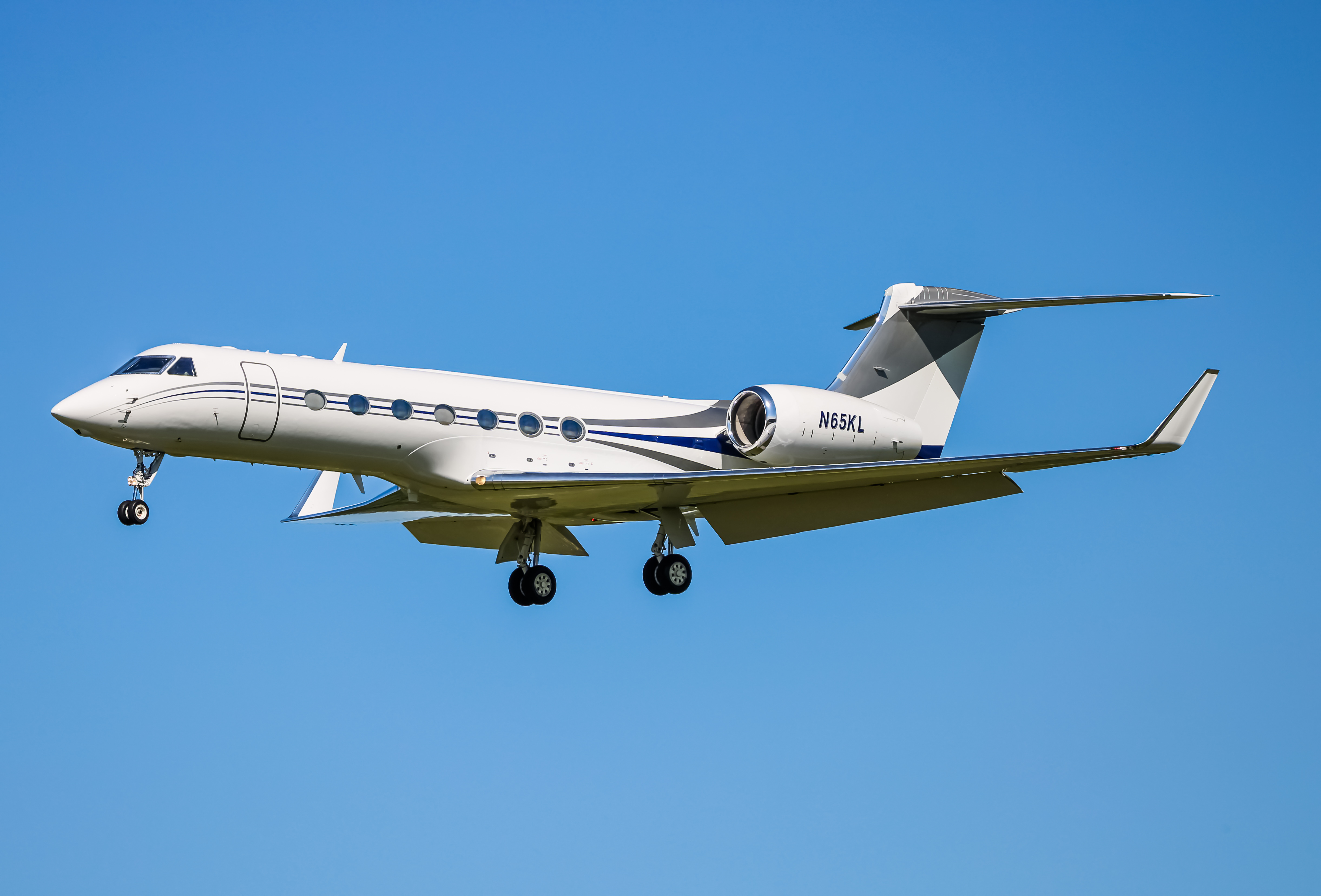

Solairus Aviation has agreed to acquire the aircraft charter and management business of Clay Lacy Aviation, a transaction that will place the combined operation among the largest managed fleets in U.S. business aviation. The deal, announced this week, will bring the total number of aircraft under Solairus management above 500, a threshold few operators in the sector have crossed.
The transaction reflects a broader shift. Owners increasingly want scale, redundancy, and geographic reach from their management partners. Solairus, based in Petaluma, California, has spent the past decade building a decentralized model that keeps flight crews close to aircraft owners while consolidating back-office functions. The addition of Clay Lacy's managed fleet extends that footprint considerably, particularly on the West Coast, where Clay Lacy has operated since 1968.
What the Deal Covers
The agreement covers Clay Lacy's aircraft management and charter operations. It does not include the company's fixed-base operations, maintenance, or aircraft sales divisions, which will continue under Clay Lacy Aviation's ownership. Brian Kirkdoffer, who has led Clay Lacy Aviation for years, will retain control of those remaining businesses.
Solairus, led by founder and chief executive Dan Drohan, will absorb the managed fleet along with the charter certificate operations. Financial terms of the transaction were not disclosed. The parties expect the deal to close later this year, subject to customary regulatory approvals.
Once finalized, the combined operation will manage aircraft across more than 70 U.S. locations, with an expanded presence at key business aviation hubs including Van Nuys, Los Angeles, and other California airports where Clay Lacy has historically held strong market position.

Photo: AeroXplorer/ Edwin Sims
Why Scale Matters
In managed charter, scale drives economics. Insurance rates, fuel purchasing, parts inventory, training programs, and technology platforms all improve as fleet size grows. Owners benefit through more competitive operating costs and access to a broader relief crew network. Charter customers gain access to a larger pool of aircraft, which improves availability during peak demand windows.
The business aviation management sector has seen steady consolidation since the pandemic-era demand surge. Private flight hours climbed sharply in 2021 and 2022, straining operators who lacked the crew depth or maintenance capacity to keep pace. Larger platforms proved more resilient. That lesson has shaped strategic thinking across the industry, and the Solairus-Clay Lacy transaction fits that pattern.
Drohan, speaking about the deal, framed it as a natural extension of both companies' work. In comments reported by AIN, he said the combination would preserve the service standards that owners at both companies have come to expect while adding operational depth.

Analysis: How Spirit Airlines Changed Airline Pricing, then Paid the Price
Clay Lacy's Legacy
Clay Lacy Aviation carries one of the most recognized names in business aviation. Founded by veteran pilot Clay Lacy, the company built a reputation for premium service, executive charter, and specialized aerial cinematography work. Its Van Nuys headquarters has long served as a hub for celebrity and corporate travel out of Southern California.
The decision to divest the charter and management arm allows Clay Lacy Aviation to focus resources on its FBO network, maintenance, and other service lines. The company has invested in FBO expansion over recent years, including facilities in Waterbury-Oxford, Connecticut, and other locations outside California. Concentrating on infrastructure and services, rather than the capital-intensive work of running a nationwide managed fleet, offers a cleaner operating model going forward.
For Clay Lacy's existing managed aircraft owners, the transition raises practical questions about crew continuity, contract terms, and service integration. Solairus has stated that it intends to retain Clay Lacy's flight crews and operational personnel connected to the managed fleet. Retention of experienced pilots and directors of maintenance will be central to a smooth handoff.

Photo: AeroXplorer/ Diego Perez
Regulatory and Operational Considerations
Combining two Part 135 charter certificates is not a simple administrative matter. The FAA requires detailed review of operations specifications, training programs, and safety management systems when certificates merge or when aircraft transfer between operators. Industry observers expect the integration process to unfold over several months following closing.
Solairus operates under a single certificate structure that has scaled successfully as the fleet has grown. Adding Clay Lacy's aircraft will require careful mapping of crew qualifications, aircraft types, and operational bases. Both companies have experience with complex fleets that include Gulfstream, Bombardier, Dassault, and Embraer aircraft, which should ease compatibility work.
What Comes Next
For owners, charter clients, and industry competitors, the deal signals that the top tier of aircraft management is consolidating around a smaller number of very large operators. Executive Jet Management, Jet Aviation, and NetJets remain among the largest players, though each occupies a somewhat different segment. A Solairus platform of more than 500 managed aircraft positions the combined company as a direct competitor at the top of the pure-play management category.
Watch for follow-on effects across the sector. Smaller regional operators may face pricing pressure as the combined Solairus-Clay Lacy platform leverages purchasing scale. Talent competition, already intense across pilot and maintenance labor markets, will likely intensify further as the combined company works to retain and grow its workforce.
The deal also underscores a maturation in business aviation. What was once a fragmented cottage industry of regional operators has evolved into a market where scale, technology investment, and operational discipline increasingly determine competitive position. Solairus and Clay Lacy have both benefited from that shift. Their combination accelerates it.
Embraer Posts Record 66 Aircraft Deliveries in Q3 2026 as Commercial Jets Climb 10% » Ryanair Boeing 737 Aborts Takeoff at Alicante Airport, Civil Aviation Commission Launches Investigation » United Express Flight Returns to Houston After Cockpit Windshield Shatters Mid-Flight »

Comments (0)
Add Your Comment
TAGS
NEWS Solairus Aviation Clay Lacy Aviation Private Jet Charter Aircraft Management Business Aviation M&A Part 91 Part 135 Dan DrohanRECENTLY PUBLISHED
 IATA's New Passenger Data Shows Global Air Travel Demand Shrinking for the First Time This Year
Global air travel just hit a reverse that has not been seen in months -- the numbers point to something more interesting than a simple slowdown.
INFORMATIONAL
READ MORE »
IATA's New Passenger Data Shows Global Air Travel Demand Shrinking for the First Time This Year
Global air travel just hit a reverse that has not been seen in months -- the numbers point to something more interesting than a simple slowdown.
INFORMATIONAL
READ MORE »
 The $30 Billion Question: Why America's Air Traffic Control Overhaul Keeps Getting More Expensive
The U.S. government is seeking $30 billion more to modernize America’s aging air traffic control system. Explore the rising $42.5 billion price tag, GAO oversight concerns, and where the new funding would go.
INFORMATIONAL
READ MORE »
The $30 Billion Question: Why America's Air Traffic Control Overhaul Keeps Getting More Expensive
The U.S. government is seeking $30 billion more to modernize America’s aging air traffic control system. Explore the rising $42.5 billion price tag, GAO oversight concerns, and where the new funding would go.
INFORMATIONAL
READ MORE »
 Embraer Posts Record 66 Aircraft Deliveries in Q3 2026 as Commercial Jets Climb 10%
Embraer delivered 66 aircraft in Q3 2026, its strongest third quarter on record, with commercial jets up 10% and business jets rising 41%.
NEWS
READ MORE »
Embraer Posts Record 66 Aircraft Deliveries in Q3 2026 as Commercial Jets Climb 10%
Embraer delivered 66 aircraft in Q3 2026, its strongest third quarter on record, with commercial jets up 10% and business jets rising 41%.
NEWS
READ MORE »
More than just headlines.
Get unlimited ad-free access to in-depth aviation news, premium stories, and exclusive insights other sites don't cover.
- Ad-free browsing on AeroXplorer
- Unlimited access to premium and exclusive articles
- Higher photo upload limits & commissions on sales
- Free access to Jetstream Magazine on higher tiers
- Ad-free browsing
- Sell aviation photos with 60% commission
- First week free!
- Everything in Basic+
- Unlimited premium articles
- Sell aviation photos with 70% commission
- Free Digital subscription to Jetstream Magazine
- First week free!
- Everything in Basic+ and Pro
- Sell aviaiton photos with 80% commission
- Early access to exclusive stories
- Free Digital+Print subscription to Jetstream Magazine