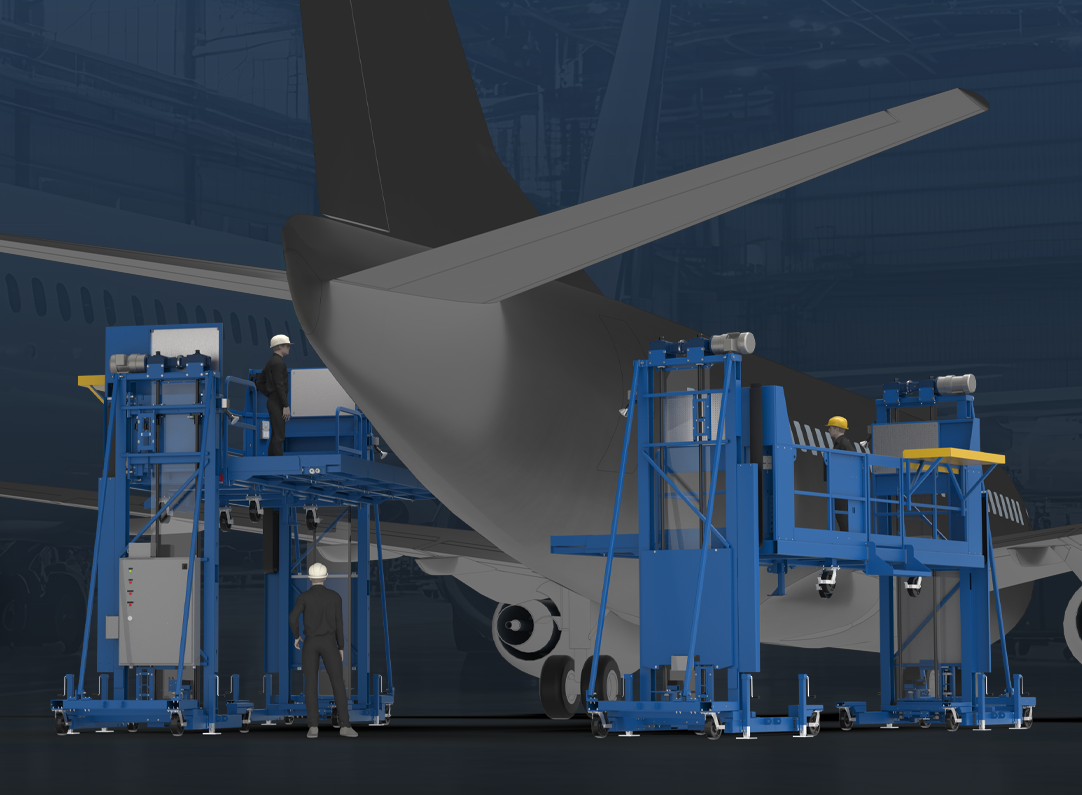
As modern aircraft become more complex, the infrastructure supporting MRO operations must evolve as well. One of the most critical components of an efficient hangar is the access equipment that technicians utilize during their repair operations.
Multi-axis lifts, in particular, enable maintenance crews to operate in tight spaces, essentially revolutionizing the way aircraft are serviced.
LPI: Leading the Industry for 45 Years
For the past 45 years, LPI Lift Systems has been the market leader, developing some of the most sophisticated lifting solutions in the industry. Based in Eau Claire, Wisconsin, the company has spent nearly half a century refining a robust product line of lifts that can adapt to any hangar.
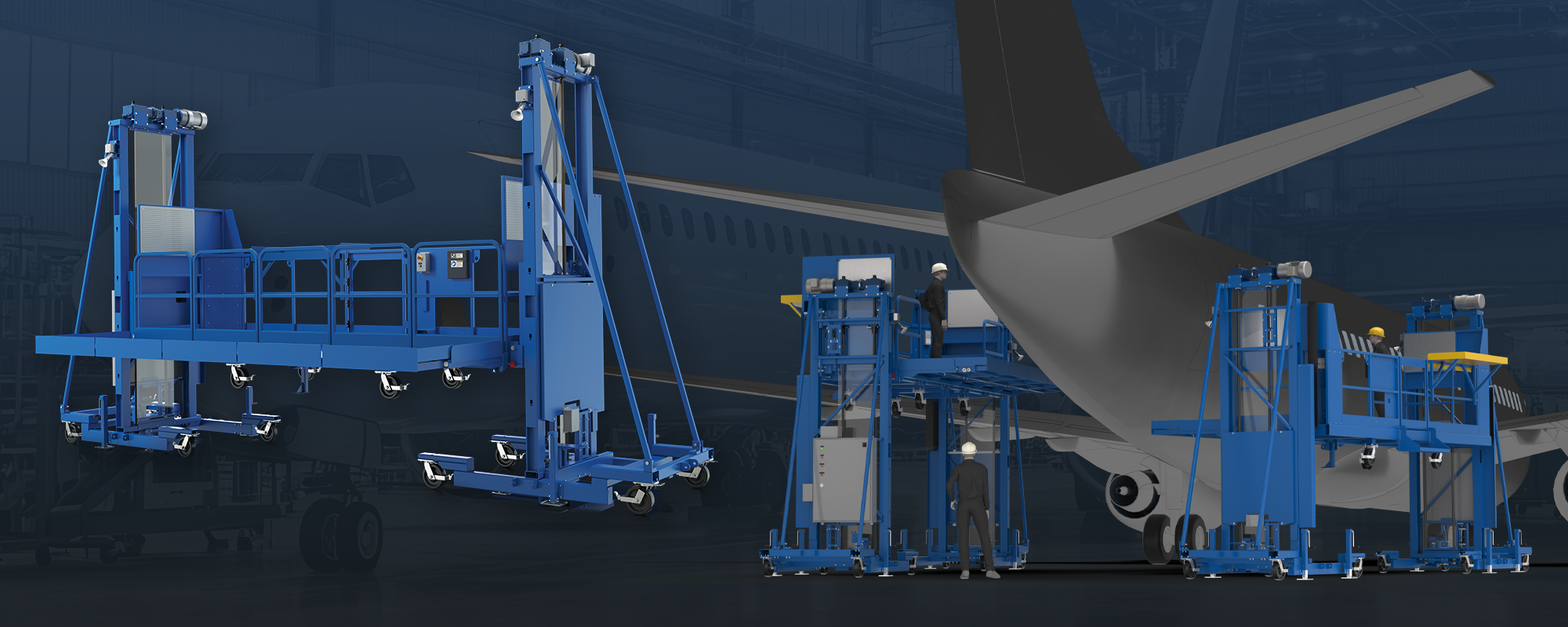
The company specializes in aviation, industrial, and OEM applications, promoting safety and durability throughout. Some of the most common safety features include:
- Lifts built with guardrails (including toe boards) to prevent people and tools from falling
- Grated flooring to improve traction when walking
- Self-latching, spring-loaded gates that open inwards
- Bumpers along the exterior of the platform, which auto-stop the lift if contact is made
- Light beacons and audio alarms to provide visible and audible cues when the lift is in motion
- Fall restraint anchor points
- Emergency stop and emergency descent buttons on platforms
Traditional access methods, like ladders and scaffolding, introduce significant ergonomic challenges. What's more, technicians using this equipment face many safety risks, both to themselves and the aircraft they service.
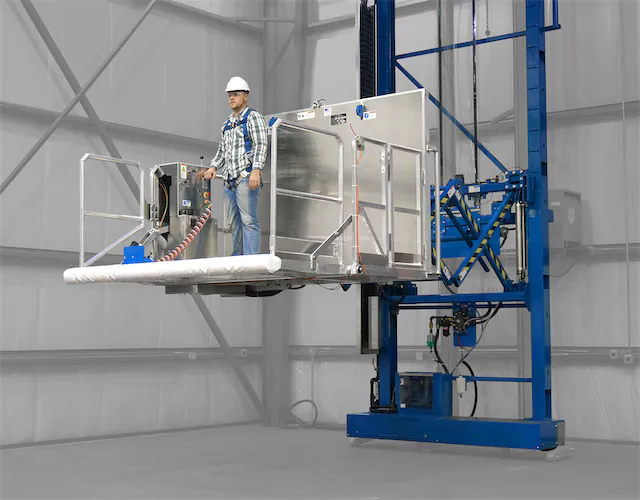
First, technicians must carry ladders to their working location. In doing this, there is a chance that the ladder can scratch – or even dent – the aircraft. Once the ladder is placed, the technician must climb it, often contorting their body to reach a certain location. Over time, this puts extra strain on the neck and back, leading to health complications in the future.
LPI's lift systems are designed to eliminate these inefficiencies.
By allowing technicians to adjust both height and position, lifts enable work to be performed at an optimal ergonomic level. Whereas technicians currently adapt their bodies to the task, technicians on LPI lifts can maintain stable, natural working positions with direct access to the work area. This not only reduces the physical strain but also lowers the risk of repetitive stress injuries, improves precision and accuracy, ultimately increasing overall technician productivity.
In fast-paced MRO environments, these benefits translate directly into reduced downtime and higher throughput.
Custom Lifts
Another key differentiator for LPI lies in its engineering philosophy. Rather than designing static platforms to provide access to certain parts of the aircraft, LPI's lifts are designed for multi-access movement, specifically for the hangar or space in which the lift is installed. Instead of three or four pre-set lifts that companies derive custom lifts from – essentially, a "pseudo-custom" solution – LPI can design custom lifts from scratch. This ensures that every customer receives a product specifically tailored to their needs, without any shortcuts.
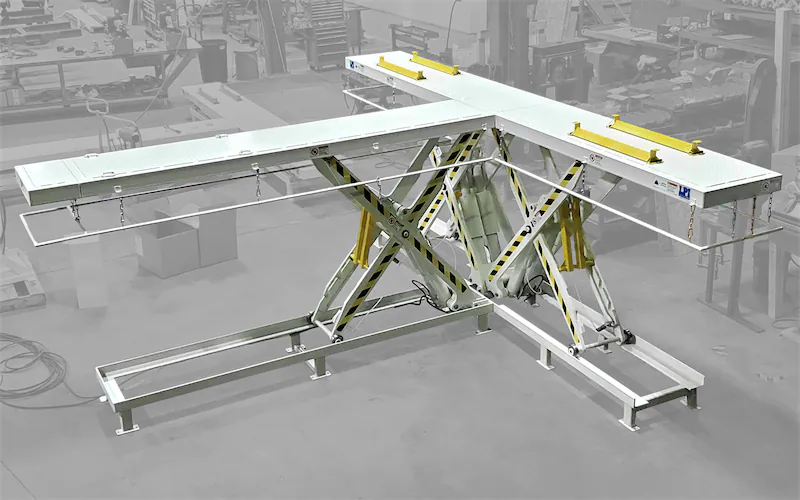
To-date, the company estimates that approximately 40 percent of the lifts it manufactures are custom.
The sales process ultimately changes from buyer to buyer, but the standard sales process takes approximately 3-6 months. Typically, a customer would first inquire about a lift, sharing specific needs and challenges with LPI's sales team. After an internal review, the engineering team would provide a solution that fits the client's application. Occasionally, LPI may even travel to the customer's facility – whether it be a maintenance hangar, manufacturing plant, or production site – to obtain additional context about the lift's design and functionality requirements. This is especially the case with larger-scale orders.
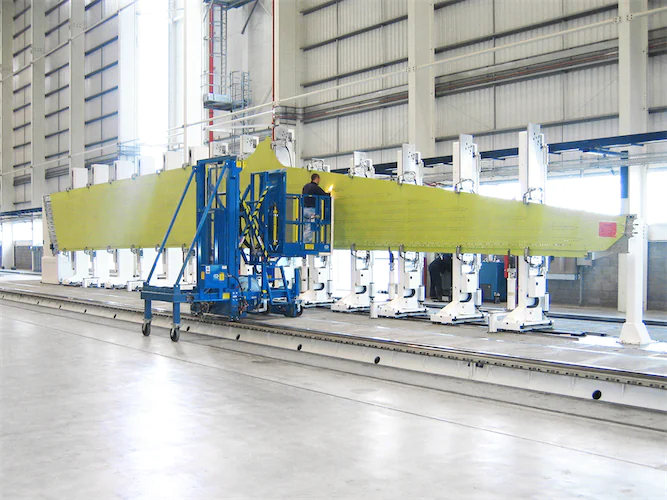
After a lift is installed, LPI offers a wide variety of maintenance services. The company provides its team of field service technicians on-site to conduct ANSI-mandated inspections every 13 months.
Standard Lifts
While LPI is renowned for its custom engineering, the company’s line of standard, pre-engineered lifts provides a made-to-order solution with significantly faster lead times. The catalog features nine specialized lift types designed for specific industrial applications, such as the 3-Axis Paint Booth Lift (PL Series) and Stationary Pneumatic Scissor Lift (SPHF Series).
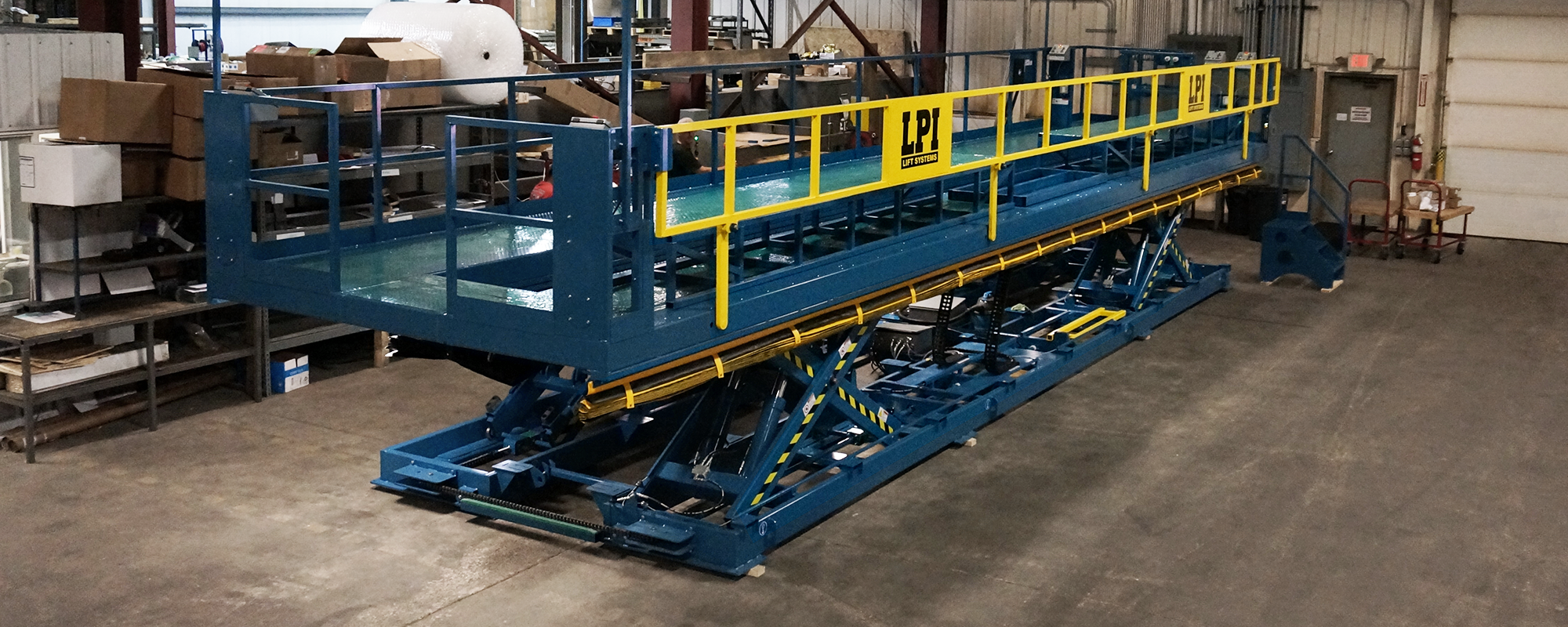
By choosing from field-proven lift systems, customers receive established designs that can seamlessly integrate with existing manufacturing workflows.
Lifts Built to Last
LPI’s emphasis on bespoke lift design, coupled with its use of high-quality components and materials, has resulted in long-term reliability, with many of its lifts remaining in service for more than 25 years.
"We pride ourselves on quality. We design things to last," noted Jason Richards, Creative Services Manager at LPI.
There is no doubt that the tools used by technicians must evolve quickly, especially considering that MRO operations are becoming more sophisticated. LPI's combination of custom engineering and long-term reliability positions it as one of the most trusted lift manufacturers in the aviation industry. The company has made user safety a priority, which is well-reflected in the quality of the lifts it produces.
Boeing's Touchscreen Flight Controls for 737 Draw Sharp Criticism from Pilots » 4th vs 5th Generation Fighter Jets: How Fighter Jets Have Evolved » NetJets Expands US Footprint With Three New Private Terminals and Larger Palm Beach Facility »

Comments (0)
Add Your Comment
TAGS
INFORMATIONAL LPI Lift Systems PB Expo Feature Lifts MRO Maintenance Safety Downtime Part 145RECENTLY PUBLISHED
 How the AI Chip Boom Is Squeezing Transpacific Air Cargo
AI-driven semiconductor demand and Middle East disruptions have pushed transpacific air cargo rates higher, with Taiwan-US rates reaching $7.02/kg in May 2026. Explore why shippers are paying premium prices, shifting to shorter contracts, and whether the market will cool as AI demand evolves.
INFORMATIONAL
READ MORE »
How the AI Chip Boom Is Squeezing Transpacific Air Cargo
AI-driven semiconductor demand and Middle East disruptions have pushed transpacific air cargo rates higher, with Taiwan-US rates reaching $7.02/kg in May 2026. Explore why shippers are paying premium prices, shifting to shorter contracts, and whether the market will cool as AI demand evolves.
INFORMATIONAL
READ MORE »
 Selma Blair Charged With Assault After Alleged Biting Incident on Delta Flight
Actress Selma Blair faces assault charges after allegedly biting a Delta flight attendant and kicking a police officer during a disturbance at JFK.
NEWS
READ MORE »
Selma Blair Charged With Assault After Alleged Biting Incident on Delta Flight
Actress Selma Blair faces assault charges after allegedly biting a Delta flight attendant and kicking a police officer during a disturbance at JFK.
NEWS
READ MORE »
 Riyadh Air Relocates New Boeing 787 Dreamliners Away From Capital Amid Houthi Missile Threat
Saudi Arabia's new flag carrier Riyadh Air has moved its Boeing 787 Dreamliners out of Riyadh over fears of Houthi missile attacks ahead of launch.
NEWS
READ MORE »
Riyadh Air Relocates New Boeing 787 Dreamliners Away From Capital Amid Houthi Missile Threat
Saudi Arabia's new flag carrier Riyadh Air has moved its Boeing 787 Dreamliners out of Riyadh over fears of Houthi missile attacks ahead of launch.
NEWS
READ MORE »
More than just headlines.
Get unlimited ad-free access to in-depth aviation news, premium stories, and exclusive insights other sites don't cover.
- Ad-free browsing on AeroXplorer
- Unlimited access to premium and exclusive articles
- Higher photo upload limits & commissions on sales
- Free access to Jetstream Magazine on higher tiers
- Ad-free browsing
- Sell aviation photos with 60% commission
- First week free!
- Everything in Basic+
- Unlimited premium articles
- Sell aviation photos with 70% commission
- Free Digital subscription to Jetstream Magazine
- First week free!
- Everything in Basic+ and Pro
- Sell aviaiton photos with 80% commission
- Early access to exclusive stories
- Free Digital+Print subscription to Jetstream Magazine