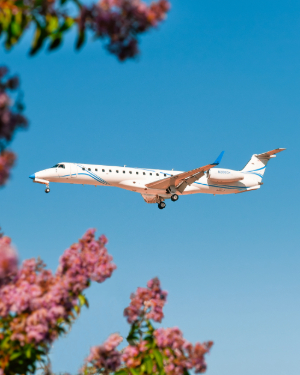


As the Dubai Air Show flies by, new airline orders continue to roll in. One of these new orders involves Egyptian flag carrier Egyptair, who has inked a new order for the Airbus A350.

Egyptian Flagship
Egyptair has placed an order for ten Airbus A350-900s in an agreement with Airbus, whose monetary amount has yet to be disclosed. Deliveries will commence in 2025. Once delivered, the A350 will become the new flagship of Egyptair's fleet. These aircraft will feature 340 seats, though the airline has not specified the exact configuration.
The Airbus A350 is known to be one of the most fuel-efficient aircraft on the market today. In a press release by Airbus, the company noted that the jet will provide Egyptair with 25% less fuel burn and less emissions. Furthermore, the passenger experience will be improved with the planes featuring Airbus' AirSpace cabin. This features wider seats, high ceilings, and ambient lighting.

Egyptair's Chairman and CEO, Yehia Zakaria, had this to say regarding his airline's new order:
"EGYPTAIR has firmed up an agreement with Airbus to procure 10 A350-900 aircraft, each boasting a capacity of 340 seats. These aircraft come equipped with cutting-edge technologies and Rolls-Royce Trent XWB engines, known for their modern design and reduced fuel emissions and consumption. As we tackle growing demand across our network, this aircraft is the optimal choice."
The Chief Commercial Officer and Head of Airbus International, Christian Scherer, added the following about the Egyptair order:
"Once delivered, the A350-900 will be Egyptair's flagship aircraft. Adding the world's most modern and efficient widebody aircraft to the airline's fleet will be instrumental in expanding its offering, opening new opportunities, particularly in the Western U.S. and the Far East."

Egyptair's Fleet
Egyptair operates a mix of Boeing and Airbus aircraft at the moment. The carrier has 77 aircraft, with 19 being widebody aircraft.
In terms of widebody jets, the airline operates the following:
- Airbus A330-200 (Four Active)
- Airbus A330-200F (Three Active - Egyptair Cargo)
- Airbus A330-300 (Four Active)
- Boeing 777-300ER (Six Active)
- Boeing 787-9 (Seven Active)

Based on the numbers above, the A350 will be the largest aircraft by fleet size, with ten examples in the fleet once all delivered. Egyptair has not intended to replace older widebody jets with the new A350s.
Therefore, it can be assumed that the new A350 aircraft will open up longer routes and supplement the current long-haul routes Egyptair operates with its 777 and 787 fleets.
Jet2 Boeing 737 Veers Off Birmingham Airport Runway During Landing » German Eurofighters Intercept British Airways Flight » British Airways Finishes Starlink Wi-Fi Rollout Across Its A350 Fleet »

Comments (0)
Add Your Comment
TAGS
NEWS Egyptair Dubai Airshow Egypt Aircraft Order Airbus A350-900 Airbus A350 Widebody A350RECENTLY PUBLISHED
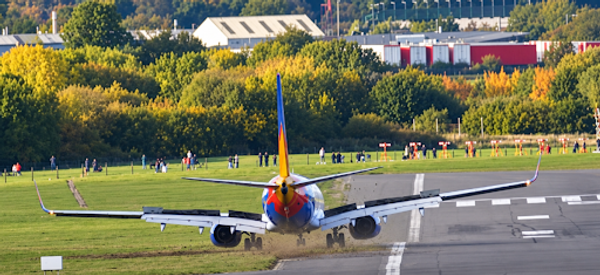 Jet2 Boeing 737 Veers Off Birmingham Airport Runway During Landing
A Jet2 Boeing 737-800 veered off the left side of the runway at Birmingham Airport after landing on Sunday, October 25, as Storm Boelo brought strong winds to the UK.
NEWS
READ MORE »
Jet2 Boeing 737 Veers Off Birmingham Airport Runway During Landing
A Jet2 Boeing 737-800 veered off the left side of the runway at Birmingham Airport after landing on Sunday, October 25, as Storm Boelo brought strong winds to the UK.
NEWS
READ MORE »
 This Week in Aviation: The 10 Stories That Mattered Most
From major airline developments to aircraft updates and industry shifts, this weekly recap highlights the ten most-read aviation stories from the week of October 18.
INFORMATIONAL
READ MORE »
This Week in Aviation: The 10 Stories That Mattered Most
From major airline developments to aircraft updates and industry shifts, this weekly recap highlights the ten most-read aviation stories from the week of October 18.
INFORMATIONAL
READ MORE »
 Jet2 Boeing 737 Veers Off Birmingham Airport Runway During Landing
A Jet2 Boeing 737-800 veered off the runway at Birmingham Airport during landing, prompting emergency crews to respond.
NEWS
READ MORE »
Jet2 Boeing 737 Veers Off Birmingham Airport Runway During Landing
A Jet2 Boeing 737-800 veered off the runway at Birmingham Airport during landing, prompting emergency crews to respond.
NEWS
READ MORE »
More than just headlines.
Get unlimited ad-free access to in-depth aviation news, premium stories, and exclusive insights other sites don't cover.
- Ad-free browsing on AeroXplorer
- Unlimited access to premium and exclusive articles
- Higher photo upload limits & commissions on sales
- Free access to Jetstream Magazine on higher tiers
- Ad-free browsing
- Sell aviation photos with 60% commission
- First week free!
- Everything in Basic+
- Unlimited premium articles
- Sell aviation photos with 70% commission
- Free Digital subscription to Jetstream Magazine
- First week free!
- Everything in Basic+ and Pro
- Sell aviaiton photos with 80% commission
- Early access to exclusive stories
- Free Digital+Print subscription to Jetstream Magazine