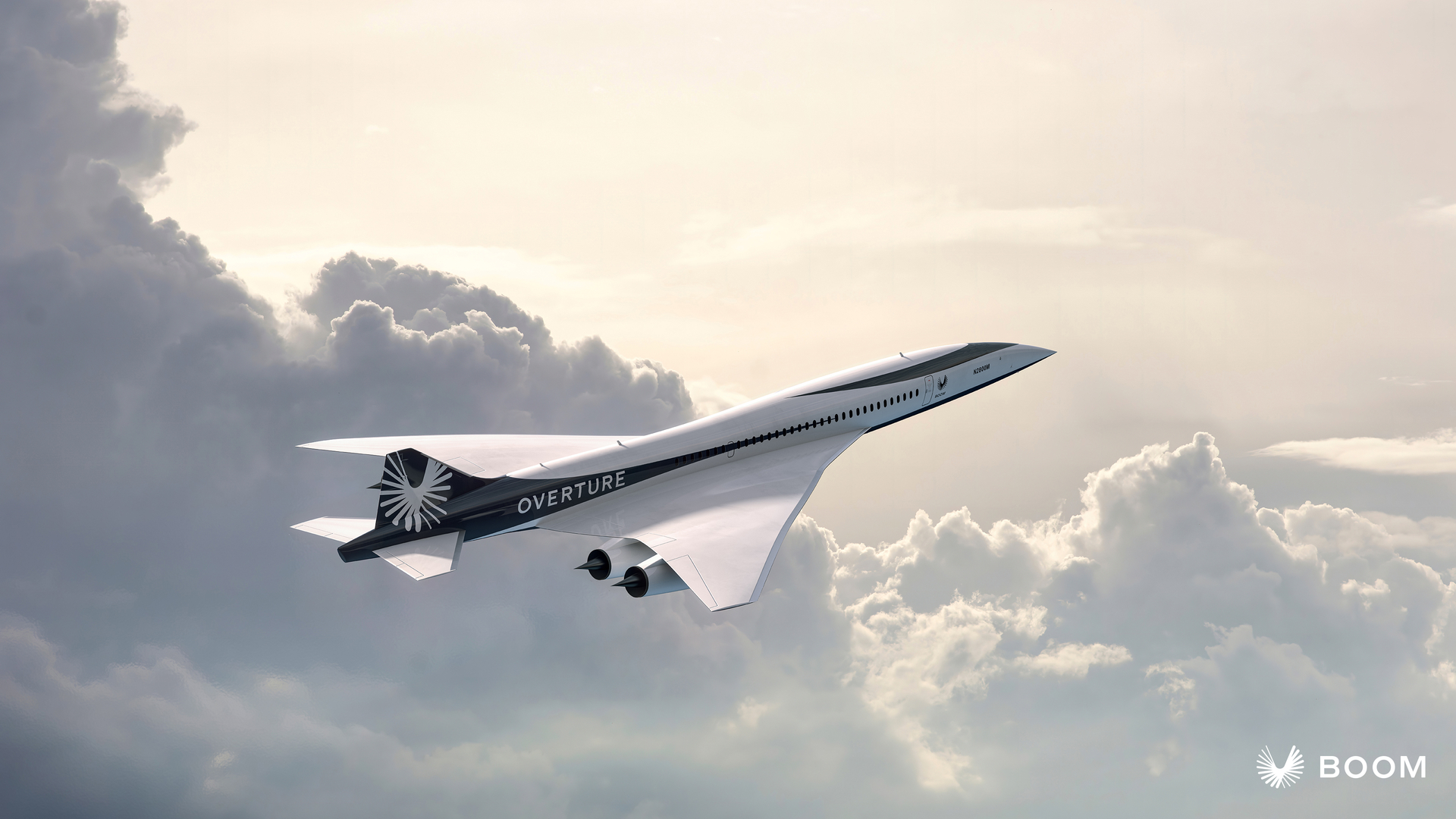
For decades, the dream of supersonic flight has remained, simply, a dream. While commercial travel at Mach 2 ended with the Concorde's retirement in 2003, the idea of smaller, quieter, and more efficient supersonic aircraft has never truly disappeared. Now, Colorado-based Boom Supersonic is working to bring back supersonic air travel with its new aircraft, Overture, set to enter service in just 4-5 years.
However, Boom's ambitions may stretch even further – toward a future where business travelers and critical cargo could cross oceans at twice the speed of sound.
About Overture
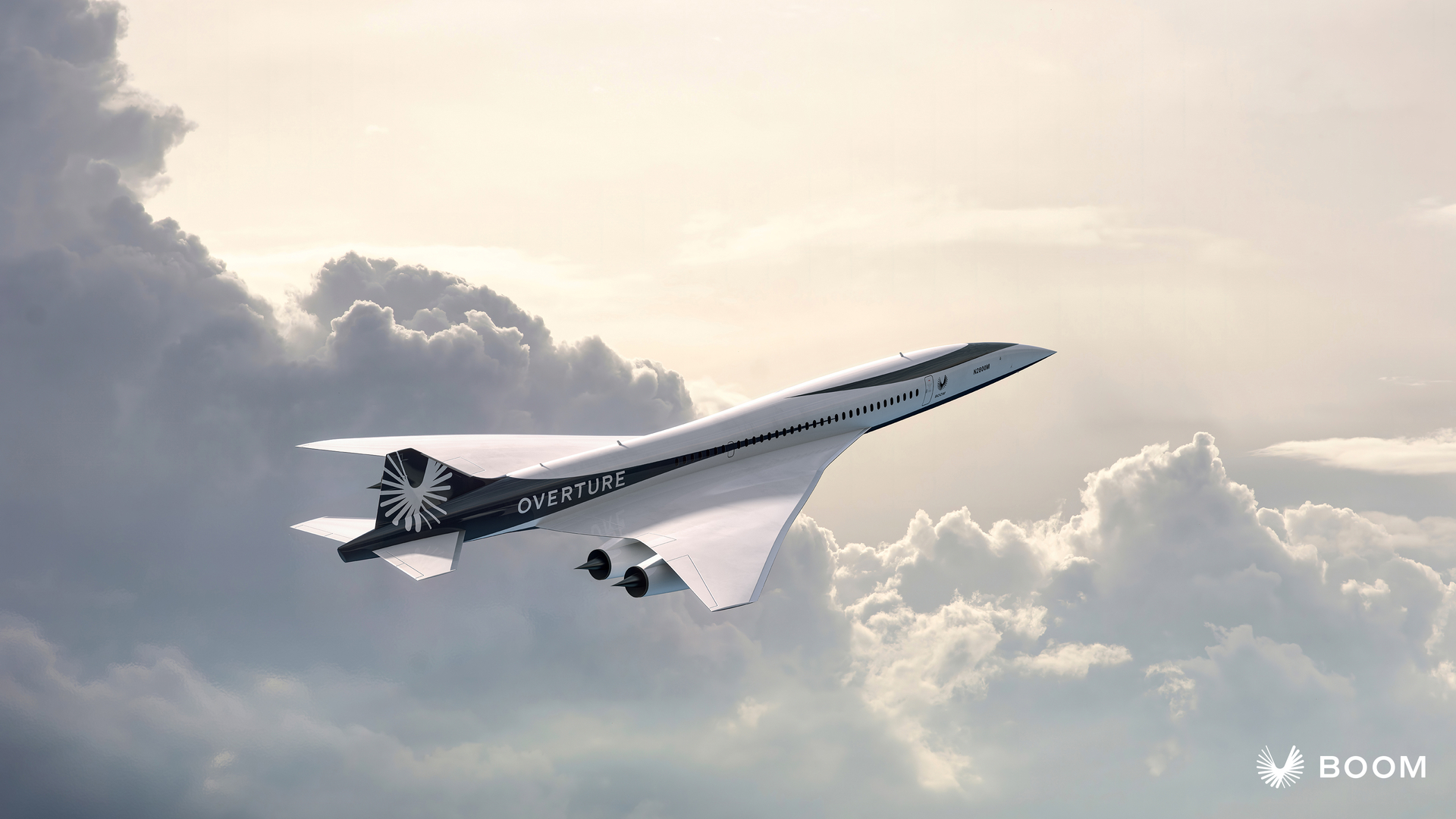
Overture will carry 64 to 80 passengers at speeds of up to Mach 1.7, twice the speed of today's fastest airliners. By using sustainable aviation fuel (SAF) and advanced composite materials, Boom's aircraft will not only be cost-effective for airlines to operate, but also sustainable. In fact, the company is committed to achieving net-zero carbon operations, with a focus on minimizing community noise and reducing lifecycle emissions through cleaner production methods.
On Boom's website, the company highlights the time savings its aircraft will bring:
- New York to Los Angeles in 4:00 hours instead of 5:50 hours
- Los Angeles to Washington, D.C. in 3:15 hours instead of 4:35 hours
- Seattle to Miami in 3:40 hours instead of 5:15 hours
- Miami to Los Angeles in 3:20 hours instead of 5:10 hours
- San Francisco to New York in 3:30 hours instead of 5:10 hours
Innovation at Mach 1.7
In 1973, the FAA introduced FAR 91.817, which banned supersonic aircraft from flying over land without a waiver. The sonic boom generated by aircraft was so loud, it could startle entire cities. Now, however, Boom Supersonic is working with the FAA to rewrite these rules, amid the introduction of its new technology: "Boomless Cruise."
With Boomless Cruise, aircraft are able to travel faster than Mach 1 while still ensuring a sonic boom can't be heard on the ground. This is a pivotal breakthrough for the manufacturer as it now opens the door to supersonic transcontinental flights – think Miami to Los Angeles in less than 3.5 hours.
However, this begs the question: Does Boom have intentions of extending this capability to business or cargo jets?
AeroXplorer had the privilege of speaking with Tristan "Geppetto" Brandenburg, Chief Test Pilot at Boom Supersonic. In conversation, he commented on how he sees the future of Boom's product line and if supersonic cargo or business jets could be in the company's future.
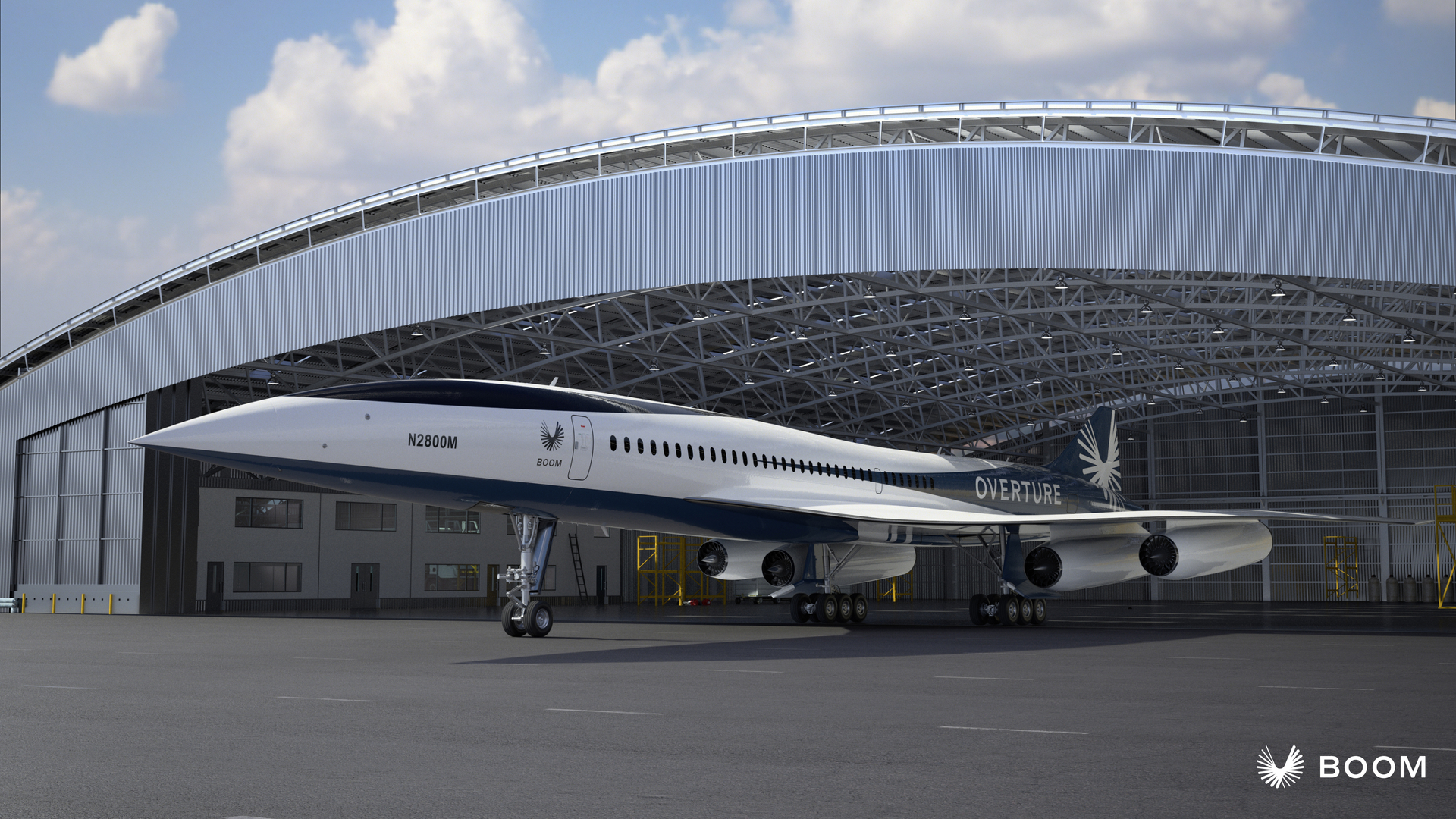
While he admitted Boom's role in cargo remains unclear, he was hopeful the company could soon venture into business jets.
"I think there's certain scenarios where three hours does make a difference for cargo, like organ donations, transplants, and stuff like that. Three hours across the ocean may mean the difference between life and death in that scenario. As far as other cargo goes, I'm certainly not an expert in what the needs of cargo carriers are. That being said, I could see Overture being designed to carry cargo if the market indicates that that would be useful to it."
When asked if business jets could be in Boom's future, Brandenburg seemed more optimistic.
"As far as the business jet goes: absolutely. There are certainly high-net-worth individuals whose time is a premium, and Overture would be a great use for that." He emphasized Boom's philosophy on human connection, adding, "we're trying to make the world dramatically more accessible [...] If you find yourself frequently crossing the ocean, then saving three hours on that crossing would definitely be worth it."
As Boom continues refining its technology in preparation for Overture's introduction to market, Brandenburg's optimism reflects a broader belief that supersonic travel is closer than ever. If Boom succeeds, crossing the Atlantic and being back by dinnertime might once again become a reality.
Only this time, there would be no supersonic boom.
Why Did Some Air India A320s Have Extra Wheels? Bogie Gear Explained » United 777 Diverts to Dublin After Cockpit Windscreen Cracks Over the Atlantic » NetJets Expands US Footprint With Three New Private Terminals and Larger Palm Beach Facility »

Comments (1)
 Dave Anderson
A smaller airplane will have an easier time training people to accept a supersonic airplane with a minimal boom. The sonic pressures increase with aircraft size, so it’s more difficult to create an acceptable large airplane than a small one. Start small, then increase when successful.
Dave Anderson
A smaller airplane will have an easier time training people to accept a supersonic airplane with a minimal boom. The sonic pressures increase with aircraft size, so it’s more difficult to create an acceptable large airplane than a small one. Start small, then increase when successful.
Add Your Comment
TAGS
STORIES Exclusive Boom Boom Supersonic Supersonic Travel Overture Business Jets NBAA NBAA-BACE Technology StartupRECENTLY PUBLISHED
 American Airlines 737 Diverts to Chicago O'Hare After Suspected Cabin Fire
An American Airlines Boeing 737 made an emergency landing at Chicago O'Hare after crew reported a suspected fire inside the cabin.
NEWS
READ MORE »
American Airlines 737 Diverts to Chicago O'Hare After Suspected Cabin Fire
An American Airlines Boeing 737 made an emergency landing at Chicago O'Hare after crew reported a suspected fire inside the cabin.
NEWS
READ MORE »
 FAA Nears Final Approval of Boeing 737 MAX 10 as Certification Review Concludes
The FAA has completed its final review of the Boeing 737 MAX 10, with certification expected as soon as next week after years of delays.
NEWS
READ MORE »
FAA Nears Final Approval of Boeing 737 MAX 10 as Certification Review Concludes
The FAA has completed its final review of the Boeing 737 MAX 10, with certification expected as soon as next week after years of delays.
NEWS
READ MORE »
 United and Air Canada Push to Expand Joint Venture Amid Cross-Border Travel Strains
United Airlines and Air Canada plan to add routes to their joint venture as political tensions dampen travel demand between the two countries.
NEWS
READ MORE »
United and Air Canada Push to Expand Joint Venture Amid Cross-Border Travel Strains
United Airlines and Air Canada plan to add routes to their joint venture as political tensions dampen travel demand between the two countries.
NEWS
READ MORE »
More than just headlines.
Get unlimited ad-free access to in-depth aviation news, premium stories, and exclusive insights other sites don't cover.
- Ad-free browsing on AeroXplorer
- Unlimited access to premium and exclusive articles
- Higher photo upload limits & commissions on sales
- Free access to Jetstream Magazine on higher tiers
- Ad-free browsing
- Sell aviation photos with 60% commission
- First week free!
- Everything in Basic+
- Unlimited premium articles
- Sell aviation photos with 70% commission
- Free Digital subscription to Jetstream Magazine
- First week free!
- Everything in Basic+ and Pro
- Sell aviaiton photos with 80% commission
- Early access to exclusive stories
- Free Digital+Print subscription to Jetstream Magazine