

Boeing has quietly scrapped one of the earliest-built Boeing 777-9 airframes, dismantling a jet that spent six years sitting dormant at Paine Field north of Seattle rather than paying the enormous cost of reworking it to a deliverable standard. The revelation, first reported by The Air Current, bare a significant challenge now facing Boeing as it prepares to bring the long-delayed 777X program to market – around 30 built aircraft require expensive modifications before they can be handed over to customers, and at least one major airline has made clear it does not want them.

The Jet That Never Flew
The scrapped aircraft, known internally as WH007, was the seventh Boeing 777-9 ever built. It rolled out of Boeing's Everett factory in July 2019, partially wearing the colors of Emirates – its folding wingtips were painted in the Dubai carrier's distinctive livery, hinting at the aircraft's intended future. However, the jet never flew. It sat on the aprons and taxiways of Paine Field for approximately six years, with weighted blocks dangling from its wings where engines should have been and covers over missing fairings and open panels. It was disassembled in the late summer of 2025.
Boeing confirmed the scrapping in response to queries from The Air Current, stating that it had decided not to complete one of its "partially assembled" 777-9s and that the aircraft had been written off in prior financial results – part of the roughly $15 billion in accounting charges Boeing has accumulated on the 777X program. The company did not specify the precise timing of the write-off.
What Is Change Incorporation and Why Does It Matter?
The central problem is what Boeing calls “change incorporation” – the process of retrofitting already-built aircraft to match the final certified design standard. When an aircraft program takes longer to certify than planned, as the 777X has dramatically demonstrated, the jets that were built early in the production run are inevitably out of step with the final configuration that regulators approve.
Every finding from flight testing, every requirement added by the FAA, and every design modification made during the years-long certification campaign must be incorporated into every pre-built airframe before it can be delivered. The older the airframe, the more work it requires.
In the case of WH007, Boeing concluded that the cost and complexity of bringing the airframe up to a deliverable standard was prohibitive. Scrapping the jet was the more economical decision.
Emirates Does Not Want Inventory Jets
Boeing's decision to scrap WH007 may have been significantly influenced by its intended customer. Emirates, the world's largest 777X customer with 270 firm orders – almost half of all passenger 777X commitments – has made its position unambiguous. Emirates President Sir Tim Clark has previously stated clearly that the carrier has no interest in accepting inventory 777X airframes due to the extensive rework they face. At least one other unnamed carrier has taken the same position.
The situation echoes Boeing's experience with the early-build 787 Dreamliner jets, which were nicknamed the "Terrible Teens" after the significant rework they required. Some were eventually sold to customers at steep discounts after years of storage; others never entered service at all. Earlier this year, a 787-8 with just 13 hours of total flight time was dismantled at Roswell Air Center.

Only Way Out: Private Aviation in a Region at War
What Comes Next
Boeing is pressing ahead with 777X certification, which is expected in early 2027, with launch operator Lufthansa expecting its first aircraft in the first quarter of that year. The 777X program's rework burden will be a focal point for investors when Boeing reports earnings on July 28. With first deliveries approaching and approximately 30 aircraft requiring varying degrees of modification, how quickly and cost-effectively Boeing can complete the change incorporation campaign will play a significant role in determining when the program can begin generating positive returns – and how many more of its pre-built jets are ultimately delivered rather than dismantled.
Phillips 66 Aviation Donates $23,928 to CAN in Support of Cancer Patient Flights » JetBlue Opens Sales for BlueFirst, Its First Domestic First Class Cabin » Aegis Air Bets on By-the-Seat Private Jet Flights From Miami to Caracas »

Comments (0)
Add Your Comment
TAGS
NEWS Boeing Boeing 777X Emirates 777XRECENTLY PUBLISHED
 Phillips 66 Aviation Donates $23,928 to CAN in Support of Cancer Patient Flights
Phillips 66 Aviation presented a $23,928 check to Corporate Angel Network at NBAA-BACE 2026, supporting free flights for cancer patients on corporate aircraft.
NEWS
READ MORE »
Phillips 66 Aviation Donates $23,928 to CAN in Support of Cancer Patient Flights
Phillips 66 Aviation presented a $23,928 check to Corporate Angel Network at NBAA-BACE 2026, supporting free flights for cancer patients on corporate aircraft.
NEWS
READ MORE »
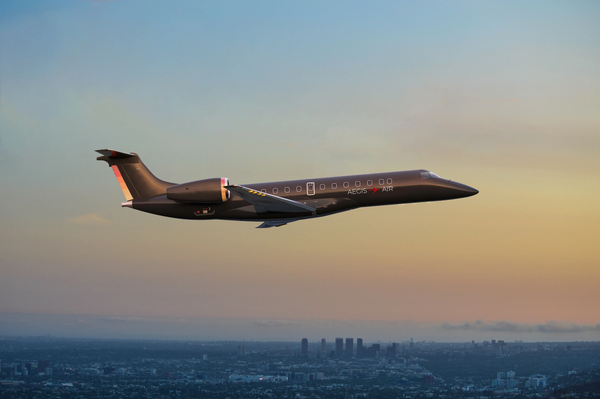 Aegis Air Bets on By-the-Seat Private Jet Flights From Miami to Caracas
A new US start-up is testing whether Caracas can support its own private jet shuttle. Aegis Air, a virtual carrier founded this year, is due to start by-the-seat flights between Miami and the Venezuelan capital today, 20 October, aboard a 16-seat Embraer E135.
NEWS
READ MORE »
Aegis Air Bets on By-the-Seat Private Jet Flights From Miami to Caracas
A new US start-up is testing whether Caracas can support its own private jet shuttle. Aegis Air, a virtual carrier founded this year, is due to start by-the-seat flights between Miami and the Venezuelan capital today, 20 October, aboard a 16-seat Embraer E135.
NEWS
READ MORE »
 Ambulances Meet Eurowings Jet From Rhodes After Passengers Feel Unwell in Flight
A Eurowings Airbus landed in Düsseldorf on Sunday evening, October 18, to a large emergency response, after several people on board suddenly became unwell on the way from Rhodes.
NEWS
READ MORE »
Ambulances Meet Eurowings Jet From Rhodes After Passengers Feel Unwell in Flight
A Eurowings Airbus landed in Düsseldorf on Sunday evening, October 18, to a large emergency response, after several people on board suddenly became unwell on the way from Rhodes.
NEWS
READ MORE »
More than just headlines.
Get unlimited ad-free access to in-depth aviation news, premium stories, and exclusive insights other sites don't cover.
- Ad-free browsing on AeroXplorer
- Unlimited access to premium and exclusive articles
- Higher photo upload limits & commissions on sales
- Free access to Jetstream Magazine on higher tiers
- Ad-free browsing
- Sell aviation photos with 60% commission
- First week free!
- Everything in Basic+
- Unlimited premium articles
- Sell aviation photos with 70% commission
- Free Digital subscription to Jetstream Magazine
- First week free!
- Everything in Basic+ and Pro
- Sell aviaiton photos with 80% commission
- Early access to exclusive stories
- Free Digital+Print subscription to Jetstream Magazine