Airbus and Boeing are accelerating investment in composite manufacturing methods that bypass the traditional autoclave, a shift that could reshape how the next generation of single-aisle airliners is built. Both manufacturers face a common problem. The current process for producing carbon fiber airframes cannot scale to the production rates required for a successor to the A320 and 737 families.
The autoclave has defined composite aerostructure production for decades. These large pressurized ovens cure resin-impregnated carbon fiber layups under precise heat and pressure, delivering the strength-to-weight ratios that made the Boeing 787 and Airbus A350 possible. But autoclaves are slow, energy-intensive, and capacity-limited. For programs currently producing between five and ten widebodies per month, that pace works. For a narrowbody line targeting 70 to 100 aircraft per month, it does not.
Why the Autoclave Has Become a Bottleneck
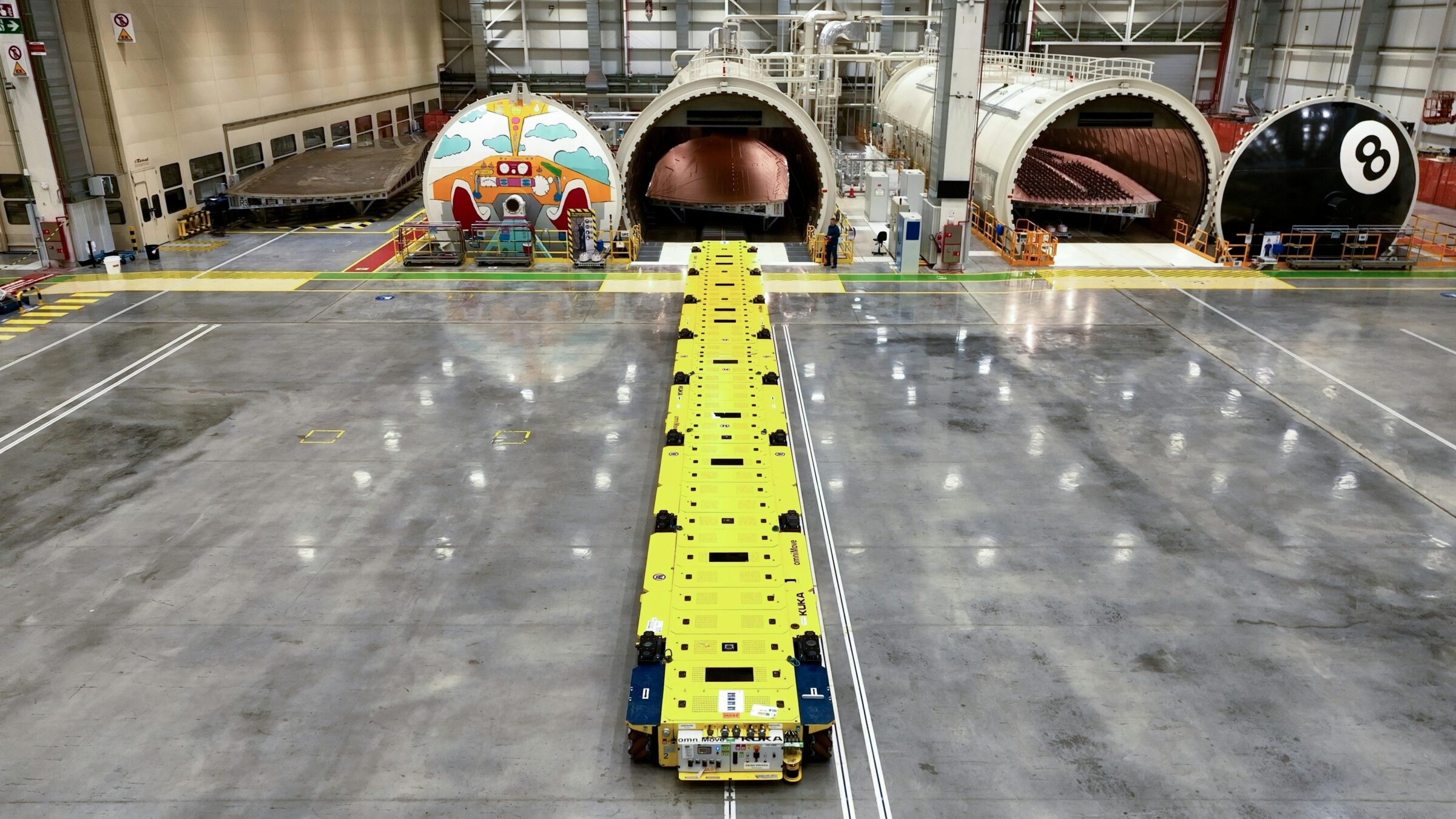
Composite fuselage barrels for the 787 and A350 require hours inside massive autoclaves, followed by inspection and finishing cycles. The capital cost of these facilities is substantial, and each unit represents a fixed throughput ceiling. Adding capacity means building more autoclaves, expanding buildings, and installing the supporting infrastructure for pressurization and thermal management.
Both Airbus and Boeing have concluded that scaling this approach linearly is neither economically nor operationally viable for their next clean-sheet programs. Airbus has publicly signaled that its A320 successor, expected to enter service in the second half of the 2030s, will rely heavily on composite structures. Boeing faces similar pressure as it evaluates a future single-aisle replacement.
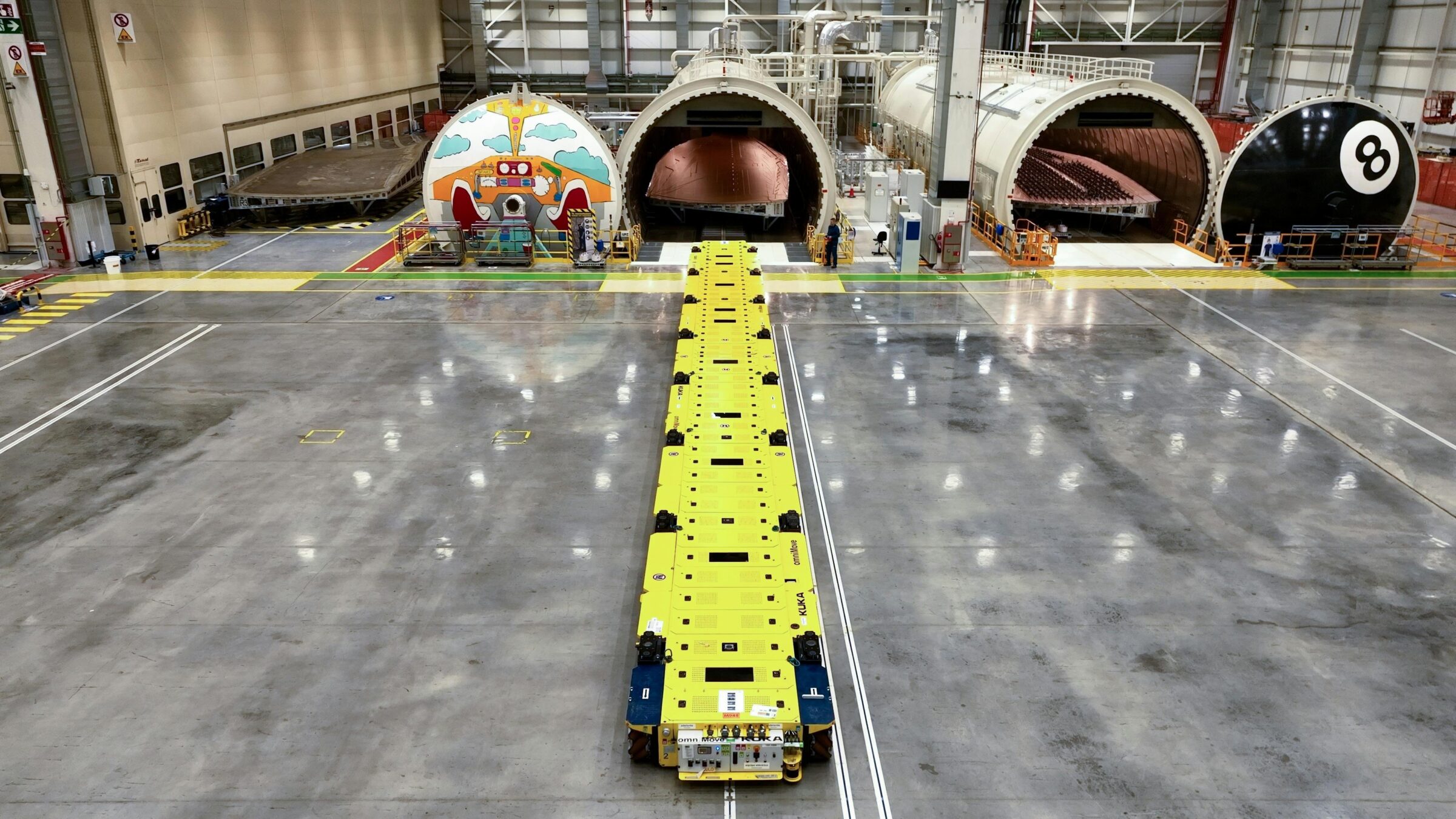
Photo: Airbus
The Out-of-Autoclave Alternatives
Several technologies are competing to displace the autoclave. Each promises faster cycle times, lower energy consumption, and reduced capital intensity, though each also carries technical risk.
Thermoplastic composites are drawing particular attention. Unlike thermoset materials, which require chemical curing under heat and pressure, thermoplastics soften when heated and harden when cooled. That property allows parts to be welded rather than fastened or bonded, potentially eliminating thousands of rivets from a fuselage. Airbus has been developing thermoplastic technology through its Wing of Tomorrow program and partnerships with suppliers experienced in the material class.
Resin transfer molding, or RTM, offers another route. In this process, dry carbon fiber preforms are placed into a closed mold, and resin is injected under pressure. Curing takes place inside the mold itself, without the need for a separate autoclave. Airbus has used RTM for smaller structural components and is evaluating whether the process can scale to primary fuselage sections.
Boeing has explored out-of-autoclave prepreg systems, in which resin-impregnated fabrics cure inside conventional ovens at lower pressures. The company demonstrated related concepts through its Boeing Research and Technology work and the earlier Sugar Volt and transonic truss-braced wing programs conducted with NASA.
"The key there would be taking all the knowledge we have and then making sure that we can replicate it again at a high rate," Sue Partridge, Head of Airbus' Wing of Tomorrow program, said. “We've been exploring different out-of-autoclave options, different dry fiber options. Those decisions are to come in the future.”

Only Way Out: Private Aviation in a Region at War
Automation as the Second Half of the Equation
Removing the autoclave alone will not deliver the production rates both manufacturers require. Automation of layup, inspection, and joining processes is equally important. Automated fiber placement machines already lay composite tape at high speeds, but downstream steps including trimming, drilling, and non-destructive inspection remain labor-intensive.
Thermoplastic welding, if it matures, could enable continuous assembly lines that resemble automotive production more than the current aerospace model. Induction welding, ultrasonic welding, and resistance welding are all being evaluated. The goal is a fuselage that moves from station to station on a moving line, with each station adding a section or completing a joint in minutes rather than hours.
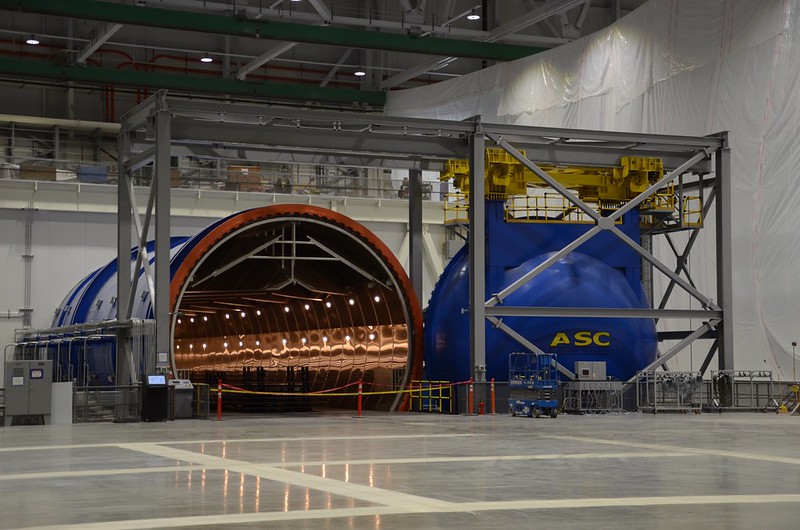
Photo: Flickr/ Jon Ostrower
Program Timelines and Industrial Risk
Airbus has been more public about its ambitions. The manufacturer has stated that decisions on the A320 successor's configuration and materials will need to be locked in during the late 2020s to support an entry into service around 2038. That leaves roughly a decade to industrialize whichever composite process the company selects, a compressed timeline given the certification demands for primary structure.
Boeing's situation is complicated by its ongoing recovery from the 737 MAX crisis and quality issues that have slowed 787 deliveries. The company has not committed to a firm timeline for a new single-aisle aircraft, but executives have acknowledged that any successor will need to break from current production paradigms. Boeing's acquisition of Spirit AeroSystems, which supplies fuselage sections for both the 737 and 787, gives it more direct control over composite manufacturing decisions.
"There is a lot of work to be done even in-autoclave with tooling...and material systems," Lane Ballard, Boeing's chief technology officer, said. “We're working on both ends, just like the wind turbine and car industry is working on it, too. How do you come up with a way to produce first-pass quality at a very rapid rate without having these huge amounts of infrastructure that composites currently drive today? So, we're doing a lot of research on both sides, but, definitely, out-of-autoclave is one of those areas we're interested in solving.”
Both companies also face supply chain considerations. Firms such as Toray, Hexcel, and Solvay produce the carbon fiber and resin systems that will feed any new process. Investment decisions at these suppliers will shape which technologies reach industrial maturity first.
What Comes Next
Neither manufacturer has publicly committed to a single technology path. Both are running parallel development efforts, funding technology demonstrators, and working with research institutions to de-risk options. Airbus operates dedicated composite research centers in Stade, Germany, and Bristol, England. Boeing conducts similar work in Everett and St. Louis.
The decisions taken in the next few years will define airliner manufacturing for the following three decades. Whichever combination of materials, processes, and automation reaches production readiness first is likely to set the template for how commercial aircraft are built well into the second half of the century. The shift away from the autoclave represents one of the most consequential manufacturing transitions since the introduction of composite primary structure itself.
Boeing's Touchscreen Flight Controls for 737 Draw Sharp Criticism from Pilots » Riyadh Airport Closed After Reported Ballistic Missile Strike on Saudia Airbus Jet » FAA Clears JetBlue's $58.5M Purchase of Spirit's LaGuardia Slots »

Comments (0)
Add Your Comment
TAGS
NEWS Airbus Boeing Composite Manufacturing Out-of-Autoclave Thermoplastic Composites Narrowbody Aircraft A320neo Successor Aerospace Production RatesRECENTLY PUBLISHED
 NetJets Expands US Footprint With Three New Private Terminals and Larger Palm Beach Facility
NetJets announces exclusive-use terminals in Dallas, Washington, and Palm Beach, expanding private aviation infrastructure across key US markets.
NEWS
READ MORE »
NetJets Expands US Footprint With Three New Private Terminals and Larger Palm Beach Facility
NetJets announces exclusive-use terminals in Dallas, Washington, and Palm Beach, expanding private aviation infrastructure across key US markets.
NEWS
READ MORE »
 Army Report Points to Systemic Failures in Deadly Black Hawk Collision Near Reagan National
A new Army report identifies systemic failures behind the January collision between a UH-60L Black Hawk and American Airlines Flight 5342 near Washington.
NEWS
READ MORE »
Army Report Points to Systemic Failures in Deadly Black Hawk Collision Near Reagan National
A new Army report identifies systemic failures behind the January collision between a UH-60L Black Hawk and American Airlines Flight 5342 near Washington.
NEWS
READ MORE »
 Why Did Some Air India A320s Have Extra Wheels? Bogie Gear Explained
Why Air India operated select Airbus A320s with an unusual bogie landing gear.
INFORMATIONAL
READ MORE »
Why Did Some Air India A320s Have Extra Wheels? Bogie Gear Explained
Why Air India operated select Airbus A320s with an unusual bogie landing gear.
INFORMATIONAL
READ MORE »
More than just headlines.
Get unlimited ad-free access to in-depth aviation news, premium stories, and exclusive insights other sites don't cover.
- Ad-free browsing on AeroXplorer
- Unlimited access to premium and exclusive articles
- Higher photo upload limits & commissions on sales
- Free access to Jetstream Magazine on higher tiers
- Ad-free browsing
- Sell aviation photos with 60% commission
- First week free!
- Everything in Basic+
- Unlimited premium articles
- Sell aviation photos with 70% commission
- Free Digital subscription to Jetstream Magazine
- First week free!
- Everything in Basic+ and Pro
- Sell aviaiton photos with 80% commission
- Early access to exclusive stories
- Free Digital+Print subscription to Jetstream Magazine