
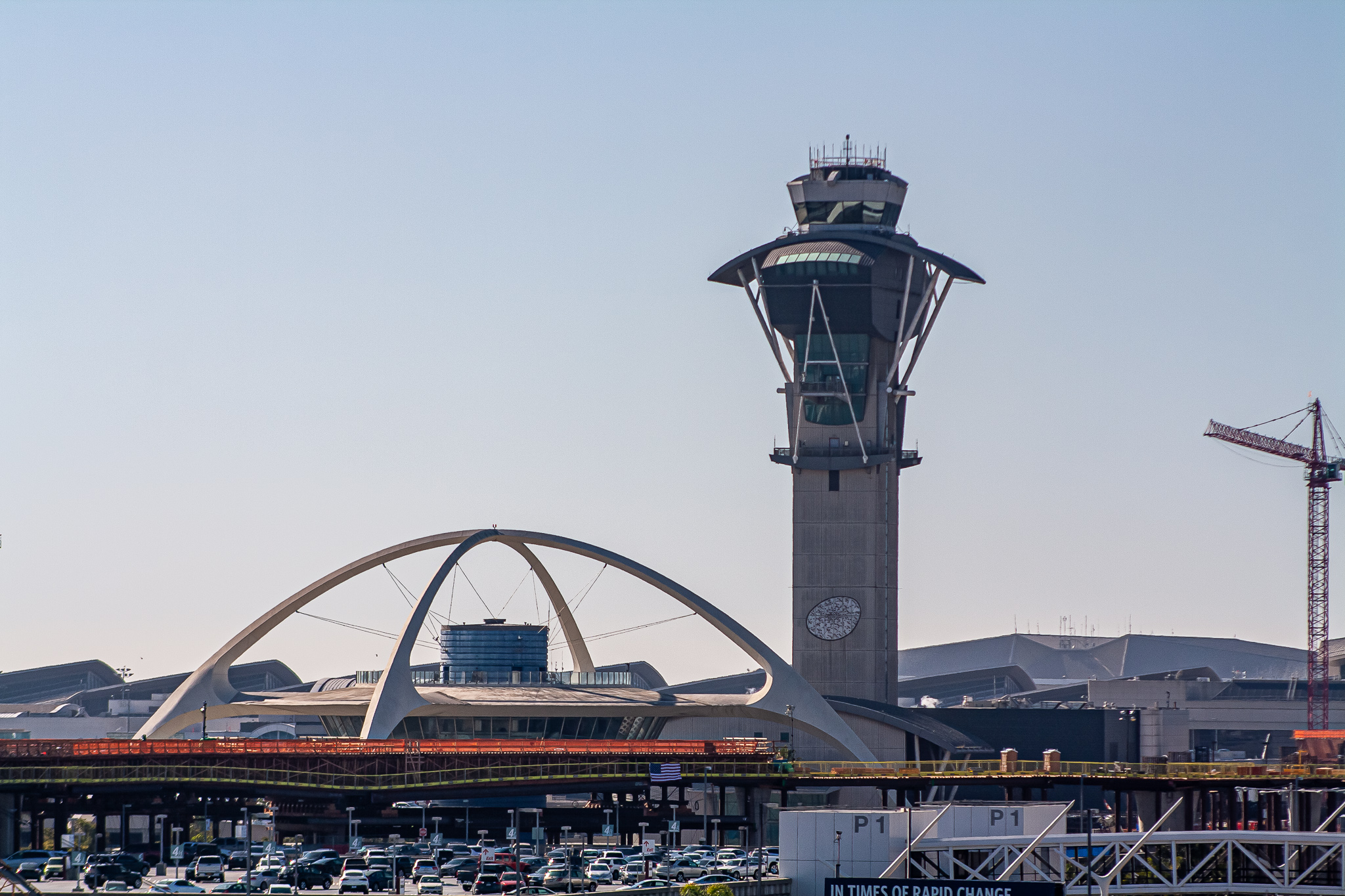

In January 2023, a lone intruder bypassed perimeter fencing at a major U.S. airport, walked across an active taxiway, and reached a commercial aircraft before being intercepted. No shots were fired. No passengers were harmed. But the incident forced a full ground stop, delayed dozens of flights, and triggered a federal investigation that cost the airport millions in operational disruption, legal exposure, and reputational damage.
That scenario is not an outlier. It is the kind of event that keeps aviation security directors awake at night, and it is precisely the kind of event that modern airport security systems are designed to prevent before a human operator ever spots a dot on a monitor.
The global airport security market was valued at USD 16.75 billion in 2025 and is projected to reach USD 38.47 billion by 2035, growing at a CAGR of 8.67%. In 2026 alone, the market is expected to reach USD 21.25 billion.
This guide evaluates the seven best airport security systems available in 2026, focusing on integrated platforms that combine video surveillance, access control, perimeter protection, and AI-powered analytics. Whether you operate a major international hub or a regional airport undergoing modernization, this article will help you identify the right platform for your operation.
7 Best Airport Security Systems in 2026
1. Genetec Security Center
Best for: Large international airports and multi-terminal operations
Genetec Security Center has become the default unified security platform for many of the world's busiest airports. It brings video surveillance, access control, license plate recognition, intrusion detection, and communications into a single interface, giving airport operations centers (AOCs) complete situational awareness across terminals, airside areas, perimeters, and parking structures.
The platform's strength lies in its ability to unify hundreds or thousands of cameras, door controllers, intercoms, and sensors into one operational view. For airports managing multiple terminals, each with distinct security zones and regulatory requirements, this centralization is essential. Genetec's Federation architecture allows individual terminal systems to operate independently while feeding into a master dashboard, ensuring that a network disruption in one area does not blind the entire operation.
Genetec's Restricted Security Area Surveillance (RSAS) module is specifically designed for aviation environments, providing automated monitoring of secure zones with real-time alerts for unauthorized access or tailgating. The platform integrates with baggage handling systems, flight information displays, and border agency databases, creating an interconnected security ecosystem that goes far beyond basic video monitoring. Its evidence management tools maintain the chain of custody required for regulatory audits and law enforcement investigations.
Key Strengths: Proven at the world's largest airports, Federation architecture for multi-terminal operations, deep integration with aviation-specific systems, robust evidence management, regulatory compliance tools.
Considerations: Significant infrastructure investment and system integration expertise required. Best suited for large operations with dedicated security IT teams.
2. Coram
Best for: AI-powered surveillance with real-time threat detection and natural language search
Coram brings a distinctly AI-native approach to airport security systems, combining advanced video surveillance, access control, and emergency management into a single cloud-based platform. For airport operators looking to add intelligent analytics to their existing camera infrastructure without a full system replacement, Coram offers a practical and powerful upgrade path. The platform works with any existing IP camera, which is a critical advantage for airports that have invested heavily in camera hardware over decades and cannot justify the cost or disruption of ripping it all out.
What sets Coram apart in the aviation context is its real-time threat detection capability. The platform's AI models run continuously, analyzing video feeds to detect firearms, unauthorized individuals in restricted zones, unattended baggage, perimeter breaches, and suspicious behavior in terminals and airfield areas. Alerts are sent instantly to security teams, buying critical seconds in scenarios where response time determines outcomes. For airports, where a delayed response to a perimeter intrusion or a weapon sighting can cascade into a full ground stop, this speed is not a nice-to-have. It is operational insurance.
Coram's Discover feature provides natural language video search, allowing security teams to type queries like "person with backpack near Gate B12" and retrieve relevant footage in seconds. During active investigations or post-incident reviews, this capability eliminates the hours traditionally spent manually scrubbing through surveillance footage.
The platform also includes facial recognition for identifying individuals on watch lists, license plate reading for monitoring vehicle movements across terminals and parking structures, and automatic person tracking that follows subjects across multiple camera feeds throughout the facility.
Key Strengths: Works with any existing IP camera, real-time firearm and threat detection, natural language video search, integrated emergency management, facial recognition and LPR, hybrid cloud for regulated environments.
Considerations: Newer platform compared to decades-old aviation incumbents. Cloud-dependent AI features require reliable network infrastructure, though the system includes offline functionality for uninterrupted access control.
3. Avigilon Control Center (Motorola Solutions)
Best for: High-resolution video analytics across expansive airport environments
Avigilon Control Center, part of the Motorola Solutions ecosystem, delivers some of the most advanced self-learning video analytics available for airport environments. Its Appearance Search technology allows operators to select a person or vehicle from any camera feed and instantly locate every appearance across the entire airport camera network. In an environment where tracking a suspicious individual from curbside through check-in, security, and into the gate area requires seamless handoff across hundreds of cameras, this capability is invaluable.
The platform supports an extensive range of camera hardware, including multi-sensor cameras that can cover entire terminal concourses from a single mounting point, PTZ cameras for airside perimeter monitoring, and high-resolution fixed cameras for checkpoint and baggage claim areas. Avigilon's Unusual Motion Detection (UMD) technology learns the normal patterns of activity in each camera's field of view and automatically flags anomalies, such as a person entering a restricted area outside of normal operational hours or a vehicle stopped in a no-parking zone.
Integration with Avigilon Alta (formerly Openpath) provides native cloud-based access control, creating a unified physical security platform that combines video and door access management. The system's near-zero latency video playback is particularly valuable during incident investigations, where every second of review time matters. All Avigilon hardware is NDAA compliant.
Key Strengths: Appearance Search for tracking individuals across facilities, self-learning Unusual Motion Detection, extensive camera hardware range, near-zero latency playback, NDAA compliant.
Considerations: Proprietary hardware ecosystem can increase long-term costs. Full deployment across a large airport requires substantial upfront investment and integration planning.
4. Bosch Security and Safety Systems
Best for: Integrated safety ecosystems combining video, fire, and public address
Bosch brings a uniquely holistic approach to airport security by integrating video surveillance, fire detection, public address and evacuation systems, and intrusion detection into a unified safety platform. For airport operators who view security as inseparable from broader safety operations, including fire response, emergency evacuation, and passenger communication, Bosch delivers a level of cross-system integration that most pure-play surveillance vendors cannot match.
The company's Video Analytics platform uses deep neural network (DNN) technology for intelligent video analysis, including crowd density monitoring, object detection, and behavior analysis. In airport terminals where crowd dynamics can shift rapidly during peak travel periods, gate changes, or security incidents, real-time crowd density data helps operations teams manage flow and prevent dangerous overcrowding. Bosch cameras are engineered for demanding environments, with models designed for both indoor terminal use and outdoor airside and perimeter deployment.
Bosch's integration with its Praesensa public address and evacuation system is particularly relevant for airports, where clear and timely communication during emergencies is a regulatory requirement. When a security event or fire alarm triggers, the system can automatically initiate zone-specific announcements, guide evacuation routes, and provide real-time updates to operations teams. The platform also integrates with building management systems for HVAC and lighting control, supporting energy-efficient operations alongside security.
Key Strengths: Unified video, fire, intrusion, and public address platform, DNN-powered video analytics, crowd density monitoring, strong regulatory compliance for fire and evacuation, robust hardware for harsh environments.
Considerations: The full value is realized when multiple Bosch systems are deployed together. Airports using third-party fire or PA systems may not benefit as much from the integrated approach.
5. Honeywell Airport Security Solutions
Best for: Large-scale airport operations with complex building management needs
Honeywell is one of the few companies that can address virtually every layer of airport security, from perimeter intrusion detection and access control to video surveillance, cybersecurity, and building automation, through a single vendor relationship. For large airports that want to consolidate security and facility management under one technology partner, Honeywell's breadth of capability and global service network are difficult to match.
The company's Pro-Watch access control platform manages credentials, zones, and policies across terminals, cargo facilities, maintenance hangars, and administrative buildings, all from a centralized interface. Integration with Honeywell's video management system provides visual verification of access events, while its Vindicator perimeter intrusion detection system monitors fencing, gates, and airside boundaries using a combination of sensors, cameras, and analytics.
Honeywell's strength in building automation means that access control, HVAC, fire and life safety, and energy management all connect through a common infrastructure. For airports pursuing "smart airport" initiatives that optimize both security and operational efficiency, this convergence is a significant advantage. Honeywell's global service and support network, with technicians and engineers stationed in major markets worldwide, provides the on-the-ground support that large airport authorities require.
Key Strengths: End-to-end security and building management from a single vendor, global service network, strong perimeter intrusion detection, proven at major international airports, smart airport convergence.
Considerations: Complex deployment and configuration, particularly in environments without existing Honeywell infrastructure. Vendor consolidation can limit flexibility in selecting best-of-breed components.
6. Axis Communications
Best for: Open-platform camera infrastructure with broad third-party integration
Axis Communications has built its reputation on delivering high-quality IP camera hardware and an open platform philosophy that allows airport operators to combine Axis cameras with virtually any video management system, analytics engine, or access control platform. For airports that want the freedom to build a customized security stack rather than committing to a single vendor's end-to-end ecosystem, Axis provides the foundational camera infrastructure.
The company's product range covers every airport deployment scenario: panoramic cameras for terminal concourses, thermal cameras for perimeter monitoring, explosion-protected cameras for fuel storage and cargo handling areas, and PTZ cameras for airside surveillance. Axis cameras support onboard analytics through the ACAP (Axis Camera Application Platform), which allows third-party developers to run applications directly on the camera, including object detection, license plate recognition, and crowd behavior analysis.
Axis's ONVIF compliance and open API ensure compatibility with major video management platforms including Genetec, Milestone, and Avigilon. This makes Axis a common choice as the hardware layer in multi-vendor airport deployments where the VMS and analytics are sourced from different providers. The company's commitment to cybersecurity includes signed firmware, secure boot, and encrypted communications, all critical for airports operating under stringent IT security policies.
Key Strengths: Exceptional camera hardware range, fully open platform, ONVIF compliance, onboard analytics via ACAP, strong cybersecurity features, broad VMS compatibility.
Considerations: Axis is primarily a hardware and firmware provider, not a complete security platform. Airports must pair Axis cameras with a separate VMS, access control system, and analytics layer, which increases integration complexity.
7. Verkada
Best for: Smaller airports and regional facilities seeking simplicity
Verkada provides a cloud-managed physical security platform that unifies video surveillance, access control, environmental sensors, and alarm monitoring in a single interface. For regional airports, private airfields, and smaller commercial airports that lack dedicated security IT teams, Verkada offers the fastest path to a modern, AI-enabled security system with minimal deployment complexity.
The platform's zero-touch deployment means cameras and access controllers configure themselves once connected to the network. Cloud management eliminates the need for on-site NVRs or dedicated servers, and automatic firmware updates ensure the system stays current without manual intervention. Built-in AI provides person and vehicle detection, license plate reading, and behavior-based alerts, and every access event can be paired with video from nearby cameras for visual verification.
Verkada's Command dashboard provides a centralized view of all cameras, doors, sensors, and alarms across the facility, accessible from any browser or mobile device. For airport operators who need to monitor terminals, parking lots, cargo areas, and perimeter fencing from a single pane of glass, the simplicity of Verkada's approach is compelling. The platform also supports environmental monitoring for temperature, humidity, and air quality, which is relevant for cargo and server room environments.
Key Strengths: Zero-touch deployment, cloud-managed with automatic updates, unified video and access control, built-in AI analytics, minimal IT overhead, intuitive interface.
Considerations: Fully proprietary hardware ecosystem. Less customizable than open-platform alternatives and may not meet the advanced, aviation-specific requirements of large international hubs with thousands of camera endpoints.
Key Factors to Consider When Choosing an Airport Security System
Regulatory Compliance: Airports operate under strict mandates from TSA, ICAO (Annex 17), ECAC, and regional aviation authorities. Your system must support mandated surveillance coverage, footage retention periods (often 30 to 90 days), tamper-evident storage, and rapid footage retrieval upon regulatory request. Non-compliance can result in fines, operational restrictions, or loss of certification.
Scale and Coverage: A large international airport may require 3,000 to 10,000 or more camera endpoints spanning terminals, airside zones, perimeters, parking structures, cargo facilities, and maintenance areas. Ensure the platform can scale to your current and projected footprint without architectural overhauls.
Integration Depth: Airport security does not operate in isolation. Evaluate how well the platform integrates with baggage handling systems, flight information displays, border agency databases, fire and life safety systems, building automation, and passenger processing systems. The more connected the security ecosystem, the faster and more coordinated the response to any incident.
AI and Threat Detection: Not all analytics are created equal. Test how effectively the platform detects the specific threats relevant to airports: unauthorized access to restricted areas, perimeter breaches, unattended baggage, weapons, suspicious loitering, and crowd anomalies. Automated detection and instant alerting can buy the critical seconds that determine outcomes in aviation security incidents.
Existing Infrastructure: Many airports have decades of investment in camera hardware, door controllers, and cabling. Prioritize platforms that work with existing IP cameras and support open protocols (ONVIF, Wiegand, OSDP) to avoid costly rip-and-replace projects.
Cybersecurity: Airport security systems are increasingly networked and IP-based, making them targets for cyberattacks. Evaluate encryption standards, firmware signing, secure boot processes, and compliance with NIST and aviation-specific cybersecurity frameworks. The cybersecurity segment held the largest revenue share (23.5%) in the airport security market in 2025.
FAQs
What are the main components of a modern airport security system?
A comprehensive airport security system in 2026 typically includes video surveillance with AI analytics, access control for restricted zones, perimeter intrusion detection, passenger and baggage screening (CT scanners, X-ray, explosive trace detection), biometric identity verification, cybersecurity infrastructure, and a centralized command-and-control platform that ties these layers together. The most advanced airports also integrate fire and life safety, public address systems, and building automation into their security operations.
How does AI improve airport security over traditional CCTV?
Traditional CCTV requires human operators to monitor feeds in real time, which is impractical across thousands of cameras. AI-powered systems continuously analyze every feed simultaneously, automatically detecting threats like unauthorized access, unattended baggage, perimeter breaches, weapons, and unusual crowd behavior. They send instant alerts to security teams, reducing response times from minutes to seconds. AI also enables natural language video search, allowing investigators to find specific footage in seconds rather than hours.
Can I add AI to my airport's existing cameras without replacing them?
Yes. Several platforms are designed to layer AI-powered software on top of existing IP camera infrastructure. This approach preserves your hardware investment while adding capabilities like real-time threat detection, facial recognition, license plate reading, and intelligent video search. It is especially practical for airports undergoing phased modernization where a full camera replacement is not feasible.
What are the TSA requirements for airport surveillance systems?
TSA mandates surveillance coverage at all passenger screening checkpoints, baggage handling areas, access control points, and other security-sensitive zones. Footage must be retained for a minimum period (typically 30 to 90 days depending on the specific area and airport category), stored in tamper-evident systems, and retrievable on demand for regulatory audits or law enforcement investigations. TSA's fiscal year 2025 budget of USD 11.8 billion reflects continued investment in advanced screening, biometric identity verification, and cybersecurity.
How much does an airport security system cost?
Costs vary dramatically based on airport size, existing infrastructure, and required capabilities. A small regional airport modernization might range from USD 500,000 to USD 5 million, while a major international hub can invest tens of millions to hundreds of millions of dollars across video surveillance, access control, screening equipment, perimeter security, and cybersecurity. Cloud-based and subscription-model platforms can reduce upfront capital expenditure, though ongoing operational costs apply. The global market's projected growth to USD 38.47 billion by 2035 reflects the scale of investment airports are making worldwide.
What is the biggest cybersecurity risk for airport security systems?
The biggest risk is the expanding attack surface created by networked, IP-based security devices. Cameras, door controllers, sensors, and screening equipment all connect to airport networks, creating potential entry points for cyberattacks. In 2024, cybersecurity held a 23.5% share of the airport security market, reflecting the scale of investment required. Key risks include ransomware targeting surveillance infrastructure, data breaches of biometric databases, and attacks on building management systems. Mitigation requires end-to-end encryption, firmware signing, network segmentation, and compliance with NIST and aviation-specific cybersecurity frameworks.
Conclusion
Airport security in 2026 is defined by convergence: video, access control, perimeter detection, and AI analytics operating as a single intelligent layer rather than disconnected silos. The right platform depends on your airport's size, existing infrastructure, regulatory environment, and operational complexity.
Genetec and Honeywell lead for large international hubs with multi-terminal operations and deep building integration needs. AI-native platforms that work with existing cameras offer the fastest path to real-time threat detection without the cost of full hardware replacement. Avigilon excels in high-resolution video analytics, Bosch delivers uniquely integrated safety ecosystems, and Axis provides the open-platform camera foundation for custom multi-vendor deployments. Verkada makes modern, cloud-managed security accessible to regional airports with lean IT teams.
Evaluate each system against your specific threat landscape, compliance obligations, and integration requirements. The platforms in this guide represent the best available today, and choosing the right one is not just an investment in equipment. It is an investment in the safety of every passenger, employee, and aircraft that moves through your facility.
Southwest Airlines Flight Returns to Orlando After Bird Strike on Takeoff » Why Statistics Matters for Future Aviation Professionals » Why Airliners Pump Nitrogen Into Their Fuel Tanks »

Comments (0)
Add Your Comment
TAGS
INFORMATIONAL Airport Travel Airport Security Systems SafetyRECENTLY PUBLISHED
 US State Department Warns of Threats to Airlines and Airports in Saudi Arabia Following Deadly Houthi Attacks
The US State Department has issued a security alert for Saudi Arabia after Houthi air attacks on the kingdom killed three people and injured dozens more.
NEWS
READ MORE »
US State Department Warns of Threats to Airlines and Airports in Saudi Arabia Following Deadly Houthi Attacks
The US State Department has issued a security alert for Saudi Arabia after Houthi air attacks on the kingdom killed three people and injured dozens more.
NEWS
READ MORE »
 Southwest Airlines Becomes First US Carrier to Integrate Flight Booking Into ChatGPT
Southwest Airlines launches a first-of-its-kind ChatGPT plugin, allowing travelers to search and book flights directly through the AI platform.
NEWS
READ MORE »
Southwest Airlines Becomes First US Carrier to Integrate Flight Booking Into ChatGPT
Southwest Airlines launches a first-of-its-kind ChatGPT plugin, allowing travelers to search and book flights directly through the AI platform.
NEWS
READ MORE »
 Joby Aviation to Pay $116.9 Million in Trade Secrets Case
A federal jury found air taxi maker Joby Aviation liable for misappropriating trade secrets, awarding $116.9 million in damages to the plaintiff.
NEWS
READ MORE »
Joby Aviation to Pay $116.9 Million in Trade Secrets Case
A federal jury found air taxi maker Joby Aviation liable for misappropriating trade secrets, awarding $116.9 million in damages to the plaintiff.
NEWS
READ MORE »
More than just headlines.
Get unlimited ad-free access to in-depth aviation news, premium stories, and exclusive insights other sites don't cover.
- Ad-free browsing on AeroXplorer
- Unlimited access to premium and exclusive articles
- Higher photo upload limits & commissions on sales
- Free access to Jetstream Magazine on higher tiers
- Ad-free browsing
- Sell aviation photos with 60% commission
- First week free!
- Everything in Basic+
- Unlimited premium articles
- Sell aviation photos with 70% commission
- Free Digital subscription to Jetstream Magazine
- First week free!
- Everything in Basic+ and Pro
- Sell aviaiton photos with 80% commission
- Early access to exclusive stories
- Free Digital+Print subscription to Jetstream Magazine