

Twenty-five years after the September 11 attacks reshaped commercial aviation, the security procedures American travelers navigate at airports continue to evolve. What began as an emergency response to the deadliest terrorist attack on U.S. soil has grown into a sprawling federal apparatus that screens hundreds of millions of passengers each year. Now, that system is undergoing another wave of changes.
The Immediate Response to September 11
Before the attacks, private companies contracted by individual airlines handled airport security. Screeners often earned low wages, received minimal training, and turnover ran high. The hijackers exploited these vulnerabilities, boarding four aircraft on the morning of September 11, 2001, with box cutters and small knives that were permitted under the rules of the time.
Congress responded quickly. President George W. Bush signed the Aviation and Transportation Security Act in November 2001, establishing the Transportation Security Administration. The legislation federalized airport screening and placed the responsibility for aviation security squarely in the hands of the government. Within roughly a year, the TSA had hired and deployed approximately 60,000 employees to staff checkpoints at commercial airports across the country.
The Department of Homeland Security followed in 2002, absorbing the TSA and consolidating a range of federal security functions under a single umbrella. The Federal Air Marshal Service expanded dramatically, and reinforced cockpit doors became standard on commercial aircraft.

New Rules, New Routines
Passengers quickly adjusted to a new normal. Shoe removal became mandatory after Richard Reid attempted to detonate explosives hidden in his footwear on a transatlantic flight in December 2001. The liquids rule followed in 2006 after British authorities disrupted a plot to blow up multiple airliners using liquid explosives. Travelers have since been limited to containers of 3.4 ounces or less, packed inside a single quart-sized bag.
Advanced imaging technology arrived at checkpoints in the years that followed, along with explosive trace detection swabs and more rigorous screening of checked baggage. The TSA introduced its PreCheck trusted traveler program in 2011, allowing vetted passengers to move through expedited lanes without removing shoes, belts, or laptops.
The Scale of Modern Screening
The TSA now screens roughly 2.5 million passengers per day at more than 430 airports across the United States. The agency employs approximately 65,000 people, and its budget has grown into the billions of dollars annually. Federal Air Marshals continue to fly aboard select flights, though the exact number remains classified.
Behind the checkpoints, layers of intelligence sharing, watchlist matching, and cargo screening operate largely out of public view. The Secure Flight program, launched in the years after 9/11, matches passenger information against government watchlists before boarding passes are issued.


Analysis: How Spirit Airlines Changed Airline Pricing, then Paid the Price
What Is Changing Now
A quarter century in, some of the most familiar rituals of post-9/11 travel are being dismantled or rethought. In July 2025, the TSA officially ended its long-standing shoe removal requirement for standard screening lanes. Passengers at airports across the country can now keep their shoes on during routine screening, a shift the agency attributed to advancements in scanning technology.
The liquids rule may be the next to change. TSA Administrator officials and Homeland Security Secretary Kristi Noem have signaled that the 3.4-ounce limit could be relaxed as newer computed tomography scanners are rolled out more widely. These CT scanners produce detailed three-dimensional images of carry-on bags, allowing officers to identify threats without requiring passengers to remove electronics or liquids from their luggage.
Facial recognition and biometric identification are also expanding. The TSA has deployed Credential Authentication Technology units at hundreds of checkpoints, matching a traveler's face to their identification without the officer needing to inspect a physical boarding pass. The rollout has drawn scrutiny from privacy advocates and lawmakers who question how the data is stored and used, though the agency maintains that participation remains voluntary and that images are not retained.
REAL ID enforcement finally took effect in May 2025 after nearly two decades of delays. Adult travelers flying domestically must now present a REAL ID-compliant driver's license or another acceptable form of identification such as a passport to board a commercial flight.

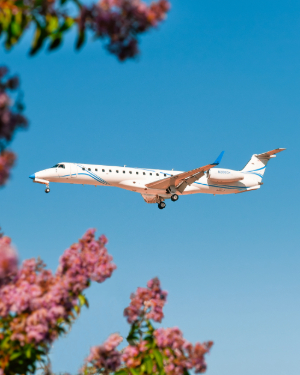
Photo: American Airlines
A Different Kind of Threat Landscape
Aviation security officials continue to grapple with threats that did not exist in 2001. Small drones flying near airports have caused significant disruptions in recent years. Cybersecurity vulnerabilities affecting airlines and airport operators have prompted new federal directives. Insider threats, where employees with security credentials misuse their access, remain a persistent concern.
Lithium battery fires aboard aircraft have also emerged as a growing safety issue, with the Federal Aviation Administration tracking a steady rise in incidents involving personal electronics and portable chargers.
Looking Ahead
The next generation of airport security appears designed to be less visible and less intrusive to passengers while relying more heavily on technology and data. CT scanners, biometric identification, and continuous vetting through trusted traveler programs are expected to reduce friction at checkpoints without lowering the overall level of protection.
Yet the fundamental architecture built after September 11, 2001, remains firmly in place. The TSA, the Department of Homeland Security, hardened cockpit doors, and federal air marshals are all products of that morning and the policy response that followed. Twenty-five years later, the memory of the attacks continues to shape every step you take through an American airport.
Jet2 Boeing 737 Veers Off Birmingham Airport Runway During Landing » How Delivery Delays Are Reshaping Aviation Sourcing » German Eurofighters Intercept British Airways Flight »

Comments (0)
Add Your Comment
TAGS
NEWS 9/11 Anniversary Airline Security TSA Aviation History Post-9/11 Reforms Airport Screening Federal Air Marshals Aviation Policy Security Technology Aviation NewsRECENTLY PUBLISHED
 Ryanair Passengers Endure Nine-Hour Flight Only To End Up Where They Started
A two-hour Ryanair flight to Cornwall turned into a nine-hour ordeal after the plane diverted twice and returned to its starting point in Spain.
NEWS
READ MORE »
Ryanair Passengers Endure Nine-Hour Flight Only To End Up Where They Started
A two-hour Ryanair flight to Cornwall turned into a nine-hour ordeal after the plane diverted twice and returned to its starting point in Spain.
NEWS
READ MORE »
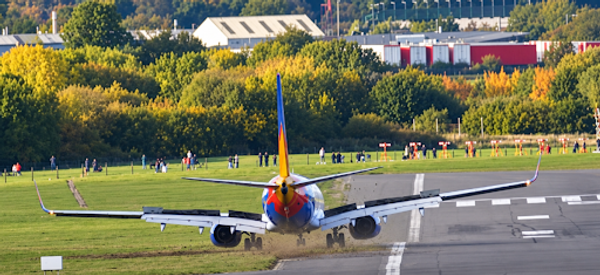 Jet2 Boeing 737 Veers Off Birmingham Airport Runway During Landing
A Jet2 Boeing 737-800 veered off the left side of the runway at Birmingham Airport after landing on Sunday, October 25, as Storm Boelo brought strong winds to the UK.
NEWS
READ MORE »
Jet2 Boeing 737 Veers Off Birmingham Airport Runway During Landing
A Jet2 Boeing 737-800 veered off the left side of the runway at Birmingham Airport after landing on Sunday, October 25, as Storm Boelo brought strong winds to the UK.
NEWS
READ MORE »
 This Week in Aviation: The 10 Stories That Mattered Most
From major airline developments to aircraft updates and industry shifts, this weekly recap highlights the ten most-read aviation stories from the week of October 18.
INFORMATIONAL
READ MORE »
This Week in Aviation: The 10 Stories That Mattered Most
From major airline developments to aircraft updates and industry shifts, this weekly recap highlights the ten most-read aviation stories from the week of October 18.
INFORMATIONAL
READ MORE »
More than just headlines.
Get unlimited ad-free access to in-depth aviation news, premium stories, and exclusive insights other sites don't cover.
- Ad-free browsing on AeroXplorer
- Unlimited access to premium and exclusive articles
- Higher photo upload limits & commissions on sales
- Free access to Jetstream Magazine on higher tiers
- Ad-free browsing
- Sell aviation photos with 60% commission
- First week free!
- Everything in Basic+
- Unlimited premium articles
- Sell aviation photos with 70% commission
- Free Digital subscription to Jetstream Magazine
- First week free!
- Everything in Basic+ and Pro
- Sell aviaiton photos with 80% commission
- Early access to exclusive stories
- Free Digital+Print subscription to Jetstream Magazine