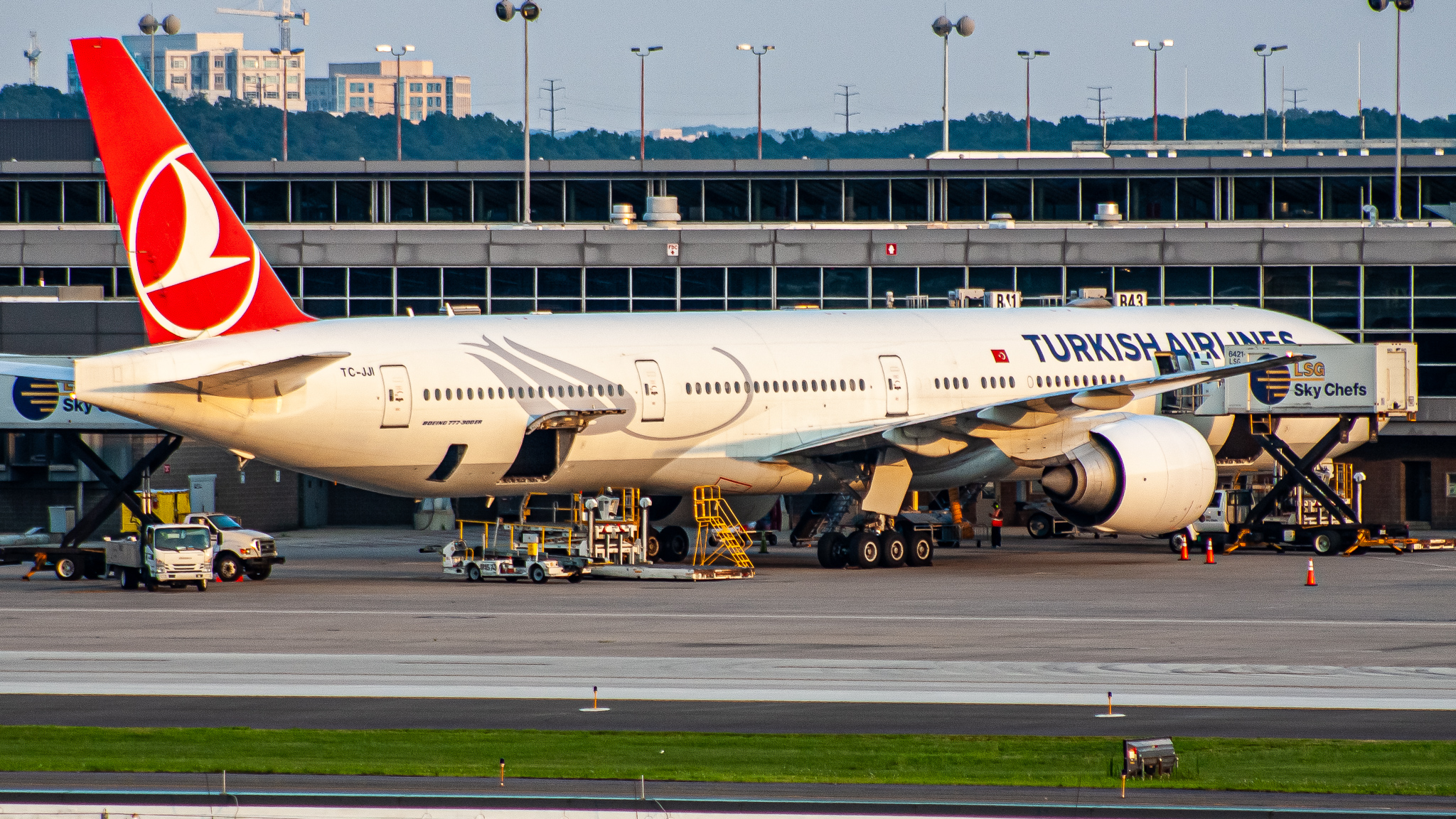

Turkish Airlines has added Krakow, Poland to its flight network, the second destination after its historic capital, Warsaw.

Turkish Airlines has decided to include flights to Krakow, the city of science, culture, and art in Poland. The carrier had begun operating with three flights a week, on Mondays, Wednesdays, and Fridays on a reciprocal basis. It has even begun connecting Krakow with Istanbul, with tickets starting from $255. It seems that Turkey is attempting to capitalize on the influx of tourists heading to Krakow.
Flight Schedule
The airline will operate the Krakow route following the schedule below:
| TK1271 | Wednesday-Friday | Istanbul | 7:20 | Krakow | 8:30 |
| TK1272 | Wednesday-Friday | Krakow | 9:20 | Istanbul | 12:35 |
| TK1273 | Monday | Krakow | 18:20 | Krakow | 19:30 |
| TK1274 | Monday | Krakow | 20:20 | Istanbul | 23:35 |
Turkish Airlines' Growth
Turkish Airlines flies to more countries than any other airline in the world. In fact, the airline's Chief Investment & Technology Officer Levent Konuçu commented "As the airline is flying to more countries than any other in the world, we are glad to add Krakow, our second destination in Poland after Warsaw, to our flight network. With this route, our flag carrier has reached 343 destinations in 129 countries."
Australia on the Horizon?
Recently, the Governor of Victoria, Australia, Linda Dessau, was in Turkey as a part of an Australian delegation. She had a couple of meetings, including with the Turkish Airlines Chairman Ahmet Bolat, to discuss some opportunities for flights to Australia. The airline will also celebrate its 90th anniversary soon, and its plan for the next decade includes having over 800 airplanes in its fleet.

The Fleet at a Glance
The airline's current fleet includes a large variety of aircraft types, including the Airbus A319, A320, A321, A330, and A350, as well as the Boeing 737, 737 MAX, 777, and 787 Dreamliner.
In all, Turkish Airlines has over 385 planes with an average age of 10.2 years per ch-aviation. The carrier has also announced that by the end of this year, it aims to have around 435 planes. Over the next decade, the airline expects to have a wider network of roughly 400 destinations.

Turkish Airlines has also finished 2022 with a $2.7 billion profit and carried over 71 million passengers. The airline exceeded its 2019 capacity in all international destinations except the Middle East and the Far East. Hopefully, by increasing tourism to Krakow, it should also be able to increase some tourism to Istanbul, increasing its passenger load in the Middle East.
Joby Aviation to Pay $116.9 Million in Trade Secrets Case » Southwest Airlines Becomes First US Carrier to Integrate Flight Booking Into ChatGPT » Debris Field Discovered in Search for Missing Air Ambulance Carrying Six People »

Comments (0)
Add Your Comment
TAGS
ROUTES Turkish Airlines Turkey Istanbul Krakow Australia RoutesRECENTLY PUBLISHED
 Boeing's Touchscreen Flight Controls for 737 Draw Sharp Criticism from Pilots
Boeing's plan to introduce Touchscreen Control Display Units on the 737 has sparked backlash from pilots who warn of safety and usability concerns.
NEWS
READ MORE »
Boeing's Touchscreen Flight Controls for 737 Draw Sharp Criticism from Pilots
Boeing's plan to introduce Touchscreen Control Display Units on the 737 has sparked backlash from pilots who warn of safety and usability concerns.
NEWS
READ MORE »
 Southwest Airlines Blames Brief System Outage for Boarding Delays and Checked Bag Disruptions
Southwest Airlines confirms a brief technology outage disrupted boarding and checked bag operations, forcing gate agents to process travelers manually.
NEWS
READ MORE »
Southwest Airlines Blames Brief System Outage for Boarding Delays and Checked Bag Disruptions
Southwest Airlines confirms a brief technology outage disrupted boarding and checked bag operations, forcing gate agents to process travelers manually.
NEWS
READ MORE »
 Southwest Airlines Considers Boeing 787 Order for Long-Haul International Expansion
Southwest Airlines is evaluating the Boeing 787 Dreamliner as it explores a shift into long-haul international flying, sources tell Reuters.
NEWS
READ MORE »
Southwest Airlines Considers Boeing 787 Order for Long-Haul International Expansion
Southwest Airlines is evaluating the Boeing 787 Dreamliner as it explores a shift into long-haul international flying, sources tell Reuters.
NEWS
READ MORE »
More than just headlines.
Get unlimited ad-free access to in-depth aviation news, premium stories, and exclusive insights other sites don't cover.
- Ad-free browsing on AeroXplorer
- Unlimited access to premium and exclusive articles
- Higher photo upload limits & commissions on sales
- Free access to Jetstream Magazine on higher tiers
- Ad-free browsing
- Sell aviation photos with 60% commission
- First week free!
- Everything in Basic+
- Unlimited premium articles
- Sell aviation photos with 70% commission
- Free Digital subscription to Jetstream Magazine
- First week free!
- Everything in Basic+ and Pro
- Sell aviaiton photos with 80% commission
- Early access to exclusive stories
- Free Digital+Print subscription to Jetstream Magazine