


The United States federal government has placed artificial intelligence at the heart of its most ambitious aviation modernisation programme in a generation, and the official leading that effort has used his most unambiguous language yet to silence fears that AI will one day make air traffic controllers obsolete. At the same time, a quietly developed and previously unannounced AI programme is now racing toward its first operational deployment, with a vendor decision expected before the end of May and a live system potentially in the skies as early as September.
Duffy Draws the Line
Speaking at the Department of Transportation's Modern Skies Summit at its Washington, D.C. headquarters on April 21, 2026, and in a separate interview with CBS News, Transportation Secretary Sean Duffy addressed the mounting public anxiety about what artificial intelligence actually means for the tens of thousands of professionals who manage America's airspace every day.
"AI is a tool, but we do not replace humans in how we manage the airspace," Duffy said. "Am I gonna replace a controller and have AI manage the airspace? The answer to that is hell no, that's not gonna happen."
The Secretary left no room for ambiguity about the technology's intended role. "This software will say, 'Well, listen, we can see this 45 days out. Let's move some of those flights a little bit later, or five, seven, 10 minutes earlier, and we can resolve the issue.' And so then you are not delayed," Duffy said.
He was equally candid about why the human element must remain central to any upgraded system. "We have human beings navigating, managing the airspace, and as human beings, we can make mistakes," Duffy said. "That's why I want to give additional tools to support the air traffic controllers."

The System That Sparked the Debate
The public concern Duffy was responding to has a specific origin. Reporting from The Air Current on April 17, 2026, revealed, for the first time, the existence of a quietly developed FAA AI programme that few outside the agency were aware of. Dubbed Strategic Management of Airspace Routing Trajectories, SMART, the stealthy programme is being spearheaded personally by Administrator Bryan Bedford, who views it as a central pillar of the FAA's airspace modernisation and redesign efforts.
SMART uses high-fidelity 4D modelling to anticipate bottlenecks and schedule conflicts before aircraft leave the ground. The system would shift air traffic management from reactive to predictive, addressing the fundamental problem that the current infrastructure was designed for a lower volume of flights and relies on controllers making real-time decisions with limited forward visibility.
The leap in capability this represents is striking. "This software, as they look at the flight paths, won't see [potential issues] 15 minutes before it happens... a controller will get a notice that they could change one of the airplane's flight paths slightly and they can deconflict it an hour and a half or two hours before the conflict even happens," Duffy said during a media event hosted by Semafor.
US airspace currently handles the scale of a system under chronic pressure. The tool extends conflict prediction from the current 15 minutes to two hours, letting controllers reroute flights, ease congestion, and issue earlier proximity alerts across airspace that handles more than 45,000 flights daily.
The Three Contenders
Transportation Secretary Sean Duffy confirmed on April 17 that the FAA had selected Palantir Technologies, Thales, and Air Space Intelligence to compete on the SMART system. Duffy declined to name the three vendors at the Modern Skies Summit, but their identities had already been reported by Bloomberg and confirmed by multiple industry sources.
Palantir Technologies brings the deepest government relationship of the three, with revenue guidance for 2026 of approximately $7.2 billion, representing 61% growth, driven by a $10 billion ceiling-value Army contract signed in July 2025 and expanding partnerships with GE Aerospace and Airbus, with its government revenue growing 70% year over year in Q4 2025.
What makes SMART different is that two of the three bidders already have working software. Palantir's Foundry platform runs production workloads for the Army. ASI's Flyways has been advising Alaska Airlines dispatchers for five years. The FAA isn't asking these companies to invent the technology — it's asking them to adapt it.
As for Thales, an FAA vision document outlines the agency's plans to predict weather, traffic, and other conditions "somewhere between six months and up to hours before operation," according to Frank Matus, director of uncrewed aircraft system integration for Thales, who said "one could infer" the company's involvement in the project from Bloomberg's reporting.
Duffy said the FAA "looked within our couch cushions" to fund those early-stage industry collaborations. The programme currently sits outside the initial $12.5 billion congressional allocation, drawing on internal FAA resources while the DOT presses lawmakers for broader supplementary funding.

The Modern Skies Summit
The April 21 Modern Skies Summit provided the most comprehensive public update yet on the overall ATC overhaul programme. Since the modernisation overhaul was announced last year, the FAA, along with its partners, has replaced nearly 50% of all copper wires, converted approximately 270 radio sites, installed new surface awareness systems at 54 airports and transitioned 17 towers to electronic flight strips.
FAA Administrator Bryan Bedford deployed sharp language to describe how far behind the current system has fallen. "We have an analog national airspace system today," Bedford told the crowd attending the Modern Skies Summit. "We can do better," he later stated. He went further, describing the FAA's traffic management systems as "glorified calculators."
"The tools that are being developed will be incredibly helpful to air traffic controllers," Duffy said. "We think airspace will not just be more efficient, but it will be a lot safer."
The infrastructure gap that underlies the urgency of the modernisation is staggering in its scale. A 2024 Government Accountability Office report found that more than 100 of the FAA's 138 air traffic control systems were unsustainable or nearing the end of their lifecycle.
"We should be using fiber, but it's copper. We use radar from the 1970s," Duffy explained. “Some of them are from the 1980s, but most of them are from the 1970s, so this technology is 50 years old that our controllers are working with.”

Analysis: How Spirit Airlines Changed Airline Pricing, then Paid the Price
The Funding Gap
The programme's ambition is not matched by its current funding. The FAA has said that no software or platform of the kind it needs currently exists on the market. "This is one of the reasons why we are asking Congress for additional funding to build platforms that will meet our specific needs," the FAA stated in materials distributed at the summit.
While the White House's fiscal 2027 budget proposal includes $4 billion for the FAA, the agency is seeking a total of $20 billion to fully realise its modernisation objectives. Bedford and Duffy used the Summit to intensify that congressional pressure, with Bedford arguing plainly:
"If we do this correctly, we believe the early indications are that we can, we'll actually reduce costs for our stakeholders, we will see block times go down. That is the win: less fuel burning, less cost to actually have airplanes sit on the ground."
What SMART Means for Drone Integration
The implications of SMART extend well beyond conventional commercial aviation. The whole Beyond Visual Line of Sight integration story, including Part 108, UTM, low-altitude corridors and eVTOL, has been blocked by the manned side of the house. ATC cannot absorb thousands of drone flight plans a day on a system that sees 15 minutes ahead. A system that sees two hours ahead can. SMART is, functionally, the missing infrastructure layer between drones and everyone else sharing the sky.

Safety Incidents Adding Urgency
The development of SMART has not occurred in a calm operational environment. It follows a string of close calls and crashes that have placed America's aviation safety record under unprecedented scrutiny. Frightening lapses, such as repeated disconnects between planes and air traffic controllers at Newark Liberty International Airport, highlight the need for change, Duffy said.
The LaGuardia crash of March 2026, in which an Air Canada regional jet collided with a fire truck, killing both crew members, accelerated the political urgency of the modernisation effort. And just days before the Modern Skies Summit, two Southwest Airlines jets came within 500 feet of each other over Nashville, an incident directly attributable to an ATC instruction error that SMART's predictive capabilities are precisely designed to prevent.
Duffy said the AI software can look at flight schedules 45 days out and move flights around, some later and some earlier, and this will reduce flight delays at airports. The passive, reactive model of today's ATC, in which controllers identify and resolve conflicts as they emerge, is, if the programme succeeds, about to be replaced by one that anticipates and eliminates those conflicts before the aircraft involved have even pushed back from their gates.
With vendor selection targeted by the end of May and a first operational deployment potentially as early as September 2026, the pace of change in American airspace management is about to accelerate sharply. Whether it happens with controllers or instead of them, the Secretary has made his answer unmistakably plain.
Virgin Atlantic Launches Nonstop Heathrow-Phuket Flights » How Delivery Delays Are Reshaping Aviation Sourcing » This Week in Aviation: The 10 Stories That Mattered Most »

Comments (2)
 fdb912
Now replace the truly antiquated radio communication system that's so vulnerable to failure. Recent "accidents" have vividly demonstrated its dangerous ineffectiveness.
ANTHONY M HOARE
from a politician - "The answer to that is hell no, that's not gonna happen."
YOU KNOW WHAT THAT MEANS !!!
fdb912
Now replace the truly antiquated radio communication system that's so vulnerable to failure. Recent "accidents" have vividly demonstrated its dangerous ineffectiveness.
ANTHONY M HOARE
from a politician - "The answer to that is hell no, that's not gonna happen."
YOU KNOW WHAT THAT MEANS !!!
Add Your Comment
TAGS
NEWS Sean Duffy · FAA Modernisation · SMART ATC System · Air Traffic Control AI · Palantir FAA · Thales Aviation · Airspace Intelligence · Bryan Bedford · Modern Skies Summit · ATC Controllers · Aviation Safety 2026 · DOT Aviation · US Airspace · BNATCS · ATC TechnologyRECENTLY PUBLISHED
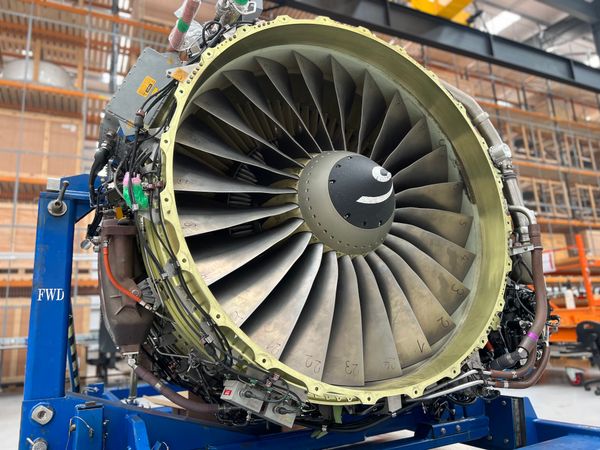 How Delivery Delays Are Reshaping Aviation Sourcing
When Boeing and Airbus can't deliver new aircraft fast enough, someone has to keep the old ones flying. That reality, playing out across airline fleets and MRO shops worldwide, is fueling what industry insiders are now calling a defining moment for the aviation aftermarket.
STORIES
READ MORE »
How Delivery Delays Are Reshaping Aviation Sourcing
When Boeing and Airbus can't deliver new aircraft fast enough, someone has to keep the old ones flying. That reality, playing out across airline fleets and MRO shops worldwide, is fueling what industry insiders are now calling a defining moment for the aviation aftermarket.
STORIES
READ MORE »
 Phillips 66 Aviation Donates $23,928 to CAN in Support of Cancer Patient Flights
Phillips 66 Aviation presented a $23,928 check to Corporate Angel Network at NBAA-BACE 2026, supporting free flights for cancer patients on corporate aircraft.
NEWS
READ MORE »
Phillips 66 Aviation Donates $23,928 to CAN in Support of Cancer Patient Flights
Phillips 66 Aviation presented a $23,928 check to Corporate Angel Network at NBAA-BACE 2026, supporting free flights for cancer patients on corporate aircraft.
NEWS
READ MORE »
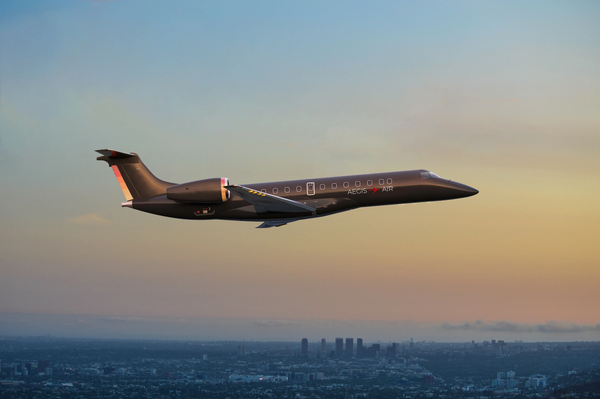 Aegis Air Bets on By-the-Seat Private Jet Flights From Miami to Caracas
A new US start-up is testing whether Caracas can support its own private jet shuttle. Aegis Air, a virtual carrier founded this year, is due to start by-the-seat flights between Miami and the Venezuelan capital today, 20 October, aboard a 16-seat Embraer E135.
NEWS
READ MORE »
Aegis Air Bets on By-the-Seat Private Jet Flights From Miami to Caracas
A new US start-up is testing whether Caracas can support its own private jet shuttle. Aegis Air, a virtual carrier founded this year, is due to start by-the-seat flights between Miami and the Venezuelan capital today, 20 October, aboard a 16-seat Embraer E135.
NEWS
READ MORE »
More than just headlines.
Get unlimited ad-free access to in-depth aviation news, premium stories, and exclusive insights other sites don't cover.
- Ad-free browsing on AeroXplorer
- Unlimited access to premium and exclusive articles
- Higher photo upload limits & commissions on sales
- Free access to Jetstream Magazine on higher tiers
- Ad-free browsing
- Sell aviation photos with 60% commission
- First week free!
- Everything in Basic+
- Unlimited premium articles
- Sell aviation photos with 70% commission
- Free Digital subscription to Jetstream Magazine
- First week free!
- Everything in Basic+ and Pro
- Sell aviaiton photos with 80% commission
- Early access to exclusive stories
- Free Digital+Print subscription to Jetstream Magazine