
Over the past fifty years, the growth and expansion of international non-governmental originations and cooperatives have expanded into every sector. This includes healthcare, sport, trade, and even travel.
Within this, governance structures and policing organizations have arisen, and have offered solidity and structure to the chaotic landscape. Although many nations have their own internal aviation governance authorities, two main ones stand apart from the rest and determine worldwide action. These are the International Civil Aviation Organization (ICAO) and the US Federal Aviation Administration (FAA). But what are these organizations and what do they do?

International Civil Aviation Organization (ICAO)
ICAO is a direct entity of the United Nations (UN) and provides aviation administration recommendations to 193 independent states worldwide. Created originally as the Convention on International Civil Aviation in 1944 (known as the Chicago Convention), the modern iteration was absorbed by the UN in 1947.
ICAO is headquartered in Montreal, Canada. The guiding philosophy of the organization is to create and distribute standards and protocols for fair and safe flight worldwide.
Set controls are listed by the agency, as well as being used as operational criteria for construction and use of aircraft. Other key tenants of the organization include passport control and regulation, as well as managing safe air traffic routes. ICAO remains the governing body of all state-based aviation authorities beyond domestic airspace.

Federal Aviation Administration (FAA)
The FAA is different that ICAO, as it is not an international collective, but rather a United States government agency under the guidance of the US Department of Transportation. The FAA, founded in 1958, was an autonomous US federal agency until being absorbed by DOT in 1967.
The FAA manages all air traffic and aviation services in the US and surrounding waters, as given authority by ICAO. Being US-based, the FAA sets all US flight standards for any aircraft entering or leaving US airspace. With US airspace subsiding over many ocean areas, large parts of the Pacific Ocean and parts of the North Pole are technically under US jurisdiction in the event of an air incident.
Additionally, the FAA has its own set of controls that all aircraft must observe, a list far denser than the standard ICAO operating procedures. It is important to note that the FAA and the Transportation Security Administration (TSA) may work hand in hand, however are not part of the same operational umbrella. In the event of any airline incident, the FAA is the preceding investigatory team.

With the introduction of the United States Space Force as well as the National Aeronautics and Space Administration (NASA), space-related incidents are typically not reviewed by the FAA and are subjected to the other administrations.
The reason aviation administrations are important is predominantly for standardization. With set rules and oversight, aviation logistics, security, and administration can be easier to manage. Additionally, as many judicial and legal proceedings follow aircraft incidents, international governance helps accountability for flight crews and operations.
Southwest Airlines Blames Brief System Outage for Boarding Delays and Checked Bag Disruptions » Boeing's Touchscreen Flight Controls for 737 Draw Sharp Criticism from Pilots » United 777 Diverts to Dublin After Cockpit Windscreen Cracks Over the Atlantic »

Comments (0)
Add Your Comment
TAGS
INFORMATIONAL ICAOFAAUnited StatesUNNASATSA Airplane AviationRECENTLY PUBLISHED
 Selma Blair Charged With Assault After Alleged Biting Incident on Delta Flight
Actress Selma Blair faces assault charges after allegedly biting a Delta flight attendant and kicking a police officer during a disturbance at JFK.
NEWS
READ MORE »
Selma Blair Charged With Assault After Alleged Biting Incident on Delta Flight
Actress Selma Blair faces assault charges after allegedly biting a Delta flight attendant and kicking a police officer during a disturbance at JFK.
NEWS
READ MORE »
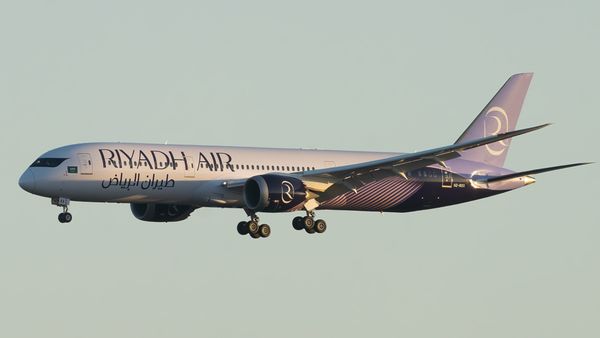 Riyadh Air Relocates New Boeing 787 Dreamliners Away From Capital Amid Houthi Missile Threat
Saudi Arabia's new flag carrier Riyadh Air has moved its Boeing 787 Dreamliners out of Riyadh over fears of Houthi missile attacks ahead of launch.
NEWS
READ MORE »
Riyadh Air Relocates New Boeing 787 Dreamliners Away From Capital Amid Houthi Missile Threat
Saudi Arabia's new flag carrier Riyadh Air has moved its Boeing 787 Dreamliners out of Riyadh over fears of Houthi missile attacks ahead of launch.
NEWS
READ MORE »
 FAA Orders Engine Repairs on Airbus A380 Fleet After Uncontained Failure
The FAA has ordered inspections and repairs on Engine Alliance GP7200 engines powering Airbus A380s after an uncontained failure during takeoff.
NEWS
READ MORE »
FAA Orders Engine Repairs on Airbus A380 Fleet After Uncontained Failure
The FAA has ordered inspections and repairs on Engine Alliance GP7200 engines powering Airbus A380s after an uncontained failure during takeoff.
NEWS
READ MORE »
More than just headlines.
Get unlimited ad-free access to in-depth aviation news, premium stories, and exclusive insights other sites don't cover.
- Ad-free browsing on AeroXplorer
- Unlimited access to premium and exclusive articles
- Higher photo upload limits & commissions on sales
- Free access to Jetstream Magazine on higher tiers
- Ad-free browsing
- Sell aviation photos with 60% commission
- First week free!
- Everything in Basic+
- Unlimited premium articles
- Sell aviation photos with 70% commission
- Free Digital subscription to Jetstream Magazine
- First week free!
- Everything in Basic+ and Pro
- Sell aviaiton photos with 80% commission
- Early access to exclusive stories
- Free Digital+Print subscription to Jetstream Magazine