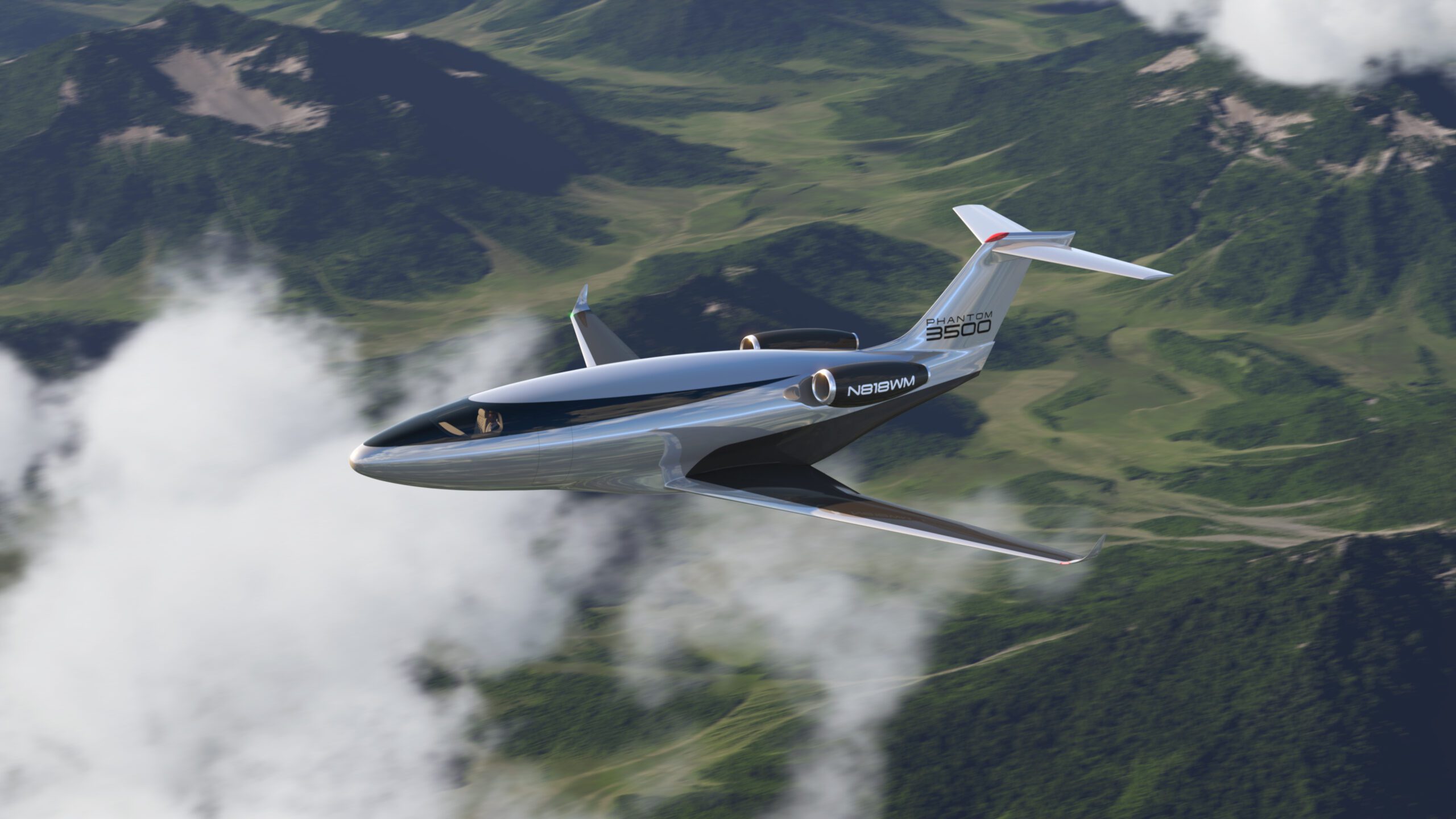

While most aircraft manufacturers are still spending billions of dollars trying to minimize drag, one startup claims to have cracked the code.
Texas startup Otto Aerospace is betting on a simple but radical idea: if you can minimize drag across an aircraft's surface, you can unlock performance improvements that legacy designs can't even touch.

Turbulence at the Top: How Four Airlines Came to Dominate the U.S. Air Travel Market
Otto Aerospace
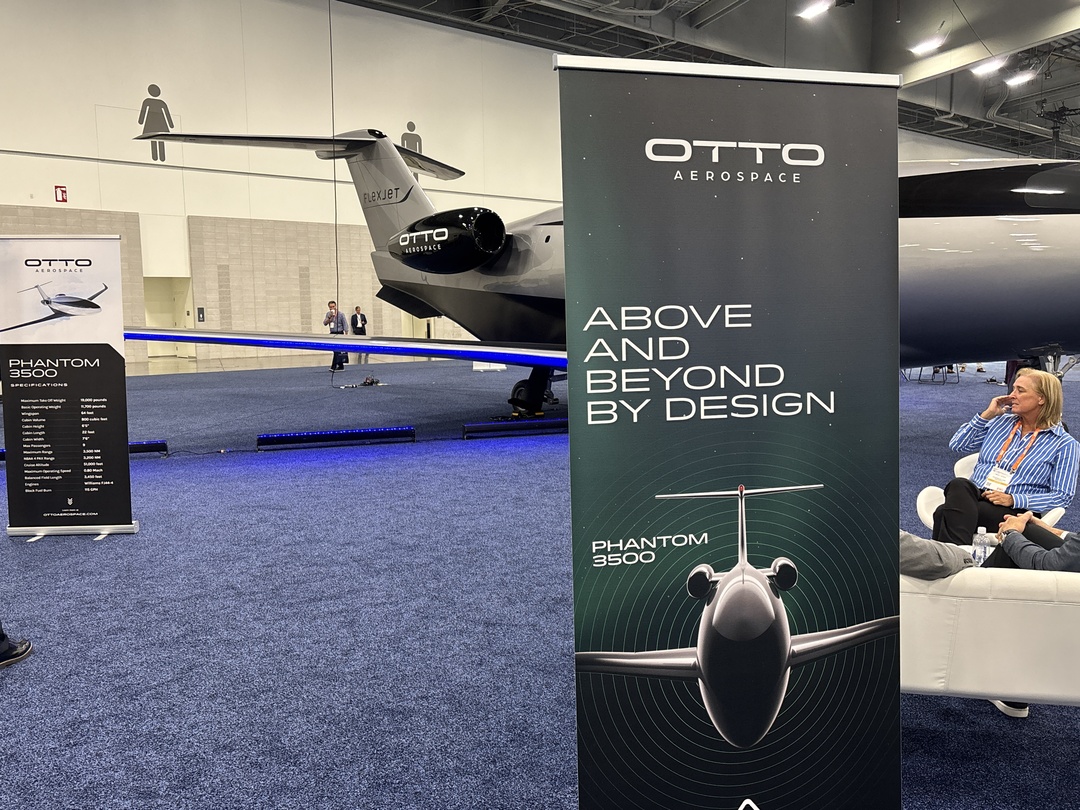
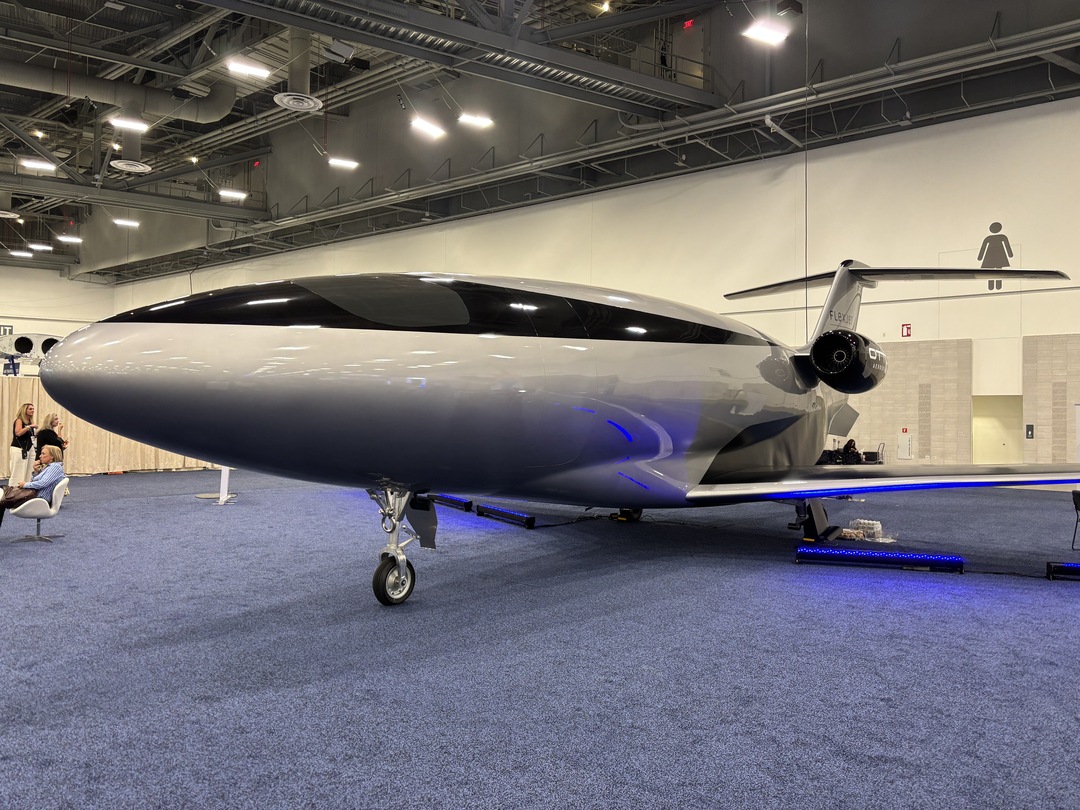
Otto Aerospace, based in Fort Worth, Texas, is a startup focused on creating sustainable business jets. Founded in 2008, the company has already seen success with its Celera 500L aircraft, which completed its maiden flight in January 2018. Its newest plane, Phantom 3500, was recently displayed at NBAA-BACE 2025 and is set to complete its maiden flight in early 2027, according to aviation news source FlightGlobal. The aircraft has already seen strong interest from business jet operators, even recently landing a 300-unit order from FlexJet.
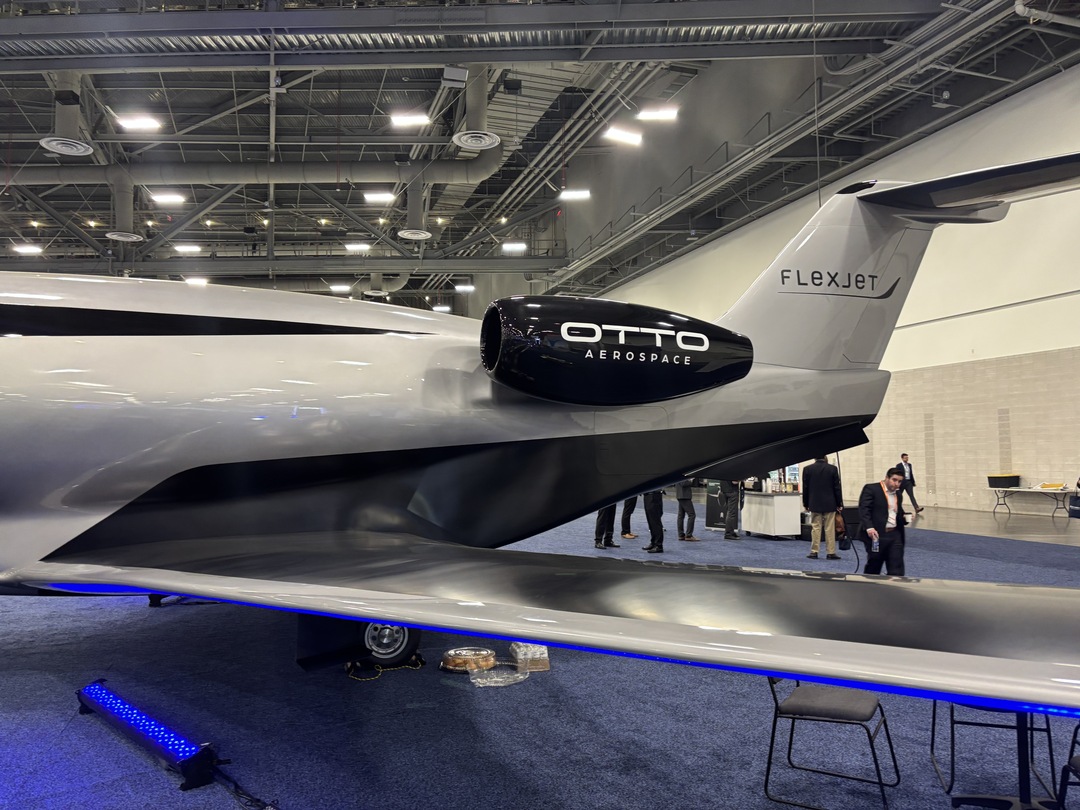
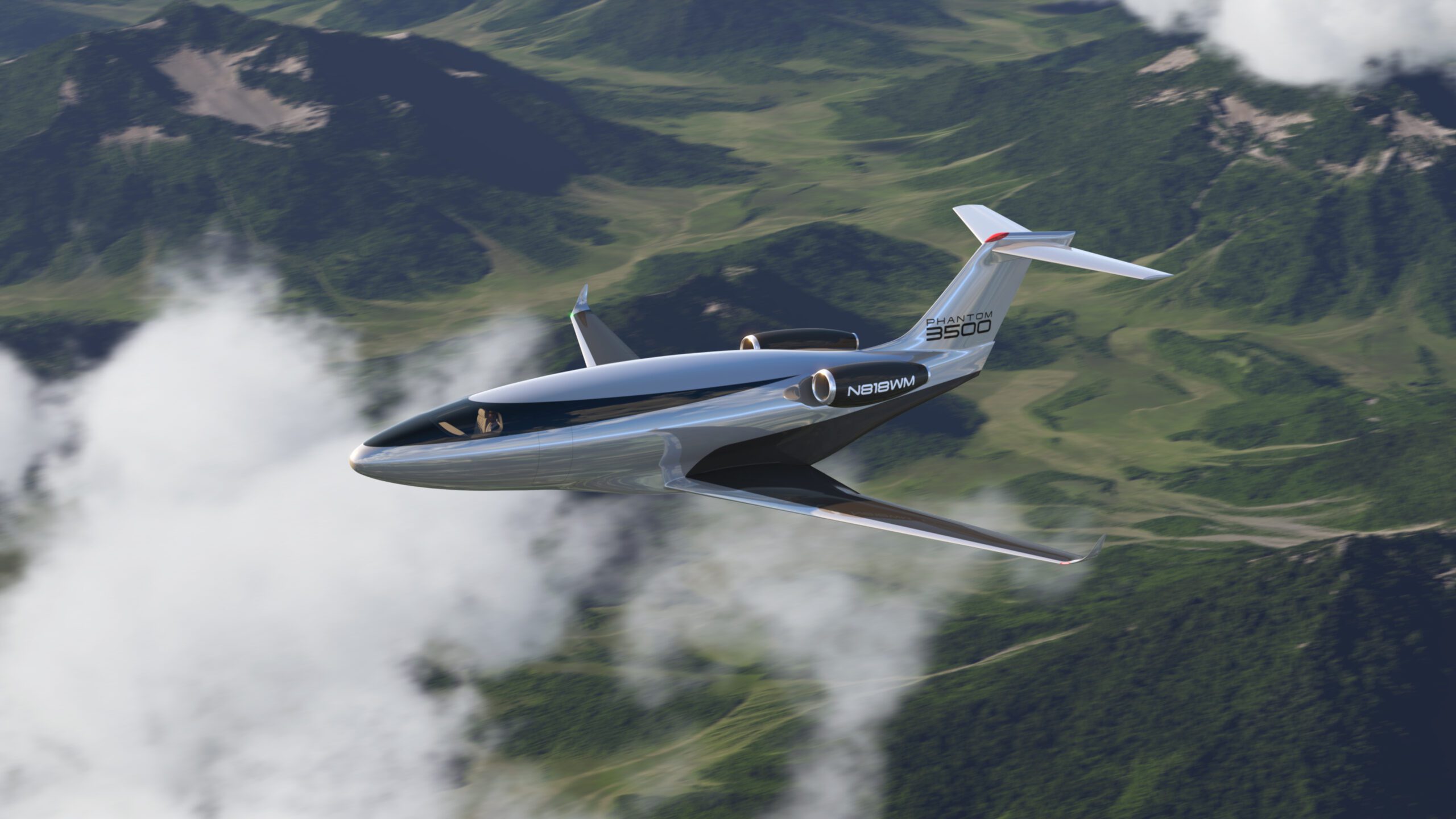
According to Otto Aerospace, the Phantom 3500 "unlocks performance metrics never before seen in similar aircraft." With a design focused on Sustainable Aviation Fuel (SAF) as an energy source, Phantom 3500 will not only achieve a dramatic reduction in drag but will also promote sustainable flight. This, along with a 92% reduction in overall emissions, will save customers up to 50% in operational costs, according to the manufacturer.
Besides the unique design of the plane's exterior, Otto Aerospace is also bringing innovation to its onboard experience. Part of the effort to minimize drag means that the Phantom 3500 will have no windows. Eliminating windows helps maintain the perfectly smooth exterior surface required for laminar flow. In place of traditional windows, Otto will use high-resolution digital displays showing real-time exterior views, similar to the virtual windows found in some modern business jets.


Supersonic Secrets: The Tupolev Tu-144 "Concordski"
How Does it Work?
In flight, air wants to tumble. The moment the airflow translates from laminar (smooth air) to turbulent (chaotic air), the drag spikes. For most conventional aircraft, this transition happens earlier across the airfoil than designers would like, especially on wings and fuselages with paint wear and panel gaps.
Enter Otto. Its core design strategy is to continuously delay the transition from laminar to turbulent flow, minimizing the amount of chaotic air around the aircraft. However, this is very tricky, as laminar flow is notoriously unforgiving. In fact, even a surface that looks perfect to the naked eye may still have micro-imperfections large enough to trigger turbulent airflow.
Otto's Competitive Advantage
AeroXplorer had the opportunity to speak with Meagan Villanueva, Director, Program Management Office at Otto Aerospace. In conversation, Villanueva commented on the unique manufacturing processes Otto employs to differentiate itself in an increasingly competitive market.
Beginning with the manufacturing of the control surfaces, Villanueva shared how Otto's manufacturing processes are focused on maintaining the reliability of its laminar flow value proposition, ensuring the aircraft maintains its optimal profile over thousands of operational cycles.
"We are being very forward-leaning on using the best technologies in composites manufacturing today. The unique part of our aircraft is how tightly we must control the tolerances of the profile of our surfaces, and to do that, you really need to deploy the best manufacturing processes out there for composites technology," Villanueva told AeroXplorer.
She also spoke about how the jet is designed to be light, leveraging composite structures instead of the metallic components its competitors use. "This aircraft is at 19,000 pounds, competing with other super mid business jets that are at somewhere between 35,000 to 40,000 pounds." She added, "We're talking about an aircraft that weighs approximately half of what its competitors weigh [...] That starts to make room for you to do more advanced things."

Terminal Trouble: One of Japan's Busiest Airports is Slowly Sinking
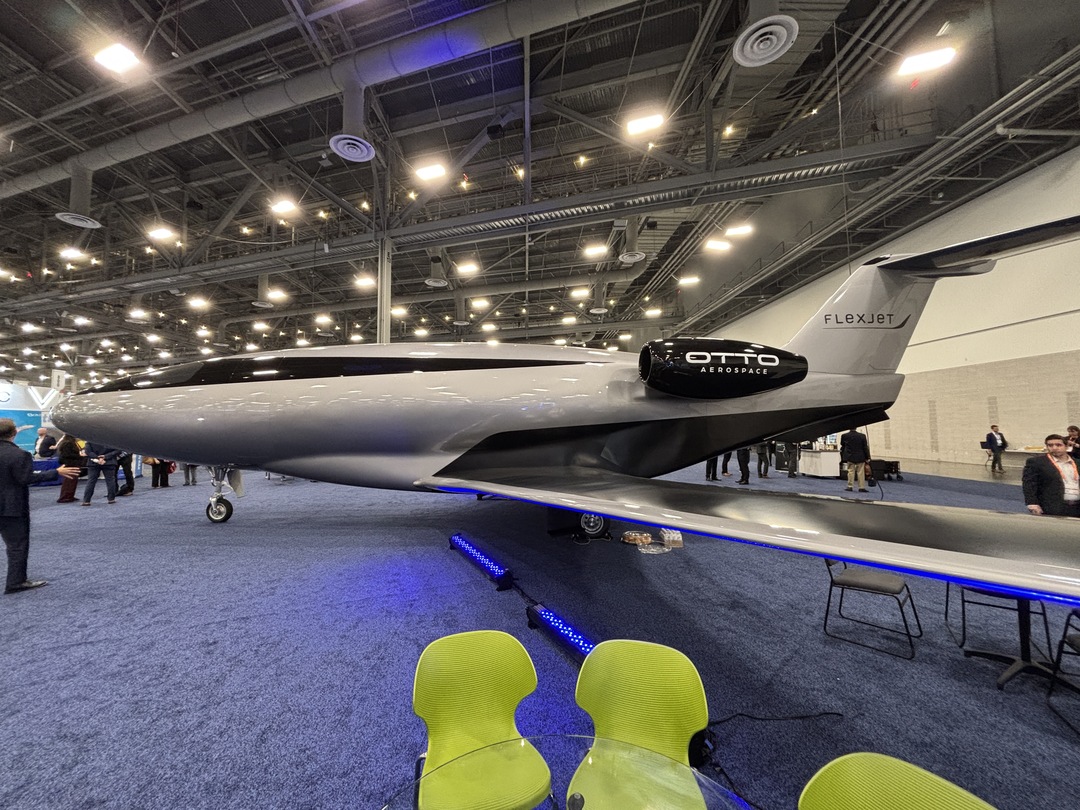
Taken together, these design choices give Otto a structural and aerodynamic margin its competitors simply can’t match.
One Step at a Time
Phantom 3500 is still in the certification process, and it will still take several years before it can enter service. However, steady progress is being made.
"We've had our familiarization briefing with the FAA [...] so that's behind us. Over the next couple of years, what you'll see is us conducting our first flight of our pre-production vehicles – that will be what we call 'performance-conforming aircraft.' So we'll go out and validate different test points and some of the boundaries of our flight envelope, and that will [...] kick off the effort that takes us through certification." With regard to a final timeline, Villanueva said Otto hopes to achieve its type certification between 2027 and 2030. This places Otto's Phantom 3500 on the market by the end of 2030, according to Corporate Jet Investor.

Fuel, Faith, and Four Engines: How Emirates Makes the A380 Work
Otto's Future
Beyond Phantom 3500, Otto Aerospace sees a future in which its product line complements the current business jet landscape, rather than replaces it.
"We don't ever fully expect to replace any large single-aisle commercial aircraft, but we do think there is a different total addressable market than what we are trying to address today with the Phantom 3500," Villanueva noted. "But a lot of what we've been spending time on is thinking about the core technology, laminar flow, and how far we can actually push that technology in terms of scale and range [...] We're really excited about that, and that vision is still taking shape, [...] but there will definitely be a follow-on aircraft to this."
Phantom isn't just a new aircraft; it's proof that a smarter design cycle can unlock aerodynamic gains the industry has left on the table for decades. If Otto succeeds in bringing large-scale laminar flow from prototypes into production fleets, it could redefine what efficient flight looks like across the aviation industry.
Federal Grand Jury Indicts Passenger Duct-Taped to Seat on American Airlines Flight » What the September NATS outage teaches passengers about flight compensation » Riyadh Air Relocates New Boeing 787 Dreamliners Away From Capital Amid Houthi Missile Threat »
Comments (1)
 Gerald C. Lauchle
I have considered whether the Otto Phantom 3500 might have extended laminar flow, as claimed in this article. In the article I published in Journal of Fluid Mechanics, Vol. 144, pp. 79-101 (1984) shows that the transition Reynolds number for an axisymmetric body that is perfectly designed and built for extended laminar flow is 4.5x10**6. The fuselage of the Phantom 3500 is similar to the body I tested in that article. Presuming operation of the aircraft is 500 mph (534 fps) at 5,000 feet, where the air temp is 41 degrees F, the kinematic viscosity of that air would be 2.3x10**-4 (feet**2/sec). The length of laminar flow over the Phantom 3500 fuselage would thus be (transition Reynolds number)x(kinematic viscosity)/(aircraft speed) = 19 feet. I am impressed!!!!
Gerald C. Lauchle
I have considered whether the Otto Phantom 3500 might have extended laminar flow, as claimed in this article. In the article I published in Journal of Fluid Mechanics, Vol. 144, pp. 79-101 (1984) shows that the transition Reynolds number for an axisymmetric body that is perfectly designed and built for extended laminar flow is 4.5x10**6. The fuselage of the Phantom 3500 is similar to the body I tested in that article. Presuming operation of the aircraft is 500 mph (534 fps) at 5,000 feet, where the air temp is 41 degrees F, the kinematic viscosity of that air would be 2.3x10**-4 (feet**2/sec). The length of laminar flow over the Phantom 3500 fuselage would thus be (transition Reynolds number)x(kinematic viscosity)/(aircraft speed) = 19 feet. I am impressed!!!!
Add Your Comment
TAGS
STORIES Startups Otto Otto Aerospace Phantom 3500 NBAA NBAA-BACERECENTLY PUBLISHED
 6 Key Rules for Claiming Citizenship Status Through Your Parents or Grandparents
If you want to know about ancestry rights in Canadian citizenship law, you need to understand what has changed in the rules lately.
INFORMATIONAL
READ MORE »
6 Key Rules for Claiming Citizenship Status Through Your Parents or Grandparents
If you want to know about ancestry rights in Canadian citizenship law, you need to understand what has changed in the rules lately.
INFORMATIONAL
READ MORE »
 FlyUSA Opens 50,000-Square-Foot Owner-Exclusive Hangar and Lounge at Tampa International Airport
FlyUSA has opened a 50,000-square-foot private hangar and lounge at Tampa International Airport, serving aircraft owners and charter clients.
NEWS
READ MORE »
FlyUSA Opens 50,000-Square-Foot Owner-Exclusive Hangar and Lounge at Tampa International Airport
FlyUSA has opened a 50,000-square-foot private hangar and lounge at Tampa International Airport, serving aircraft owners and charter clients.
NEWS
READ MORE »
 Federal Grand Jury Indicts Passenger Duct-Taped to Seat on American Airlines Flight
A passenger restrained with duct tape after a violent outburst on an American Airlines flight to Newark faces federal charges and up to 20 years in prison.
NEWS
READ MORE »
Federal Grand Jury Indicts Passenger Duct-Taped to Seat on American Airlines Flight
A passenger restrained with duct tape after a violent outburst on an American Airlines flight to Newark faces federal charges and up to 20 years in prison.
NEWS
READ MORE »
More than just headlines.
Get unlimited ad-free access to in-depth aviation news, premium stories, and exclusive insights other sites don't cover.
- Ad-free browsing on AeroXplorer
- Unlimited access to premium and exclusive articles
- Higher photo upload limits & commissions on sales
- Free access to Jetstream Magazine on higher tiers
- Ad-free browsing
- Sell aviation photos with 60% commission
- First week free!
- Everything in Basic+
- Unlimited premium articles
- Sell aviation photos with 70% commission
- Free Digital subscription to Jetstream Magazine
- First week free!
- Everything in Basic+ and Pro
- Sell aviaiton photos with 80% commission
- Early access to exclusive stories
- Free Digital+Print subscription to Jetstream Magazine