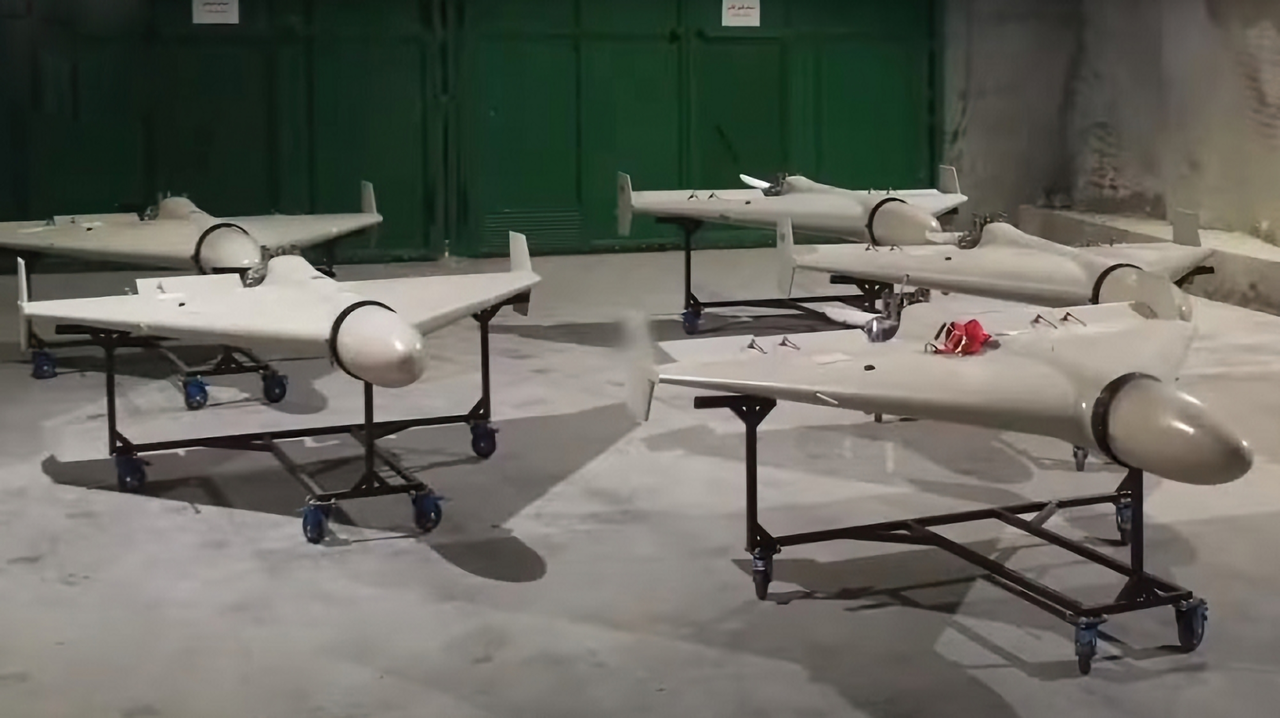
Recent escalations across the Middle East have thrust Iran’s unmanned aerial vehicle (UAV) program into the global spotlight, revealing a sophisticated ecosystem of "loitering munitions" and long-range strike platforms that have fundamentally altered the economics of modern warfare. As of March 2026, the ongoing regional conflict, often referred to as the first “Cheap Drone War”, has demonstrated that high-end air defense systems costing millions per interceptor are struggling to keep pace with swarms of expendable, low-cost Iranian drones.
The technological evolution of these systems has moved far beyond the basic "flying lawnmowers" seen in earlier years. Today, the Iranian arsenal features a mix of piston-driven Kamikazes, jet-powered high-speed interceptors, and High-Altitude Long-Endurance (HALE) platforms capable of transcontinental reaches.
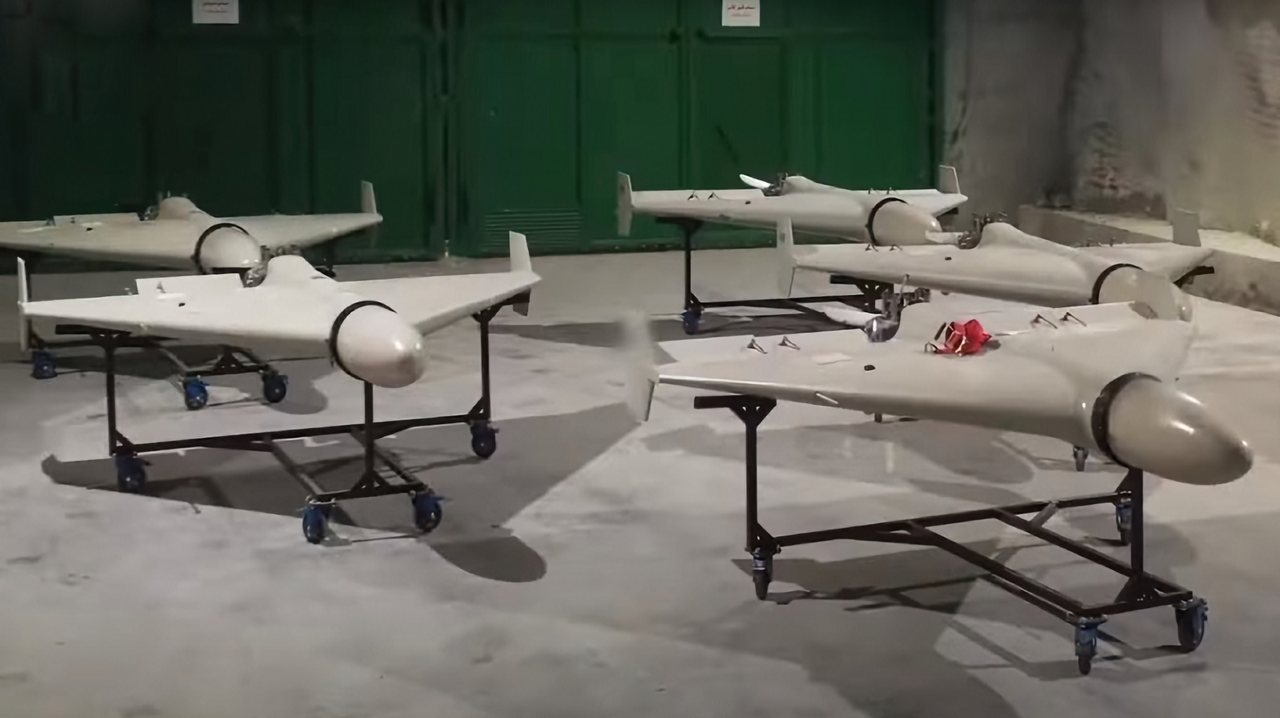
Photo: ispionline
The Shahed Evolution
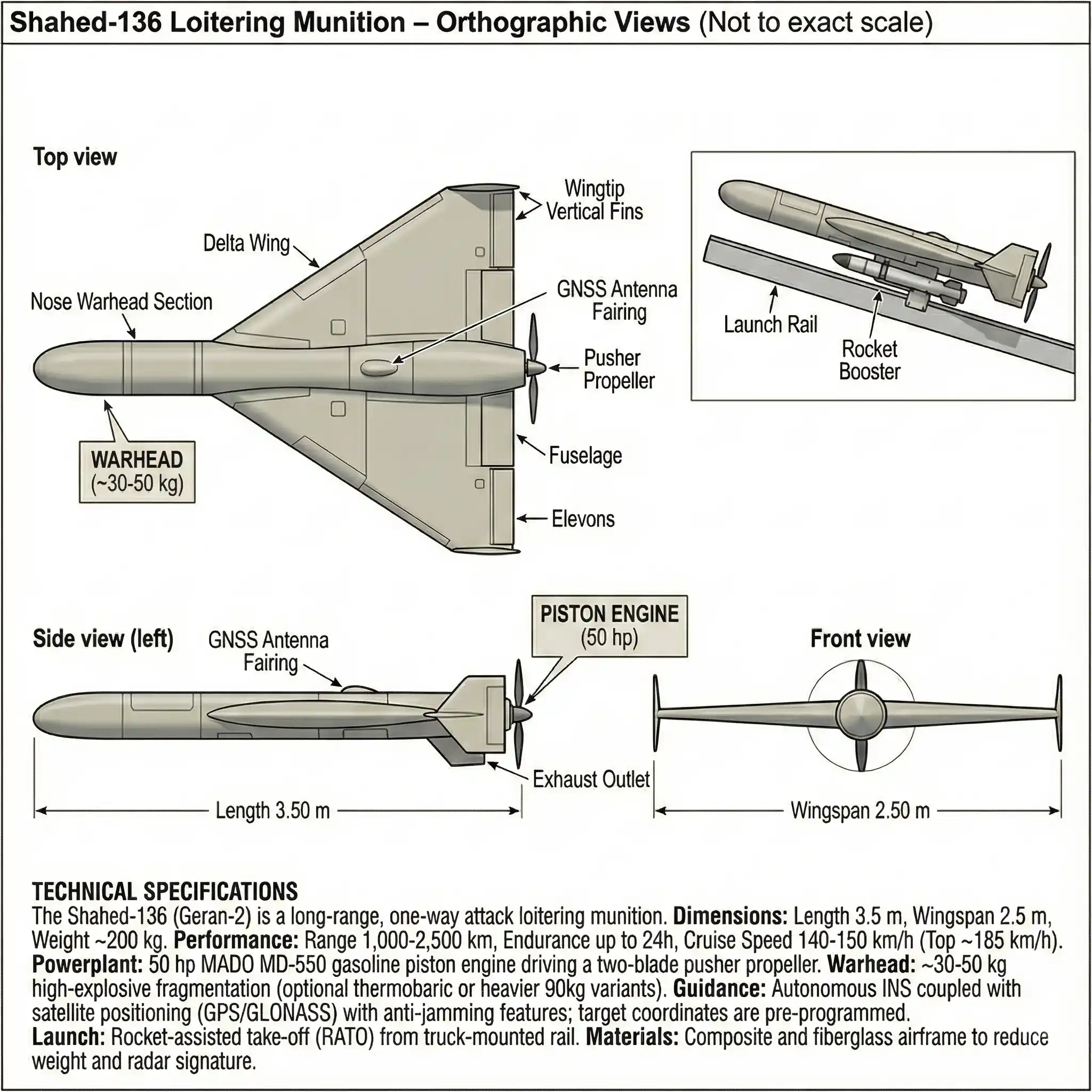
The backbone of Iran's asymmetric strategy remains the Shahed-136, now augmented by its faster sibling, the Shahed-238. While the original -136 utilized a simple MD-550 piston engine, the newer -238 is powered by the Toloue-10 or the Czech-designed PBS TJ150 micro-turbojet. This upgrade has pushed approach speeds from 180 km/h to over 500 km/h, significantly reducing the reaction time for ground-based defenders.
According to technical analysis of wreckage recovered this month, the guidance systems have also undergone a massive overhaul. The drones now utilize Controlled Reception Pattern Antennas (CRPA) with up to 16 elements, allowing them to "null out" electronic jamming signals from ground-based EW (Electronic Warfare) units.
“Already, the 10 percent of unintercepted drones are doing damage entirely disproportional to their price tag,” noted Anna Miskelley in a recent briefing for Defense Security Monitor. “On March 1st, a single Shahed reportedly destroyed a $300 million AN/TPS-59 radar site in Bahrain.”
The Strategic Heavyweights
Beyond the suicide drones, Iran has successfully operationalized "Reaper-class" aircraft. The Mohajer-10, unveiled in late 2023 and fully integrated into IRGC operations by early 2025, boasts a 2,000 km range and can carry a 300 kg payload of "Almas" anti-tank missiles and "Ghaem" precision-guided bombs.
Even more ambitious is the Shahed-149, nicknamed the "Gaza." This HALE drone represents the pinnacle of Iranian aerospace engineering, designed to challenge Western dominance in long-duration surveillance.
“The Shahed-149 ‘Gaza’ stands out with its impressive 21-meter wingspan and a payload capacity of 500 kilograms, allowing it to carry a variety of advanced munitions, including precision-guided bombs and surveillance equipment,” according to reports from the IRGC Aerospace Force.
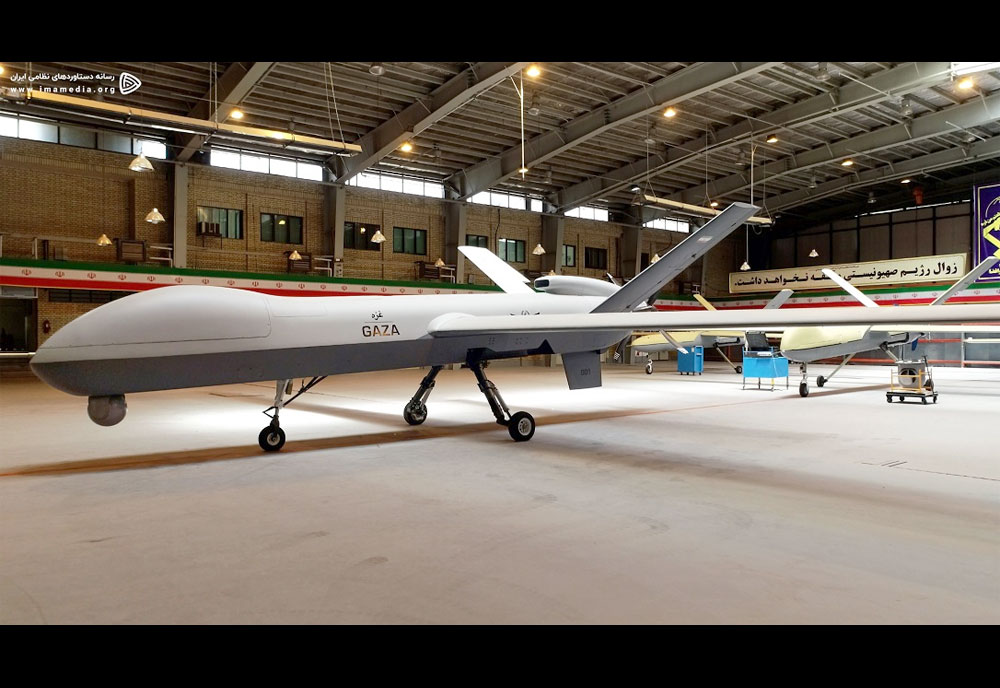
Photo: Fars Media Corporation
Comparison of Primary Iranian Drone Systems (2026 Status)
| Model | Classification | Propulsion | Max Range | Top Speed | Primary Role |
|---|---|---|---|---|---|
| Shahed-136 | Loitering Munition | Piston Engine | 2,500 km | 185 km/h | Saturation Strikes |
| Shahed-238 | Jet Kamikaze | Micro-Turbojet | 1,000 km | 520 km/h | High-Speed Interception |
| Mohajer-10 | MALE UCAV | Turboprop | 2,000 km | 210 km/h | Surveillance & Strike |
| Shahed-149 | HALE UCAV | Turboprop | 7,000 km | 350 km/h | Strategic Reconnaissance |

How AI Quietly Became the Backbone of Today’s Aviation Industry
Offline Navigation and Stealth
The success of Iranian drones in the 2026 conflict environment stems from their "offline" capabilities. To counter the massive GPS jamming currently blanketing the Middle East, these drones use Inertial Navigation Systems (INS). They register their location via GPS or the Chinese BeiDou system immediately after takeoff, then disable their receivers to fly "dark" using high-precision gyroscopes and barometers.
Furthermore, the airframes are increasingly built from lightweight radar-absorbing materials, such as carbon-fiber-reinforced plastics and fiberglass. This, combined with their small cross-section and low-altitude flight paths, makes them nearly invisible to traditional long-range radar until they are within a few kilometers of the target.
A Reciprocal Technological Exchange
The geopolitical landscape of 2026 has also seen a shift in how these drones are manufactured. Recent reports suggest that the flow of technology is no longer one-way.
“The presence of a Russian-manufactured Geran-2 in Iran's operations would suggest that the previously one-directional drone cooperation, where Iran supplied Shahed systems to Russia after 2022, may be evolving into a more reciprocal exchange of loitering munition technologies between the two countries,” stated a CSIS analysis published on March 10, 2026.
As the conflict continues, the world's air forces are racing to develop "drone-against-drone" interceptors, realizing that using a $4 million Patriot missile to down a $30,000 Shahed is a mathematical path to defeat.
Pilot Tried to Crash Flight Bound for Israel After Stabbing Co-Pilot » British Airways Restarts Starlink Installation on Airbus A350 Fleet With Free High-Speed Wi-Fi for Passengers » Alaska Airlines Sets Sights on Final Major U.S. Carrier Takeover While Building Global Seattle Hub »

Comments (0)
Add Your Comment
TAGS
NEWS Iran Drones Shahed 136 Aviation Tech Military UAV Shahed 149 Gaza Shahed 238 Mohajer 10RECENTLY PUBLISHED
 Embraer Posts Record 66 Aircraft Deliveries in Q3 2026 as Commercial Jets Climb 10%
Embraer delivered 66 aircraft in Q3 2026, its strongest third quarter on record, with commercial jets up 10% and business jets rising 41%.
NEWS
READ MORE »
Embraer Posts Record 66 Aircraft Deliveries in Q3 2026 as Commercial Jets Climb 10%
Embraer delivered 66 aircraft in Q3 2026, its strongest third quarter on record, with commercial jets up 10% and business jets rising 41%.
NEWS
READ MORE »
 Alaska Airlines Sets Sights on Final Major U.S. Carrier Takeover While Building Global Seattle Hub
Alaska Airlines pursues its last major U.S. airline acquisition target as it expands international routes from Seattle to challenge Delta's dominance.
NEWS
READ MORE »
Alaska Airlines Sets Sights on Final Major U.S. Carrier Takeover While Building Global Seattle Hub
Alaska Airlines pursues its last major U.S. airline acquisition target as it expands international routes from Seattle to challenge Delta's dominance.
NEWS
READ MORE »
 American Airlines Reportedly Planning to Bring Starlink Wi-Fi to Its Entire Mainline Fleet
American Airlines is reportedly preparing to expand SpaceX's Starlink Wi-Fi service across its full mainline fleet, including Boeing aircraft.
NEWS
READ MORE »
American Airlines Reportedly Planning to Bring Starlink Wi-Fi to Its Entire Mainline Fleet
American Airlines is reportedly preparing to expand SpaceX's Starlink Wi-Fi service across its full mainline fleet, including Boeing aircraft.
NEWS
READ MORE »
More than just headlines.
Get unlimited ad-free access to in-depth aviation news, premium stories, and exclusive insights other sites don't cover.
- Ad-free browsing on AeroXplorer
- Unlimited access to premium and exclusive articles
- Higher photo upload limits & commissions on sales
- Free access to Jetstream Magazine on higher tiers
- Ad-free browsing
- Sell aviation photos with 60% commission
- First week free!
- Everything in Basic+
- Unlimited premium articles
- Sell aviation photos with 70% commission
- Free Digital subscription to Jetstream Magazine
- First week free!
- Everything in Basic+ and Pro
- Sell aviaiton photos with 80% commission
- Early access to exclusive stories
- Free Digital+Print subscription to Jetstream Magazine