
A deeply troubling incident from May 2025 has only now come to light following a detailed investigation by The Seattle Times, one that reveals how federal immigration officers boarded a deportee onto entirely the wrong Alaska Airlines flight at Seattle-Tacoma International Airport, ignored repeated warnings from flight attendants, and then compounded the error by re-detaining the man for a further 16 days after an airline captain used his own money to help him. The story raises serious questions about ICE's operational procedures, its use of special airfield access, and the limits of what commercial airline crews can do when federal agents override their warnings.
Who Rakesh Rakesh Is and How He Got to Seattle
Rakesh Rakesh, an Indian national, entered the United States illegally after flying to Central America and then completing the arduous 'donkey route' to enter over the southern border. Once in the United States, Rakesh was picked up by ICE and eventually transferred to an immigration removal unit in Seattle. Rakesh initially tried to apply for asylum but gave up his claim and agreed to be voluntarily returned to India.
Rakesh, now 25, grew up in a poor farming family. He came to the U.S. in the fall of 2024, hoping to find a job or perhaps set up an Indian food stall. His decision to abandon his asylum claim and accept voluntary departure was intended to avoid a formal deportation order on his record, a distinction that matters for any future immigration applications. His valid passport was in order. His commercial flights were booked. Everything was ready for him to leave peacefully and at his own expense.
What ICE Did at Seattle-Tacoma Airport
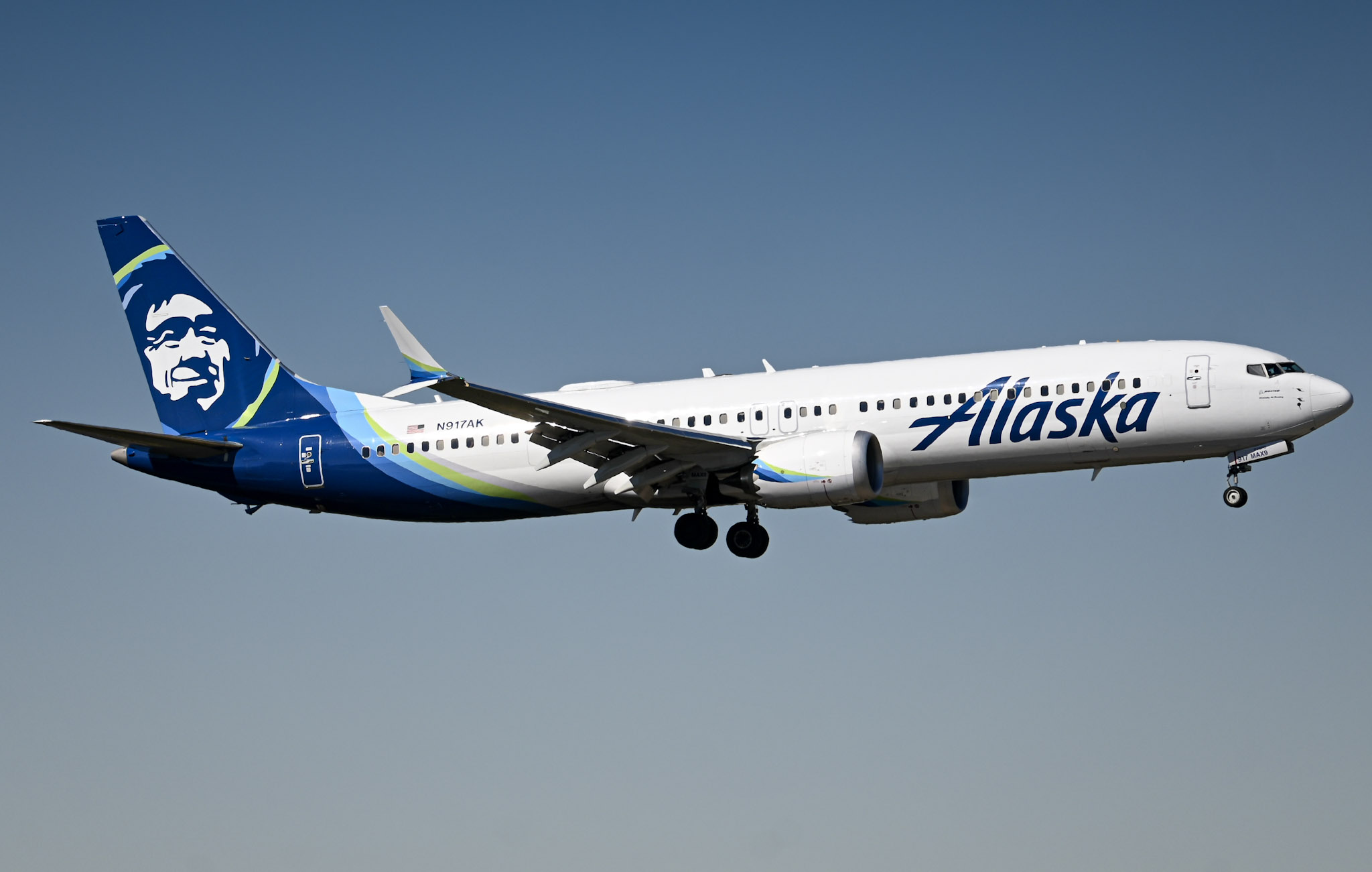
ICE was escorting Rakesh, who had agreed to leave the US, onto a commercial flight from Seattle to New York so he could connect to India. The officers bypassed the boarding gate process and walked him onto the Alaska Airlines flight at the next gate that was going to Sitka, Alaska, instead. Flight attendants told them it was the wrong plane. They ordered the crew to board him anyway, even though he reportedly wasn't on the manifest.
The incident unfolded when ICE officers bypassed the standard terminal gate process and brought Rakesh up a stairway from the airfield directly onto the jet bridge. Federal agents are eligible for badges granting airfield access when escorting individuals in their custody. However, Alaska Airlines said the officers failed to follow established check-in procedures with airline gate agents before stepping onto the plane.
Once on the jet bridge, the officers should have checked in with an airline agent before stepping onto the plane, according to procedures. At that point, they would have learned the plane they wanted to New York City was parked adjacent to the one they were about to board. Still, flight attendants shortly filled them in. Why the officers pushed on is unclear.
Alaska Airlines spokesperson Alexa Rudin was unambiguous about where the fault lay:
"The established procedures for this passenger were not followed by ICE."

Stranded in Sitka
Once the flight was airborne, flight attendants alerted the captain. The captain then told Rakesh what had happened. He was scared because he'd been told he was only allowed to go back to India. The captain took him to the crew hotel, got him a room, and organised the flight back to Seattle the next morning and onto New York.
Once the plane arrived in Sitka, Rakesh had nowhere to go, and the captain of the Alaska Airlines flight felt so bad that he used his own money to book a hotel room for Rakesh for the night.
The airline paid for Rakesh's hotel and meals in Sitka and covered the flight back to Seattle and rebooking to New York City. Rudin expressed appreciation for how the crew responded, calling the captain “a true representation of our values of safety, kindness and doing the right thing.”

How AI Quietly Became the Backbone of Today’s Aviation Industry
ICE Re-Detains Rakesh on His Return
What happened next defied straightforward explanation. When Rakesh arrived in Seattle, ICE refused to allow him to continue on the rebooked itinerary to New York and India. They took him back into custody, to the Tacoma detention centre.
Rakesh described his own experience in a text message:
“I pleaded desperately with the ICE officers, begging and weeping, to let me go home. They did not listen to me.”
He added that he went on a hunger strike for several days after being returned to the detention centre.
The captain kept in touch with him and visited him at the detention centre. It was during one of those visits that the incident first came to the attention of immigration attorney Larkin VanDerhoef.
VanDerhoef, the immigration attorney, was in the waiting area when he heard the pilot explain to a front-desk official the mistaken flight and Rakesh being re-detained. "This is crazy," VanDerhoef said he thought, prompting him to hand the captain his card.
VanDerhoef took up Rakesh's case pro bono. He speculated that ICE may have refused to release Rakesh because no officers had been arranged to meet him at John F. Kennedy International Airport for his connecting flight to India. VanDerhoef questioned that logic openly:
"You mean to tell me there's not an ICE officer at JFK at all times?"
Nearly two weeks after Rakesh was re-detained, VanDerhoef emailed ICE to inquire about departure plans. An officer confirmed a flight had been scheduled for June 17. Rakesh eventually made it back to India after spending 16 additional days in detention beyond his original departure date.

A Pattern of Operational Failures
VanDerhoef placed the incident in a wider context of systemic ICE process failures. Immigration lawyer Larkin VanDerhoef said he has seen ICE make mistakes before: scheduling check-in appointments on days its offices were closed, failing to bring a detained man to a prearranged interview with US Citizenship and Immigration Services. Yet the flight snafu reached a different level of "bumbling, for lack of a better word," he said.
ICE did not respond to requests for comment.
Alaska Airlines Reviews Protocols
The incident prompted a direct policy response from the airline. The previously unreported May 31 incident prompted the airline to review safety protocols and go over them with the Department of Homeland Security, suggesting a surprising carelessness in the way ICE officers used special airfield access and their perceived authority as federal agents.
Alaska Airlines said:
"This was a non-standard interaction between law enforcement and our teams, and we are evaluating how to support our crews and implement policy that meets these types of situations."
In February 2025, Alaska Airlines rolled out a "deportee checklist" packet for airline staff to provide to immigration officers placing unescorted individuals on flights. The packet includes airline policy information and a form requesting the names of officers and the individuals being removed. An internal bulletin accompanying the checklist clarified that flight attendants are not required to hold passports or tickets on behalf of immigration officers, nor are they obligated to withhold travel documents from passengers boarded by federal agents.
The Broader Question of Crew Authority
The incident cuts to a question that has grown more acute as immigration enforcement operations have expanded on commercial aviation infrastructure: what authority do airline crew members actually have when federal agents board their aircraft? In this case, flight attendants knew the man was on the wrong plane, said so clearly, and were overridden. The manifest did not include his name. The gate agent was never consulted. The standard check-in procedure was bypassed entirely.
Alaska Airlines has not suggested its crews acted improperly; on the contrary, it praised them for alerting the captain and for the care they showed Rakesh throughout the ordeal. What the airline cannot do, and what this incident demonstrates painfully, is compel federal agents to follow procedures they choose to ignore. The result was a man who wanted to go home to India and agreed to do so voluntarily, instead of being stranded in one of the most remote communities in the United States, frightened and alone, while the airline captain, whose flight he had accidentally joined, spent his own money on a hotel room and kept visiting him in detention.
Alaska Airlines Flights Involved
| Flight No. | Route | Departure (approx.) | Arrival (approx.) | Duration | Operating Days |
|---|---|---|---|---|---|
| AS (SEA–SIT) | Seattle-Tacoma (SEA) → Sitka, Alaska (SIT) | ~Morning | ~Afternoon | ~2h 30m | Daily service |
| AS (SEA–JFK) | Seattle-Tacoma (SEA) → New York JFK (JFK) | ~Morning (intended) | ~Afternoon (intended) | ~5h 30m | Daily service |
| Rebooked | Sitka (SIT) → Seattle (SEA) → New York JFK (JFK) → Delhi (DEL) | Arranged the next day | June 17, 2025 (final India departure) | Multi-leg | One-time rebooked itinerary |
Note: Specific flight numbers for the Seattle–Sitka service on May 31, 2025, have not been publicly confirmed. The Seattle–New York JFK service shown is the originally intended routing for Rakesh's departure. The Seattle–Sitka route is a regularly scheduled Alaska Airlines service. All times are approximate. ICE did not respond to requests for comment.
What This Story Demands
The nine-month delay between the incident on May 31, 2025 and its public emergence in April 2026 is itself a measure of how quietly these events can unfold when no formal complaint mechanism functions as intended. It took an investigative report by The Seattle Times, a pro-bono immigration attorney, and a commercial airline captain, spending his own money, to bring a straightforward, agreed voluntary departure to its conclusion. ICE has not explained why its officers proceeded onto the wrong aircraft after being told it was wrong, why they re-detained Rakesh on his return to Seattle, or why it took sixteen additional days to rebook a flight for a man with a valid passport and a pre-existing commercial itinerary. Those questions remain open, and the agency's silence in the face of multiple media requests for comment is unlikely to make them go away.
German Eurofighters Intercept British Airways Flight » Federal Grand Jury Indicts Passenger Duct-Taped to Seat on American Airlines Flight » Ambulances Meet Eurowings Jet From Rhodes After Passengers Feel Unwell in Flight »

Comments (1)
 Ann Schmechel
Thank you Kalum, for investigating and reporting this incident. Trying to bring attention and accountability to these agencies in the current admiistration feels like trying to punch a hole in a wall of water. Just tying to watch and keep up with all the outragous, illegal and immoral things happening right now feels like constant whiplash.
Your article is important. Your work is important. Documenting this administration is vital as they work to make Oliver North look like an archivist.
Thank you for who you are and all you do.
Ann Scmechel
Ann Schmechel
Thank you Kalum, for investigating and reporting this incident. Trying to bring attention and accountability to these agencies in the current admiistration feels like trying to punch a hole in a wall of water. Just tying to watch and keep up with all the outragous, illegal and immoral things happening right now feels like constant whiplash.
Your article is important. Your work is important. Documenting this administration is vital as they work to make Oliver North look like an archivist.
Thank you for who you are and all you do.
Ann Scmechel
Add Your Comment
TAGS
NEWS Alaska Airlines ICE Seattle-Tacoma Airport Deportee Wrong Flight Immigration Enforcement Airline Crew Rights Northwest ICE Processing Center US Immigration Airline Safety Protocols Voluntary Departure Federal Agents AirlinesRECENTLY PUBLISHED
 How Delivery Delays Are Reshaping Aviation Sourcing
When Boeing and Airbus can't deliver new aircraft fast enough, someone has to keep the old ones flying. That reality, playing out across airline fleets and MRO shops worldwide, is fueling what industry insiders are now calling a defining moment for the aviation aftermarket.
STORIES
READ MORE »
How Delivery Delays Are Reshaping Aviation Sourcing
When Boeing and Airbus can't deliver new aircraft fast enough, someone has to keep the old ones flying. That reality, playing out across airline fleets and MRO shops worldwide, is fueling what industry insiders are now calling a defining moment for the aviation aftermarket.
STORIES
READ MORE »
 Phillips 66 Aviation Donates $23,928 to CAN in Support of Cancer Patient Flights
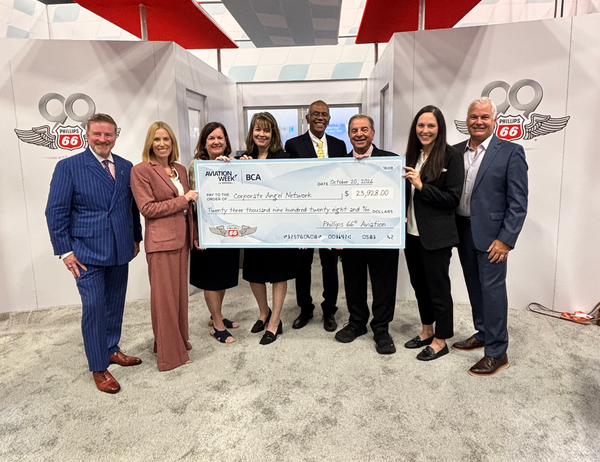
Phillips 66 Aviation presented a $23,928 check to Corporate Angel Network at NBAA-BACE 2026, supporting free flights for cancer patients on corporate aircraft.
NEWS
READ MORE »
Phillips 66 Aviation Donates $23,928 to CAN in Support of Cancer Patient Flights
Phillips 66 Aviation presented a $23,928 check to Corporate Angel Network at NBAA-BACE 2026, supporting free flights for cancer patients on corporate aircraft.
NEWS
READ MORE »
 Aegis Air Bets on By-the-Seat Private Jet Flights From Miami to Caracas
A new US start-up is testing whether Caracas can support its own private jet shuttle. Aegis Air, a virtual carrier founded this year, is due to start by-the-seat flights between Miami and the Venezuelan capital today, 20 October, aboard a 16-seat Embraer E135.
NEWS
READ MORE »
Aegis Air Bets on By-the-Seat Private Jet Flights From Miami to Caracas
A new US start-up is testing whether Caracas can support its own private jet shuttle. Aegis Air, a virtual carrier founded this year, is due to start by-the-seat flights between Miami and the Venezuelan capital today, 20 October, aboard a 16-seat Embraer E135.
NEWS
READ MORE »
More than just headlines.
Get unlimited ad-free access to in-depth aviation news, premium stories, and exclusive insights other sites don't cover.
- Ad-free browsing on AeroXplorer
- Unlimited access to premium and exclusive articles
- Higher photo upload limits & commissions on sales
- Free access to Jetstream Magazine on higher tiers
- Ad-free browsing
- Sell aviation photos with 60% commission
- First week free!
- Everything in Basic+
- Unlimited premium articles
- Sell aviation photos with 70% commission
- Free Digital subscription to Jetstream Magazine
- First week free!
- Everything in Basic+ and Pro
- Sell aviaiton photos with 80% commission
- Early access to exclusive stories
- Free Digital+Print subscription to Jetstream Magazine