
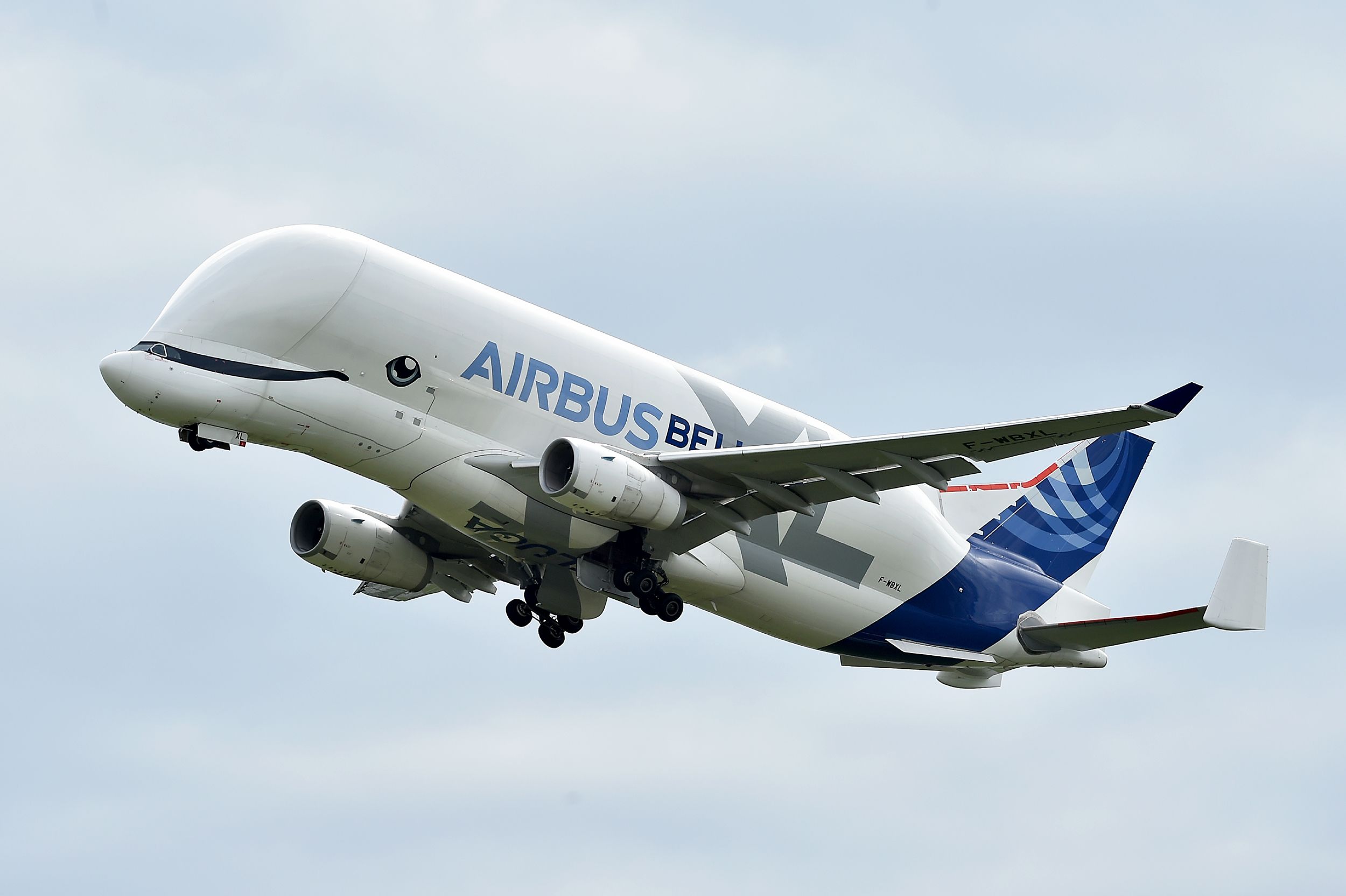

When looking at the future of aerospace, one eye always has to be looking forward while the other is looking behind. Innovation requires learning from our previous actions to make decisions to advance our industry. However, a new framework of research and study has emerged across different industrial sectors that have the potential to direct the future of airline innovation. Multiple companies have introduced biomimicry, and it could provide some answers to the future of sustainable aerospace infrastructure and design.

According to the Biomimicry Institute, a leading research center, biomimicry is "the practice that learns from and mimics the strategies found in nature to solve human design challenges". Using biomimetics can provide alternative answers to questions that manmade algorithms may not. Although sounding methodical in definition, the practice is much more practical. Plant stability, geological developments, and bone structures are all examples of how biology has shaped the design structure through evolution and ecological progressions.
One of the ways biomimicry is practiced is by analyzing the physical makeup of animals and seeing how certain genetic advantages have allowed them to prosper throughout evolution. This can be something like, how can a bird fly quicker than others? Or how can a duck repel water while other birds cannot? These answers, when provided in the context of a manmade design element, are what can push innovation. Through the study of biomimetics, these questions have been asked through the lens of aviation, which leads researchers to take data provided by avians to analyze advancements in aerodynamics, speed, and air resistance.

In 2020, Airbus announced they would begin researching biomimicry to create a more efficient aircraft. As part of the announcement, Airbus said they would research geese for their V-shaped aerodynamic design, owls for their silence when flying, and sharks for using a fin in movement. Initial research of these animals resulted in DragonFly, a prototype designed through biomimicry. Although still in the design phase, this broke ground as the first aircraft the manufacturers developed through this science. The DragonFly was envisioned to help serve remote and hard-to-reach regions, mimicking a dragonfly's superior vision.
Additional research in early biomimicry studies found that certain design elements based on skeletal structures can lead to lighter aircraft. If certain areas of the vessel are enforced at stronger points, the rest can be made up of thinner and lighter materials, like a human skeleton keeping the body's shape. Lighter materials can result in less fuel usage and reduced carbon emissions. As sustainability efforts continue to be aircraft manufacturers' top focus, adopting new building habits might unlock new opportunities.

Although there is far more research and science to be done to use any of these initial tests or prototypes, it is fascinating to see a new approach to evolving the flying experience. Biomimicry may just be a fad or the future; who knows, but for now, it offers something different.
Debris Field Discovered in Search for Missing Air Ambulance Carrying Six People » This Week in Aviation: The 10 Stories That Mattered Most » British Airways Unveils World's Largest Business Class Cabin With 106 Seats Aboard Refurbished A380 Fleet »

Comments (0)
Add Your Comment
TAGS
INFORMATIONAL Innovation Science Biomimicry Future Technology EngineeringRECENTLY PUBLISHED
 American Airlines Swaps Landline Buses for CRJ-700 Flights on 84-Mile South Bend to Chicago Route
American Airlines replaces its South Bend to Chicago Landline bus service with CRJ-700 regional jet flights starting today, cutting travel to 84 miles by air.
ROUTES
READ MORE »
American Airlines Swaps Landline Buses for CRJ-700 Flights on 84-Mile South Bend to Chicago Route
American Airlines replaces its South Bend to Chicago Landline bus service with CRJ-700 regional jet flights starting today, cutting travel to 84 miles by air.
ROUTES
READ MORE »
 Aviation Fuel Prices Hit Six-Month High in September
Aviation fuel prices surged to their highest level in six months during September 2026, with jet-A and avgas posting notable gains.
NEWS
READ MORE »
Aviation Fuel Prices Hit Six-Month High in September
Aviation fuel prices surged to their highest level in six months during September 2026, with jet-A and avgas posting notable gains.
NEWS
READ MORE »
 British Airways Unveils World's Largest Business Class Cabin With 106 Seats Aboard Refurbished A380 Fleet
British Airways reveals a record-setting 106-seat Club Suite business class cabin as part of a multi-billion pound A380 refurbishment program.
NEWS
READ MORE »
British Airways Unveils World's Largest Business Class Cabin With 106 Seats Aboard Refurbished A380 Fleet
British Airways reveals a record-setting 106-seat Club Suite business class cabin as part of a multi-billion pound A380 refurbishment program.
NEWS
READ MORE »
More than just headlines.
Get unlimited ad-free access to in-depth aviation news, premium stories, and exclusive insights other sites don't cover.
- Ad-free browsing on AeroXplorer
- Unlimited access to premium and exclusive articles
- Higher photo upload limits & commissions on sales
- Free access to Jetstream Magazine on higher tiers
- Ad-free browsing
- Sell aviation photos with 60% commission
- First week free!
- Everything in Basic+
- Unlimited premium articles
- Sell aviation photos with 70% commission
- Free Digital subscription to Jetstream Magazine
- First week free!
- Everything in Basic+ and Pro
- Sell aviaiton photos with 80% commission
- Early access to exclusive stories
- Free Digital+Print subscription to Jetstream Magazine