

The Federal Aviation Administration is establishing a dedicated research facility in Oklahoma City focused on the next generation of aviation, signaling a concrete federal commitment to studying how electric air taxis will operate in American skies.
The new hub, situated at the FAA's Mike Monroney Aeronautical Center, will serve as a central location for examining the operational, training, and safety questions surrounding advanced air mobility (AAM). The initiative arrives as manufacturers race to bring electric vertical takeoff and landing (eVTOL) aircraft into commercial service, with several companies targeting passenger operations in the coming years.
A Research Center Built for a New Class of Aircraft
The Aeronautical Center already functions as the FAA's primary training and logistics campus, housing the agency's academy and a workforce that supports air traffic control, aviation safety, and technical operations across the country. Adding an air taxi research hub to that footprint places eVTOL studies alongside the FAA's existing aviation infrastructure.
The facility will examine how powered-lift aircraft, the new category the FAA created to cover eVTOLs, can be safely integrated into the National Airspace System. Researchers will study pilot training requirements, simulator development, maintenance procedures, and the airspace procedures needed to accommodate aircraft that take off vertically but cruise like fixed-wing airplanes.
That hybrid flight profile sits at the heart of why air taxis present such a complex regulatory challenge. They do not behave like helicopters, nor do they fly like traditional airplanes. Existing certification rules and training frameworks were not designed with them in mind, which is why the FAA published a special federal aviation regulation in October 2024 to cover powered-lift pilot qualifications and operations.

Why Oklahoma City
Oklahoma City's selection reflects the city's long-standing role as the operational backbone of American aviation administration. The Mike Monroney Aeronautical Center spans roughly 1,100 acres and employs thousands of FAA personnel, including instructors, engineers, and safety inspectors. The campus also houses the Civil Aerospace Medical Institute, which conducts research on pilot health and human factors.
Placing the air taxi research hub at this site gives the agency immediate access to the simulators, classrooms, laboratories, and subject-matter experts already engaged in pilot certification and aircraft safety work. It also keeps the work close to the FAA Academy, where future controllers and inspectors receive their training.
For Oklahoma, the decision reinforces the state's economic stake in aviation. The aerospace sector ranks among Oklahoma's largest industries, with Tinker Air Force Base, the FAA campus, and a network of private contractors anchoring tens of thousands of jobs in and around the capital.

Analysis: How Spirit Airlines Changed Airline Pricing, then Paid the Price
What the Hub Will Study
The research agenda covers a broad set of questions that need answers before air taxis can carry paying passengers at scale. Among them are how controllers should manage low-altitude eVTOL traffic over urban areas, what battery and propulsion standards should apply to certification, and how vertiports should be designed and licensed.
Pilot training stands out as a particularly pressing issue. Powered-lift aircraft require skills drawn from both helicopter and airplane flying, and the supply of qualified instructors remains thin because the aircraft themselves are still rare. The FAA's October 2024 rule allowed instructors to train students from a single set of controls in the early phase of operations, a workaround meant to address the shortage of dual-control eVTOLs available for training.
The hub will also study how to evaluate simulator fidelity for these aircraft, a crucial question given that flight-training devices will carry much of the early instruction load.
Industry Momentum and Federal Catch-Up
Companies including Joby Aviation, Archer Aviation, and Beta Technologies have pushed aggressively toward commercial entry, with some operators targeting passenger flights in cities such as Los Angeles, New York, and Dubai. The Los Angeles 2028 Summer Olympics has emerged as an unofficial deadline for several manufacturers hoping to demonstrate the technology on a global stage.
Federal regulators have faced sustained pressure to keep pace. The FAA Reauthorization Act of 2024 directed the agency to accelerate its AAM work, including the development of policies for vertiports, operational rules, and workforce planning. The Oklahoma City hub represents one of the more visible answers to that congressional mandate.
The agency has also been working to establish a coordinated approach with NASA and the Department of Transportation, both of which have their own research programs studying urban air mobility, noise impact, and community acceptance.

What Comes Next
The timeline for the hub's full activation has not been publicly detailed, but the FAA has indicated that work will begin in coordination with existing programs already underway at the Aeronautical Center. Industry observers expect early outputs to include updated guidance for pilot examiners, refined certification criteria, and new airspace integration recommendations.
For the traveling public, the practical effects of the hub's work will take time to surface. Even optimistic forecasts place widespread air taxi service several years away, with early routes likely limited to short hops between airports and downtown vertiports in a handful of major cities.
Still, the establishment of a dedicated federal research center marks a turning point. For years, the conversation around air taxis has centered on private investment, prototype flights, and promotional videos. With the Oklahoma City hub, the government side of the equation now has a physical address, a defined mission, and a place at the table where the rules of a new aviation era will be written.
US Air Force Pulls All 12 B-1B Bombers from RAF Fairford Following Attempted Attack » British Airways Flight to Chicago Forces Emergency Descent After Cabin Pressure Failure » Halon Was Supposed to Disappear. This Company Kept It Flying. »

Comments (0)
Add Your Comment
TAGS
NEWS FAA Air Taxi Oklahoma City Urban Air Mobility eVTOL Aircraft Advanced Air Mobility Research Hub Aviation Innovation Future Aviation Flight Testing Aircraft Development Urban Transportation Sustainable AviationRECENTLY PUBLISHED
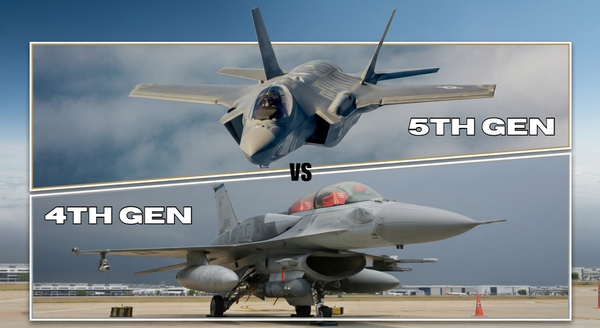 4th vs 5th Generation Fighter Jets: How Fighter Jets Have Evolved
A look at what separates fourth- and fifth-generation fighter jets, from stealth and sensor fusion to combat capability and cost.
INFORMATIONAL
READ MORE »
4th vs 5th Generation Fighter Jets: How Fighter Jets Have Evolved
A look at what separates fourth- and fifth-generation fighter jets, from stealth and sensor fusion to combat capability and cost.
INFORMATIONAL
READ MORE »
 United 777 Diverts to Dublin After Cockpit Windscreen Cracks Over the Atlantic
A United Airlines Boeing 777 bound for Milan made a steep descent and diverted to Dublin after its cockpit windscreen cracked mid-flight.
NEWS
READ MORE »
United 777 Diverts to Dublin After Cockpit Windscreen Cracks Over the Atlantic
A United Airlines Boeing 777 bound for Milan made a steep descent and diverted to Dublin after its cockpit windscreen cracked mid-flight.
NEWS
READ MORE »
 Boeing's Touchscreen Flight Controls for 737 Draw Sharp Criticism from Pilots
Boeing's plan to introduce Touchscreen Control Display Units on the 737 has sparked backlash from pilots who warn of safety and usability concerns.
NEWS
READ MORE »
Boeing's Touchscreen Flight Controls for 737 Draw Sharp Criticism from Pilots
Boeing's plan to introduce Touchscreen Control Display Units on the 737 has sparked backlash from pilots who warn of safety and usability concerns.
NEWS
READ MORE »
More than just headlines.
Get unlimited ad-free access to in-depth aviation news, premium stories, and exclusive insights other sites don't cover.
- Ad-free browsing on AeroXplorer
- Unlimited access to premium and exclusive articles
- Higher photo upload limits & commissions on sales
- Free access to Jetstream Magazine on higher tiers
- Ad-free browsing
- Sell aviation photos with 60% commission
- First week free!
- Everything in Basic+
- Unlimited premium articles
- Sell aviation photos with 70% commission
- Free Digital subscription to Jetstream Magazine
- First week free!
- Everything in Basic+ and Pro
- Sell aviaiton photos with 80% commission
- Early access to exclusive stories
- Free Digital+Print subscription to Jetstream Magazine