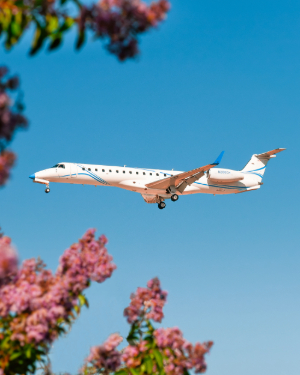


It’s a Friday evening, and an aircraft bound for San Francisco (SFO) needs to divert. The flight is full of business travelers heading home after a long week, college students visiting home for the weekend, and vacation-goers visiting for the weekend. Everyone is excited to be on the ground.
But there’s a problem. The weather has deteriorated, and the pilots are not current for the Category III approaches required in the scenario. The filed alternate is San Jose.
For an AI system asked where the flight should go, that’s a straightforward answer. San Jose (SJC) is just 34 miles south of SFO, so – aside from its designation as the filed alternate – it makes sense from a geographical standpoint. But for an airline’s operations controllers, landing the aircraft is only part of the picture.
What happens to passengers with connections? Where can the airline recover the aircraft and crew? Could another airport leave the operation better positioned to recover?
During a live demonstration to AeroXplorer, this scenario was presented to one of Jeppesen ForeFlight’s new Airflow agents to highlight its operational expertise. Airflow is the company’s Aviation Operating Intelligence platform, supporting specialized AI agents designed to apply that intelligence to specific aviation workflows. When fed the same scenario, those same considerations changed Airflow’s recommendation from San Jose to Los Angeles. According to Jens Koerner, Head of Flight Planning & AI at Jeppsen ForeFlight, the difference came from teaching the platform how experienced controllers consider an operational disruption.
Beyond the Filed Alternate
Koerner described the diversion example as a demonstration that the company had shown during its commercial aviation launch in Paris.
Initially, Airflow recommended San Jose, the flight’s filed alternate. Controllers reviewing the scenario, however, wanted the system to consider the wider operation.
“We have passengers needing to make connections,” Koerner explained. “The airplane needs to be in a place where we can easily recover it from.”
Along with the passengers, the crew needed to be recovered. In the case of a San Jose diversion, it would be difficult for an airline with existing operations in San Francisco to expend valuable resources to reposition them from SJC. And if the airline does not conduct regular operations in SJC, the aircraft would need to fly empty to SFO to reposition, which is often very expensive.

That distinction became the subject of a teaching session for Airflow. Afterward, the team opened a new conversation, cleared the previous conversation’s context, and asked the diversion question again.
This time, Koerner said, Airflow identified San Jose as the filed alternate but recommended Los Angeles, considering aircraft recovery, crew, passenger connections, and sufficient fuel to reach it.
Teaching the Reasoning Behind a Decision
Koerner described two connected elements underpinning Airflow. A world graph brings together flight information, weather, NOTAMs, airport data, and information from connected operational systems – sometimes, data that is not all publicly accessible. A context graph supplies knowledge and practices used to interpret this information.
This enables the operator to not only see what the AI recommends but also understand the context and reasoning behind it.
“We always want to reason within the context,” he explained.

Training this model involves a structured process in which the system questions an aviation expert on a topic. Another expert then reviews the answers before the curated knowledge is merged into the context graph.
In the diversion example, this process gave Airflow additional considerations to apply in a fresh conversation. The aim, as Koerner explained, is to make it act “like one of your most senior staff members” within a particular function.
Keeping Calculations Grounded
Now, it is important to note that operational context is only one part of the approach. Koerner emphasized that Airflow is designed to bring together information from established, deterministic aviation systems rather than simply feeding a language model data and asking it to draw its own conclusions.
“We don’t want the LLM to make calculations and come up with conclusions,” he said. “We want that to be grounded in the systems that are trusted for decades.”
Those systems include flight planning, dispatch, crew planning, and operations platforms, to name a few. Users should also be able to inspect the sources and calculations behind a recommendation, including how runway performance was calculated or an alternate was selected.
“In school, we learn that we have to show our work. There’s no difference here,” Koerner said. “We want to be able to dig into it and then see where this information comes from.”
Operators can configure permissions, including whether an agent can only read information or also make changes. In the operations-control application Koerner described, the agent works within a sandbox, with human approval required before its output goes live or is communicated externally.
Koerner expanded on this: “The agent can only do what you can do [...] So for anything to go live and get communicated out, the human needs to say, ‘Yes, I approve.’”
Koerner acknowledged that useful applications can be relatively modest, from collecting information to helping an operator assess the feasibility of a trip. Jeppesen ForeFlight is working with operators to uncover more use cases, building Airflow agents around their everyday needs.
When asked what the industry should look for in a year to judge whether Airflow has delivered on its promise, Koerner directed his response to the reception of the product over the next twelve months:
“My answer would be: don’t ask me. Ask our operators and our commercial airlines what they see,” he said. “At the end of the day, we’re not doing this for us. We’re doing this for our customers.”
SFO, Bay Area Airports Face Severe Flood Threat as Officials Urge Residents to Avoid Travel » What Is the 'Brake to Vacate' Feature on Airbus Aircraft? » This Week in Aviation: The 10 Stories That Mattered Most »

Comments (0)
Add Your Comment
TAGS
STORIES NBAA26 NBAA-BACE Jeppesen ForeFlight Airflow AI Artificial Intelligence Aviation TechnologyRECENTLY PUBLISHED
 Southwest Airlines Accused of Misleading Media Over Broken Stroller Compensation Claim
Southwest Airlines faces backlash after a passenger disputed the carrier's claim that it compensated him $500 for a stroller damaged during a flight.
NEWS
READ MORE »
 Norse Atlantic Safety Card Hits eBay for $200
Just hours after Norwegian budget carrier Norse Atlantic Airways filed for bankruptcy, a New York-based seller listed a single Boeing 787-9 Dreamliner safety briefing card on eBay for a staggering $200.
NEWS
READ MORE »
 Top IT Service Providers for Transportation Companies
A comprehensive list outlining the top transportation & logistics IT service providers.
INFORMATIONAL
READ MORE »
More than just headlines.
Get unlimited ad-free access to in-depth aviation news, premium stories, and exclusive insights other sites don't cover.
- Ad-free browsing on AeroXplorer
- Unlimited access to premium and exclusive articles
- Higher photo upload limits & commissions on sales
- Free access to Jetstream Magazine on higher tiers
- Ad-free browsing
- Sell aviation photos with 60% commission
- First week free!
- Everything in Basic+
- Unlimited premium articles
- Sell aviation photos with 70% commission
- Free Digital subscription to Jetstream Magazine
- First week free!
- Everything in Basic+ and Pro
- Sell aviaiton photos with 80% commission
- Early access to exclusive stories
- Free Digital+Print subscription to Jetstream Magazine