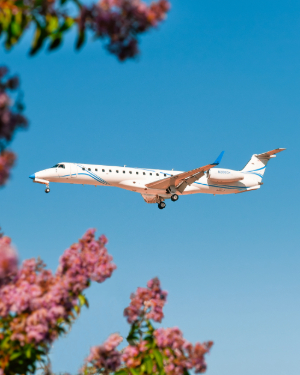


Emirates has announced one of the most significant operational milestones in its 41-year history, the near-complete restoration of its global route network following a period of disruption triggered by the US-Israel war on Iran that began on February 28, 2026. As of May 4, the Dubai-based carrier confirms that 96% of its worldwide network is operational, with services reaching 137 destinations across 72 countries on over 1,300 weekly frequencies. The announcement coincides with the UAE's Civil Aviation Authority lifting all remaining airspace restrictions that had been in force since the conflict began, marking a definitive turning point for what had become the most consequential disruption to Gulf aviation in modern history.
What the Disruption Looked Like at Its Peak
To understand the scale of what Emirates has now rebuilt, it is essential to appreciate how catastrophic the initial weeks of the conflict were for the airline and for Dubai International Airport, the world's busiest international hub.
Etihad suspended all departures from Abu Dhabi, while Dubai-based carriers Emirates and flydubai temporarily halted all of their operations.
Several MENA countries, including Iran, Iraq, Israel, Jordan, Kuwait, Qatar, Bahrain, Syria, and the UAE, enforced full or partial airspace closures. Major airports such as Dubai, Abu Dhabi, and Doha were heavily affected, with 3,000 to 3,400 or more flights cancelled during the initial disruption period.
Emirates and Etihad Airways continued to operate reduced operations, although each was flying about 90% of its previously planned network as of March 18. The recovery from near-total suspension to 90% in under three weeks was itself remarkable. The step from 90% to 96%, confirmed today, completes a two-month restoration effort that has tested every dimension of the airline's operational resilience.
Throughout this disruption, travel demand never collapsed. Even as it operated with a reduced schedule, Emirates carried 4.7 million passengers during the disruption, a testament to the enduring demand for travel and the trust that travellers continued to place in the airline to get them where they needed to go.

The UAE Airspace Announcement That Unlocked the Final Recovery
The restoration of Emirates' network to 96% has been enabled directly by the UAE's decision to lift all remaining flight restrictions. After months of disruption tied to the United States' conflict with Iran, the country has lifted all airspace restrictions, restoring normal operations across its major hubs. The UAE's Civil Aviation Authority said all air operations have returned to "normal status" across its airspace.
The authority stated:
"Our decision came following a comprehensive assessment of operational and security conditions, in coordination with the relevant authorities."
In a statement, Dubai Airports welcomed the announcement:
“With airspace within the UAE now fully restored, Dubai Airports is moving decisively to scale up operations, increasing flight movements in line with available regional routing capacity.”
Where Emirates Stands Today
Today, the airline operates to 137 destinations across 72 countries, with over 1,300 weekly frequencies, representing 75% of pre-disruption capacity. The airline is offering more flights, more seats and more options each day while reaffirming Dubai's position as a vital hub through which global travel moves.
The 75% capacity figure, against 96% of destinations restored, reflects the practical reality of rebuilding frequency rather than simply reinstating routes. Returning to a destination requires one flight; restoring the full commercial schedule of multiple daily rotations on the same route requires aircraft availability, crew positioning, slot coordination, and catering infrastructure, all of which take more time to rebuild than the initial route reinstatement.
In the past weeks, the airline has progressively resumed services across the Americas, Europe, Africa, West Asia, the Middle East and GCC, the Far East and Australasia.
The Cockpit’s Next Revolution: When the Co-Pilot Is a Computer
The Product and Experience Passengers Return To
Emirates has been clear that the disruption has not diminished the product awaiting passengers on its restored services. The airline's in-flight entertainment system (ice) offers more than 6,500 channels of global content in almost 40 languages. The onboard dining experience features regionally inspired multi-course menus developed by award-winning chefs.
On connectivity, Emirates' Starlink rollout, already a significant aviation story in its own right, has continued apace through the disruption period. Emirates now has Starlink connectivity live on 28 aircraft, delivering ultra-fast, reliable internet in the air.

Passenger Flexibility and Skywards Benefits
Recognising that the disruption has generated significant uncertainty for booked travellers, Emirates has introduced a suite of measures designed to rebuild confidence.
Customers booked from 2 April will enjoy added flexibility, with one free date change included across all cabin classes. Customers who have booked with Emirates can also hold a fare for 24 hours free of charge.
For passengers with long connections in Dubai, the airline's Dubai Connect programme offers a compelling alternative to airport waiting. For customers with extended transit times in Dubai from 6 to 26 hours, Emirates' Dubai Connect programme turns a long layover into a comfortable stopover, courtesy of the airline. Eligible customers will enjoy complimentary hotel accommodation at a 4 or 5-star property, airport transfers, meals, and, where required, a UAE entry visa. Available to passengers across all cabin classes with qualifying connection times, Dubai Connect can be booked up to 12 hours ahead via Manage Your Booking on emirates.com.
For loyalty members, the incentive is specifically calibrated to reward those who continue flying through the recovery period. From 1 May to 31 August 2026, Emirates Skywards members can enjoy accelerated access to the programme's premium tiers through reduced tier requirements and Bonus Tier Miles on Emirates and flydubai flights.
The Broader Industry Context
The disruption that Emirates has now substantially overcome has reshaped global long-haul aviation for two months. Routes between Europe and Asia that historically transited the Gulf, benefiting from the geographical efficiency of Dubai as a connecting hub, were forced onto longer, more expensive alternatives. Airlines are redeploying capacity to markets unaffected by the conflict, seeking to offset lost Middle East revenues while capturing displaced long-haul demand.
Throughout the conflict, at least eight states had to announce full or partial airspace closures, which meant that the number of routes between Europe and Asia with stops at Gulf airports was severely restricted. The normalisation of UAE airspace now removes the single largest structural constraint on the recovery.
The remaining 4% of Emirates' network that has not yet been restored includes destinations where local airspace restrictions, airport operational constraints, or other factors beyond Dubai's control are still being resolved. The airline has indicated that those remaining routes are progressing toward reinstatement as regional conditions continue to stabilise.
For the hundreds of millions of passengers whose long-haul travel plans pass through Dubai, the May 4 announcement delivers an unambiguous message: the world's most connected aviation hub is back, and Emirates is ready to carry them.
Caribbean Airlines Expands Network With New Toronto and Caracas Routes » Southwest Airlines Becomes First US Carrier to Integrate Flight Booking Into ChatGPT » British Airways Unveils World's Largest Business Class Cabin With 106 Seats Aboard Refurbished A380 Fleet »

Comments (0)
Add Your Comment
TAGS
NEWS Emirates Dubai Airport Network Restoration UAE Airspace Iran War Aviation Gulf Aviation Emirates Starlink Dubai Connect Emirates Skywards Middle East Aviation International Aviation Airspace Closure Emirates Recovery Flights TravelRECENTLY PUBLISHED
 This Week in Aviation: The 10 Stories That Mattered Most
From major airline developments to aircraft updates and industry shifts, this weekly recap highlights the ten most-read aviation stories from the week of October 04.
INFORMATIONAL
READ MORE »
This Week in Aviation: The 10 Stories That Mattered Most
From major airline developments to aircraft updates and industry shifts, this weekly recap highlights the ten most-read aviation stories from the week of October 04.
INFORMATIONAL
READ MORE »
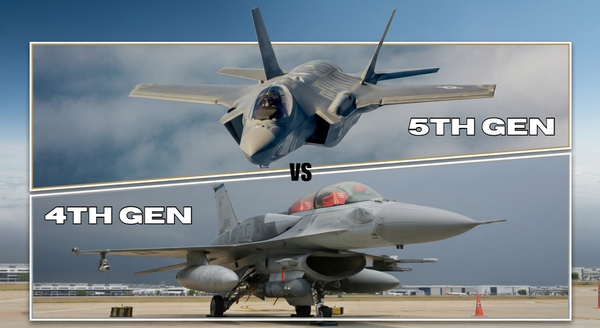 4th vs 5th Generation Fighter Jets: How Fighter Jets Have Evolved
A look at what separates fourth- and fifth-generation fighter jets, from stealth and sensor fusion to combat capability and cost.
INFORMATIONAL
READ MORE »
4th vs 5th Generation Fighter Jets: How Fighter Jets Have Evolved
A look at what separates fourth- and fifth-generation fighter jets, from stealth and sensor fusion to combat capability and cost.
INFORMATIONAL
READ MORE »
 United 777 Diverts to Dublin After Cockpit Windscreen Cracks Over the Atlantic
A United Airlines Boeing 777 bound for Milan made a steep descent and diverted to Dublin after its cockpit windscreen cracked mid-flight.
NEWS
READ MORE »
United 777 Diverts to Dublin After Cockpit Windscreen Cracks Over the Atlantic
A United Airlines Boeing 777 bound for Milan made a steep descent and diverted to Dublin after its cockpit windscreen cracked mid-flight.
NEWS
READ MORE »
More than just headlines.
Get unlimited ad-free access to in-depth aviation news, premium stories, and exclusive insights other sites don't cover.
- Ad-free browsing on AeroXplorer
- Unlimited access to premium and exclusive articles
- Higher photo upload limits & commissions on sales
- Free access to Jetstream Magazine on higher tiers
- Ad-free browsing
- Sell aviation photos with 60% commission
- First week free!
- Everything in Basic+
- Unlimited premium articles
- Sell aviation photos with 70% commission
- Free Digital subscription to Jetstream Magazine
- First week free!
- Everything in Basic+ and Pro
- Sell aviaiton photos with 80% commission
- Early access to exclusive stories
- Free Digital+Print subscription to Jetstream Magazine