
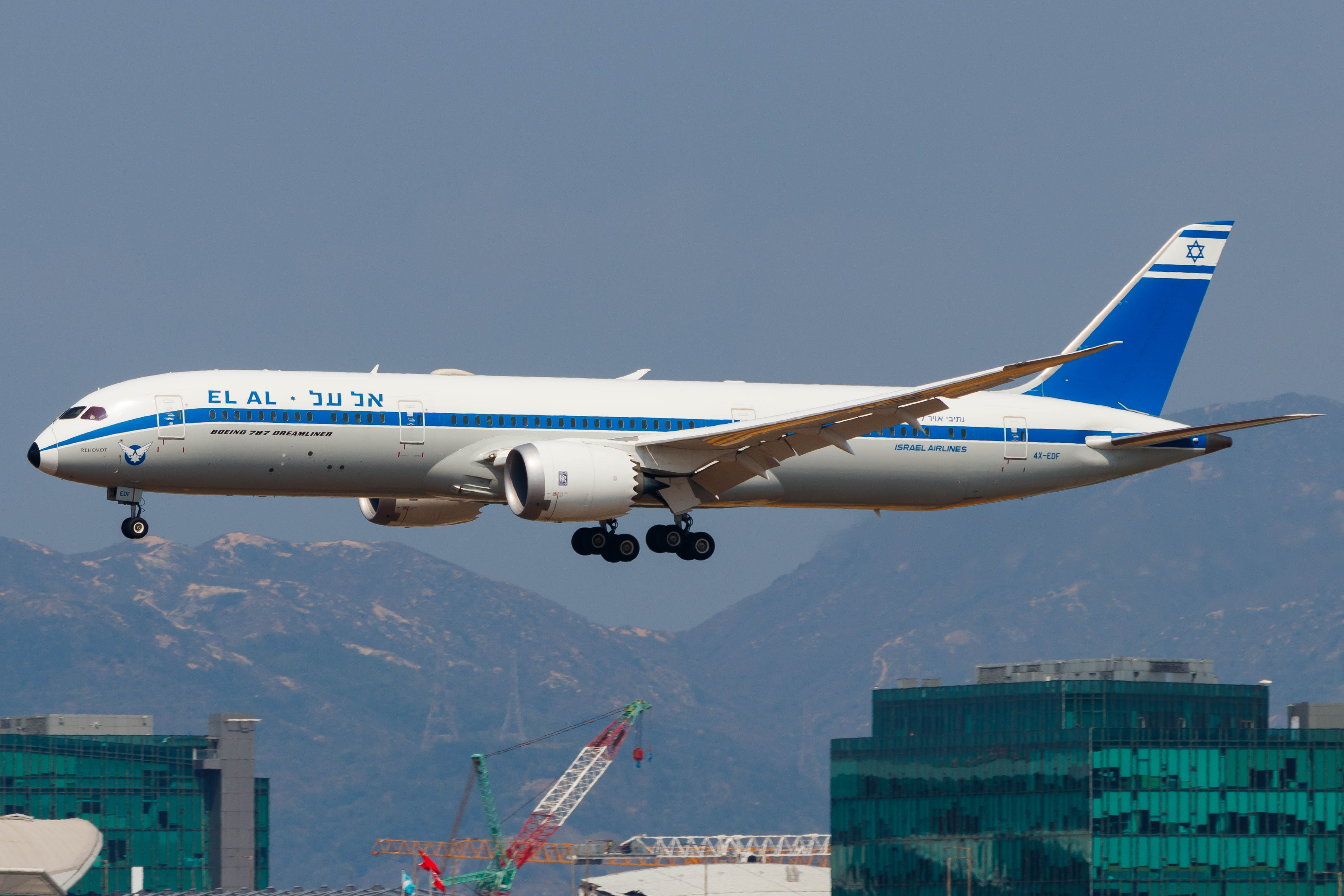

In the wake of the major escalation in the conflict between Israel and Hamas in Gaza in recent weeks, airlines serving Tel Aviv's Ben Gurion Airport (TLV) have been forced to suspend service and serve passengers through "nearby" airports like Amman, Jordan (AMM), Cairo, Egypt (CAI), and Athens, Greece (ATH).

Airlines have added capacity to accommodate passengers seeking repatriation and other stranded passengers in Israel looking for a way out. However, Israel's flag carrier, El Al, has found itself in a tricky situation where Israelis abroad looking to come home and soldiers needing to return to the country are forced to fly into Ben Gurion Airport.
Moreover, with so many expat Israelis looking to return home, El Al's widebody fleet consisting of 777s and 787s still needs to be larger in some instances to handle the demand. The 270-seat Boeing 787s sometimes carried up to 30 extra passengers.

On most flights, that would be strictly against safety regulations. Still, in wartimes, El Al has been able to, with passenger consent, have the extra passengers use flight attendant jump seats, cockpit seats, or even sit on the floor of galleys.
The Civil Aviation Authority of Israel specifically approved the change to regulation; it is important to note that all the passengers who choose to sit in a non-standard seat do so voluntarily, and El Al has not forced anyone to stay on the floor. Unlike other airlines that serve Tel Aviv, El Al has E-MUSIC missile defense capabilities onboard their aircraft, allowing them to detect and change course in the event of missile attacks.

This technology has allowed El Al to continue serving Tel Aviv, Israir, and Arkia to provide critical regional flights. Even smaller, narrowbody aircraft such as the Boeing 737 have continued to fly with extra passengers—some have reported 10 additional passengers over capacity—into Israel to repatriate passengers.
In sum, the Israel Civil Aviation Authority seems content to allow El Al to shuttle excess capacity into the country in dubiously safe ways; as the conflict worsens, air travel to the country could be jeopardized, so bringing in as many people as possible before travel could end up fully shutting down is a logical move on El Al's part.

Major international airlines have shown no signs of resuming service to the country and continue to fly additional capacity into neighboring countries. That situation seems likely to continue for some time; we hope it resolves soon.
Super Puma Firefighting Helicopter Crashes at Yosemite, Killing Both Pilots » The Engineering Behind the 777X's Folding Wingtips » Ryanair Demands NATS Chief Resign After Second Air Traffic Control Failure in Two Weeks »

Comments (0)
Add Your Comment
TAGS
NEWS El Al Israel Tel Aviv TLV Palestine Conflict War Geopolitics HumanitarianRECENTLY PUBLISHED
 Why Ice Is So Dangerous for Aircraft, and How Anti-Icing Systems Stop It
An article on why ice formation is dangerous for an aircraft
INFORMATIONAL
READ MORE »
Why Ice Is So Dangerous for Aircraft, and How Anti-Icing Systems Stop It
An article on why ice formation is dangerous for an aircraft
INFORMATIONAL
READ MORE »
 FAA Equipment Outage Grounds Flights at Newark, JFK and Philadelphia Airports
An FAA air traffic control equipment outage triggered ground stops at Newark, JFK and Philadelphia airports, causing widespread flight delays.
NEWS
READ MORE »
FAA Equipment Outage Grounds Flights at Newark, JFK and Philadelphia Airports
An FAA air traffic control equipment outage triggered ground stops at Newark, JFK and Philadelphia airports, causing widespread flight delays.
NEWS
READ MORE »
 Airbus Invests £150 Million to Convert Former A380 Wing Factory for A321neo Production
NEWS
READ MORE »
Airbus Invests £150 Million to Convert Former A380 Wing Factory for A321neo Production
Airbus Invests £150 Million to Convert Former A380 Wing Factory for A321neo Production
NEWS
READ MORE »
More than just headlines.
Get unlimited ad-free access to in-depth aviation news, premium stories, and exclusive insights other sites don't cover.
- Ad-free browsing on AeroXplorer
- Unlimited access to premium and exclusive articles
- Higher photo upload limits & commissions on sales
- Free access to Jetstream Magazine on higher tiers
- Ad-free browsing
- Sell aviation photos with 60% commission
- First week free!
- Everything in Basic+
- Unlimited premium articles
- Sell aviation photos with 70% commission
- Free Digital subscription to Jetstream Magazine
- First week free!
- Everything in Basic+ and Pro
- Sell aviaiton photos with 80% commission
- Early access to exclusive stories
- Free Digital+Print subscription to Jetstream Magazine