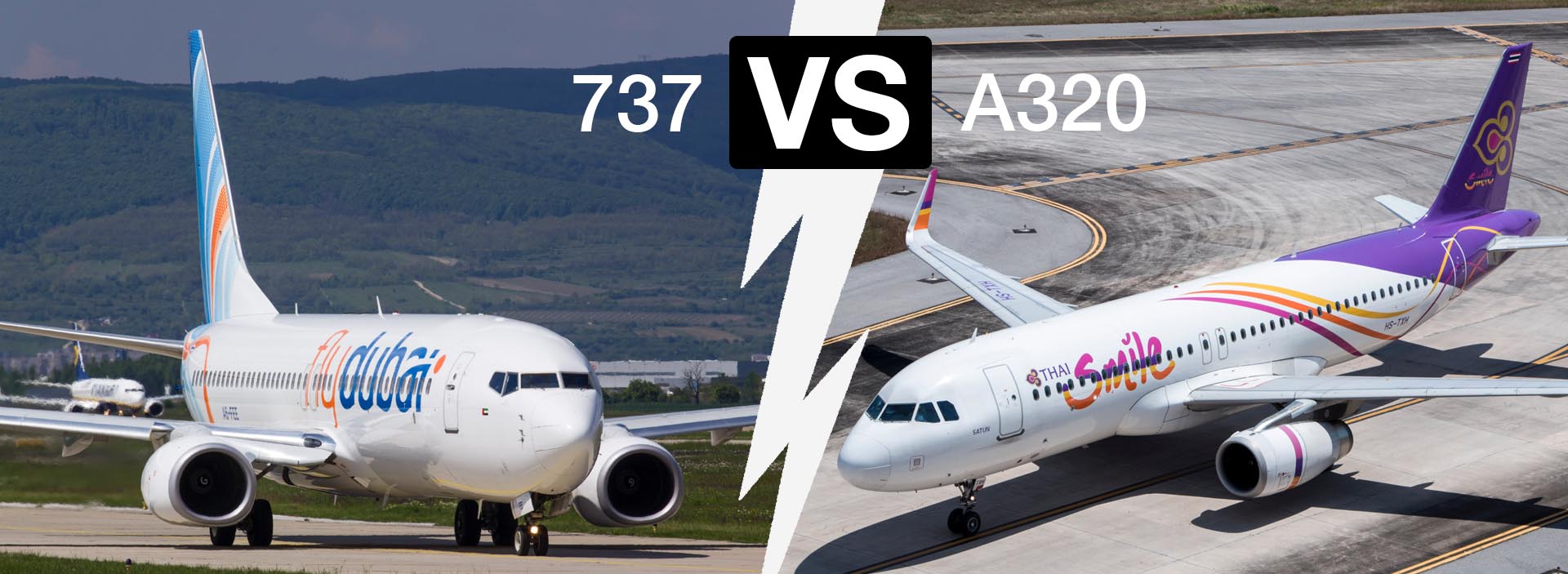
Step into an Airbus cockpit and a technician will talk about the Green system or the Blue system. Step into a Boeing and the same conversation turns into System A, System B, and Standby. Same job, wildly different vocabulary, and it says something real about how each manufacturer thinks about its aircraft. The clearest way to see it is by comparing the two most common narrow-body jets in the sky, the Airbus A320 and the Boeing 737.
The Job Both Systems Do
Hydraulics on any airliner move things too heavy to move by cable and pulley alone, flight controls (primary and secondary), landing gear, brakes, flaps, spoilers, steering. Both the A320 and the 737 run at roughly 3,000 psi, and both build in more than one independent circuit so losing one does not mean losing the aircraft entirely. Controls and operations are split between the three systems.
Airbus: Green, Yellow, Blue
On the Airbus A320, each system powers a distinct set of functions:
- Green — engine-driven pump (EDP) on Engine 1 powers primary flight controls (ailerons, elevators, rudder), normal brakes, the landing gear, slats/flaps, yaw damper 1, etc.
- Yellow — engine-driven pump (EDP) on Engine 2 plus its own electric pump powers cargo doors, alternate braking, flaps, rudder, yaw damper 2, etc.
- Blue — electric pump in normal operation, backed up by the Ram Air Turbine (RAT) powers essential flight controls, including spoilers, rudder, elevators, ailerons, etc. and keeps the aircraft controllable if both engines are lost
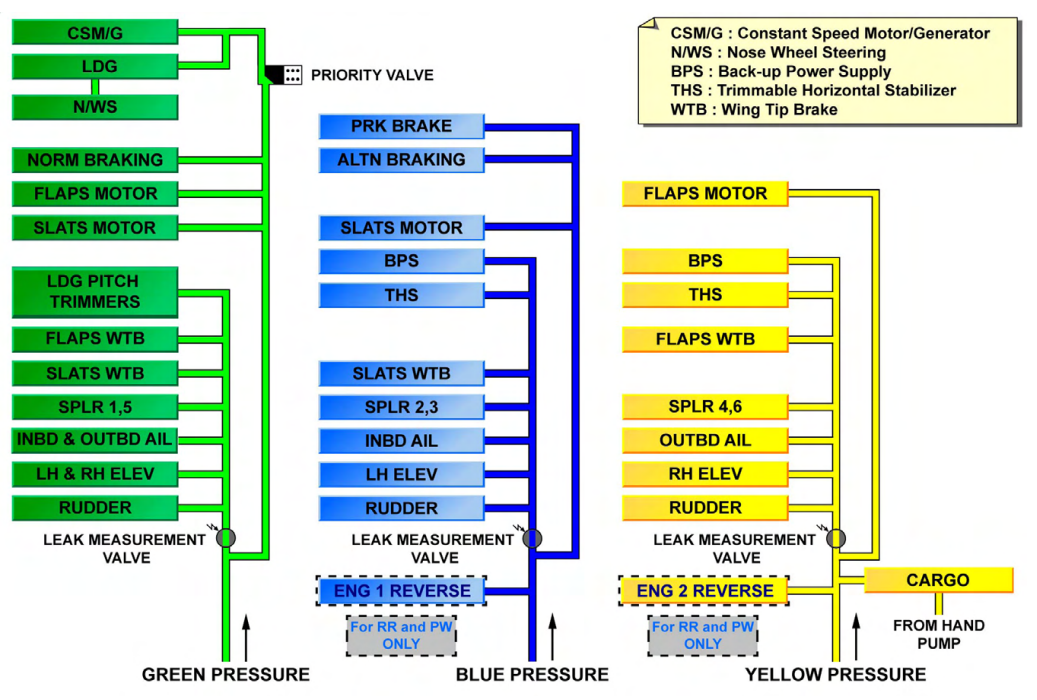
The three systems never share fluid. When pressure between Green and Yellow drifts more than about 500 psi apart, a Power Transfer Unit (PTU), which has a distinct dog barking sound, kicks in automatically and passes mechanical power between them, not fluid, so a leak in one system can never contaminate another.
Boeing: System A, System B, Standby
The Boeing 737 incorporates the same idea around letters instead of colors:
- System A — engine-driven pump (EDP) on Engine 1 powers primary flight controls (ailerons, elevators, rudder), the ground and flight spoilers, landing gear, and Autopilot A
- System B — engine-driven pump (EDP) on Engine 2 plus its own electric pump powers trailing edge flaps, normal brakes, the flight spoilers, the yaw damper, and Autopilot B
- Standby — the safety net often called, powers the rudder, the standby yaw damper, etc. and in certain failures the leading-edge devices
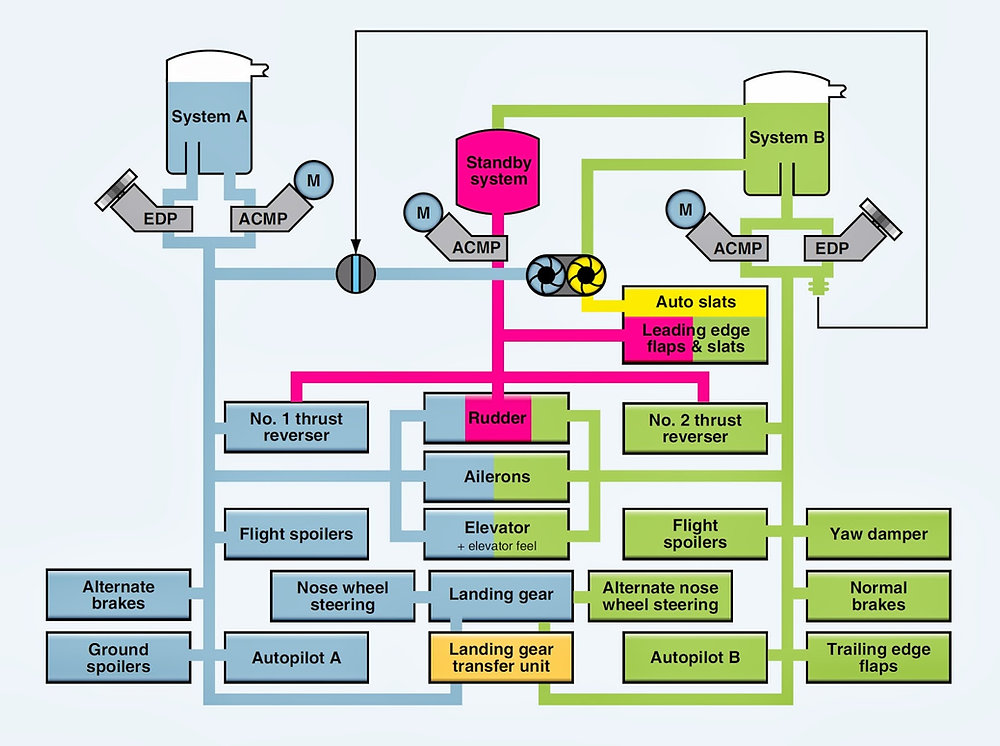
System A leans toward landing and slowing down and the system B towards configuring for lift. The rudder alone draws power from all three sources at once, about as much redundancy as Boeing builds into any single control surface on the aircraft.
What the Cockpit Actually Watches
Both aircraft give pilots a running readout of their hydraulics rather than leaving anything to guesswork. The A320's ECAM HYD page displays pressure, temperature, and fluid quantity for Green, Yellow, and Blue in real time, so a crew can see a system trending toward trouble before it fully fails.
The 737 leans on cockpit hydraulic panels that let pilots monitor pressure across System A, System B, and Standby. Crews are trained to read two distinct failure signatures, a downstream leak shows falling fluid quantity, while a pump problem shows steady quantity but dropping pressure.

Analysis: How Spirit Airlines Changed Airline Pricing, then Paid the Price
What the Naming Actually Reflects
Airbus color-codes because its systems are parallel, largely interchangeable systems distinguished mainly by which physical source powers them. Boeing's lettering leans functional, A and B split responsibilities by flight phase, and Standby exists purely as a last-resort layer.
There is a deeper split behind the labels too. The A320 was built from the outset as a fly-by-wire aircraft, so its hydraulics work hand in hand with computers that interpret pilot input. The 737 is not fly-by-wire, and if it somehow lost System A, System B, and Standby all at once, the crew could still fly it through manual reversion, moving control surfaces by muscle force through the same cables Boeing has used since the earliest days.
None of this naming is trivia for pilots and maintenance crews. Green, Yellow, and Blue feel almost like a traffic light system, easy to picture and hard to mix up. A, B, and Standby read more like a hierarchy; primary, secondary, last resort. Both approaches get a loaded jet safely on the ground they just start from two different ideas about how to describe the same kind of power.
What the September NATS outage teaches passengers about flight compensation » FAA Orders Engine Repairs on Airbus A380 Fleet After Uncontained Failure » Riyadh Air Relocates New Boeing 787 Dreamliners Away From Capital Amid Houthi Missile Threat »
Comments (0)
Add Your Comment
TAGS
NEWS Boeing Airbus Hydraulic A320 737 Cockpit Flight ControlsRECENTLY PUBLISHED
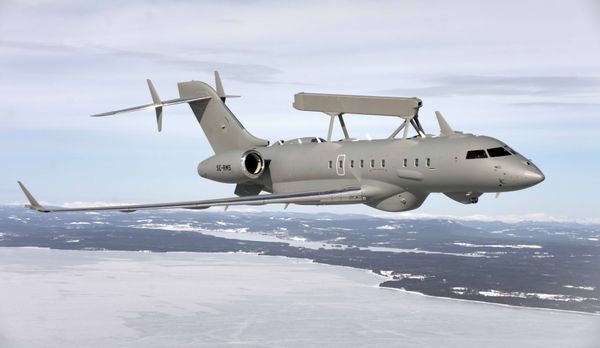 Saab Weighs Canadian GlobalEye Production Line to Match Growing Surveillance Aircraft Orders
Saab is considering establishing GlobalEye production in Canada as demand for the airborne early warning aircraft climbs across NATO nations.
NEWS
READ MORE »
Saab Weighs Canadian GlobalEye Production Line to Match Growing Surveillance Aircraft Orders
Saab is considering establishing GlobalEye production in Canada as demand for the airborne early warning aircraft climbs across NATO nations.
NEWS
READ MORE »
 Lawmakers Press FAA to Suspend AI Air Traffic Control Tool at Washington-Area Airports
Senators and union leaders urge the FAA to pause an AI-driven air traffic management tool at DC airports, citing safety concerns.
NEWS
READ MORE »
Lawmakers Press FAA to Suspend AI Air Traffic Control Tool at Washington-Area Airports
Senators and union leaders urge the FAA to pause an AI-driven air traffic management tool at DC airports, citing safety concerns.
NEWS
READ MORE »
 Lufthansa Wins Bid for 44.9% Stake in TAP Air Portugal, Edging Out Air France-KLM
Portugal selects Lufthansa as preferred buyer for a 44.9% stake in TAP Air Portugal, beating competing offers from Air France-KLM and IAG.
NEWS
READ MORE »
Lufthansa Wins Bid for 44.9% Stake in TAP Air Portugal, Edging Out Air France-KLM
Portugal selects Lufthansa as preferred buyer for a 44.9% stake in TAP Air Portugal, beating competing offers from Air France-KLM and IAG.
NEWS
READ MORE »
More than just headlines.
Get unlimited ad-free access to in-depth aviation news, premium stories, and exclusive insights other sites don't cover.
- Ad-free browsing on AeroXplorer
- Unlimited access to premium and exclusive articles
- Higher photo upload limits & commissions on sales
- Free access to Jetstream Magazine on higher tiers
- Ad-free browsing
- Sell aviation photos with 60% commission
- First week free!
- Everything in Basic+
- Unlimited premium articles
- Sell aviation photos with 70% commission
- Free Digital subscription to Jetstream Magazine
- First week free!
- Everything in Basic+ and Pro
- Sell aviaiton photos with 80% commission
- Early access to exclusive stories
- Free Digital+Print subscription to Jetstream Magazine