


Airbus Helicopters has officially pulled back the curtain on two pioneering rotorcraft concepts designed to meet the rigorous demands of the NATO Next Generation Rotorcraft Capability (NGRC) initiative. Unveiled today, February 23, 2026, the proposal represents a dual-track strategy aimed at providing the alliance with a blend of proven reliability and cutting-edge velocity.
Developed in strategic collaboration with RTX (specifically Collins Aerospace and Raytheon) and MBDA, the submission includes a high-performance conventional helicopter alongside a novel high-speed compound rotorcraft. This "twin approach" is engineered to ensure operational flexibility while maintaining industrial sovereignty across European partner nations.
The Dual-Track Strategy
The core of the Airbus proposal lies in its commitment to modularity and affordability. Rather than a one-size-fits-all solution, Airbus is offering NATO partners a choice of a combination of platforms that share a common digital backbone.
High-Performance Conventional Concept: Designed for maximum availability and reliability, this model emphasizes ease of maintenance and seamless integration into existing military infrastructures.
High-Speed Compound Concept: Drawing heavily from the Airbus Racer and X3 demonstrators, this configuration utilizes wings and lateral propellers to achieve cruise speeds exceeding 220 knots. This configuration allows for rapid acceleration, high-speed climb, and the ability to cover vast distances in shorter windows.

Industry Collaboration and the MOSA Standard
Airbus has leaned heavily on its partnership with RTX and MBDA to integrate a Modular Open System Architecture (MOSA). This architecture ensures that both the conventional and high-speed platforms are "future-proof," allowing for rapid software updates and the integration of new sensors or weapon systems without a complete overhaul of the airframe.
"We want to ensure that Europe is in a position to propose a platform that will best fit our military partners' needs in terms of affordability, operational efficiency and maximum availability for both the conventional helicopter and for the high speed rotorcraft," said Bruno Even, CEO of Airbus Helicopters. “These two concepts are a basis to further exchange with our military partners on their vision and need for future military operations.”

KAL858: The North Korean Bombing that Shocked the World
A Foundation Built on Flight Data
The high-speed concept is not merely a theoretical design. It is underpinned by the success of the Racer (Rapid and Cost-Effective Rotorcraft) program, which successfully validated its high-speed objectives in 2024. Military pilots have already participated in flight evaluations of the Racer as part of the European Next Generation Rotorcraft Technologies (ENGRT) program, providing the operational feedback necessary to refine the current NATO proposal.
By leveraging these flight-tested configurations, Airbus aims to mitigate the technical risks often associated with next-generation military hardware. The proposed designs prioritize simplicity in manufacturing and long-term sustainability, addressing a key NATO requirement for reduced lifecycle costs.
Looking Toward 2035
The NGRC project, which involves nations including France, Germany, Italy, and the United Kingdom, seeks to replace approximately 1,000 medium multi-role helicopters that will reach the end of their service life between 2035 and 2040. With today's unveiling, Airbus has firmly positioned itself as a lead contender to provide the backbone of NATO's vertical lift capability for the mid-21st century.
Qantas Grounds Plane After Passengers Report Bedbug Bites on Flight » Why the A-10 Warthog's Nose Gear Is Offset to the Right » Lufthansa Wins Bid for 44.9% Stake in TAP Air Portugal, Edging Out Air France-KLM »

Comments (0)
Add Your Comment
TAGS
NEWS Airbus Helicopters NATO NGRC Military Aviation Defense Aerospace RTX MBDARECENTLY PUBLISHED
 FAA Nears Final Approval of Boeing 737 MAX 10 as Certification Review Concludes
The FAA has completed its final review of the Boeing 737 MAX 10, with certification expected as soon as next week after years of delays.
NEWS
READ MORE »
FAA Nears Final Approval of Boeing 737 MAX 10 as Certification Review Concludes
The FAA has completed its final review of the Boeing 737 MAX 10, with certification expected as soon as next week after years of delays.
NEWS
READ MORE »
 United and Air Canada Push to Expand Joint Venture Amid Cross-Border Travel Strains
United Airlines and Air Canada plan to add routes to their joint venture as political tensions dampen travel demand between the two countries.
NEWS
READ MORE »
United and Air Canada Push to Expand Joint Venture Amid Cross-Border Travel Strains
United Airlines and Air Canada plan to add routes to their joint venture as political tensions dampen travel demand between the two countries.
NEWS
READ MORE »
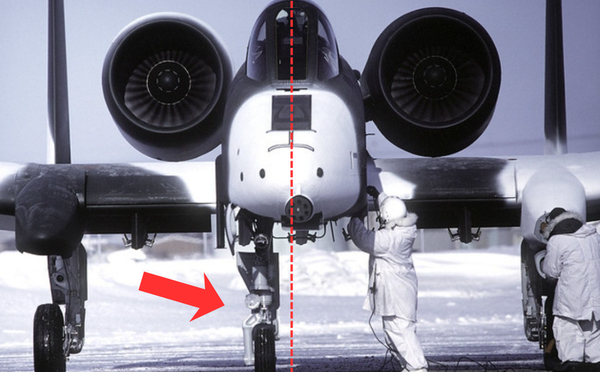 Why the A-10 Warthog's Nose Gear Is Offset to the Right
Why the A-10 Warthog’s nose wheel sits off-center, and how its massive GAU-8 Avenger cannon dictated the aircraft’s design.
INFORMATIONAL
READ MORE »
Why the A-10 Warthog's Nose Gear Is Offset to the Right
Why the A-10 Warthog’s nose wheel sits off-center, and how its massive GAU-8 Avenger cannon dictated the aircraft’s design.
INFORMATIONAL
READ MORE »
More than just headlines.
Get unlimited ad-free access to in-depth aviation news, premium stories, and exclusive insights other sites don't cover.
- Ad-free browsing on AeroXplorer
- Unlimited access to premium and exclusive articles
- Higher photo upload limits & commissions on sales
- Free access to Jetstream Magazine on higher tiers
- Ad-free browsing
- Sell aviation photos with 60% commission
- First week free!
- Everything in Basic+
- Unlimited premium articles
- Sell aviation photos with 70% commission
- Free Digital subscription to Jetstream Magazine
- First week free!
- Everything in Basic+ and Pro
- Sell aviaiton photos with 80% commission
- Early access to exclusive stories
- Free Digital+Print subscription to Jetstream Magazine