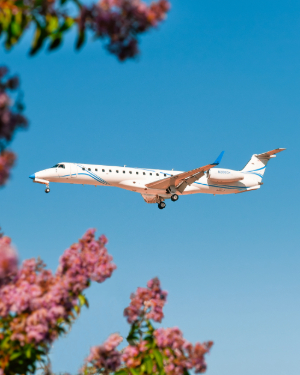
In April, a passenger’s laptop caught fire mid-flight on an Air Tahiti Nui aircraft. Lithium cells in thermal runaway can spray burning shrapnel, fill a cabin with smoke, and force an emergency diversion.
But none of that happened this time. Instead, a flight attendant grabbed a containment unit, isolated the device, and went back to service as if nothing had happened. No one was injured, and the aircraft did not need to divert. When the aircraft landed, there was no extra paperwork other than a brief note made by the crew in the incident log.
That’s precisely the point.
A press release by the airline stated, “The airline reported that the product was intuitive to deploy and enabled the crew to manage the event while maintaining cabin control and minimizing operational disruption.” It continued, “The event was resolved with no injuries, no service interruption, and no follow-on schedule impact.“

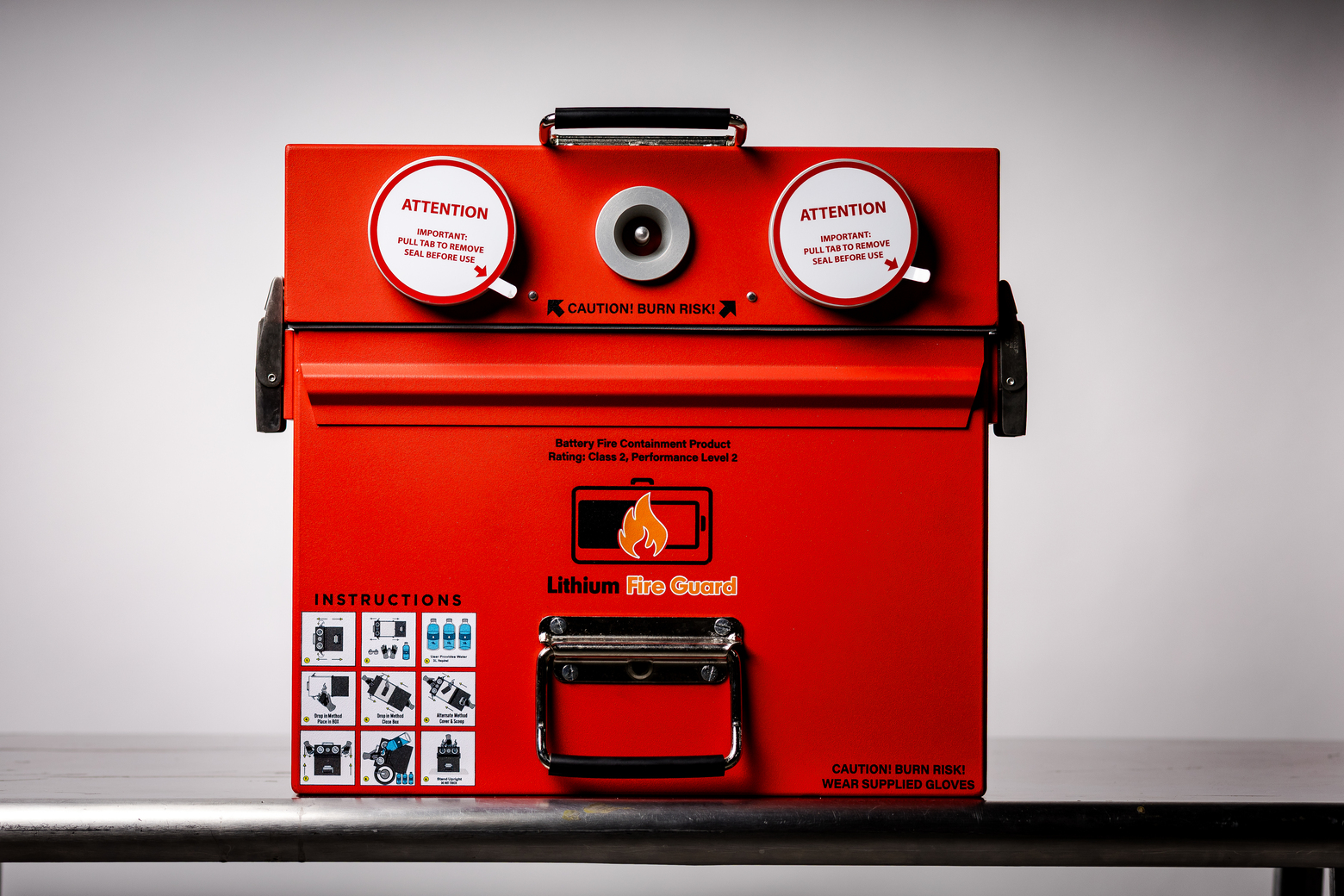
The containment device was developed by Lithium Fire Guard (LFG), a New Jersey-based firm specializing in mitigating electrical fires caused by lithium-ion batteries. The company’s products hold UL5800 certification and are used by companies such as Gulfstream, Journey Aviation, and, of course, Air Tahiti Nui.
Why This is Harder Than It Looks
LFG's product is notable less for its design than for the research showing how difficult total suppression actually is to achieve.
In December 2024, the FAA’s William J. Hughes Technical Center published the results of an evaluation few outside the aviation world ever saw. Researchers took fire containment bags from five manufacturers and did to them, deliberately, what a lithium battery does on its own when it fails: they cooked cells until they burned, and they watched what the bags did about it.
The results were not encouraging. Bags built to hold in a 100 Watt-hour fire tore open under pressure they weren't designed to vent. One power bank generated enough force to blow a bag apart, throwing burning shrapnel several feet across a test chamber. Suppression pads knocked down visible flame but didn't stop the cell next door from catching fire minutes later.
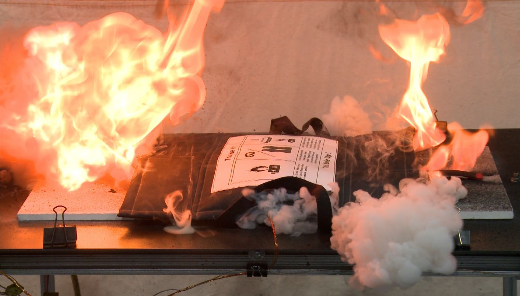
The FAA’s conclusion? Some of these products are not equipped to meet the performance that airlines expect of them.
A separate and much larger study, run by two Fraunhofer institutes with Airbus and funded by European aviation regulators, arrived at the same place from a different direction. The LOKI-PED project tested eight containment bags in a proper battery test lab and found thermal propagation from cell to cell in every single one. All eight vented smoke. Two ruptured outright.
What the Crews Said
Then the researchers did something the FAA study didn’t: they handed the bags to actual cabin crew and watched them try to use them under pressure. The crews came back with a constant complaint. The most common gripe was that the bags required two people to use: one to fight the fire, and another to hold gloves, manage the blanket, and keep the second set of hands free. In a narrow aisle, mid-flight, with one attendant already occupied elsewhere in the cabin, this is unlikely to be a manageable task.
Every product tested by the FAA and by Fraunhofer follows the same basic concept: the device, after it is cooled with water or an extinguisher, must be stabilized, then placed into a bag. On paper, it sounds straightforward. But in practice, it means a crew member spends the most dangerous minutes of the whole event – sometimes more than 15 minutes – standing close enough to an active fire to douse it by hand.
The LOKI-PED tests measured what that proximity costs. A single PED fire can push carbon monoxide and formaldehyde past acute exposure limits in the immediate vicinity. Hydrogen fluoride, a byproduct of burning lithium cells, was also measured in the same tests, but stayed below the danger threshold researchers used. Carbon monoxide and formaldehyde were the substances that crossed it, and both are capable of causing serious harm well within the minutes a crew member might spend near an unshielded fire.
A Different Sequence
LFG’s approach, unlike the other companies whose products were tested by the FAA and Fraunhofer, is to contain first and cool second. Its unit isolates the device immediately, and only afterward does a crew member add water through a one-way valve built into the container itself. The unit does not have to be reopened after the initial containment, and the operator does not have to stand over the device while it’s actively burning.
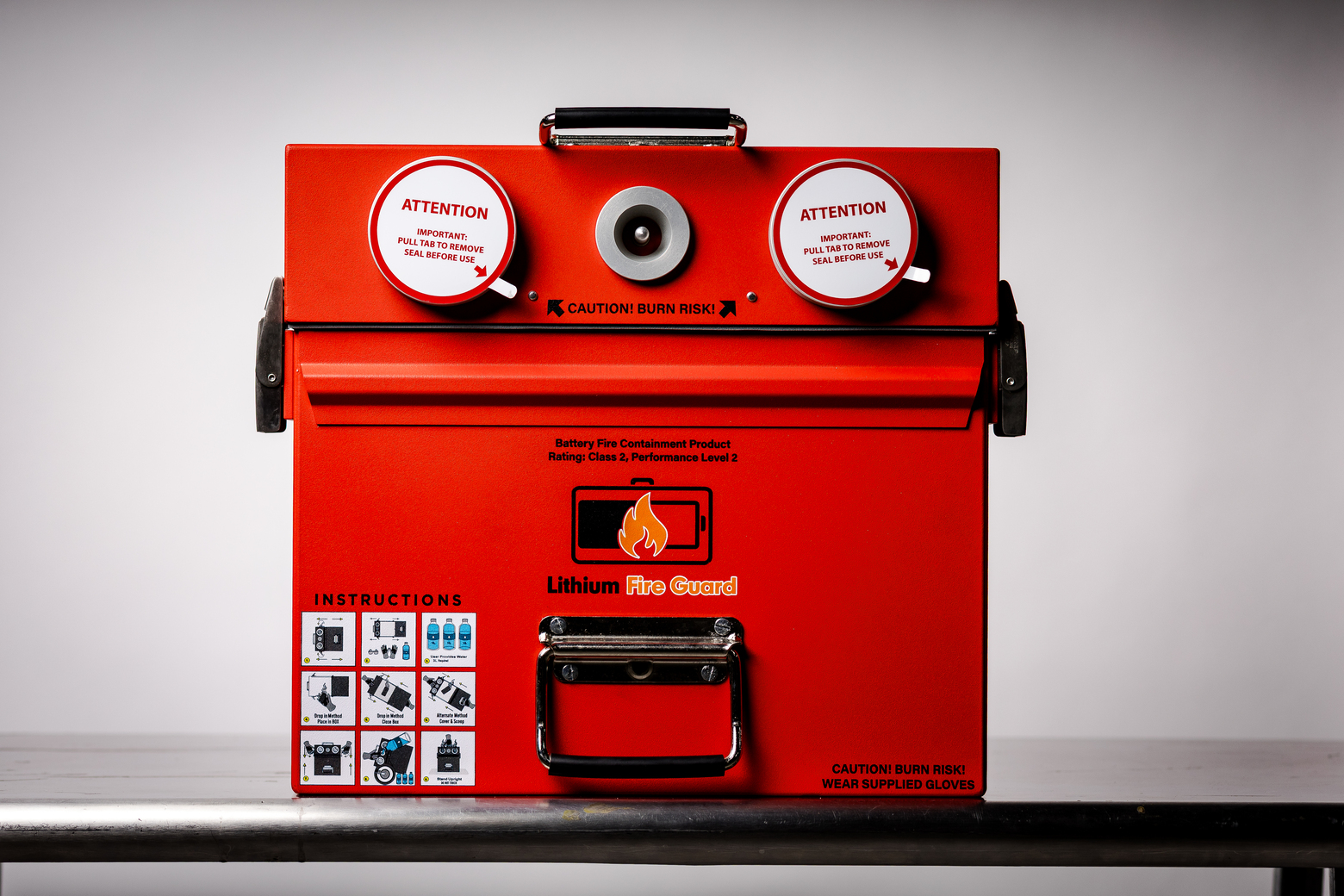
Reversing the order changes who needs to be involved. The unit can be operated by a single person, addressing the complaint crews raised about competing containment devices. A single-person procedure also removes the coordination a two-person process requires, which matters most on a flight where the second attendant may be three rows back behind a beverage cart.
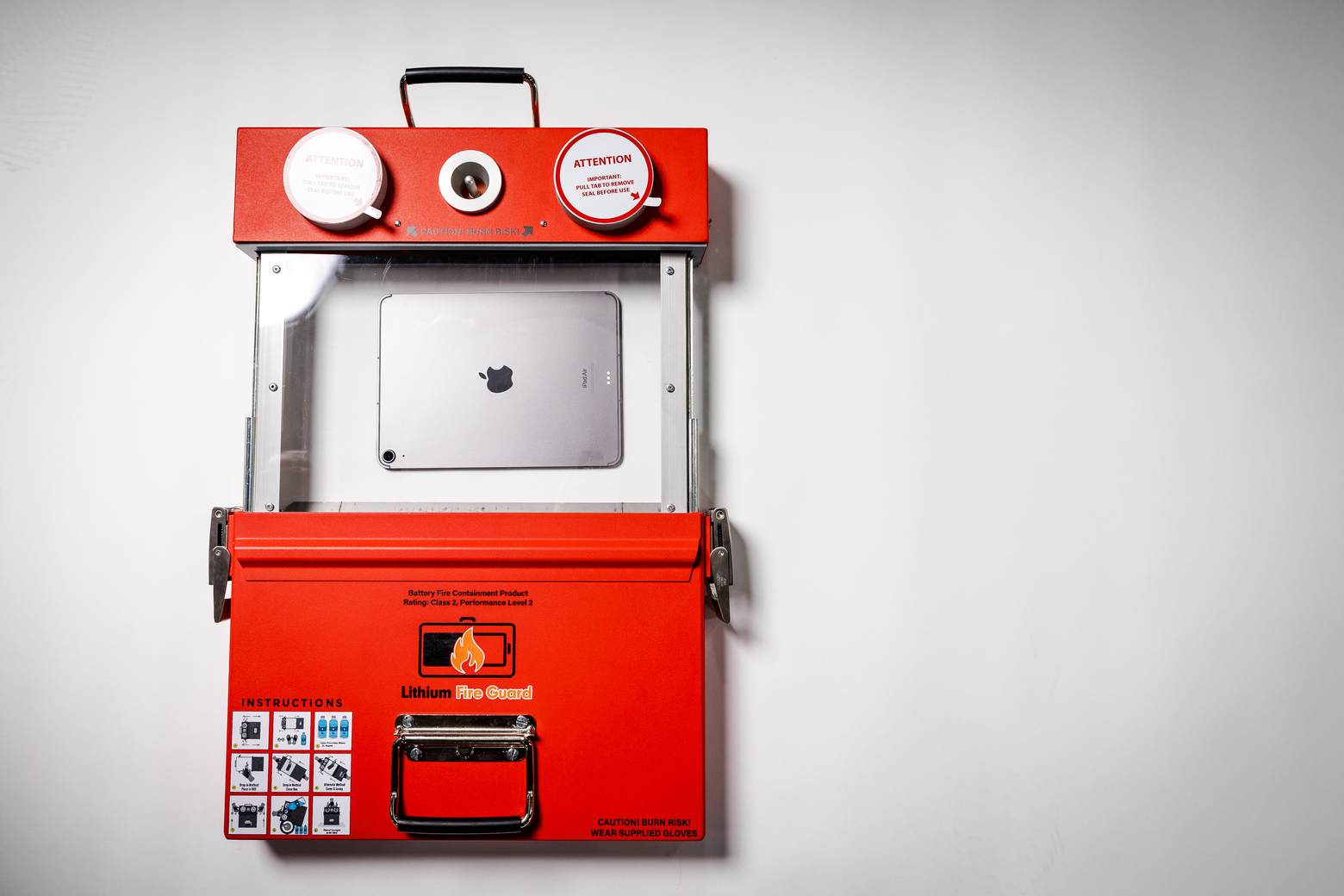
Nick Dunbar, Vice President of Sales at Lithium Fire Guard, emphasized why containment first is generally safer than the current industry standard. He linked it back to an observation the team made during the product testing cycle: “During our UL testing, one of the battery packs exploded, sending shrapnel flying at 300 m/s. For reference, a 9 mm gun shoots a bullet at a velocity of 360m/s. Extinguishing and cooling prior to collection puts everyone at risk of substantial collateral damage. With the diverse set of reactions in thermal runaway events, including explosion, toxic gases, and extreme temperature swings, it is imperative to have the PED contained as quickly as possible.”
He added, “Although these cabin crews are rigorously trained, we have to remember they are not firefighters. They need to be provided with containment tools that allow for simple and seamless execution — ones that provide minimal exposure and can be completed quickly.”
An Open Question, Still
Lithium Fire Guard’s unit carries certification under ANSI/CAN/UL5800, the standard both federal researchers cite as the current benchmark. Neither the FAA team nor the LOKI-PED team found any certified product, from any manufacturer, that fully closed the gap they identified. LOKI-PED’s own summary is unambiguous about this: confidence in containment products, industry-wide, is still not sufficient. That caveat applies to every company working in this space, this one included.
The Cockpit’s Next Revolution: When the Co-Pilot Is a Computer
What the research does establish, cleanly, is where the failure keeps showing up. Not in the concept of containment itself, but in the order of operations and the number of hands required to execute it. LFG’s design is a direct answer to those two specific findings. Whether that answer holds up at scale is a question that gets tested one flight at a time, and on one Pacific route in April, it held.
For those interested in learning more about Lithium Fire Guard’s containment device, visit www.lithiumfireguard.com or stop by booth 2632 at NBAA-BACE.
Why Don’t Airplane Wings Break During Turbulence? » This Week in Aviation: The 10 Stories That Mattered Most » The Engineering Behind the 777X's Folding Wingtips »

Comments (0)
Add Your Comment
TAGS
STORIES Lithium Fire Guard Fire containment Fire suppression Fire SafetyRECENTLY PUBLISHED
 British Airways Returns to Tanzania After 15 Years With Direct Flights to Kilimanjaro and Zanzibar
British Airways will launch direct flights from London Gatwick to Kilimanjaro and Zanzibar in summer 2027, marking its return to Tanzania after 15 years.
NEWS
READ MORE »
British Airways Returns to Tanzania After 15 Years With Direct Flights to Kilimanjaro and Zanzibar
British Airways will launch direct flights from London Gatwick to Kilimanjaro and Zanzibar in summer 2027, marking its return to Tanzania after 15 years.
NEWS
READ MORE »
 The Engineering Behind the 777X's Folding Wingtips
The engineering behind the folding wingtips onboard the Boeing 777X
INFORMATIONAL
READ MORE »
The Engineering Behind the 777X's Folding Wingtips
The engineering behind the folding wingtips onboard the Boeing 777X
INFORMATIONAL
READ MORE »
 Frontier Airlines Introduces Cancel For Any Reason Option For Passengers Up To 24 Hours Before Departure
Frontier Airlines now lets passengers cancel any flight up to 24 hours before departure through a new Cancel For Any Reason product powered by Hopper.
NEWS
READ MORE »
Frontier Airlines Introduces Cancel For Any Reason Option For Passengers Up To 24 Hours Before Departure
Frontier Airlines now lets passengers cancel any flight up to 24 hours before departure through a new Cancel For Any Reason product powered by Hopper.
NEWS
READ MORE »
More than just headlines.
Get unlimited ad-free access to in-depth aviation news, premium stories, and exclusive insights other sites don't cover.
- Ad-free browsing on AeroXplorer
- Unlimited access to premium and exclusive articles
- Higher photo upload limits & commissions on sales
- Free access to Jetstream Magazine on higher tiers
- Ad-free browsing
- Sell aviation photos with 60% commission
- First week free!
- Everything in Basic+
- Unlimited premium articles
- Sell aviation photos with 70% commission
- Free Digital subscription to Jetstream Magazine
- First week free!
- Everything in Basic+ and Pro
- Sell aviaiton photos with 80% commission
- Early access to exclusive stories
- Free Digital+Print subscription to Jetstream Magazine