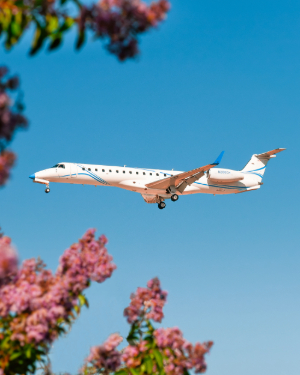


Park an SR-71 on a ramp and, within minutes, a puddle of fuel starts to spread beneath it. On almost any other aircraft that would mean an immediate grounding. On the Blackbird it was perfectly normal. The jet leaked on purpose, and the reason shows how far Lockheed's engineers had to go to build an aircraft that cruised above Mach 3.

An Airframe That Grows in Flight
At Mach 3, friction with the air heated the SR-71's skin to an average of roughly 240°C to 330°C (460°F to 620°F), with hotter spots near the engines. Aluminum would not have survived. Lockheed built more than 80% of the structure from titanium instead. Titanium handled the heat, but it still expanded, and the aircraft grew by roughly 3 to 4 inches (7 to 10 cm) in length compared with its cold state.

Built Loose on Purpose
A tightly assembled airframe would have buckled or torn itself apart under that growth. The solution was to fit the fuselage panels loosely on the ground, leaving small gaps at the seams, and let heat close them later. The skin on the inboard wings was even corrugated rather than smooth, so it could stretch in more than one direction. Aerodynamicists disliked the idea at first, joking that the Blackbird looked like a Mach 3 version of the corrugated Ford Trimotor from the 1920s.

The Tanks That Could Not Be Sealed
The fuel system made leakage unavoidable. Instead of carrying separate tanks, the SR-71 used integral tanks, where parts of the airframe skin formed the tank walls. The sealants available in the 1960s were not strong enough to cope with the heat and the movement. They worked, but they could not stop every drop, so JP-7 seeped from seams and joints while the aircraft sat on the ground.
How the Leak Stopped Itself
The cure arrived with speed. As the aircraft accelerated, friction heating expanded the titanium and pushed the panels together. By around Mach 2 the seams were tight, and at cruise the airframe behaved like a single sealed vessel. The leak ended because of the very heat that had created the problem in the first place.
Why a Leaking Jet Did Not Catch Fire
The other half of the answer was the fuel itself. JP-7 was developed specifically for the SR-71. It had very low volatility and a flash point of about 60°C (140°F), making it so hard to ignite that a lit match dropped into a puddle of it would go out. That stability also let the fuel serve as a coolant, absorbing heat from aircraft systems before it ever reached the engines.
The same property created a different problem. A fuel that refuses to burn is difficult to light, so each J58 engine relied on triethyl borane, a chemical that ignites on contact with air with a green flash. Every engine start and afterburner light used one measured shot, and crews on long missions had to ration the supply.
Why It Refueled Right After Takeoff
A popular belief holds that the Blackbird took off with a partial fuel load because of the leaks. The real reason was different. Without an inert nitrogen atmosphere above the fuel, the aircraft was limited to Mach 2.6, and the surest way to achieve that atmosphere was to fill the tanks completely in flight. So, the SR-71 took off lightly loaded, climbed to about 26,000 feet and met a KC-135Q tanker within roughly 15 minutes. Only after topping off, did it accelerate to Mach 3 and begin the mission.

Seconds to Survive: The Human Factors Lessons of the 1985 Manchester Airport Disaster
Back on the Ground
The story did not end at landing. As the airframe cooled, the panels contracted, and seepage could return. That made slick ramps something pilots and ground crews treated with care. Decades after the aircraft was retired, some SR-71s on display in museums still seep traces of JP-7 onto the floor. It shows that what looked like a flaw was a deliberate trade, one that let a titanium aircraft fly where almost nothing else could.
SFO, Bay Area Airports Face Severe Flood Threat as Officials Urge Residents to Avoid Travel » British Airways Expands Larger Overhead Bins to More Aircraft, Easing the Battle for Cabin Space » American Airlines Flight Diverts to Phoenix After Passenger Tries to Open Cabin Door Mid-Flight »
Comments (2)
 Art Pauly
Oh, Come on. We knew that back in the 80's. The plane was buiult loosely because at high speed, the titanium would expand from the heat and seal all the gaps. If the aircraft was built tightly, at high speed the expanding panels would warp and deform.
PETER E HAMLIN
The BAC/BAe Lighting was also a 'leaker' because the main fuel tanks were integral and depended on effective sealing with plastic resin jointing compounds; their was even fuel in the flaps. However the leaks did not seal-up in flight and most aircrew came to accept this a normal. As I recall, a poster was produced by BAC explaining pictorially acceptable and rejectable states along the lines 'A stain, a weep, a drip and a leak.
Add Your Comment
TAGS
INFORMATIONAL SR-71 Blackbird Titanium Jet fuel Mach Fuel leakRECENTLY PUBLISHED
 Southwest Airlines Accused of Misleading Media Over Broken Stroller Compensation Claim
Southwest Airlines faces backlash after a passenger disputed the carrier's claim that it compensated him $500 for a stroller damaged during a flight.
NEWS
READ MORE »
 Norse Atlantic Safety Card Hits eBay for $200
Just hours after Norwegian budget carrier Norse Atlantic Airways filed for bankruptcy, a New York-based seller listed a single Boeing 787-9 Dreamliner safety briefing card on eBay for a staggering $200.
NEWS
READ MORE »
 Top IT Service Providers for Transportation Companies
A comprehensive list outlining the top transportation & logistics IT service providers.
INFORMATIONAL
READ MORE »
More than just headlines.
Get unlimited ad-free access to in-depth aviation news, premium stories, and exclusive insights other sites don't cover.
- Ad-free browsing on AeroXplorer
- Unlimited access to premium and exclusive articles
- Higher photo upload limits & commissions on sales
- Free access to Jetstream Magazine on higher tiers
- Ad-free browsing
- Sell aviation photos with 60% commission
- First week free!
- Everything in Basic+
- Unlimited premium articles
- Sell aviation photos with 70% commission
- Free Digital subscription to Jetstream Magazine
- First week free!
- Everything in Basic+ and Pro
- Sell aviaiton photos with 80% commission
- Early access to exclusive stories
- Free Digital+Print subscription to Jetstream Magazine