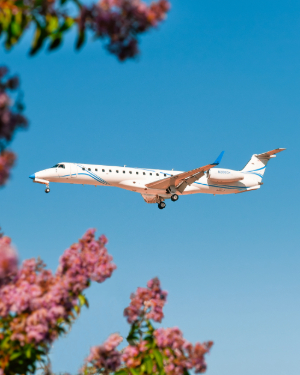
There is nothing more cumbersome in the aviation world than an airplane on the ground. Whether you are taxiing a tailwheel airplane around your local airport or maneuvering a 747 at JFK from a cockpit 60 feet in the air, the adage is always true: an airplane’s natural habitat is in the sky.
The Problem With Conventional Tugs
I, personally, have anxious memories of working on the ground crew of a small commuter airliner, where I routinely wrestled a ten-foot tow bar onto the nose gear of a Metroliner IV and hitched it to a propane-powered tug that was, for all intents and purposes, little more than an over-glorified lawn tractor.
Trying to manipulate the Metroliner IV in and out of its hangar in the wee hours of the morning was even harder with snow covering the ground and blowing ice finding its way underneath my hat and hoodie. Our chief mechanic, who looked surprisingly like a serious version of the big guy from Laurel and Hardy, would stand on the back end of that tractor and implore me, "Come on, Ed! You've got to make this work! Come on, Ed!"
That was 30-some years ago, and in that time, aircraft have gotten no more graceful while on the ground. Fortunately, 21st-century technology has come a long way in getting them moved to and fro in their least natural environment.
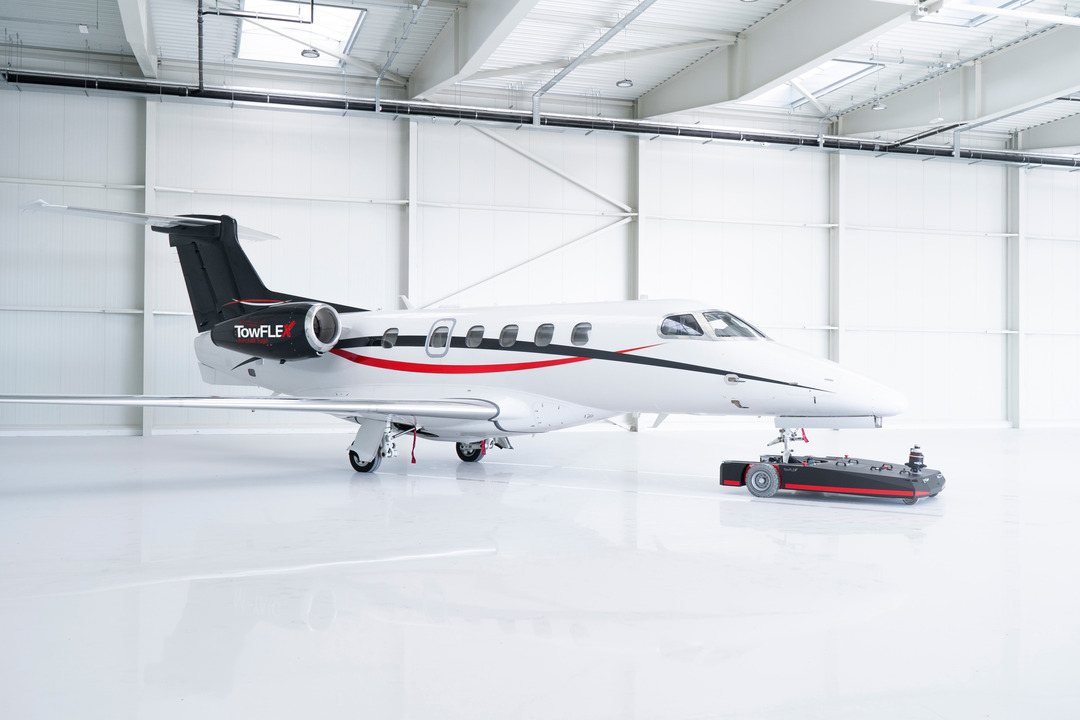
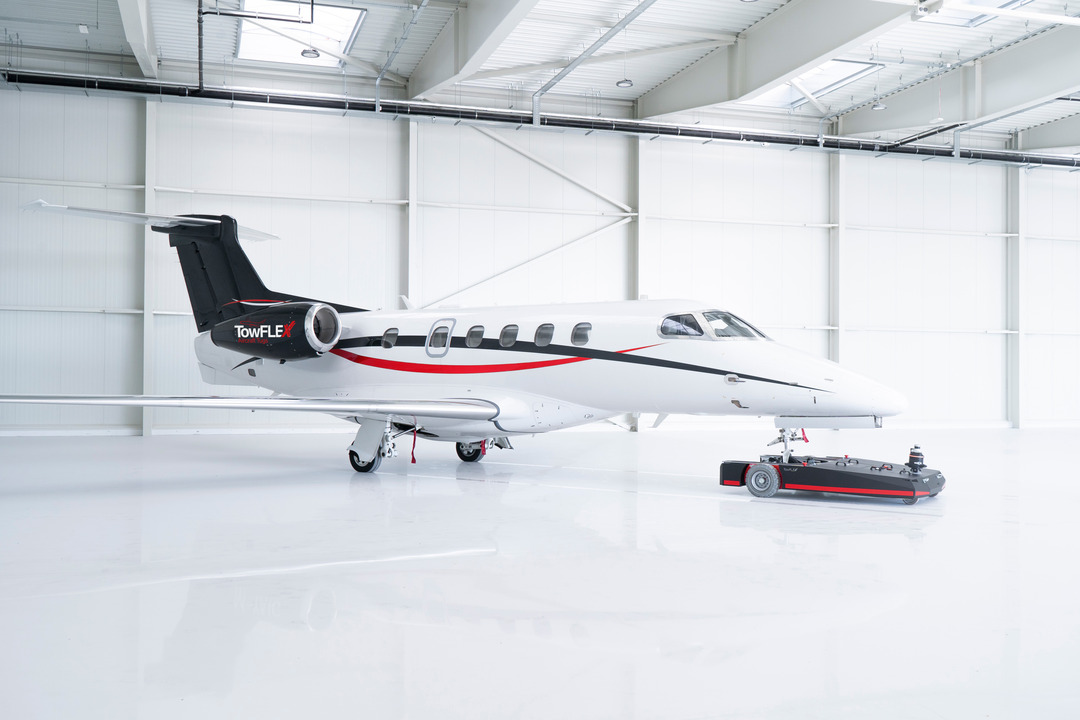
Enter TowFLEXX, a company with a product portfolio that revolutionizes aircraft mobility on the ground. With U.S. headquarters in Delaware and international headquarters in Germany, TowFLEXX designs and manufactures state-of-the-art electric aircraft tugs. These powerful, towbarless, hydraulic-free, and environmentally friendly aircraft tractors save time, reduce costs, and protect the environment at the same time.
What Is TowFLEXX?
The forerunner of the TowFLEXX was invented by a man named Hanns Schickling, which he called “The Schlepmaxxe.” This humble device has given birth to the entire line of TowFLEXX products, which now includes three walk-behind models and four large remotely controlled tugs.
These seven product models provide customized solutions based on the types and sizes of aircraft used by a given organization or individual pilot-user. TowFLEXX users range from small single-piston aircraft owners to operators of medium-sized private jets, large narrow-body commercial aircraft, the military, and maintenance hangars. TowFLEXX supports FBOs, MROs, airports, private users, and government agencies worldwide.
The Benefits of TowFLEXX
In many conventional tug applications, annual fuel and maintenance costs can reach $16,000 or more per unit, depending on utilization, operating environment, and service requirements. In contrast, TowFLEXX electric tugs typically incur approximately $300 per year in operating costs, largely associated with electricity and routine inspections. Actual costs may vary based on usage and local energy rates.
TowFLEXX tugs also eliminate hydraulic systems completely, which are typically among the highest wear and maintenance items on conventional tugs. Hydraulic components often require regular servicing, seal replacement, and fluid management. Removing hydraulics reduces maintenance complexity, minimizes downtime, and improves long-term reliability.
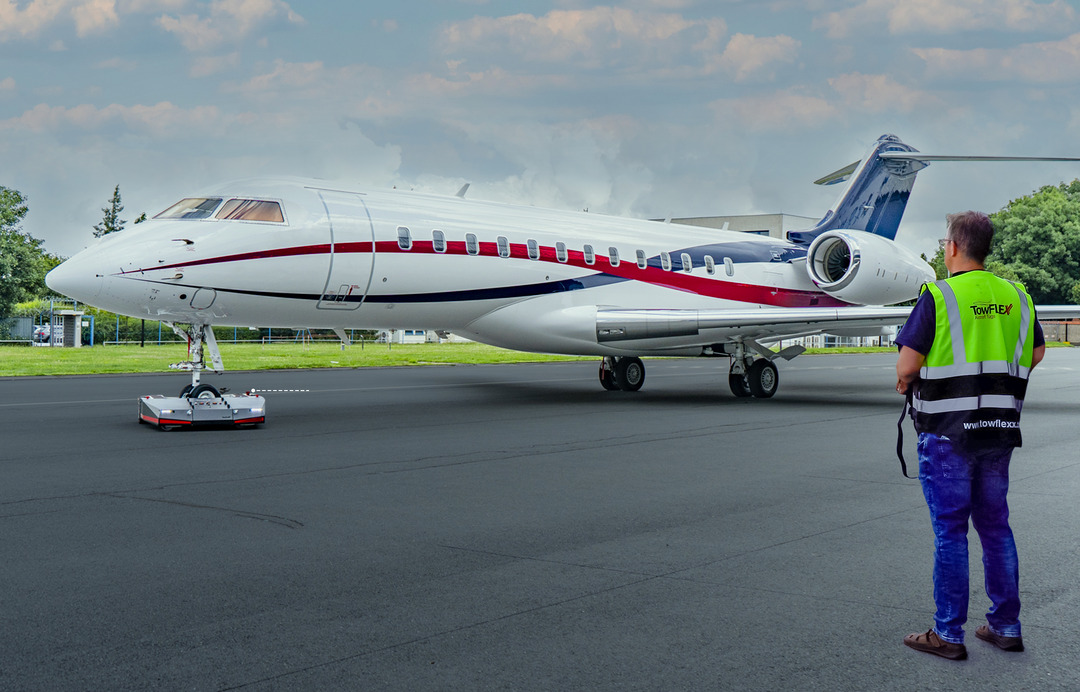
Combined with a modular design approach that allows subcomponents to be serviced or replaced efficiently, operators benefit from a lower total cost of ownership over the life of the equipment. Even the larger, remotely controlled tugs require just a single operator.
As operators continue to modernize ground support equipment, demand has increased for electric towing solutions that offer reliability, flexibility across multiple aircraft types, and a lower total cost of ownership compared to traditional tug platforms.
The aircraft ground support market is increasingly moving toward electrification, driven by sustainability initiatives, rising operating costs, and the need for more dependable, operator-friendly equipment. TowFLEXX expects this trend to continue as operators seek solutions that are purpose-built for aviation environments rather than adapted from traditional industrial platforms.
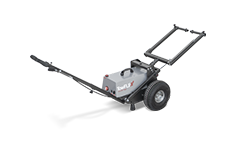
TowFLEXX’s three walk-behind models serve lighter aircraft, including those who most likely to be used by private owner-operators. Yet these models are robust for their size and offer the same cost advantages available to larger institutional customers. The TF1 model can move aircraft up to 4400 lbs, or 2000 kilos, while the larger TF2 model supports aircraft up to 8,800 lbs, or 4,000 kilos. A third manual tug is designed specifically for the Robinson Helicopter.
TowFLEXX Product Line and Towing Capabilities
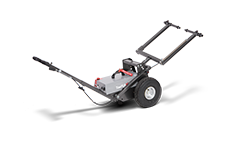 TF1 |
TF2 |
TF2.2 |
TF3 | |
| Towing Capacity | up to 4,400lbs / 4.400lbs | up to 4.000kg / 8.800lbs | up to 4.000kg / 8.800lbs | up to 9.000kg / 20,000lbs |
| Lifting Capacity | – | – | Robinson Helicopter | up to 1.500kg / 3.300lbs |
| Controls | manually | manually | manually | remote controlled |
| 360° Axis | – | – | – | yes |
| Wheel Adjustment | manually | manually | manually | mechanical |
| Airframe | Aircraft | Aircraft | Robinson Helicopter | Aircraft and Helicopter |
| Battery runtime (under full load) | ca. 3km / 1,8mi | ca. 3km / 1,8mi | ca. 3km / 1,8mi | ca. 5km / 3,8mi |
| Lights | front | front | front | front and rear |
| Time to release an Aircraft | 5-10 Sec. | 5-10 Sec. | 5-10 Sec. | 10 Seconds |
| GPU | 24V (optional) | 24V (optional) | 24V (optional) | 24V (optional) |
| Weight | 132lbs | 70kg / 154lbs | 70kg / 154lbs | 771lbs |
| Dimensions | 520 x 1.700 x 700mm | 520 x 1.700 x 700mm | 520 x 1.700 x 700mm | 1.200 x 1.600 x 450mm |
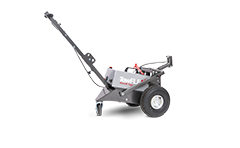
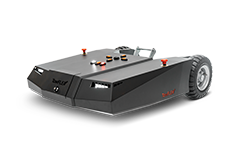
TF4 |
TF5 / TF5 ESSENTIAL |
TF6 | |
| Towing Capacity | up to 14.000kg / 30.000lbs | up to 60.000kg / 132.000lbs | up to 90.000kg / 198.000lbs |
| Lifting Capacity | up to 1.500kg / 3.300lbs | up to 5.000kg / 11.000lbs | up to 14.000kg / 30.000lbs |
| Controls | remote controlled | remote controlled | remote controlled |
| 360° Axis | yes | yes | – |
| Wheel Adjustment | semi-automatic | mechanical | automatic |
| Airframe | Aircraft and Helicopter | Aircraft and Helicopter | Aircraft and Helicopter |
| Battery runti,e (under full load) | ca. 8km / 5mi | ca. 8km / 5mi | ca. 3km / 1,8mi |
| Lights | front and rear | front and rear | front and rear |
| Time to release an Aircraft | 12 Sec. | 20 Seconds | 30 Seconds |
| GPU | 24V (optional) | 24V (optional) | 24V (optional) |
| Weight | 600kg | 1.900kg / 4.189lbs | 2.000kg / 4409lbs |
| Dimensions | 1.500 x 1.800 x 510mm | 1.900 x 2.600 x 500mm | 2862 x 2230 x 780 mm |
How Does the TowFLEXX Electric Tug Work?
A simple A-frame attachment brackets either side of the nose wheel of the aircraft and attaches to the gear hub in the typical fashion. The struts attach to the hub with the use of a simple crank handle. No awkward stooping under the engine or propeller required.
These three smaller models are operated with a handlebar that extends upward from the battery box. Shifting the weight of the apparatus makes repositioning the aircraft easy and simple.
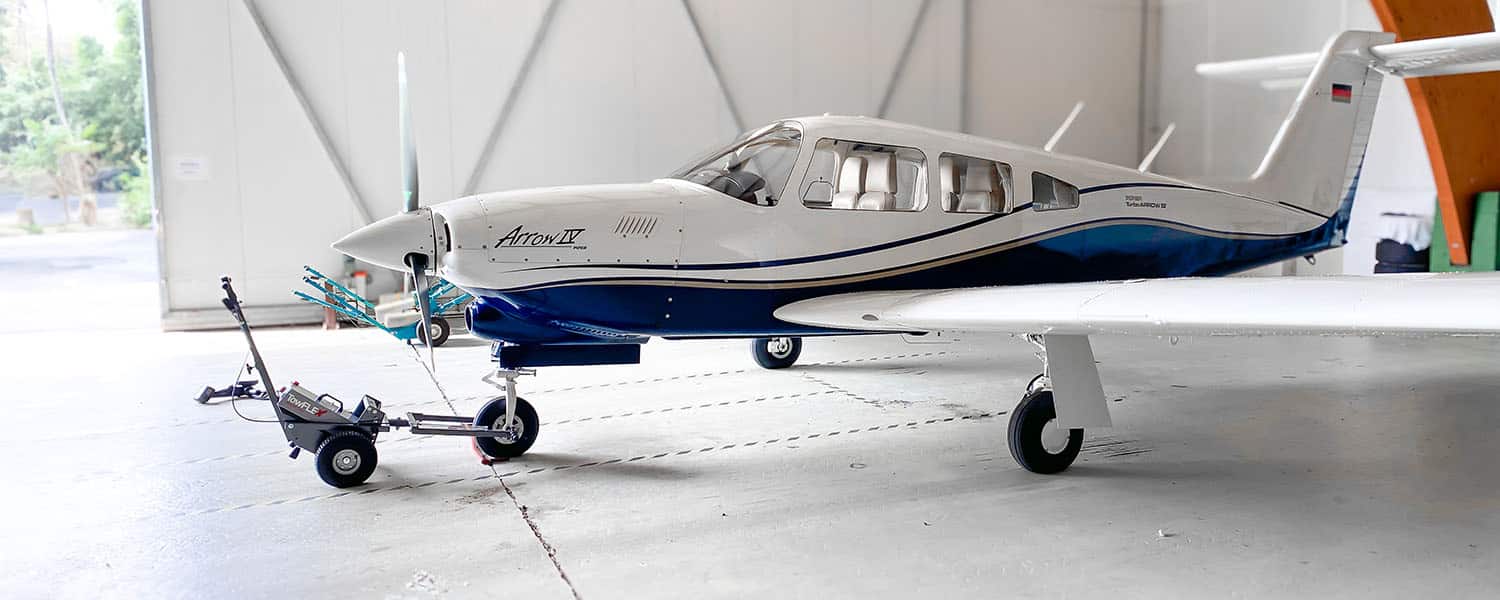
The TF1, the smallest model tug, weighs in at 132 lbs. It is powered by a 24V battery and provides up to 1.8 miles of towing distance on a single charge. Lights on the front of the body illuminate the work area underneath the nose of the aircraft.
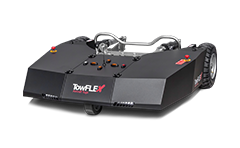
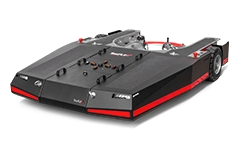
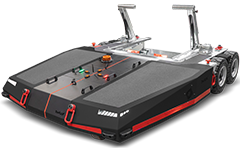
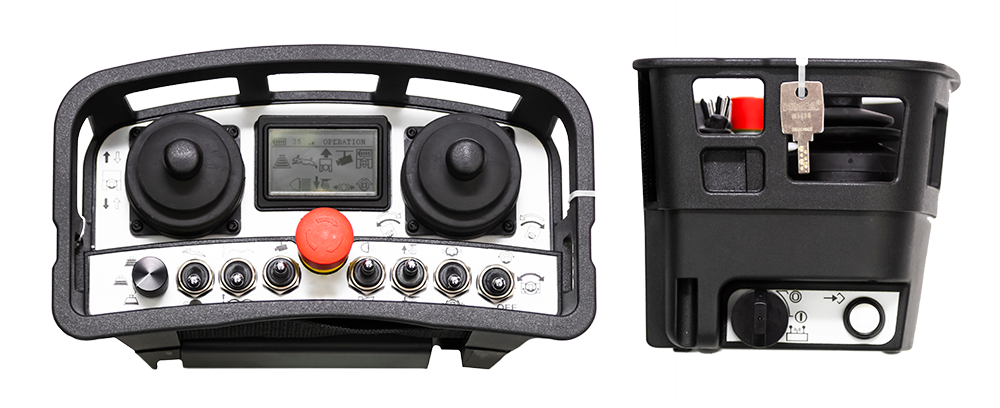
But the larger TowFlexx tugs are the really fascinating machines. The larger tugs might look to the uninitiated like a square, industrial-sized Roomba vacuum cleaner, a low-profile, robotic machine that moves low to the surface of the airport ramp. The tugs are operated by a small, handheld control unit. This allows the operator to position themselves around the aircraft, say to watch the wingtips or tail in tight spaces.
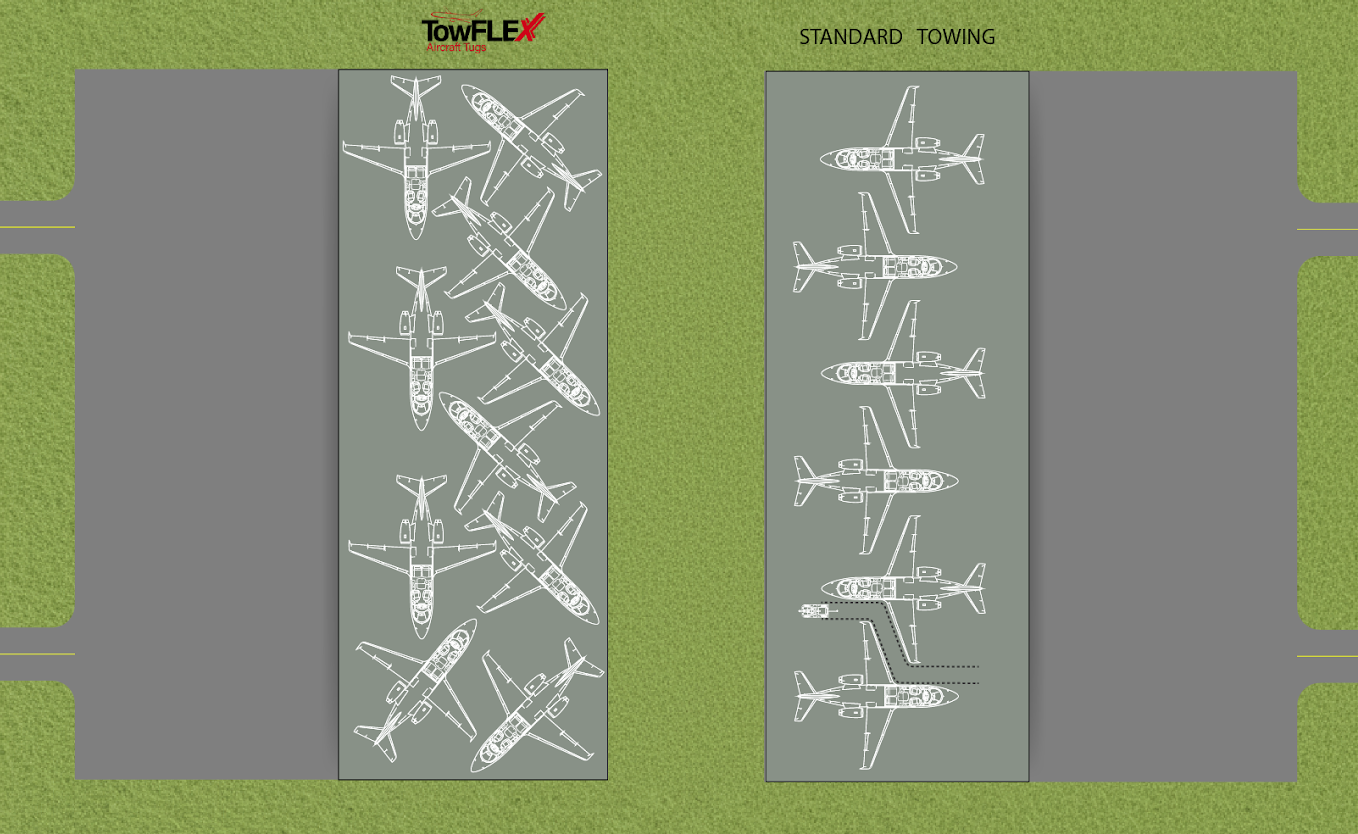
The frame of the large TowFLEXX tugs is designed to surround the landing gear like a horseshoe around a post. A gate latches closed around the back of the gear so that angled panels brace the curvature of the wheels both in front of and behind them. At this point, the structure around the wheels now lifts the nose gear entirely off the ground and acts as a turntable, which allows the tug to rotate a full 360 degrees around the nose gear without twisting or changing the gear’s orientation to the fuselage.
This feature is what provides TowFLEXX tugs with such maximal maneuverability. By moving along any tangent around a full circle, the tug can be extremely precise in angling an aircraft either into a specific position on the ramp or into a crowded hangar, where space is always at a premium. It is also quiet and creates zero harmful emissions, making the work area safer and less fatiguing for ramp and hangar personnel.
Military and Commercial Use Cases
TowFlexx can count the United Air Force as one of its satisfied customers. At Aviano Air Base in Italy, the 555th Aircraft Maintenance Unit uses TowFLEXX equipment to move F-16s around, an aircraft with a typical gross weight of around 26,500 lbs. According to the 355th, the TowFlexx saves approximately 2,790 man-hours annually.
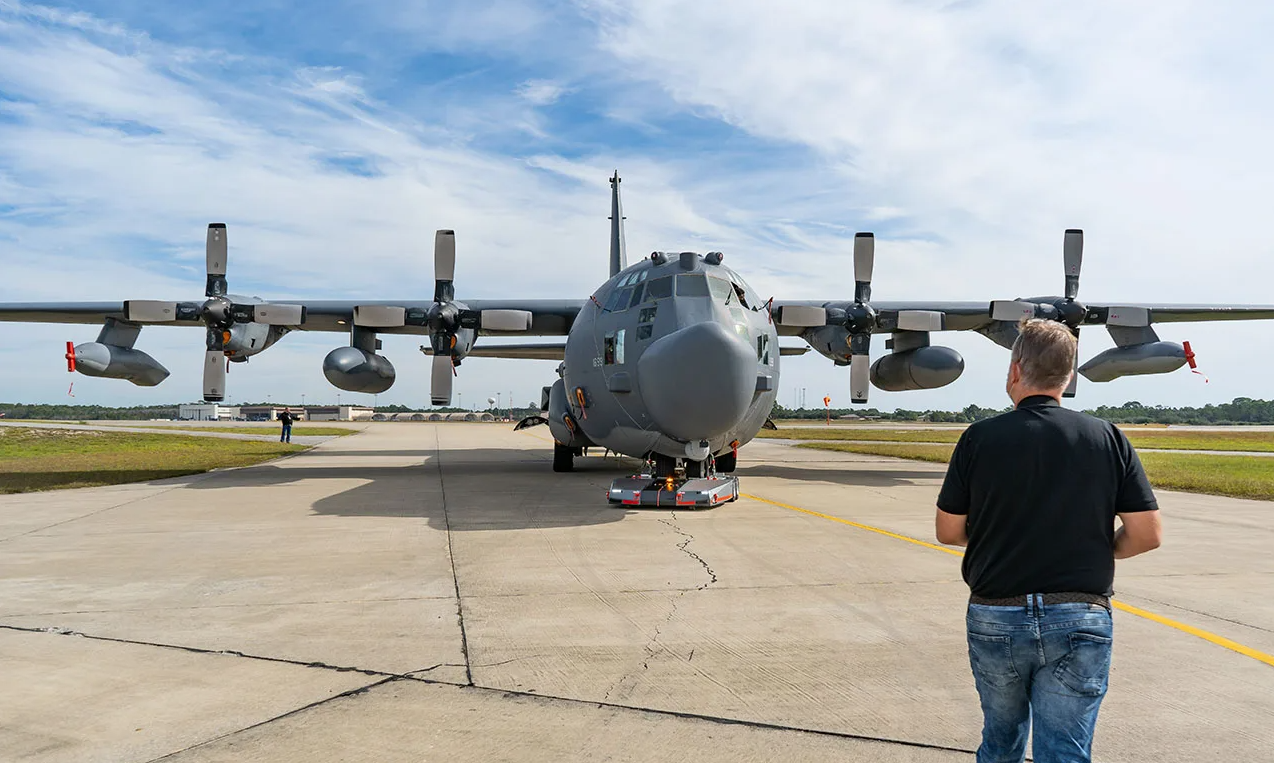
A video by TowFlexx shows its Model HD190 being attached to a KC-135 tanker jet of the United States Air Force. The HD190 is rated to tow aircraft with a Maximum Take Off Weight (MTOW) up to 198,000 lbs (90,000kg), but in the video, the HD190 smoothly and fluidly moves the tanker across the ramp. The four-engined KC-135’s MTOW is 322,500 pounds (146,285 kg), and its empty weight ranges from 109.000 to 119,000 (49,441 - 53,977kg), depending on the variant. Thus, towing Boeing 737s or regional jets is well within its capabilities.
TowFLEXX CEO Junaid (Jay) Mukhtar is optimistic about the future of the company’s position in the ground mobility market.
“TowFLEXX has experienced double-digit growth on average over the past 5 years, driven primarily by increased adoption across the U.S. market,” Mukhtar explained. “The majority of this growth has come from business aviation operators, including FBOs, charter operators, and corporate flight departments.”
Looking ahead, Mukhtar sees TowFLEXX remaining focused on thoughtful engineering, modular design, and long-term serviceability. The company's goal is to continue delivering dependable equipment that supports evolving fleets while maintaining the reliability and maintainability required in demanding aviation operations.
Is TowFLEXX Worth It for Aircraft Operators?
It is no secret that commercial aviation is an expensive endeavor. The emphasis has always been on safety and efficiency in every aspect of operating aircraft, and the industry has always been welcoming to innovations that help achieve those goals. TowFLEXX’s precise mobility, ease of operation, and cost efficiency offer numerous solutions to realize gains in all aspects of safety and economy in ground operations. From the private operator trying to prevent muscle aches to the largest commercial and military organizations, TowFLEXX products have the potential to improve operations all across the aviation community.
FAA Clears JetBlue's $58.5M Purchase of Spirit's LaGuardia Slots » Delta Passenger Arrested After Allegedly Stealing Airport Tug » British Airways Flight to Chicago Forces Emergency Descent After Cabin Pressure Failure »

Comments (0)
Add Your Comment
TAGS
STORIES TowFLEXX Tow Bar Push Tug Hydraulic Towing PushbackRECENTLY PUBLISHED
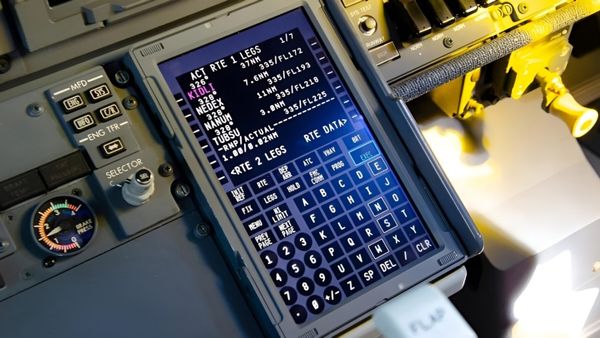 Boeing's Touchscreen Flight Controls for 737 Draw Sharp Criticism from Pilots
Boeing's plan to introduce Touchscreen Control Display Units on the 737 has sparked backlash from pilots who warn of safety and usability concerns.
NEWS
READ MORE »
Boeing's Touchscreen Flight Controls for 737 Draw Sharp Criticism from Pilots
Boeing's plan to introduce Touchscreen Control Display Units on the 737 has sparked backlash from pilots who warn of safety and usability concerns.
NEWS
READ MORE »
 Southwest Airlines Blames Brief System Outage for Boarding Delays and Checked Bag Disruptions
Southwest Airlines confirms a brief technology outage disrupted boarding and checked bag operations, forcing gate agents to process travelers manually.
NEWS
READ MORE »
Southwest Airlines Blames Brief System Outage for Boarding Delays and Checked Bag Disruptions
Southwest Airlines confirms a brief technology outage disrupted boarding and checked bag operations, forcing gate agents to process travelers manually.
NEWS
READ MORE »
 Southwest Airlines Considers Boeing 787 Order for Long-Haul International Expansion
Southwest Airlines is evaluating the Boeing 787 Dreamliner as it explores a shift into long-haul international flying, sources tell Reuters.
NEWS
READ MORE »
Southwest Airlines Considers Boeing 787 Order for Long-Haul International Expansion
Southwest Airlines is evaluating the Boeing 787 Dreamliner as it explores a shift into long-haul international flying, sources tell Reuters.
NEWS
READ MORE »
More than just headlines.
Get unlimited ad-free access to in-depth aviation news, premium stories, and exclusive insights other sites don't cover.
- Ad-free browsing on AeroXplorer
- Unlimited access to premium and exclusive articles
- Higher photo upload limits & commissions on sales
- Free access to Jetstream Magazine on higher tiers
- Ad-free browsing
- Sell aviation photos with 60% commission
- First week free!
- Everything in Basic+
- Unlimited premium articles
- Sell aviation photos with 70% commission
- Free Digital subscription to Jetstream Magazine
- First week free!
- Everything in Basic+ and Pro
- Sell aviaiton photos with 80% commission
- Early access to exclusive stories
- Free Digital+Print subscription to Jetstream Magazine