NASA's X-59 experimental aircraft is moving through its test campaign at a faster clip, bringing the quiet supersonic demonstrator closer to the day it finally lifts off from a California runway. The aircraft, built to prove that supersonic flight does not have to come with a window-rattling boom, has been working through a series of ground tests that pave the way for its maiden flight.
If the program delivers on its promise, you could see a future where commercial jets cross the country at speeds airline passengers have not experienced since the Concorde retired in 2003.
What the X-59 Is Built to Do
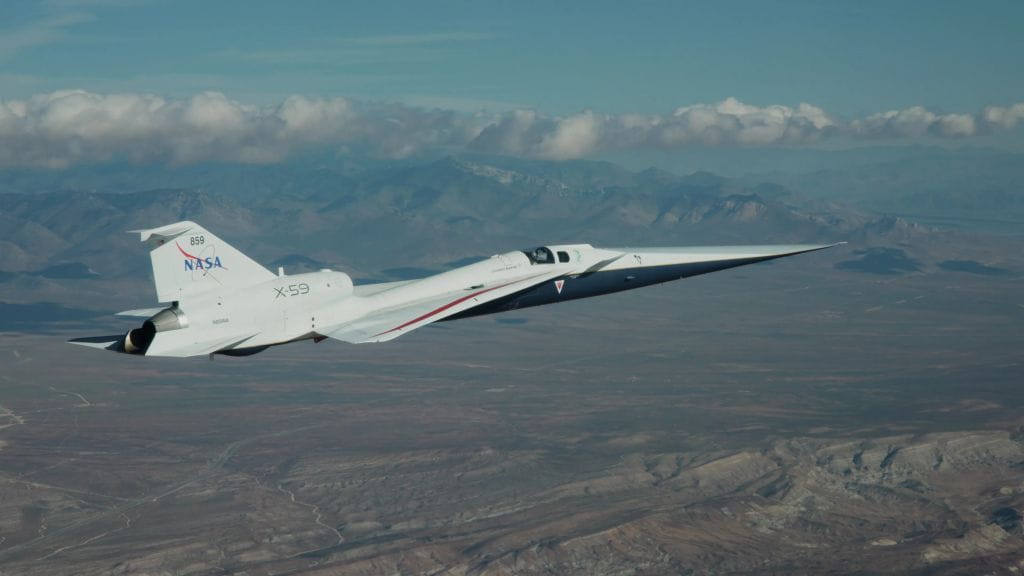
The X-59 sits at the center of NASA's Quesst mission, short for Quiet SuperSonic Technology. Lockheed Martin's Skunk Works built the aircraft at its Palmdale, California facility under a contract awarded in 2018. The goal is straightforward in concept and difficult in execution. Engineers want to fly faster than the speed of sound while producing a sound on the ground closer to a soft thump than the classic sonic boom.
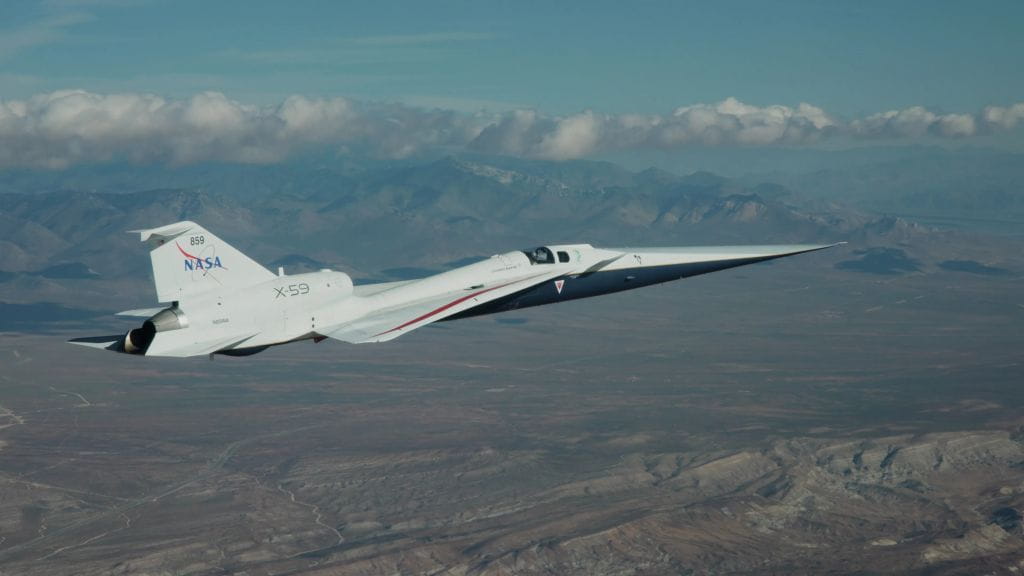
The aircraft is designed to cruise at roughly Mach 1.4, or about 925 mph, at an altitude near 55,000 feet. Its shape is the key. The long, slender nose stretches nearly a third of the aircraft's total length, a feature meant to prevent the shock waves coming off the airframe from coalescing into a single loud boom. Instead, those shock waves stay separated, producing what NASA describes as a quieter sonic thump.
Because the nose blocks the forward view from the cockpit, pilots rely on an external vision system. A 4K monitor in front of the pilot stitches together imagery from forward-facing cameras, giving the crew a clear picture of what lies ahead.
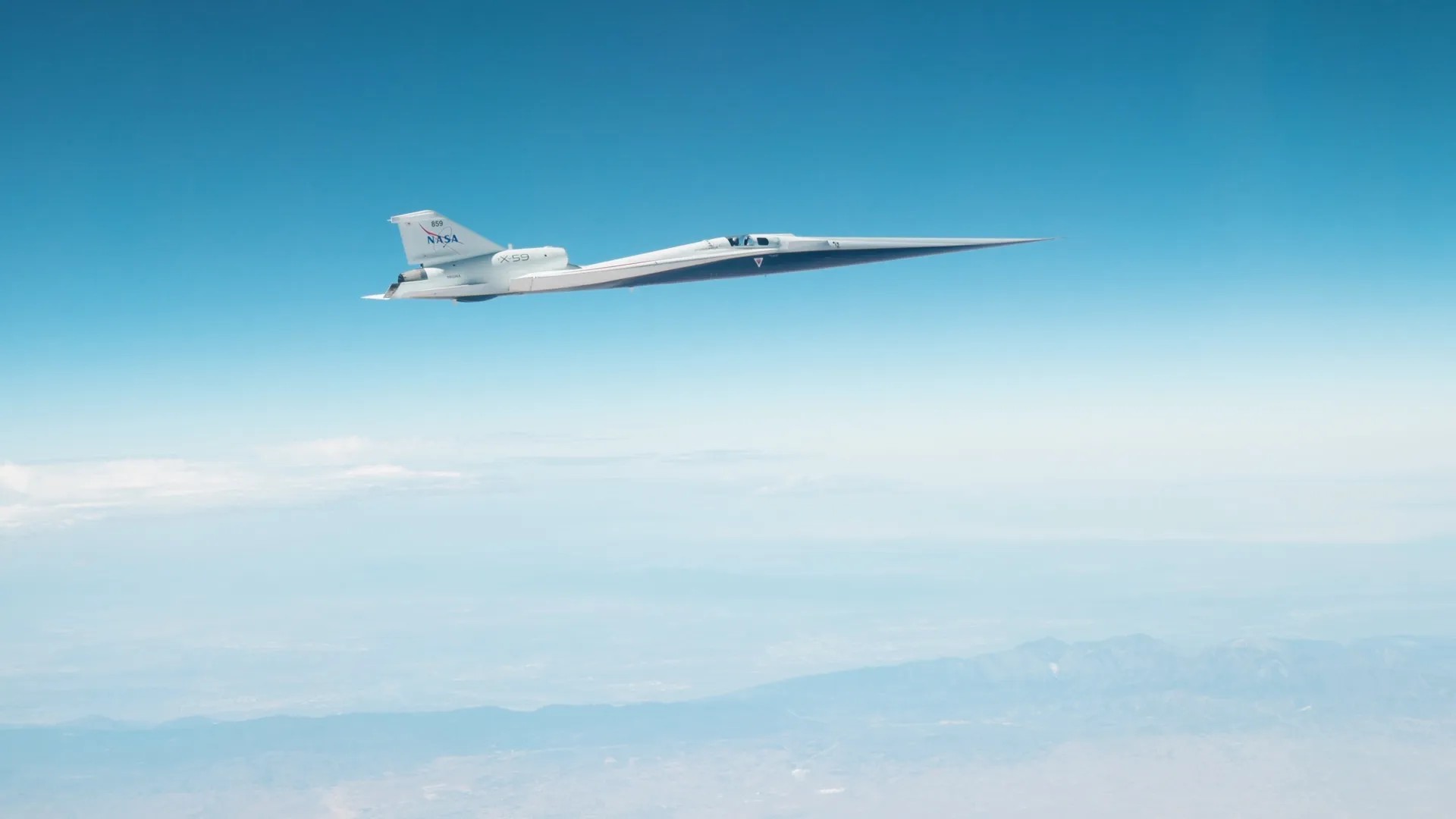
Photo: NASA/Lori Losey
Tests Picking Up Speed
The X-59 has been accelerating through its preflight test regimen at NASA's Armstrong Flight Research Center and at the Lockheed Martin facility in Palmdale. The team has worked through engine runs, electromagnetic interference checks, and structural evaluations to confirm the aircraft behaves as predicted.
Recent milestones include low-speed taxi tests, where the aircraft moved under its own power along the runway for the first time. Those tests let engineers verify steering, braking, and ground handling before pushing the airplane to higher speeds. High-speed taxi tests are next on the schedule, followed by the long-anticipated first flight.
NASA has not pinned down a precise date for that first flight, but officials have indicated it should happen before the end of 2025. Each successful ground test trims uncertainty from the timeline and gives the program team more confidence in the aircraft's readiness.

How AI Quietly Became the Backbone of Today’s Aviation Industry
How the Mission Will Unfold
Once the X-59 takes to the air, the test campaign will run in phases. Early flights will focus on basic airworthiness, gradually expanding the envelope to confirm the aircraft handles as the models predict. Engineers will then push the X-59 past the sound barrier and measure the acoustic signature it produces.
After NASA validates the aircraft's performance, the agency plans to fly the X-59 over selected communities in the United States. Residents on the ground will be asked to share their reactions to the sounds they hear. That feedback, combined with sensor measurements, will form the dataset NASA hands to the Federal Aviation Administration and international regulators.
The current rule, in place in the United States since 1973, bans civil supersonic flight over land. The X-59 program aims to give regulators the evidence they need to replace that blanket prohibition with a noise-based standard. If that shift happens, manufacturers could design supersonic airliners that meet defined sound thresholds rather than facing an outright ban.
Why This Matters for the Industry
Several private companies are watching the X-59 program closely. Boom Supersonic, for example, is developing its Overture airliner with plans for transoceanic supersonic routes. A relaxed overland rule would dramatically expand the potential market for any future supersonic commercial aircraft, opening domestic city pairs that today require subsonic flight.
The X-59 itself is not a prototype airliner. It is a single-seat research platform with a specific job: gather data. But the technology it validates, particularly the airframe shaping that controls shock wave formation, could influence the next generation of commercial designs.
The Road Ahead
The pace of recent activity suggests the program has cleared many of the technical hurdles that delayed earlier milestones. The X-59 was originally expected to fly in 2021, but engineering challenges, component delivery delays, and the complexity of integrating new systems pushed the schedule back several years.
Now the aircraft sits closer than ever to flight. Engineers have illuminated the afterburner during ground runs, completed aluminum bird strike tests on critical components, and worked through software validation cycles. Each test peels away another layer of risk.
For aviation enthusiasts, the X-59 represents something rare: a genuine X-plane in the classic mold, built to answer a specific question that could reshape how people fly. Whether the answer leads to a new era of fast commercial travel depends on data the aircraft has yet to collect. But the runway tests in Palmdale suggest you will not have to wait much longer to find out what the X-59 sounds like from the ground.
How Ryanair and Alaska Airlines Are Using AI to Make Real Decisions, Not Just Predictions » Embraer Delivers First Praetor 600E to Flexjet » The Engineering Behind the 777X's Folding Wingtips »

Comments (0)
Add Your Comment
TAGS
INFORMATIONAL NASA X-59 Quesst Program Supersonic Flight Experimental Aircraft Flight Testing Research Aircraft Aviation Innovation Sonic Boom Reduction Quiet Supersonic Technology Test Campaign Aeronautics Research Aircraft Development Hypersonic Research Airframe Design Data Collection Aviation Research Next-Generation Aircraft Regulatory Certification Future FlightRECENTLY PUBLISHED
 This Week in Aviation: The 10 Stories That Mattered Most
From major airline developments to aircraft updates and industry shifts, this weekly recap highlights the ten most-read aviation stories from the week of September 13.
INFORMATIONAL
READ MORE »
This Week in Aviation: The 10 Stories That Mattered Most
From major airline developments to aircraft updates and industry shifts, this weekly recap highlights the ten most-read aviation stories from the week of September 13.
INFORMATIONAL
READ MORE »
 One-Millisecond Software Defect Identified as Cause of UK Air Traffic Control Collapse That Grounded Thousands of Flights
A new NATS report reveals a one-millisecond software defect triggered the UK air traffic control failure, causing thousands of cancellations.
NEWS
READ MORE »
One-Millisecond Software Defect Identified as Cause of UK Air Traffic Control Collapse That Grounded Thousands of Flights
A new NATS report reveals a one-millisecond software defect triggered the UK air traffic control failure, causing thousands of cancellations.
NEWS
READ MORE »
 AirAsia Pushes Back on Collapse Rumors as Fuel Costs Squeeze Budget Airline
AirAsia CEO Tony Fernandes denies the airline faces collapse, saying travel demand stays strong despite rising jet fuel prices pressuring margins.
NEWS
READ MORE »
AirAsia Pushes Back on Collapse Rumors as Fuel Costs Squeeze Budget Airline
AirAsia CEO Tony Fernandes denies the airline faces collapse, saying travel demand stays strong despite rising jet fuel prices pressuring margins.
NEWS
READ MORE »
More than just headlines.
Get unlimited ad-free access to in-depth aviation news, premium stories, and exclusive insights other sites don't cover.
- Ad-free browsing on AeroXplorer
- Unlimited access to premium and exclusive articles
- Higher photo upload limits & commissions on sales
- Free access to Jetstream Magazine on higher tiers
- Ad-free browsing
- Sell aviation photos with 60% commission
- First week free!
- Everything in Basic+
- Unlimited premium articles
- Sell aviation photos with 70% commission
- Free Digital subscription to Jetstream Magazine
- First week free!
- Everything in Basic+ and Pro
- Sell aviaiton photos with 80% commission
- Early access to exclusive stories
- Free Digital+Print subscription to Jetstream Magazine