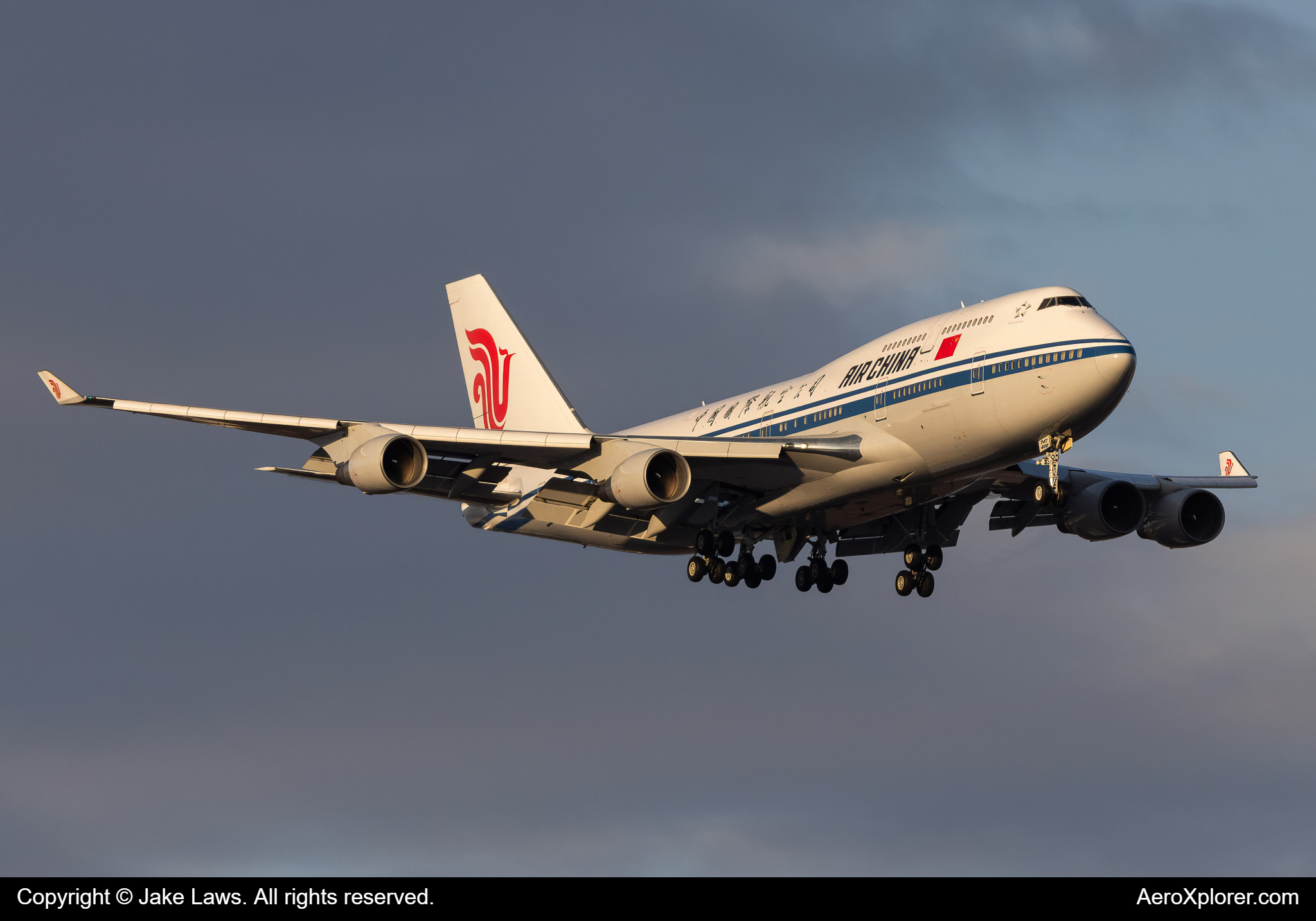

Major United States airlines have formally objected to a request from Air China to schedule additional flights between China and the United States, escalating a dispute over how Washington regulates Chinese carriers operating in American airspace.
American Airlines, Delta Air Lines, and United Airlines, joined by the Airlines for America trade group, filed their opposition with the US Department of Transportation. The carriers argue that granting Air China's request would deepen an already lopsided competitive landscape that favors Chinese airlines over their American counterparts.
Air China is seeking approval to add flights on routes connecting the two countries, part of a broader push by Chinese carriers to expand their presence in the US market as international travel demand continues to recover from pandemic-era lows. The application has drawn immediate resistance from American carriers who say the current regulatory framework leaves them at a structural disadvantage.
The Russian Airspace Advantage
At the core of the airlines' complaint is the issue of Russian airspace, which Chinese carriers can traverse but US airlines cannot. Since Russia's invasion of Ukraine in 2022, US carriers have been effectively barred from flying over Russian territory, forcing them to take longer, more expensive routes between the United States and Asia.
Chinese airlines face no such restriction. They continue to use the shorter polar and trans-Siberian routes, which translates into lower fuel costs, reduced crew expenses, and shorter flight times. US airlines contend this creates an uneven playing field that regulators have yet to fully address.
Airlines for America, which represents the largest US passenger and cargo carriers, has repeatedly urged the Transportation Department to withhold approvals for additional Chinese flights until the airspace disparity is resolved or otherwise offset through policy measures.

A Slow Recovery in US-China Aviation
Air traffic between the United States and China remains far below levels seen before the pandemic. Diplomatic tensions, travel restrictions, and the collapse of business travel during the early 2020s all contributed to a sharp reduction in scheduled service between the two countries.
Both governments have gradually permitted additional flights in recent years, though the pace has been measured. US carriers have been cautious about restoring capacity, citing weak demand for business travel and the operational challenges created by the Russian airspace closure. Chinese airlines, by contrast, have been more aggressive in seeking to add frequencies.
The imbalance has become a source of growing frustration within the US industry. American carriers have argued that allowing Chinese airlines to expand while their own operations remain constrained by geopolitical realities amounts to a de facto subsidy for foreign competitors.

Analysis: How Spirit Airlines Changed Airline Pricing, then Paid the Price
Industry Position
In its filing, Airlines for America and the three major US carriers urged the Department of Transportation to deny or defer action on Air China's request. The group has argued that any expansion of Chinese carrier service should be tied to broader concessions or to a resolution of the airspace inequity.
The trade group and its member airlines have consistently maintained that they are not opposed to bilateral aviation ties with China in principle. Rather, they say the current terms of competition need to be recalibrated before further expansions are approved.
Delta, United, and American operate a limited number of flights between the United States and mainland China, a fraction of what they flew before 2020. All three carriers have publicly stated that Chinese routes remain financially challenging under current conditions.
Regulatory Considerations
The Department of Transportation has broad authority to approve or reject applications from foreign carriers seeking to operate in the United States. In evaluating such requests, the agency typically considers factors including bilateral aviation agreements, reciprocity, competitive balance, and public interest.
The bilateral aviation agreement between the United States and China governs how many flights each country's carriers can operate, along with the routes and airports they can serve. Any expansion beyond current authorized levels typically requires coordination between the two governments, along with individual carrier approvals from the respective aviation authorities.
US officials have signaled awareness of the airspace disparity and the concerns raised by domestic carriers. However, no formal policy has been adopted to offset the advantage enjoyed by Chinese airlines that continue to fly over Russia.

Broader Geopolitical Context
The dispute over flight approvals unfolds against a backdrop of continuing tension between Washington and Beijing over trade, technology, and national security. Aviation has become one of several sectors where commercial disputes intersect with broader diplomatic considerations.
Chinese carriers, including Air China, China Eastern, and China Southern, have collectively pursued expansion of their US operations as part of their post-pandemic recovery strategies. Each new application has drawn scrutiny from US labor groups and industry associations concerned about the competitive impact.
Pilots unions representing crews at major US airlines have also weighed in on similar applications in the past, arguing that additional Chinese flights would come at the expense of American jobs and undermine US aviation interests.
What Happens Next
The Department of Transportation will review Air China's application along with the objections filed by US carriers and industry groups. The agency has not indicated a timeline for its decision.
For travelers, the outcome could affect the availability and pricing of flights between the United States and China. For the airlines involved, the decision will signal how Washington intends to balance commercial aviation interests with the broader challenges posed by the ongoing conflict in Ukraine and its ripple effects on global air travel.
US carriers have made clear that they will continue pressing regulators to address the airspace issue before approving further expansion by Chinese airlines. Whether that argument prevails in the Air China case remains to be seen.
FAA Orders Fuel Hose Inspections on Airbus A220 Fleet Operated by Breeze Airways and Delta Air Lines » Major US Airlines Push Back Against Air China's Request for Additional US Flights » A Laptop Caught Fire at 35,000 Feet. This Device Kept the Flight Going »

Comments (0)
Add Your Comment
TAGS
NEWS US Airlines Air China Route Rights US-China Aviation Airline Competition DOT International Routes Aviation Policy Aviation News Airline LobbyingRECENTLY PUBLISHED
 One-Millisecond Software Defect Identified as Cause of UK Air Traffic Control Collapse That Grounded Thousands of Flights
A new NATS report reveals a one-millisecond software defect triggered the UK air traffic control failure, causing thousands of cancellations.
NEWS
READ MORE »
One-Millisecond Software Defect Identified as Cause of UK Air Traffic Control Collapse That Grounded Thousands of Flights
A new NATS report reveals a one-millisecond software defect triggered the UK air traffic control failure, causing thousands of cancellations.
NEWS
READ MORE »
 AirAsia Pushes Back on Collapse Rumors as Fuel Costs Squeeze Budget Airline
AirAsia CEO Tony Fernandes denies the airline faces collapse, saying travel demand stays strong despite rising jet fuel prices pressuring margins.
NEWS
READ MORE »
AirAsia Pushes Back on Collapse Rumors as Fuel Costs Squeeze Budget Airline
AirAsia CEO Tony Fernandes denies the airline faces collapse, saying travel demand stays strong despite rising jet fuel prices pressuring margins.
NEWS
READ MORE »
 Delta Air Lines Moves to Claim Top Spot at LAX With New Routes and Expanded Schedule
Delta Air Lines plans its largest-ever schedule at Los Angeles International Airport, adding routes and premium seating to overtake rivals.
NEWS
READ MORE »
Delta Air Lines Moves to Claim Top Spot at LAX With New Routes and Expanded Schedule
Delta Air Lines plans its largest-ever schedule at Los Angeles International Airport, adding routes and premium seating to overtake rivals.
NEWS
READ MORE »
More than just headlines.
Get unlimited ad-free access to in-depth aviation news, premium stories, and exclusive insights other sites don't cover.
- Ad-free browsing on AeroXplorer
- Unlimited access to premium and exclusive articles
- Higher photo upload limits & commissions on sales
- Free access to Jetstream Magazine on higher tiers
- Ad-free browsing
- Sell aviation photos with 60% commission
- First week free!
- Everything in Basic+
- Unlimited premium articles
- Sell aviation photos with 70% commission
- Free Digital subscription to Jetstream Magazine
- First week free!
- Everything in Basic+ and Pro
- Sell aviaiton photos with 80% commission
- Early access to exclusive stories
- Free Digital+Print subscription to Jetstream Magazine