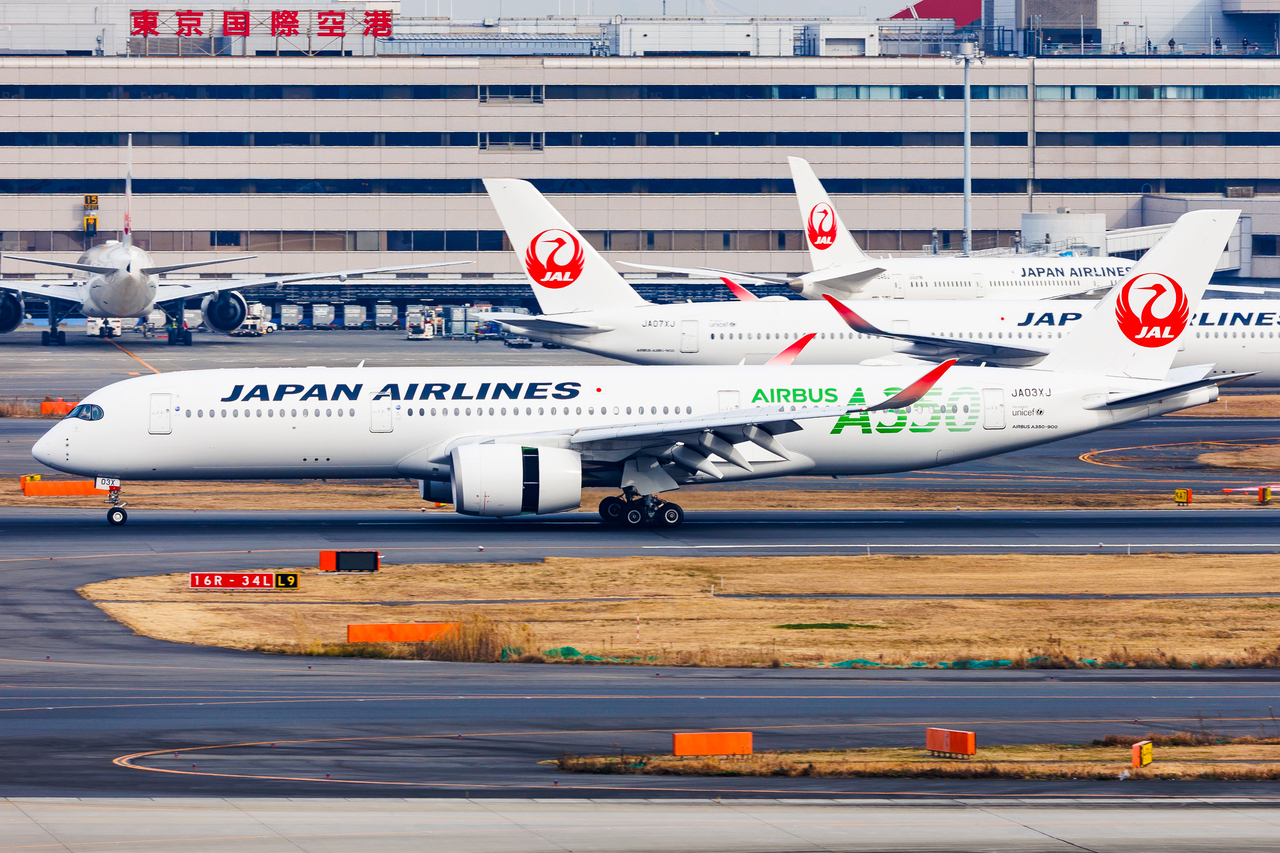

Japan Airlines has announced one of the most consequential aviation technology experiments of 2026: a multi-year trial deploying humanoid robots in live ground handling operations at Tokyo's Haneda Airport, the nation's busiest, in a partnership with GMO AI & Robotics Trading Co., Ltd. that marks the first time in Japan's aviation history that human-shaped machines will work alongside staff in the physically demanding environment of the aircraft apron. The trial begins in May 2026, and what it reveals could reshape how ground operations are staffed at airports across Japan and well beyond.
The Partnership and the First-Ever Experiment
JAL Ground Service Co., Ltd., responsible for ground handling operations such as aircraft towing and baggage and cargo loading and unloading at major domestic airports for the JAL Group, and GMO AI & Robotics Trading Co., Ltd., which promotes the social implementation of AI and robotics within the GMO Internet Group, will launch a demonstration experiment for the utilization of humanoid robots at airports, the first of its kind in Japan, starting in May 2026.
The initiative will be led by JAL Ground Service Co., Ltd. in partnership with GMO AI & Robotics Trading Co., Ltd., combining aviation expertise with advanced robotics development. The trial is expected to run for approximately three years, with phased evaluations and operational testing.
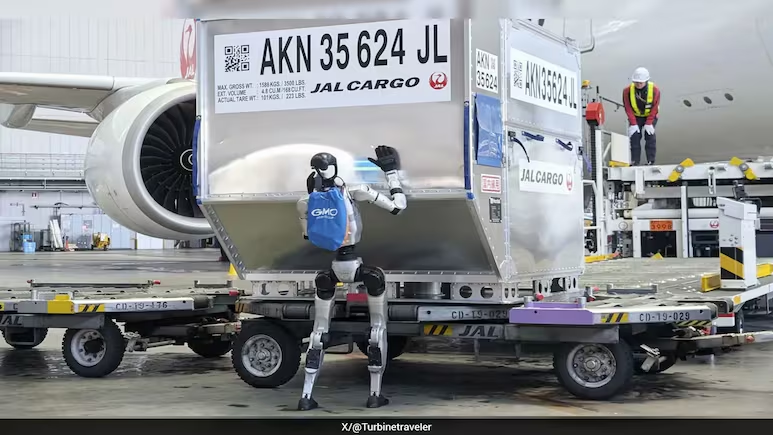
In the test, announced Monday, two robots made in China will carry out tasks such as transporting containers and opening and closing levers that secure them.

The Labour Crisis Driving the Decision
The announcement is not a technology showcase for its own sake. It is a direct response to structural workforce pressures that have been building across Japan's aviation ground handling sector for years and are now reaching a critical point.
Japan suffers from labour shortages, and the myriad pieces of equipment used airside at airports were all designed to be used by humans. It therefore makes sense to try humanoid robots that can use existing tools, rather than try to develop specific bots for each job.
JAL currently employs around 4,000 ground handling staff, many of whom work in confined and demanding conditions.
Ground handling operations are conducted in environments that rely heavily on human manual labour, such as operating various shapes of Ground Support Equipment within limited spaces around aircraft. Ground handling operations require highly skilled personnel to maintain safety, such as aircraft marshalling and baggage and cargo handling, while also imposing significant physical burdens.
Japan's demographic reality makes this problem self-compounding. An ageing population combined with surging inbound tourism, which has driven Japan's international passenger numbers to record levels, means that the gap between available workers and required capacity is widening precisely as demand accelerates.

Analysis: How Spirit Airlines Changed Airline Pricing, then Paid the Price
What the Robots Will Do
The initial deployment is structured conservatively, beginning with the most clearly defined and physically bounded tasks before expanding. Initially, two humanoid robots will be deployed to perform basic ground handling functions. These include transporting cargo containers and operating the mechanical levers that secure them in place.
The long-term vision for the project extends beyond basic cargo handling tasks. Developers aim to deploy humanoid robots across a broader range of airport operations, including baggage loading, cabin cleaning, and ground support equipment handling.
Initially, operations at airport sites will be visualised and analysed to identify areas where humanoid robots can operate safely. Subsequently, repeated operational verifications simulating actual airport environments will be conducted, with the ultimate goal of establishing a sustainable operational structure through labour savings and reducing workload by having humanoid robots complement human tasks.
Future plans include enabling the robots to operate autonomously, thereby expanding the range of tasks they can perform.
The Technology Behind the Trial
Japan Airlines will work with a local company called GMO, which already offers four humanoid bots, none with battery life beyond three hours. Just one of the company's bots, the Walker E, appears suitable for outdoor use, an important consideration given Tokyo winters can bring occasional snow while the city's summers are infamously hot and humid.
The battery life limitation is a meaningful operational constraint. A three-hour window is sufficient for defined task cycles in a structured environment, but it requires careful scheduling and charging infrastructure to ensure continuous availability across the multi-shift operations that Haneda's 24-hour status demands. The Walker E's outdoor suitability is equally significant; the tarmac environment subjects any equipment to temperature extremes, jet blast, fuel vapour, and high-vibration conditions that indoor-optimised robotics systems cannot reliably withstand.
GMO AIR will provide humanoid robots and develop and optimise their motion programs, utilising know-how gained from its Humanoid Dispatch Service and the GMO Humanoid Lab Shibuya Showcase — a physical AI research and development hub opened on April 7, 2026, and will construct robot solutions tailored to airport operations.

The "First Year of Humanoids"
The cultural and commercial context GMO Internet Group has placed around this announcement is striking. The GMO Internet Group designates 2026 as the "First Year of Humanoids" and is committed to solving social issues through the fusion of AI and robotics. This demonstration experiment represents a crucial step toward accelerating the social implementation of humanoid robots, with continued efforts to realise a society where humans and robots coexist through collaboration across diverse industries.
That framing places the JAL trial within a broader national technology moment. Japan, a country with one of the world's most advanced robotics industries and one of the most acute demographic labour challenges, is positioning humanoid robot deployment in aviation as a flagship test case for the technology's practical viability in safety-critical, physically complex work environments.
Safety Standards and the Human-Robot Balance
Both JAL and GMO AIR have been deliberate in framing the robots as complementary to human workers rather than as replacements. JAL has emphasised that robots will not fully replace human employees, but rather provide support in streamlining operations.
Before full deployment, the trial will include a detailed analysis of airport workflows to identify safe and practical use cases. Simulated and real-world testing will ensure compliance with strict aviation safety standards.
The safety dimension is paramount. Ground handling operations occur in immediate proximity to aircraft, structures weighing hundreds of tonnes, pressurised with hydraulic systems, fuelled with highly combustible material, and subject to regulatory oversight that holds every malfunction to a rigorous standard of accountability. A humanoid robot that misjudges its positioning relative to an aircraft fuselage, cargo hold door, or engine intake presents risks of a categorically different order from those associated with a robot mishandling a warehouse shelf.
That is precisely why the phased approach, visual analysis first, simulated testing second, controlled real-world operations third, autonomous expansion last, reflects the kind of systematic caution that aviation safety culture demands and that this experiment's long timeline accommodates.
What Success Would Mean
If successful, the initiative could redefine ground handling operations by creating a hybrid workforce where humans and robots work side by side.
The implications extend well beyond Haneda. Japan's ground handling labour shortage is a concentrated version of a challenge that airports across Asia, Europe, and North America are also navigating, albeit with different demographic drivers and workforce structures. A proven, scalable humanoid robot solution for baggage handling, cargo securing, and cabin cleaning could become one of the most commercially transferable technologies in aviation services within the decade.
By offering new AI and robotics technology solutions to the industry-wide challenge of human resource shortages in ground handling operations, this initiative will contribute to sustainable development in the aviation industry and promote work-style reform at airports.
For now, the experiment begins in May. Two robots. One airport. Three years of data. And a question that the entire global aviation industry is watching Japan Airlines try to answer: can a humanoid machine be trusted to work safely, consistently, and effectively in one of the most demanding operational environments on earth?
US Air Force Pulls All 12 B-1B Bombers from RAF Fairford Following Attempted Attack » British Airways Unveils World's Largest Business Class Cabin With 106 Seats Aboard Refurbished A380 Fleet » FAA Clears JetBlue's $58.5M Purchase of Spirit's LaGuardia Slots »

Comments (0)
Add Your Comment
TAGS
NEWS Japan Airlines Humanoid Robots Haneda Airport GMO AI Robotics Aviation Technology Ground Handling Japan Labour Shortage Airport Automation JAL Ground Service AI Aviation Tokyo Aviation GMO Internet Group Aviation InnovationRECENTLY PUBLISHED
 United 777 Diverts to Dublin After Cockpit Windscreen Cracks Over the Atlantic
A United Airlines Boeing 777 bound for Milan made a steep descent and diverted to Dublin after its cockpit windscreen cracked mid-flight.
NEWS
READ MORE »
United 777 Diverts to Dublin After Cockpit Windscreen Cracks Over the Atlantic
A United Airlines Boeing 777 bound for Milan made a steep descent and diverted to Dublin after its cockpit windscreen cracked mid-flight.
NEWS
READ MORE »
 Boeing's Touchscreen Flight Controls for 737 Draw Sharp Criticism from Pilots
Boeing's plan to introduce Touchscreen Control Display Units on the 737 has sparked backlash from pilots who warn of safety and usability concerns.
NEWS
READ MORE »
Boeing's Touchscreen Flight Controls for 737 Draw Sharp Criticism from Pilots
Boeing's plan to introduce Touchscreen Control Display Units on the 737 has sparked backlash from pilots who warn of safety and usability concerns.
NEWS
READ MORE »
 Southwest Airlines Blames Brief System Outage for Boarding Delays and Checked Bag Disruptions
Southwest Airlines confirms a brief technology outage disrupted boarding and checked bag operations, forcing gate agents to process travelers manually.
NEWS
READ MORE »
Southwest Airlines Blames Brief System Outage for Boarding Delays and Checked Bag Disruptions
Southwest Airlines confirms a brief technology outage disrupted boarding and checked bag operations, forcing gate agents to process travelers manually.
NEWS
READ MORE »
More than just headlines.
Get unlimited ad-free access to in-depth aviation news, premium stories, and exclusive insights other sites don't cover.
- Ad-free browsing on AeroXplorer
- Unlimited access to premium and exclusive articles
- Higher photo upload limits & commissions on sales
- Free access to Jetstream Magazine on higher tiers
- Ad-free browsing
- Sell aviation photos with 60% commission
- First week free!
- Everything in Basic+
- Unlimited premium articles
- Sell aviation photos with 70% commission
- Free Digital subscription to Jetstream Magazine
- First week free!
- Everything in Basic+ and Pro
- Sell aviaiton photos with 80% commission
- Early access to exclusive stories
- Free Digital+Print subscription to Jetstream Magazine