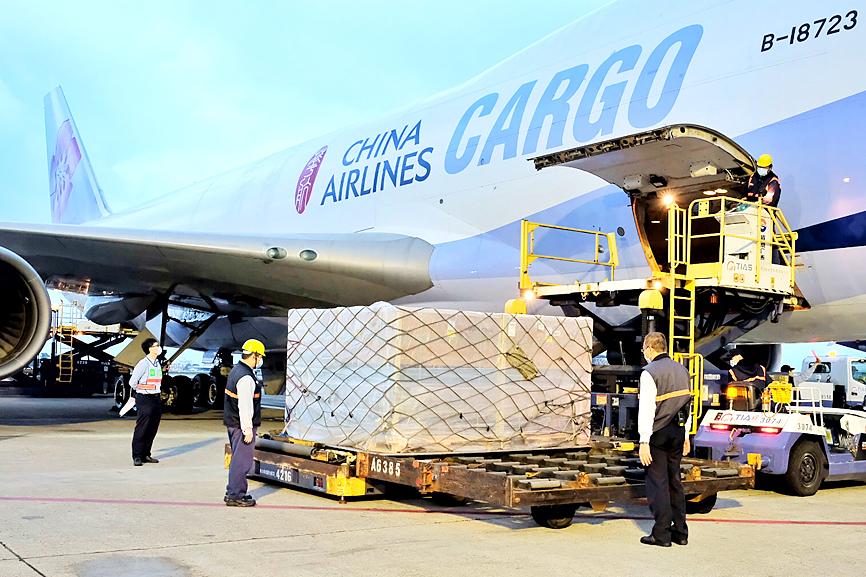
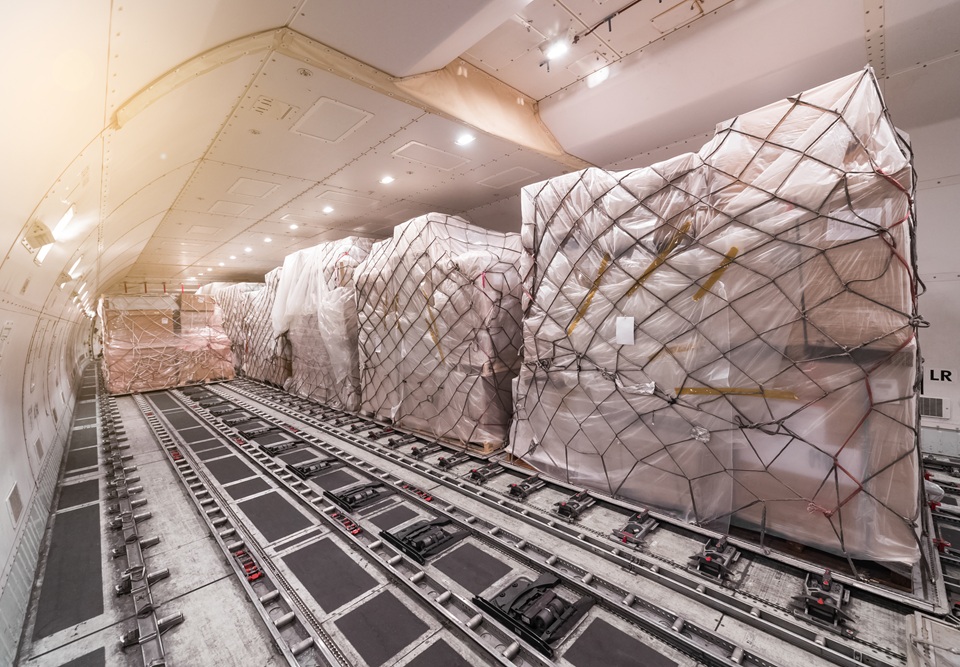
In May, moving a kilogram of cargo from Taiwan to the United States by air cost $7.02, up 24% on the year before. China-US rates hit $5.86, up 46%, and Malaysia-US reached $6.69, up 36%, according to Xeneta data reported by Air Cargo News. These weren't niche routes. They were standard transpacific lanes running close to full. Two forces collided to cause it: an AI-driven chip boom and a war that squeezed capacity out of the Middle East.
Two Shocks, One Squeezed Market
The Middle East conflict hit first. Global spot rates in May were 41% higher than a year earlier, even though volumes rose only 4% and capacity rose just 1%, pointing to lost supply as much as to new demand.
Chips supplied the second shock. Global semiconductor sales jumped 106% year on year in April, and Taiwan's economy grew 15% in the first quarter, its fastest pace in almost five decades. AI hardware replaced e-commerce as air cargo's main growth driver, and transpacific utilisation climbed to around 90% in May.
Why Shippers Keep Paying
Rates like these usually push shippers toward ocean freight, but that option stayed weak. With the Iran war continuing, ocean reliability remained low, which kept volumes from shifting back to ships.
Xeneta's chief airfreight officer Niall van de Wouw argued that for companies building data centres, getting components quickly matters more than the freight bill. Whether they pay five, six or seven dollars a kilo is largely secondary to him. The money behind that urgency is huge. Samsung and SK Hynix together account for more than half of South Korea's Kospi index, and SK Hynix's stock rose more than sevenfold in a year.
Shippers Are Hedging, Not Committing
Even with that urgency, buyers aren't locking in. In the second quarter, 58% of newly agreed shipper and forwarder contracts ran three months or less, up from 22% a year earlier, and nearly half of chargeable weight moved on the spot market.
The trend is continuing. Among new contracts starting in the third quarter, 60% covered three months or less, against 25% a year earlier, while 12-month deals fell from 40% to 25%. Van de Wouw reads this as shippers using short deals while they push for pricing tied to what airlines actually charge forwarders, not a fuel surcharge.

How AI Quietly Became the Backbone of Today’s Aviation Industry
Rates Are Easing, Not Collapsing
Global spot rate growth has cooled since May. Year-on-year increases went from 41% in May to 38% in June, 28% in July, 24% in August, and 27% in September, at $3.10 per kilogram.
The transpacific is holding firmer than most lanes. Northeast Asia to North America averaged $5.76 per kilogram in August, 36% above late-February levels, with Southeast Asia 34% higher. Those are regional averages, so they can't be compared directly with May's Taiwan-US rate. The transatlantic tells a different story, where summer belly capacity kept Europe-to-North America rates 25% below late-February levels.
What Could Change the Picture
Xeneta isn't expecting a strong finish. Its indicators point to a muted fourth quarter with no signs of a peak season, and frontloaded inventories may leave less to ship.
The AI demand behind the transpacific premium also carries risk. Korea's market swung hard in July, with the Kospi falling more than 8% in a single day before staging a record rebound as investors weighed stretched AI valuations.

Why It Matters
If chip shipments hold up, transpacific rates could stay above last year's levels even as the rest of the market cools. If AI spending slows, the lanes that gained most would likely feel it first. The shift toward three-month contracts suggests shippers don't yet know which way it will go.
Southwest Airlines Becomes First US Carrier to Integrate Flight Booking Into ChatGPT » United 777 Diverts to Dublin After Cockpit Windscreen Cracks Over the Atlantic » How the AI Chip Boom Is Squeezing Transpacific Air Cargo »

Comments (0)
Add Your Comment
TAGS
INFORMATIONAL Air Cargo Air Freight Rates AI Semiconductor Boom Semiconductor Industry Transpacific Air Cargo Taiwan-US Cargo Air Cargo Demand Xeneta Air Cargo Market Supply Chain Middle East Conflict Cargo Capacity Freight Rates Air Freight AI Hardware Global Trade Aviation Industry Cargo LogisticsRECENTLY PUBLISHED
 Selma Blair Charged With Assault After Alleged Biting Incident on Delta Flight
Actress Selma Blair faces assault charges after allegedly biting a Delta flight attendant and kicking a police officer during a disturbance at JFK.
NEWS
READ MORE »
Selma Blair Charged With Assault After Alleged Biting Incident on Delta Flight
Actress Selma Blair faces assault charges after allegedly biting a Delta flight attendant and kicking a police officer during a disturbance at JFK.
NEWS
READ MORE »
 Riyadh Air Relocates New Boeing 787 Dreamliners Away From Capital Amid Houthi Missile Threat
Saudi Arabia's new flag carrier Riyadh Air has moved its Boeing 787 Dreamliners out of Riyadh over fears of Houthi missile attacks ahead of launch.
NEWS
READ MORE »
Riyadh Air Relocates New Boeing 787 Dreamliners Away From Capital Amid Houthi Missile Threat
Saudi Arabia's new flag carrier Riyadh Air has moved its Boeing 787 Dreamliners out of Riyadh over fears of Houthi missile attacks ahead of launch.
NEWS
READ MORE »
 FAA Orders Engine Repairs on Airbus A380 Fleet After Uncontained Failure
The FAA has ordered inspections and repairs on Engine Alliance GP7200 engines powering Airbus A380s after an uncontained failure during takeoff.
NEWS
READ MORE »
FAA Orders Engine Repairs on Airbus A380 Fleet After Uncontained Failure
The FAA has ordered inspections and repairs on Engine Alliance GP7200 engines powering Airbus A380s after an uncontained failure during takeoff.
NEWS
READ MORE »
More than just headlines.
Get unlimited ad-free access to in-depth aviation news, premium stories, and exclusive insights other sites don't cover.
- Ad-free browsing on AeroXplorer
- Unlimited access to premium and exclusive articles
- Higher photo upload limits & commissions on sales
- Free access to Jetstream Magazine on higher tiers
- Ad-free browsing
- Sell aviation photos with 60% commission
- First week free!
- Everything in Basic+
- Unlimited premium articles
- Sell aviation photos with 70% commission
- Free Digital subscription to Jetstream Magazine
- First week free!
- Everything in Basic+ and Pro
- Sell aviaiton photos with 80% commission
- Early access to exclusive stories
- Free Digital+Print subscription to Jetstream Magazine