


North American business aviation activity posted another month of gains in May, though the pace of growth has notably decelerated, according to the latest TraqPak report from Argus International. The data points to an industry that remains in expansion territory but faces softening momentum heading into the summer months.
Argus recorded a 2.1% year-over-year increase in business jet and turboprop flight activity across North America in May. While the figure extends a streak of positive comparisons, it falls short of earlier projections and reflects a deceleration from the stronger gains posted in prior months.
Breaking Down the Numbers
The May results show uneven performance across the three primary operational categories tracked by Argus. Part 91 flying, which covers operations by private and corporate flight departments, led the way with a 3.2% year-over-year increase. Part 135 charter activity climbed 2.1% compared with May 2024. Fractional operations registered the smallest gain, advancing 0.4% year over year.
By aircraft category, large-cabin jets delivered the strongest performance, with flight activity rising 3.7% compared with the same month last year. Midsize jets followed with a 2.6% increase, while light jets posted a 1.9% gain. Turboprops rounded out the figures with a 1.4% rise in activity.
The combination of segment results paints a picture of an industry still drawing strength from corporate and high-net-worth travel demand, particularly at the upper end of the market, where large-cabin operations continue to outperform.

Charter Market Shows Strain
The on-demand charter segment, often viewed as a leading indicator of broader market sentiment, has shown the clearest signs of cooling. Part 135 operators have faced sustained pressure since charter demand peaked during the post-pandemic surge of 2021 and 2022. While the May figures remain positive, the rate of expansion has thinned considerably compared with the double-digit growth rates recorded during the boom years.
Fractional operations, which had served as one of the most consistent growth stories in business aviation through 2023 and 2024, recorded their most modest year-over-year gain in recent memory. The near-flat performance suggests fleet operators may be approaching capacity limits or encountering early signs of demand softening among their membership bases.
Forward Indicators Point Lower
Looking ahead, Argus projects that June 2025 activity will rise 1.4% compared with June 2024. If realized, that figure would mark a further slowdown from May and continue the trend of moderating growth that has characterized the first half of the year.
The forecast carries particular weight because June typically represents one of the busier months for business aviation, with corporate travel patterns, summer leisure flying, and event-driven demand all contributing to elevated activity levels. A growth rate of less than 1.5% heading into peak season raises questions about how the sector will perform through the back half of 2025.
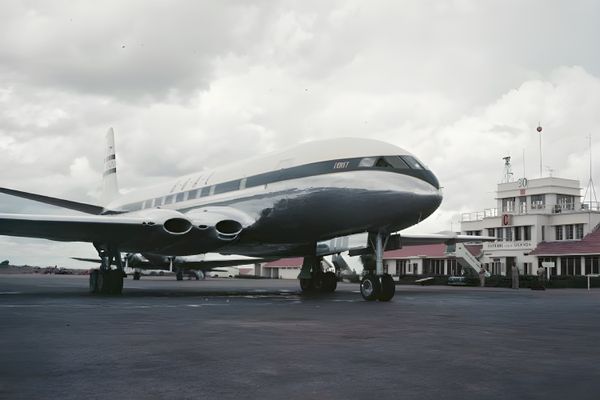
The Shape of Disaster: The Plane That Kept Falling Apart Mid-Air
Regional and Operational Context
The Argus TraqPak data, which tracks IFR flight movements across North America, has long served as one of the most closely watched barometers for business aviation health. The May results follow a pattern of decelerating gains that began emerging earlier in the year, with month-over-month comparisons gradually narrowing.
Industry observers have pointed to several factors that may explain the cooling trend. Higher operating costs, including fuel, insurance, and maintenance expenses, have squeezed margins for charter operators. Pilot supply, while improved from the acute shortages of 2022 and 2023, remains a structural constraint on fleet expansion. Interest rates and broader economic uncertainty have also weighed on aircraft transactions and corporate flying budgets.
At the same time, the continued strength in large-cabin activity suggests that demand from ultra-high-net-worth individuals and major corporations remains durable. These operators tend to be less sensitive to short-term economic fluctuations and often maintain flying patterns regardless of broader market conditions.

What the Data Means for Operators
For flight departments, charter operators, and fractional providers, the May figures offer a mixed signal. The headline number remains positive, confirming that the post-pandemic correction has not given way to outright contraction. Yet the trajectory clearly points toward a more challenging operating environment than the one that prevailed during the boom years.
Part 91 operators appear best positioned in the current environment, with corporate flying continuing to expand at a healthy clip. The 3.2% year-over-year gain in this segment outpaces the broader market and suggests that business travel by owned and corporate fleets remains a reliable source of activity.
Charter operators face a more complex picture. While Part 135 activity continues to grow, the pace of expansion has slowed substantially from peak levels. Operators that built capacity during the boom years are now navigating a market where demand growth no longer automatically absorbs available supply.
Fractional providers, despite the modest May result, retain structural advantages that should support continued growth over time. The membership-based model offers more predictable revenue streams than pure charter operations, even if monthly activity figures show occasional softness.
The June projection will provide the next data point in determining whether the current slowdown represents a temporary plateau or the start of a more sustained moderation in business aviation activity.
Caribbean Airlines Expands Network With New Toronto and Caracas Routes » KLM Brings Starlink Internet to Long-Haul Flights » United 777 Diverts to Dublin After Cockpit Windscreen Cracks Over the Atlantic »

Comments (0)
Add Your Comment
TAGS
INFORMATIONAL Business Aviation Argus Data Aviation Activity Market Trends Charter Flights Business Aviation Business Travel Charter Market Industry Analysis Market Conditions Demand Signals Travel Patterns Economic Outlook Market Intelligence Aviation Statistics Booking Trends Charter OperationsRECENTLY PUBLISHED
 United 777 Diverts to Dublin After Cockpit Windscreen Cracks Over the Atlantic
A United Airlines Boeing 777 bound for Milan made a steep descent and diverted to Dublin after its cockpit windscreen cracked mid-flight.
NEWS
READ MORE »
United 777 Diverts to Dublin After Cockpit Windscreen Cracks Over the Atlantic
A United Airlines Boeing 777 bound for Milan made a steep descent and diverted to Dublin after its cockpit windscreen cracked mid-flight.
NEWS
READ MORE »
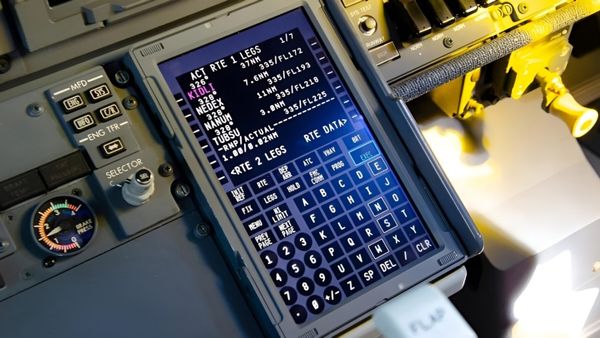 Boeing's Touchscreen Flight Controls for 737 Draw Sharp Criticism from Pilots
Boeing's plan to introduce Touchscreen Control Display Units on the 737 has sparked backlash from pilots who warn of safety and usability concerns.
NEWS
READ MORE »
Boeing's Touchscreen Flight Controls for 737 Draw Sharp Criticism from Pilots
Boeing's plan to introduce Touchscreen Control Display Units on the 737 has sparked backlash from pilots who warn of safety and usability concerns.
NEWS
READ MORE »
 Southwest Airlines Blames Brief System Outage for Boarding Delays and Checked Bag Disruptions
Southwest Airlines confirms a brief technology outage disrupted boarding and checked bag operations, forcing gate agents to process travelers manually.
NEWS
READ MORE »
Southwest Airlines Blames Brief System Outage for Boarding Delays and Checked Bag Disruptions
Southwest Airlines confirms a brief technology outage disrupted boarding and checked bag operations, forcing gate agents to process travelers manually.
NEWS
READ MORE »
More than just headlines.
Get unlimited ad-free access to in-depth aviation news, premium stories, and exclusive insights other sites don't cover.
- Ad-free browsing on AeroXplorer
- Unlimited access to premium and exclusive articles
- Higher photo upload limits & commissions on sales
- Free access to Jetstream Magazine on higher tiers
- Ad-free browsing
- Sell aviation photos with 60% commission
- First week free!
- Everything in Basic+
- Unlimited premium articles
- Sell aviation photos with 70% commission
- Free Digital subscription to Jetstream Magazine
- First week free!
- Everything in Basic+ and Pro
- Sell aviaiton photos with 80% commission
- Early access to exclusive stories
- Free Digital+Print subscription to Jetstream Magazine