
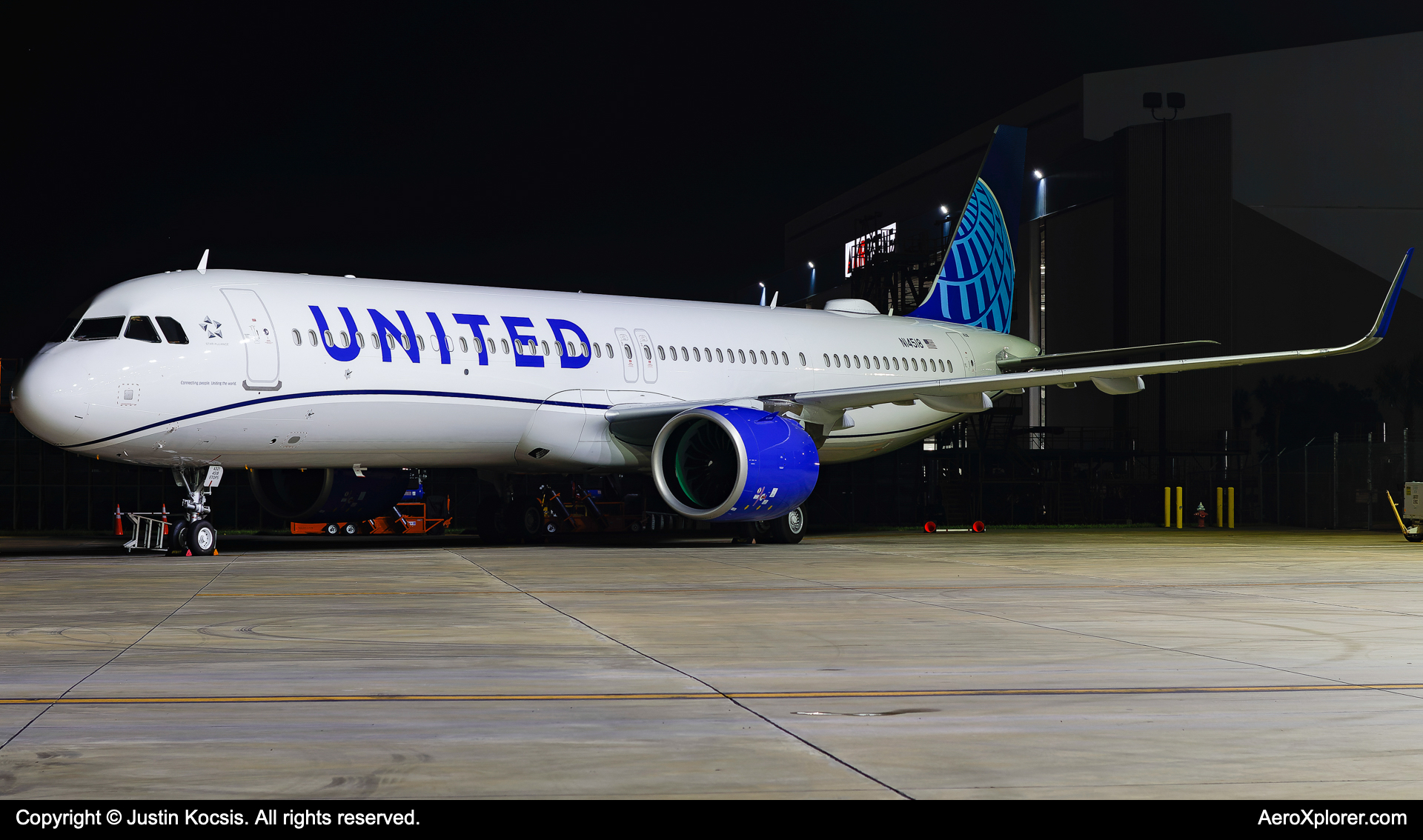

United Airlines is reportedly developing a new economy class product designed to give passengers more personal space by blocking out the middle seat. The carrier is said to be working on a tray table, internally referred to as a 'perma-tray,' that locks over the middle seat in a row of three. The tray can be unlocked and stored beneath the seat when required, allowing the row to return to standard three-seat configuration if needed.
The concept aims to offer travelers additional personal space within the economy cabin, with passengers seated in the window or aisle position gaining extra room without paying full premium economy prices. However, sources suggest the primary driver behind the product is operational rather than passenger-focused – by blocking middle seats, United can reduce the total seat count on its A321XLR aircraft, allowing the airline to staff flights with fewer flight attendants in line with FAA minimum cabin crew requirements, without requiring additional headcount.
The airline has not yet released a firm launch date for the product, nor has it confirmed pricing details. United has not publicly confirmed the project, and the airline did not respond to media requests for comment at the time of publication.
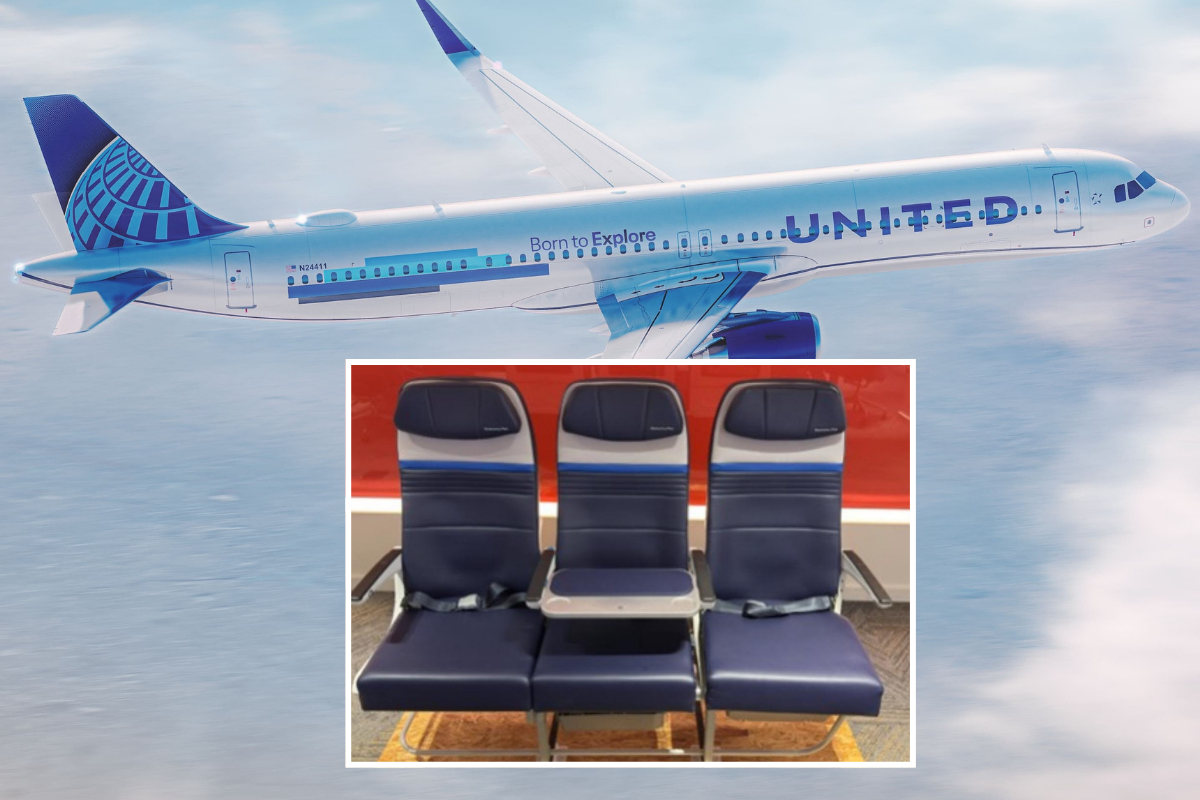
How the Perma-Tray Concept Works
The design replaces the standard middle seat with a permanent flat surface. That surface gives the two adjacent passengers somewhere to place drinks, laptops, books, or meals during the flight. The idea borrows from a trend that gained attention during the pandemic, when several carriers temporarily blocked middle seats to maintain distance between travelers.
United's version moves beyond a temporary measure. By installing a fixed tray, the airline avoids losing the seat capacity entirely on paper while still marketing the row as offering additional space. Passengers would book the window or aisle position as a distinct fare category.
The approach also avoids the structural changes that come with reconfiguring an aircraft cabin. Airlines typically face complex certification processes when altering seat layouts. A permanent tray placed over an existing seat could be easier to roll out across multiple aircraft types.
A Response to Passenger Demand
Surveys conducted across the industry have consistently shown that the middle seat ranks as the least desirable position on any aircraft. Travelers regularly pay extra to avoid it, whether through seat selection fees, upgrades, or by booking with carriers that guarantee an empty middle seat.
United appears to be testing whether passengers will pay a premium for guaranteed extra space without committing to the higher cost of premium economy or business class. The product would not constitute a standalone cabin class but would instead represent a modified economy row within the existing economy cabin, offering passengers additional elbow room and easier access to armrests compared to a standard three-seat economy row.
Industry analysts have pointed out that the move reflects a broader strategy among major US carriers to segment their cabins further. American Airlines, Delta Air Lines, and United have all introduced new fare categories in recent years, ranging from basic economy at the low end to premium economy and updated business class suites at the top.

Concerns From Cabin Crew
The announcement comes alongside reports that United has been adjusting its flight attendant staffing levels on certain routes. Some crew members have raised concerns about workload and service standards as the airline experiments with new cabin configurations and fare structures.
Flight attendant unions have historically pushed back against changes that reduce staffing ratios or increase the complexity of in-flight service. Adding another fare category with its own service expectations could complicate the work of cabin crews who already manage multiple classes on a single flight.
United has not publicly addressed how the perma-tray product will affect onboard service procedures or whether it will require additional training for cabin crews.
The Shape of Disaster: The Plane That Kept Falling Apart Mid-Air
What Comes Next
The product is being developed specifically for United's soon-to-debut Airbus A321XLR aircraft, which will replace aging Boeing 757s on flights to smaller cities in Europe, and possibly the A321neo Coastliner subfleet used on premium transcontinental routes. Industry observers anticipate that United will likely test the concept on a limited number of routes before any wider rollout.
The success of the product will depend largely on how United prices it. If the fare premium sits close to standard economy, it could attract a wide range of travelers willing to pay a small amount extra for guaranteed space. Priced too high, and passengers may opt for the existing Premium Plus cabin instead.
For now, the project remains unconfirmed by United, with further details including timing, pricing, and route deployment yet to be publicly disclosed.
Ryanair CEO Rejects Report That Passenger Was Partially Sucked Through Broken 737 Window » ANA 787 Suffers Tail Strike at Houston After Captain Accidentally Hit Go-Around Switch » Why Don’t Airplane Wings Break During Turbulence? »

Comments (0)
Add Your Comment
TAGS
NEWS United A321XLR A321neo United A321XLR Perma-TrayRECENTLY PUBLISHED
 Emirates Wins Approval for Direct Berlin Flights After 22-Year Push
Emirates has secured approval to launch direct flights between Dubai and Berlin, ending a lobbying effort that stretched more than two decades.
ROUTES
READ MORE »
Emirates Wins Approval for Direct Berlin Flights After 22-Year Push
Emirates has secured approval to launch direct flights between Dubai and Berlin, ending a lobbying effort that stretched more than two decades.
ROUTES
READ MORE »
 25 Years After 9/11: How Airline Security Transformed and What Is Changing Once Again
A quarter century after the September 11 attacks, airline security has evolved dramatically. Here is what changed and what is shifting now.
NEWS
READ MORE »
25 Years After 9/11: How Airline Security Transformed and What Is Changing Once Again
A quarter century after the September 11 attacks, airline security has evolved dramatically. Here is what changed and what is shifting now.
NEWS
READ MORE »
 United Airlines Boeing 777 Diverts to Bangor After Intoxicated Passenger Bites Flight Attendant
A United Airlines flight from Tel Aviv to Newark diverted to Bangor, Maine after an intoxicated first class passenger bit a flight attendant.
NEWS
READ MORE »
United Airlines Boeing 777 Diverts to Bangor After Intoxicated Passenger Bites Flight Attendant
A United Airlines flight from Tel Aviv to Newark diverted to Bangor, Maine after an intoxicated first class passenger bit a flight attendant.
NEWS
READ MORE »
More than just headlines.
Get unlimited ad-free access to in-depth aviation news, premium stories, and exclusive insights other sites don't cover.
- Ad-free browsing on AeroXplorer
- Unlimited access to premium and exclusive articles
- Higher photo upload limits & commissions on sales
- Free access to Jetstream Magazine on higher tiers
- Ad-free browsing
- Sell aviation photos with 60% commission
- First week free!
- Everything in Basic+
- Unlimited premium articles
- Sell aviation photos with 70% commission
- Free Digital subscription to Jetstream Magazine
- First week free!
- Everything in Basic+ and Pro
- Sell aviaiton photos with 80% commission
- Early access to exclusive stories
- Free Digital+Print subscription to Jetstream Magazine