Naming aircraft is certainly not a new tradition. The majority of aviation jargon and lingo stemmed from shipping, and the world of aviation adopted these traditions very early on. And whilst giving an aircraft a name is something that many airlines do, most chosen names are to do with a famous city, landmarks, or notable individuals. Virgin Atlantic prefers to add a bit of a twist whilst adding some classy, British panache on the side.

But, what’s in a name? First of all, British aircraft registrations begin with a G- followed by four letters. It’s important to note that Virgin Atlantic ensures there’s always some link between the aircraft name and its registration, so the airline adopts a V after the G, resulting in an arbitrary registration G-VXXX. This means the airline has three letters to play around with in accordance with the chosen name. And how they do this can be very entertaining, sometimes resulting in a fun little game to attempt to work out the relationship between the two.
Sometimes the links between the name and registration are fairly obvious, as with ‘Miss Moneypenny’ which is registered G-VSPY. Some more tenuous such as ‘West End Girl’, G-VMAP, and others which seemingly make no sense whatsoever, as with ‘Ruby Tuesday’, G-VXLG.

Virgin Atlantic’s whole naming tradition began with its founder, Richard Branson. He noticed that everyone tended to refer to aircraft by the last two letters of its registration, for example ‘Romeo-Golf’. He thought this was rather bland, and adopted yet another tradition from shipping by naming all aircraft by female names. This resulted in the very first Virgin Atlantic aircraft G-VIRG being named rather fittingly ‘Maiden Voyager’. The airline’s names take inspiration from various avenues, particularly if there is a British link involved, often drawing from music, film, literature, food, and Cockney rhyming slang. For those who aren’t familiar, Cockney rhyming slang usually incorporates taking a word or phrase that rhymes with the word it should be representing. For example, ‘Rosie Lee’ is rhyming slang for tea. Therefore the airline chose G-VTEA as the registration for the named A350.

From talking to various employees at the airline, it is clear that everybody has their own favorite name and registration for their own particular reasons. Again, despite the fact that this is not a new or special practice in the airline world, Virgin Atlantic furthers its fun-loving nature and expresses its ethos through names and registrations that reflect that. Which name and registration catches your eye?
interCaribbean Airways Expands Barbados Hub with Five New Non-Stop Routes » “I’m Not Okay”: Chilling Audio Captures Near-Disaster as Pilot Tries to Kill Engines » World’s Most On-Time Airlines and Airports of 2025 »

Comments (0)
Add Your Comment
SHARE
TAGS
INFORMATIONAL Virgin AtlanticBritainUnited KingdomLondonRegistrationsRECENTLY PUBLISHED
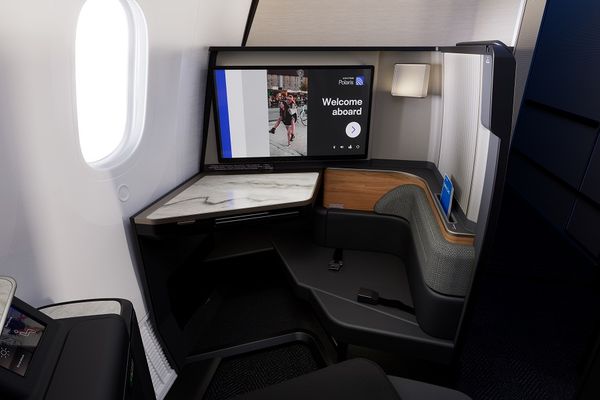 Why Airline Class Wars Will Intensify in 2026
The "Class War" of 2026 is no longer just about legroom; it is a calculated, multi-billion-dollar strategic pivot by Original Equipment Manufacturers (OEMs) and carriers to capture a "splurge-ready" traveller base that is increasingly opting for "one big trip" over frequent, low-cost hops.
INFORMATIONAL
READ MORE »
Why Airline Class Wars Will Intensify in 2026
The "Class War" of 2026 is no longer just about legroom; it is a calculated, multi-billion-dollar strategic pivot by Original Equipment Manufacturers (OEMs) and carriers to capture a "splurge-ready" traveller base that is increasingly opting for "one big trip" over frequent, low-cost hops.
INFORMATIONAL
READ MORE »
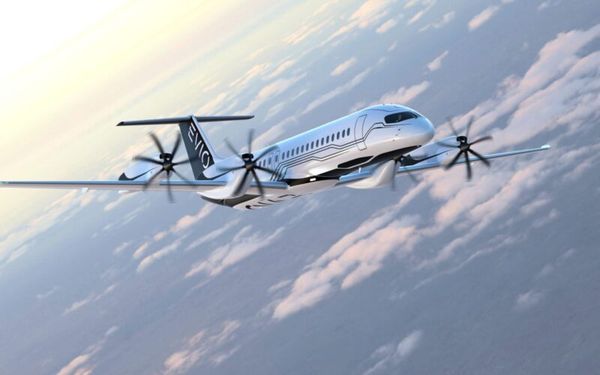 How Evio’s 810 Airliner Aims to Rescue Regional Aviation
As the regional airline industry grapples with a staggering 27% fleet reduction over the last five years, a new powerhouse has emerged from stealth to reclaim "thin" routes. Evio Inc., a Montreal-based startup backed by aerospace titans Boeing and Pratt & Whitney Canada, has unveiled the EVIO 810, a clean-sheet, 76-seat "strong hybrid" airliner designed to restore profitability to short-haul sectors.
INFORMATIONAL
READ MORE »
How Evio’s 810 Airliner Aims to Rescue Regional Aviation
As the regional airline industry grapples with a staggering 27% fleet reduction over the last five years, a new powerhouse has emerged from stealth to reclaim "thin" routes. Evio Inc., a Montreal-based startup backed by aerospace titans Boeing and Pratt & Whitney Canada, has unveiled the EVIO 810, a clean-sheet, 76-seat "strong hybrid" airliner designed to restore profitability to short-haul sectors.
INFORMATIONAL
READ MORE »
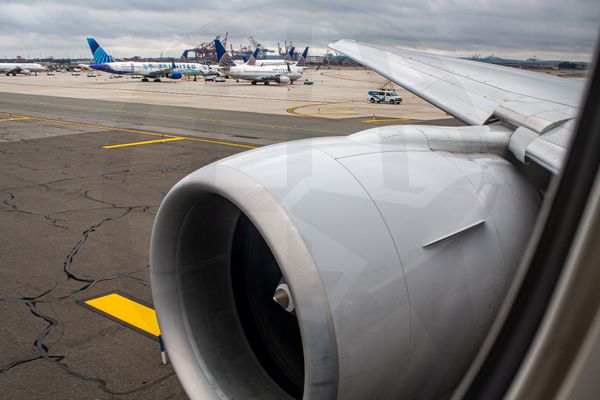 FAA Finalises Airworthiness Directive for GE90 Engines Following Powder Metal Contamination Discovery
The Federal Aviation Administration (FAA) has officially finalised a high-priority airworthiness directive (AD) targeting General Electric GE90 engines, the primary power plants for the Boeing 777 fleet. The ruling, published on January 2, 2026, addresses a critical manufacturing defect involving iron contamination in powder metal components that could lead to uncontained engine failures.
NEWS
READ MORE »
FAA Finalises Airworthiness Directive for GE90 Engines Following Powder Metal Contamination Discovery
The Federal Aviation Administration (FAA) has officially finalised a high-priority airworthiness directive (AD) targeting General Electric GE90 engines, the primary power plants for the Boeing 777 fleet. The ruling, published on January 2, 2026, addresses a critical manufacturing defect involving iron contamination in powder metal components that could lead to uncontained engine failures.
NEWS
READ MORE »