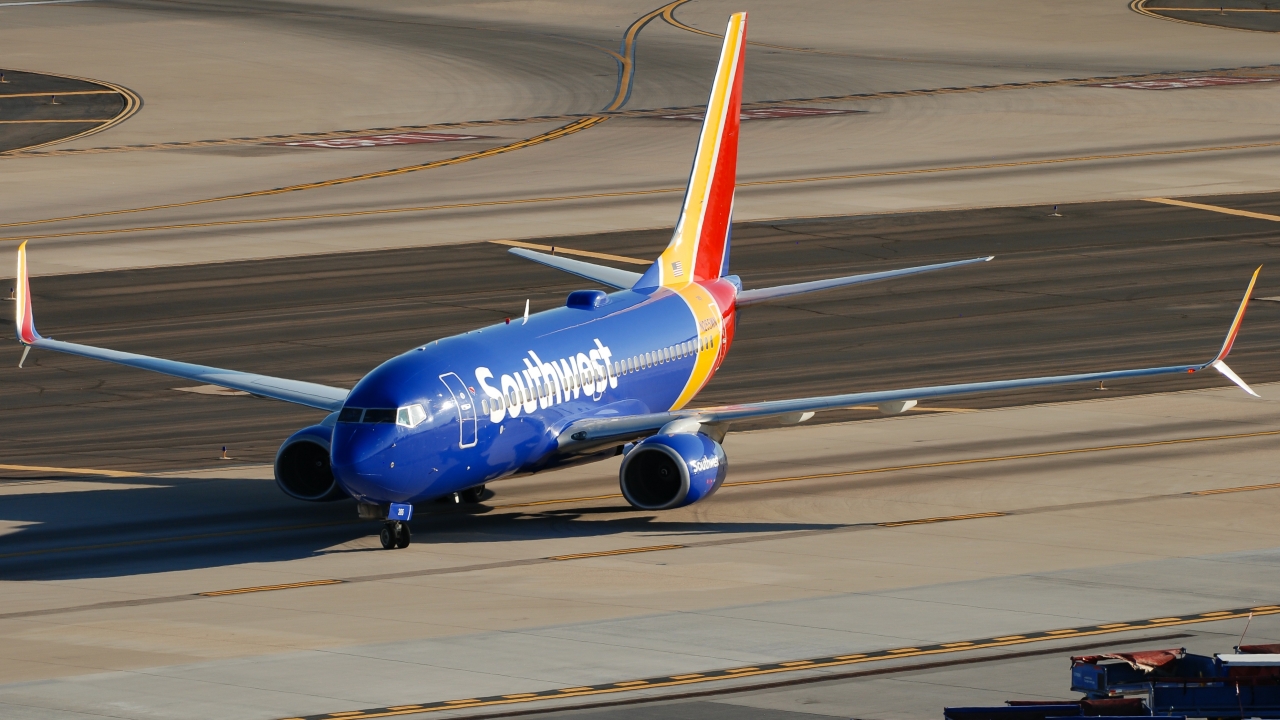

A Southwest Airlines Boeing 737 made an emergency diversion to Tulsa, Oklahoma, on Monday, May 12, 2026, after its cockpit windscreen began cracking and then shattered while cruising over the state, forcing the flight crew of Flight WN-2665 to declare an emergency and abandon a routine cross-country service that had departed Albuquerque just over an hour earlier. No passengers or crew were injured in an incident that the FAA has confirmed is now under formal investigation, and which occurred on one of the most disrupted days in recent US airline operations, with Southwest itself recording over 1,000 delays across its network.
What Happened and When
Flight 2665 departed Albuquerque around 2 PM, about 20 minutes behind schedule. It was set to land in Baltimore about three and a half hours later. However, data from Flightradar24 shows that just over an hour into the journey and cruising at 37,000 feet, the Boeing 737 turned south and diverted to Tulsa, Oklahoma.
According to data provided by Flightradar24, the 19-year-old aircraft, registered as N265WN, turned south toward Tulsa roughly one hour into the cross-country journey.
The manner in which the windscreen failed was described by a passenger who witnessed it from the cabin in terms that will resonate with anyone who understands the pressure differential between a pressurised aircraft at cruising altitude and the external atmosphere.
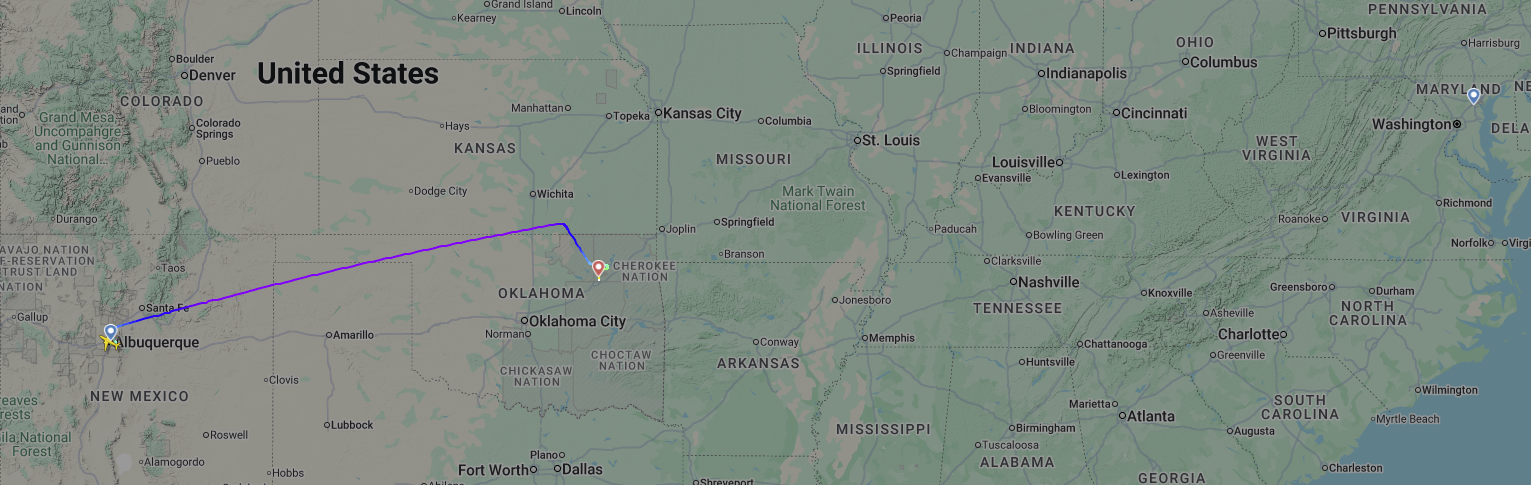
Photo: Flightradar24
The Passenger Who Watched It Happen
George Gonzales was aboard the flight and communicated directly with KRQE News 13 in Albuquerque after the incident. His account describes a sudden and alarming failure that offered no warning before it became dramatic. "They mentioned nothing struck the aircraft; it was just the windshield started cracking, and then it just exploded, so credit to the pilots for landing the plane and getting us down safely," Gonzales told KRQE. He also shared a photograph of the shattered cockpit window that showed the extent of the damage in graphic terms.
Gonzales confirmed that the crew's communication with passengers was calm and decisive: the pilots announced over the intercom that something had happened and they needed to make an emergency landing in Tulsa. The phrasing, professional, measured, and action-focused rather than explanatory, reflects the training that flight crews receive for exactly this type of emergency.
A 777 on Four Wheels? Inside One Superfan’s Mission to Celebrate His Favorite Airline
The Aircraft
The aircraft involved, registered as N265WN, is over 19 years old. The Boeing 737-700 variant of the Classic/Next Generation family has an excellent service record and is one of the most widely operated narrowbody aircraft in the United States. Southwest operates the largest fleet of Boeing 737 variants of any airline globally, and the 737-700 specifically forms a significant proportion of its network.
The age of the aircraft is relevant context. At 19 years old, N265WN is operating within its certified airworthiness life but is at an age where maintenance scrutiny is appropriately elevated. Cockpit windscreens on commercial aircraft are multi-layered structures designed to resist significant impacts and maintain integrity under the enormous pressure differential of high-altitude cruise. A windscreen that cracks spontaneously, with no external impact, points toward either a material fatigue issue, a heating element malfunction within the laminated windscreen structure, or a pre-existing micro-fracture that propagated rapidly under operational stress.

Photo: AeroXplorer/ Harrison Bacci
Why the Aircraft Remained Safe
The question of why a shattering cockpit windscreen did not cause a catastrophic decompression event is answered by the engineering design of commercial aircraft windscreens themselves.
Plane windshields are designed with several layers, including tempered glass and other materials, so that they can still function safely in case any individual layer is damaged.
Standard aviation design utilizes multiple layers of tempered glass and specialized materials to prevent total failure if a single layer is compromised.
The system works in layers: an outer pane, one or more middle structural plies, and an inner pane, each bonded with polymer interlayers. When the outer layer cracks — however violently — the inner layers maintain pressure containment. What the passenger described as an "explosion" was the outer pane fracturing under its stored stress, producing the alarming acoustic and visual effect of a sudden catastrophic failure while the underlying structural integrity of the windscreen assembly remained intact. The aircraft remained safely pressurised throughout.
Southwest and the FAA Statements
Southwest Airlines issued a brief, professional statement that confirmed the facts without elaboration:
"Southwest Airlines Flight 2665 diverted safely to Tulsa due to a windshield crack. The flight landed uneventfully, and Customers were re-accommodated to Baltimore on another aircraft. We appreciate the professionalism of our Flight Crew. Nothing is more important to Southwest than the Safety of our Customers and Employees."
The FAA confirmed its own role: the airplane landed safely "after the crew reported a cracked windshield." The cause of the crack remains under investigation as of Tuesday.
The jet landed safely in Oklahoma at about 4:20 PM CT. Flightradar24's data shows the replacement airplane reached Baltimore around 11:30 PM, four hours later than passengers initially expected to arrive.

A Similar Incident That Adds Important Context
Last October, a United Airlines jet saw its windshield cracked by a weather balloon while flying at 36,000 feet. Although bird strikes are more common than a weather balloon or space debris, it is still very rare for them to damage an airplane.
The United Airlines October incident involved an external impact; the Southwest event on May 12 did not. That distinction is precisely what makes the current case more complex from an airworthiness investigation standpoint. An impact-caused crack has a defined origin and cause. A spontaneous crack, propagating without any external trigger while the windscreen is simply performing its normal function under normal cruise conditions, requires a more detailed forensic examination of the windscreen's material history, manufacturing lot, maintenance records, and thermal management system.
Southwest's Broader Monday
The windscreen diversion was not the only headline-generating event in Southwest's operations on Monday, May 12.
It was a difficult start to the week for Southwest Airlines, as the carrier was the only one to hit four-digit delays on Monday. American Airlines had the most cancellations worldwide on Monday after the Federal Aviation Administration issued a ground stop at its major hub, Dallas-Fort Worth International Airport, due to weather concerns. Additionally, Delta passengers faced five-hour delays due to pilot issues.
Dan Janki, Delta's Executive Vice President and Chief Operating Officer, offered a candid assessment of what the summer ahead may hold. Janki hinted that problems may persist throughout the summer.
For Southwest specifically, exceeding 1,000 delays system-wide while simultaneously managing a windscreen emergency diversion in Oklahoma crystallises the operational pressure the carrier is navigating, a combination of ongoing fuel cost pressures, aging fleet segments, and a national aviation infrastructure that continues to strain under the volume and complexity of 2026's disrupted operating environment.
RAF Typhoons Scramble to Intercept Qatar Airways Boeing 777 Over England After Flight Causes Concern for UK Authorities » Fuel Costs Swallow American Airlines' Record Revenue as Carrier Warns of Potential Full-Year Loss » Flight-Ready Precision: How Antrica is Revolutionising UAV and Aerospace Video Systems »

Comments (5)
 CpjJwWHV
[hidden]
CpjJwWHV
[hidden]
CpjJwWHV
[hidden]
CpjJwWHV
[hidden]
CpjJwWHV
[hidden]
CpjJwWHV
[hidden]
CpjJwWHV
[hidden]
CpjJwWHV
[hidden]
CpjJwWHV
[hidden]
CpjJwWHV
[hidden]
Add Your Comment
TAGS
NEWS Southwest Airlines WN2665 Boeing 737-700 Cockpit Windscreen Albuquerque Airport Tulsa Diversion Emergency Landing FAA Investigation Baltimore Airport Aviation Safety Windshield Crack Southwest DelaysRECENTLY PUBLISHED
 airBaltic Launches Swiss Subsidiary to Expand Pilot Employment and ACMI Operations
airBaltic sets up a Swiss subsidiary to employ pilots under local contracts, supporting its growing international ACMI wet-lease business.
NEWS
READ MORE »
airBaltic Launches Swiss Subsidiary to Expand Pilot Employment and ACMI Operations
airBaltic sets up a Swiss subsidiary to employ pilots under local contracts, supporting its growing international ACMI wet-lease business.
NEWS
READ MORE »
 Southwest Airlines Partners With Chase to Launch Co-Branded Airport Lounges
Southwest Airlines confirms plans to open premium airport lounges co-branded with Chase, marking a major shift for the traditionally no-frills carrier.
NEWS
READ MORE »
Southwest Airlines Partners With Chase to Launch Co-Branded Airport Lounges
Southwest Airlines confirms plans to open premium airport lounges co-branded with Chase, marking a major shift for the traditionally no-frills carrier.
NEWS
READ MORE »
 SWISS A330 Bound for New York Diverts to Bangor After Smoke Fills Business Class Cabin
A SWISS Airbus A330 flying from Zurich to New York made an emergency landing in Bangor, Maine, after smoke filled the business class cabin.
NEWS
READ MORE »
SWISS A330 Bound for New York Diverts to Bangor After Smoke Fills Business Class Cabin
A SWISS Airbus A330 flying from Zurich to New York made an emergency landing in Bangor, Maine, after smoke filled the business class cabin.
NEWS
READ MORE »
More than just headlines.
Get unlimited ad-free access to in-depth aviation news, premium stories, and exclusive insights other sites don't cover.
- Ad-free browsing on AeroXplorer
- Unlimited access to premium and exclusive articles
- Higher photo upload limits & commissions on sales
- Free access to Jetstream Magazine on higher tiers
- Ad-free browsing
- Sell aviation photos with 60% commission
- First week free!
- Everything in Basic+
- Unlimited premium articles
- Sell aviation photos with 70% commission
- Free Digital subscription to Jetstream Magazine
- First week free!
- Everything in Basic+ and Pro
- Sell aviaiton photos with 80% commission
- Early access to exclusive stories
- Free Digital+Print subscription to Jetstream Magazine