When people think of micronations, many think about small-landlocked countries like Lichtenstein, San Marino, or the Vatican. However, many of the world's smallest states are archipelagos, a series of small islands. These nations have vibrant marine life and a rich history of natural beauty but lack physical landmass. Unfortunately, the rise of sea levels globally puts many of these island nations at risk of total encapsulation by the ocean.
As isolated and small as these micronations might be, many still have international airports, which serve as both a transit hub for commercial airliners and a key contributor to foreign trade. These airports provide a unique insight into how land is allocated in these places, as well as the importance of maintaining consistent air transit routes to these countries.
The globe’s least-touristed country, Tuvalu, sits in the middle of the South Pacific, about 2,600 miles South of Hawaii. Tuvalu hosts about 11,000 total residents, and their most notable export is internet domains, being that Tuvalu based websites end with ".tv".

The Funafuti International Airport (FUN) is the country's only international airport, and sits at the widest and highest point in the country, at 9 feet above sea level. Although presenting a short runway — only 5,000 feet long — the airport is crucial to air traffic in and out of the country. Fiji Airlines and Air Kiribati both use FUN to have flights in and out of the country, as well as cargo aircrafts which use the space to bring in medicines and food. As the airport serves as the largest flat space in the country, when no flights are occurring, the runway is used as a public park, with events and soccer matches occurring regularly.
Another nation that has a scarcity of landmass but has a lot of tourists is the Maldives. The Velana National Airport (VIA) is the largest land-based airport in the country, which presents an 11,000-foot runway. Sitting on a manmade island outside of the capital city of Male, VIA only sits at a whopping 6 feet above sea level. As the tourist industry is blossoming in the archipelago, the airport has received multiple expansions, bringing the total mass of the airport island to just about the size of Male, one of the most densely populated places on Earth.
As micronations continue to reinvest in their airports, it is important to realize the importance of a contingency plan in the event that an airport is absorbed by the sea. As sea levels rise, the populations of these micronations have evacuation routes to nearby areas. For example, Tuvaluans would relocate to New Zealand in the event that the Tuvaluan islands can no longer be above sea level.
The diminishing landmass of these islands reinforces the need for sustainable fuel sources and carbon footprint minimization worldwide. Rich histories and vibrant cultures exist in these regions, and if sea levels continue to rise, there will be no more land for life. De-carbonization of the aviation industry is one way these places can continue to exist.
Wizz Air Dominates London Luton with TUI Slot Acquisition » What You Don't Know About Airport Operations That Go Overnight » US Air Force to Launch New Experimental One-Way Attack Drone Unit »

Comments (0)
Add Your Comment
SHARE
TAGS
INFORMATIONAL MicronationsTuvaluMaldives Air Kiribati Fiji AirlinesRECENTLY PUBLISHED
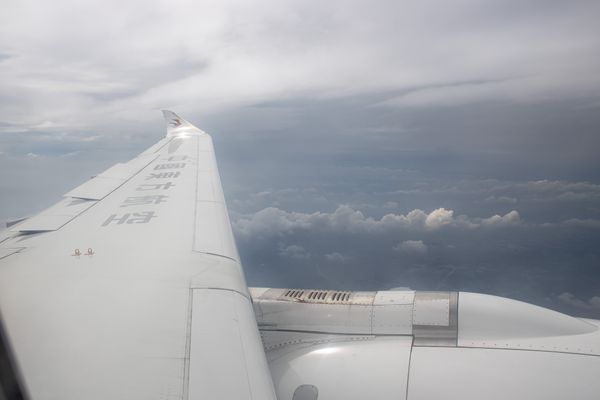 VIDEO: What It's Like Onboard China's COMAC C919
We flew onboard China Eastern's COMAC C919 to experience China's homegrown narrow-body up close. From seat comfort to cabin layout to noise levels to tech: how does it really compare with the Boeing 737 and Airbus A320? This review puts all three workhorses under the same spotlight.
TRIP REPORTS
READ MORE »
VIDEO: What It's Like Onboard China's COMAC C919
We flew onboard China Eastern's COMAC C919 to experience China's homegrown narrow-body up close. From seat comfort to cabin layout to noise levels to tech: how does it really compare with the Boeing 737 and Airbus A320? This review puts all three workhorses under the same spotlight.
TRIP REPORTS
READ MORE »
 KAL858: The North Korean Bombing that Shocked the World
Among the 99 passengers boarding Korean Air Flight 858 on November 29, 1987, few could imagine their journey would end as one of aviation's darkest mysteries.
STORIES
READ MORE »
KAL858: The North Korean Bombing that Shocked the World
Among the 99 passengers boarding Korean Air Flight 858 on November 29, 1987, few could imagine their journey would end as one of aviation's darkest mysteries.
STORIES
READ MORE »
 Ghost Networks: The Rise, Fall, and Revival of Fifth-Freedom Flights
Fifth-freedom flights — routes where an airline flies between two countries outside its home base — have always lived in aviation's twilight zone. We chart their rise, their near-disappearance, and the surprising markets where they still thrive today. Then we take you on board a special Seoul-Tokyo fifth-freedom flight to show how the experience stacks up against a typical regional carrier.
TRIP REPORTS
READ MORE »
Ghost Networks: The Rise, Fall, and Revival of Fifth-Freedom Flights
Fifth-freedom flights — routes where an airline flies between two countries outside its home base — have always lived in aviation's twilight zone. We chart their rise, their near-disappearance, and the surprising markets where they still thrive today. Then we take you on board a special Seoul-Tokyo fifth-freedom flight to show how the experience stacks up against a typical regional carrier.
TRIP REPORTS
READ MORE »